History of Astronomy Timeline: Major Discoveries and Astronomers
Explore 2,423 records covering the history of astronomy, astronomers, discoveries, telescopes, planets and space missions from the medieval period to the modern space age.
2,423Astronomy records
History of astronomy · 2,423 database records
Major Events in Astronomy from Ancient Observers to JWST
This chronology begins before the surviving database records so that the development of astronomy is placed in its full historical context. The interactive archive currently contains 2,423 astronomy records spanning 499–2026; the editorial history below reaches back to ancient observational and mathematical astronomy before joining the detailed searchable record set.
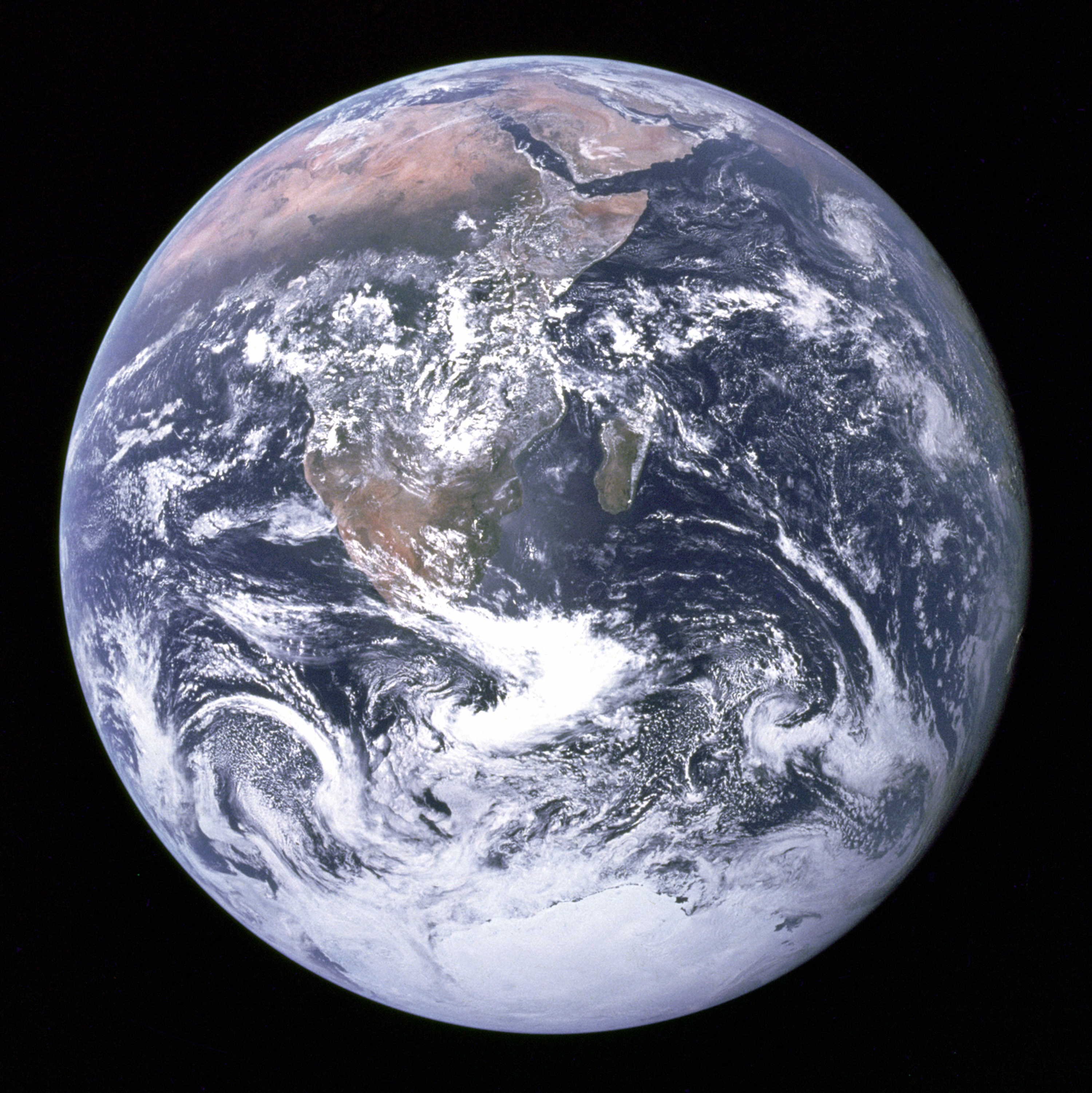
Representative images are embedded with descriptive filenames, alt text, captions and preferred-image metadata.
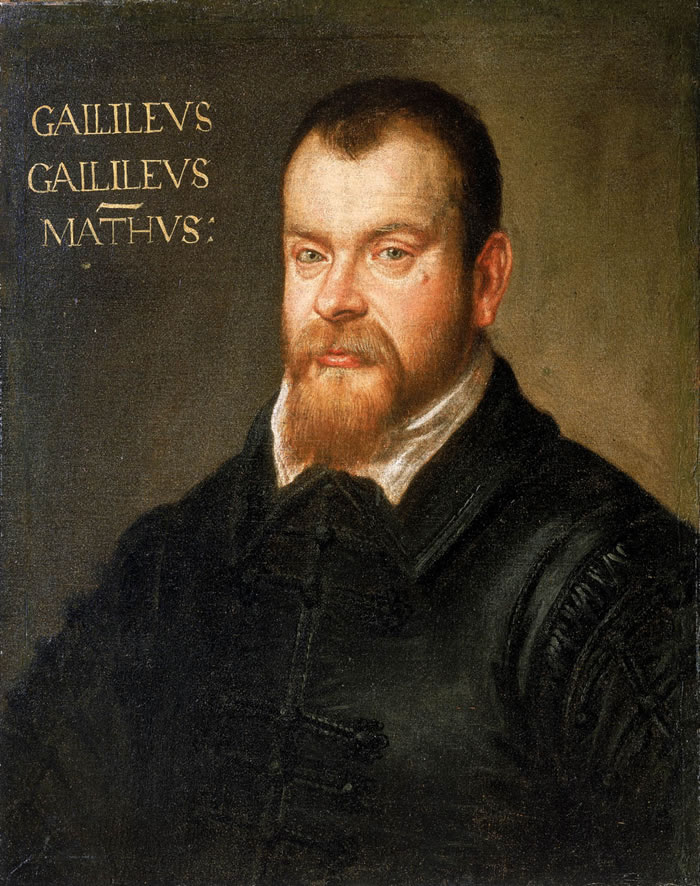
The Earth seen from Apollo 17NASA/Apollo 17. A locally served, high-resolution representative image for the astronomy collection.Galileo Galilei in a portrait attributed to Domenico TintorettoGalileo became one of the defining figures of telescopic astronomy.
Six-era history
Major Events in Astronomy from Ancient Observers to JWST
From ancient sky measurement to modern astrophysics, gravitational waves, exoplanets and space telescopes.
Ancient astronomy — before AD 500
Babylonian astronomers record and predict recurring celestial phenomena; the Venus Tablet tradition preserves systematic observations of Venus.
Greek natural philosophers develop geometric models of the cosmos, including influential Earth-centred frameworks.
Aristarchus of Samos proposes that Earth rotates and travels around the Sun, an early heliocentric model.
Eratosthenes estimates the circumference of Earth from the geometry of sunlight and shadows.
Hipparchus advances positional astronomy, star cataloguing and the study of precession.
Ptolemy’s Almagest systematises Greek mathematical astronomy in a geocentric model that remains influential for more than a millennium.
Aryabhata’s Aryabhatiya presents sophisticated computational astronomy and describes the apparent daily motion of the sky in terms of Earth’s rotation.
Indian, Chinese and Islamic astronomy — AD 500–1500
Brahmagupta develops mathematical methods used in Indian astronomical calculation.
Al-Sufi publishes the Book of Fixed Stars, combining inherited catalogues with new observations.
Chinese and other observers record the brilliant “guest star” whose remnant is now the Crab Nebula.
Bhaskara II develops planetary computation, eclipse methods and spherical astronomy in the Siddhanta Shiromani.
Ulugh Beg’s Samarkand observatory produces a major new star catalogue based on careful naked-eye observations.
Scientific Revolution — 1500–1700
Nicolaus Copernicus publishes De revolutionibus orbium coelestium, presenting a mathematical heliocentric system.
Tycho Brahe observes a supernova, challenging the belief that the stellar heavens are unchanging.
Johannes Kepler publishes the first two laws of planetary motion, including elliptical planetary orbits.
Galileo turns improved telescopes to the sky and observes the Moon, Jupiter’s satellites and other phenomena that transform observational astronomy.
Kepler publishes his third law, relating planetary orbital periods to their distance from the Sun.
Isaac Newton’s Principia unites terrestrial and celestial motion through the laws of motion and universal gravitation.
Astronomy becomes astrophysics — 1700–1900
Edmond Halley predicts the return of the comet that now bears his name using Newtonian mechanics.
William Herschel discovers Uranus, the first planet found with a telescope in the modern era.
Friedrich Bessel makes the first successful measurement of stellar parallax, giving a direct distance to another star.
Neptune is identified close to a position predicted from disturbances in the orbit of Uranus.
Kirchhoff and Bunsen establish the physical basis of spectroscopy, allowing astronomers to determine the chemical composition of stars.
Helium is identified in the solar spectrum before the element is isolated on Earth.
Modern astrophysics and cosmology — 1900–1960
Albert Einstein completes general relativity, providing a new theory of gravity and a framework for modern cosmology.
Cepheid observations in Andromeda establish that the “nebula” is a galaxy beyond the Milky Way.
Cecilia Payne demonstrates that stars are composed primarily of hydrogen and helium.
Georges Lemaître develops an expanding-universe model from general relativity and astronomical observations.
The observed relation between galaxy distance and recession velocity makes cosmic expansion a central fact of observational cosmology.
Karl Jansky detects radio emission from the Milky Way, opening radio astronomy.
Space age and modern astronomy — 1960–present
Arno Penzias and Robert Wilson detect the cosmic microwave background radiation.
Jocelyn Bell Burnell identifies pulsars, rapidly rotating neutron stars observed through regular radio pulses.
Apollo 11 achieves the first crewed landing on the Moon.
The Hubble Space Telescope launches and begins a new era of high-resolution space-based astronomy.
The first confirmed exoplanets are found around the pulsar PSR B1257+12.
51 Pegasi b becomes the first confirmed exoplanet around a Sun-like star.
Supernova observations show that the expansion of the universe is accelerating.
NASA launches the Kepler mission to search for transiting exoplanets.
LIGO makes the first direct detection of gravitational waves from merging black holes; the result is announced in 2016.
The Event Horizon Telescope collaboration releases the first image of a black hole, in galaxy M87.
The James Webb Space Telescope releases its first science images and begins infrared observations of the early universe, stars and exoplanets.
Crawlable astronomer profiles
Important astronomers and their discoveries
Each major name now has a real canonical URL, while a separate link still opens the matching records in the interactive dropdowns.
His work links mathematical technique with observational astronomy and illustrates that major developments in astronomy were taking place far beyond medieval Europe. The World History Database records below place Aryabhata within the longer chronology of astronomical ideas.
His astronomy shows the continuing strength of Indian mathematical traditions in the medieval period. The database records connect his work to the broader development of positional astronomy and computational methods.
Copernicus is central to the transition from inherited geocentric models to heliocentric astronomy. His work became the point of departure for Kepler, Galileo and later Newtonian celestial mechanics.
His observation of the 1572 supernova challenged the idea of an unchanging celestial realm, while his planetary data later enabled Johannes Kepler to derive the laws of planetary motion.
These observations did not by themselves prove every part of the Copernican model, but they undermined important assumptions of traditional cosmology and demonstrated that the heavens could be investigated through instruments and repeated observation.
Kepler’s three laws of planetary motion connected geometry, observation and prediction. They later became a crucial foundation for Isaac Newton’s explanation of gravitation and celestial mechanics.
By predicting the comet’s return, Halley demonstrated the explanatory and predictive power of Newtonian celestial mechanics. The comet now bearing his name became one of astronomy’s most famous periodic objects.
Herschel also carried out extensive surveys of stars, double stars and nebulae. His work helped shift astronomy toward systematic investigation of the structure and scale of the wider universe.
The period–luminosity relation turned Cepheids into distance indicators. It became a key step in measuring the scale of the universe and in the later work that established the existence of galaxies beyond the Milky Way.
Lemaître later proposed that the universe developed from an extremely dense early state, an important precursor of modern Big Bang cosmology. His work connected theoretical physics with the new observational study of galaxies.
Hubble’s work on the relation between galaxy distance and recession velocity became a cornerstone of observational cosmology. The space telescope later named after him vastly extended the observational programme he helped begin.
Her work connected spectroscopy, atomic physics and stellar astronomy and helped establish the modern physical understanding of stars rather than treating stellar spectra mainly as a classification scheme.
Her measurements helped make dark matter a central problem in modern astrophysics and cosmology. They also show how precision observations of galaxies can reveal large-scale physical components that cannot be seen directly.
The discovery supplied a major observational foundation for Big Bang cosmology by revealing relic radiation from the early universe. It became one of the defining discoveries of twentieth-century cosmology.
Duplicate and reversed identities have been consolidated through a documented canonical-person mapping. Important astronomers link to permanent profile pages; record-count links open the Name2 → Name1 filters.
Historical chronology compiled from the World History Database and checked against major scientific and historical reference sources.
Last reviewed: September 2026.
The interactive database remains the underlying record collection. The six-era history and topic/profile introductions provide editorial context; canonical-person mappings merge high-confidence aliases without deleting historical event records.