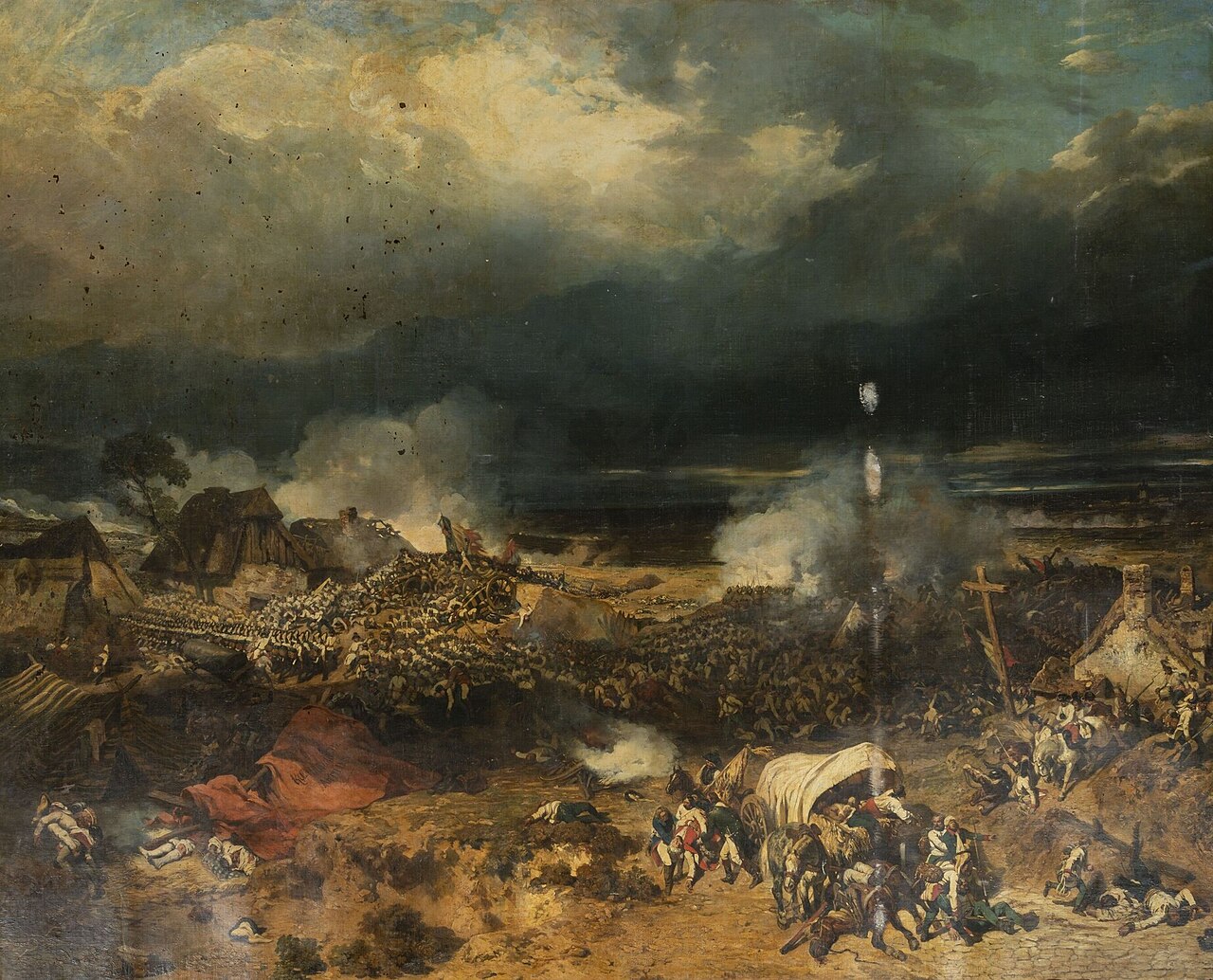
October 1793 and the relief of Maubeuge. Explore the related historical entries from the same archive as the main French Revolution records.
September 1793 · Northern France
Jourdan Assumes Command before Maubeuge Relief
Jean-Baptiste Jourdan
Jourdan took charge of the northern field army while Coalition forces threatened the French fortress of Maubeuge. Restoring the initiative required an attack against the troops covering the siege.
15 October 1793 · Wattignies
Balland Assaults the Coalition Centre
Jean-Baptiste Balland
Balland's troops attacked the central enemy line during the first day's engagements. Coalition reserves helped prevent a French breakthrough despite determined pressure.
15 October 1793 · Wattignies
Carnot Consults Commanders after Initial Setbacks
Lazare Nicolas Marguerite Carnot
Carnot remained with the army while senior officers reviewed the first day's disappointing results. French leaders prepared to mass strength against the position around Wattignies.
15 October 1793 · Wattignies
Central Fighting Holds Coalition Reinforcements
Jean-Baptiste Balland
Balland's unsuccessful attack nonetheless required the enemy to commit strength to defending the center. That effort formed part of the wider struggle to find a vulnerable point in the covering line.
15 October 1793 · Wattignies
Clerfayt Reinforces Threatened Central Defences
François Sébastien Charles Joseph de Croix
The Coalition commander used reserves to contain attacks against his principal positions. The defensive success on the first day temporarily frustrated Jourdan's wider offensive.
15 October 1793 · Maubeuge
Coalition Command Evaluates French Flank Attacks
Josias von Sachsen-Coburg-Saalfeld
Coburg's headquarters assessed an assault distributed across a long front. The French effort remained dangerous even though its first day did not break the covering line.
15 October 1793 · Wattignies
Duquesnoy Advances on French Right Wing
Jean-Baptiste Duquesnoy
General Duquesnoy pushed French forces toward the eastern approaches of the battlefield. Difficult terrain and stubborn defenders limited the immediate effect of his movement.
15 October 1793 · Wattignies
Eastern Assault Meets Difficult Ground
Jean-Baptiste Duquesnoy
The attack led by Duquesnoy encountered terrain and resistance that reduced its momentum. These difficulties contributed to the decision to concentrate a stronger force on the following day.
15 October 1793 · Wattignies
First Day Attack Fails to Break Centre
Jean-Baptiste Jourdan
French units fighting near the central positions met strong resistance on 15 October. Jourdan needed to alter the plan rather than repeat an unsuccessful frontal attack unchanged.
15 October 1793 · Wattignies
Jourdan Chooses Broad Initial Attack
Jean-Baptiste Jourdan
The French commander planned attacks against multiple parts of the Coalition position on 15 October. This deployment attempted to stretch enemy reserves before concentrating on a decisive sector.
16 October 1793 · Wattignies
Carnot Encourages Renewed Attack on Village
Lazare Nicolas Marguerite Carnot
Carnot accompanied the army during the renewed fighting and pressed for an energetic offensive. His presence embodied direct civilian oversight of operational decisions in the revolutionary war.
16 October 1793 · Wattignies
Clerfayt Withdraws after Wattignies Defeat
François Sébastien Charles Joseph de Croix
Clerfayt's troops retreated when the French attack made their line untenable. The withdrawal cleared the way for the siege of Maubeuge to be lifted.
16 October 1793 · Wattignies
Coalition Covering Force Faces Renewed Offensive
François Sébastien Charles Joseph de Croix
Clerfayt's men defended against a larger French concentration on 16 October. The renewed assault threatened the line protecting the Maubeuge siege operations.
16 October 1793 · Northern France
Coburg Orders Withdrawal of Covering Troops
Josias von Sachsen-Coburg-Saalfeld
The French success forced the Coalition command to abandon its forward covering position. Continued operations against Maubeuge had become too dangerous without that protection.
16 October 1793 · Wattignies
French Troops Capture Wattignies Village
Jean-Baptiste Jourdan
Republican soldiers broke through to take the village during the decisive second day. The advance compromised the Coalition position and forced reassessment of its siege operations.
16 October 1793 · Maubeuge
Jourdan Opens Route toward Besieged Maubeuge
Jean-Baptiste Jourdan
Victory at Wattignies removed the immediate obstacle between the French field army and Maubeuge. The republican garrison could expect relief instead of continued isolation.
16 October 1793 · Wattignies
Right Wing Soldiers Assault Wattignies Heights
Jean-Baptiste Duquesnoy
French formations operating on the right joined the effort to secure the strategically important ground. Control of the heights would make the Coalition covering position harder to maintain.
16 October 1793 · Wattignies
Second Day Plan Concentrates French Strength
Jean-Baptiste Jourdan
Jourdan redirected the main weight of the French attack toward the village and heights of Wattignies. Concentration offered better prospects than scattering forces along the entire enemy line.
16 October 1793 · Wattignies
Wattignies Victory Relieves Maubeuge
Jean Baptiste Jourdan
Jourdan's army defeated coalition troops around Wattignies and helped lift the siege of Maubeuge. The result strengthened republican defenses in northern France.
October 1793 · Maubeuge
Carnot Inspects Maubeuge Operational Situation
Lazare Nicolas Marguerite Carnot
Carnot travelled to the northern front as a representative of the revolutionary government. He examined the threat to Maubeuge and encouraged preparations for an offensive against the besiegers.
October 1793 · Wattignies
Clerfayt Prepares Coalition Covering Positions
François Sébastien Charles Joseph de Croix
Count Clerfayt commanded much of the force deployed to oppose Jourdan's advance. His troops occupied a broad line south of Maubeuge guarding the forces conducting the siege.
October 1793 · Belgium
Coalition Command Preserves Retreating Formations
François Sébastien Charles Joseph de Croix
After defeat the enemy commanders withdrew remaining units rather than risk destruction near Maubeuge. The retreat preserved troops for future campaigns despite the loss of operational initiative.
October 1793 · Northern France
Coalition Offensive Loses Northern Momentum
Josias von Sachsen-Coburg-Saalfeld
The failure at Wattignies disrupted Coburg's plans to advance farther into France. The battlefield result weakened the strategic value of earlier Coalition gains on the frontier.
October 1793 · Maubeuge
Coburg Maintains Pressure on Maubeuge Fortress
Josias von Sachsen-Coburg-Saalfeld
Prince Josias of Saxe Coburg directed Coalition operations intended to secure the northern frontier. His field army relied on a covering force to block French attempts to relieve Maubeuge.
October 1793 · Paris
Committee Reviews Northern Campaign Outcome
Lazare Nicolas Marguerite Carnot
The revolutionary government treated the relief of Maubeuge as evidence that the Republic could recover from earlier defeats. Carnot's reports helped shape decisions about subsequent army operations.
October 1793 · Northern France
French Army Concentrates toward Wattignies Sector
Jean-Baptiste Jourdan
Jourdan assembled troops for a coordinated advance across several points of the Coalition line. The objective was to force the enemy covering army back and free Maubeuge from immediate danger.
October 1793 · Northern France
Jourdan Later Seeks to Reverse Northern Losses
Jean-Baptiste Jourdan
Jourdan assumed command while the Republic remained threatened by Coalition positions gained earlier in the year. His subsequent Wattignies victory helped end the immediate danger to Maubeuge though Valenciennes stayed occupied.
October 1793 · Maubeuge
Maubeuge Remains Outside Coalition Control
Josias von Sachsen-Coburg-Saalfeld
The loss of the covering battle deprived Coburg of the opportunity to capture Maubeuge at that time. The fortress continued to anchor French defenses on the northern border.
October 1793 · Maubeuge
Maubeuge Siege Lifted after French Victory
Jean-Baptiste Jourdan
The Coalition withdrew from its siege after the failure of the covering force. Maubeuge remained in French hands, preserving an important fortress on the road toward Paris.
October 1793 · Wattignies
Right Wing Success Strengthens French Position
Jean-Baptiste Duquesnoy
Duquesnoy's troops contributed to the decisive pressure against the enemy's flank. Their fighting helped turn the strategic heights into a weakness in the opposing defensive line.
October 1793 · Paris
Wattignies Becomes Symbol of Republican Recovery
Jean-Baptiste Jourdan
Jourdan's victory was celebrated as proof that France could defend itself during the emergency of 1793. It strengthened confidence in troops raised and reorganized by the revolutionary state.
October 1793 · Northern France
Wattignies Reverses Sequence of Fortress Losses
Jean-Baptiste Jourdan
Earlier Coalition successes at Valenciennes and other northern fortresses had placed the Republic under severe pressure. Jourdan's success demonstrated that the enemy advance could be checked in open battle.
October 1793 · Paris
Wattignies Victory Supports Mass Mobilization Policy
Lazare Nicolas Marguerite Carnot
The battle supplied a prominent example of republican forces turning manpower into battlefield success. Carnot continued advocating the organization of large armies with reliable supply and command.
November 1793 · Northern France
Aftermath Leaves Continuing Border Warfare
Jean-Baptiste Jourdan
Despite the relief of Maubeuge the northern campaign did not end with Wattignies. Jourdan's soldiers still faced Coalition armies positioned across the nearby frontier.
November 1793 · Belgium
Coalition Regroups beyond the Battlefield
Josias von Sachsen-Coburg-Saalfeld
The defeat required Coburg to reconsider the disposition of Allied troops and the prospects for further sieges. His coalition remained active although the immediate threat to Maubeuge had receded.
1793 · Northern France
Army Regroups after Wattignies
Jean Baptiste Jourdan
Jourdan reorganized his troops after the autumn victory as supply shortages and demands for renewed offensive action persisted.
1793 · Wattignies
Battle of Wattignies
Lazare Nicolas Marguerite Carnot
Carnot took part in the campaign that culminated in a French victory at Wattignies in October, helping relieve Maubeuge.
1793 · Wattignies
Battle of Wattignies First Day
Jean Baptiste Jourdan
Jourdan's troops assaulted Coalition positions but met determined resistance, requiring adjustments before the next phase of the battle.
1793 · Maubeuge
Carnot Supports Northern Offensive
Lazare Nicolas Marguerite Carnot
Carnot served as a representative of the Convention and supported aggressive operations that helped the French army contest the siege of Maubeuge.
1793 · Northern France
Cooperation with General Jourdan
Lazare Nicolas Marguerite Carnot
Carnot and General Jean-Baptiste Jourdan coordinated operational decisions before the Battle of Wattignies.
1793 · Maubeuge
Northern frontier stabilized
Lazare Nicolas Marguerite Carnot
The success near Wattignies helped ease pressure on France's northern frontier and strengthened Carnot's standing as a military organizer.
1793 · Maubeuge
Planning relief of Maubeuge
Lazare Nicolas Marguerite Carnot
Carnot helped develop the offensive intended to relieve Maubeuge from Allied pressure during the northern campaign.
1793 · Wattignies
Victory at Wattignies
Jean Baptiste Jourdan
Jourdan secured a French victory at Wattignies, relieving the immediate threat to Maubeuge and restoring morale along the northern front.
1793 · Maubeuge
Wattignies Offensive Planned
Jean Baptiste Jourdan
Jourdan prepared an assault to break the pressure on Maubeuge, coordinating attacks against Coalition positions south of the fortress.