1789 26th April
Election for Artois
Artois electors sent Robespierre to the Estates General as one of their Third Estate representatives.
French Revolution · permanent subject timeline
Jacobin leader and central figure of revolutionary government. This page combines historical context with 96 matching records drawn directly from the World History Database French Revolution archive.
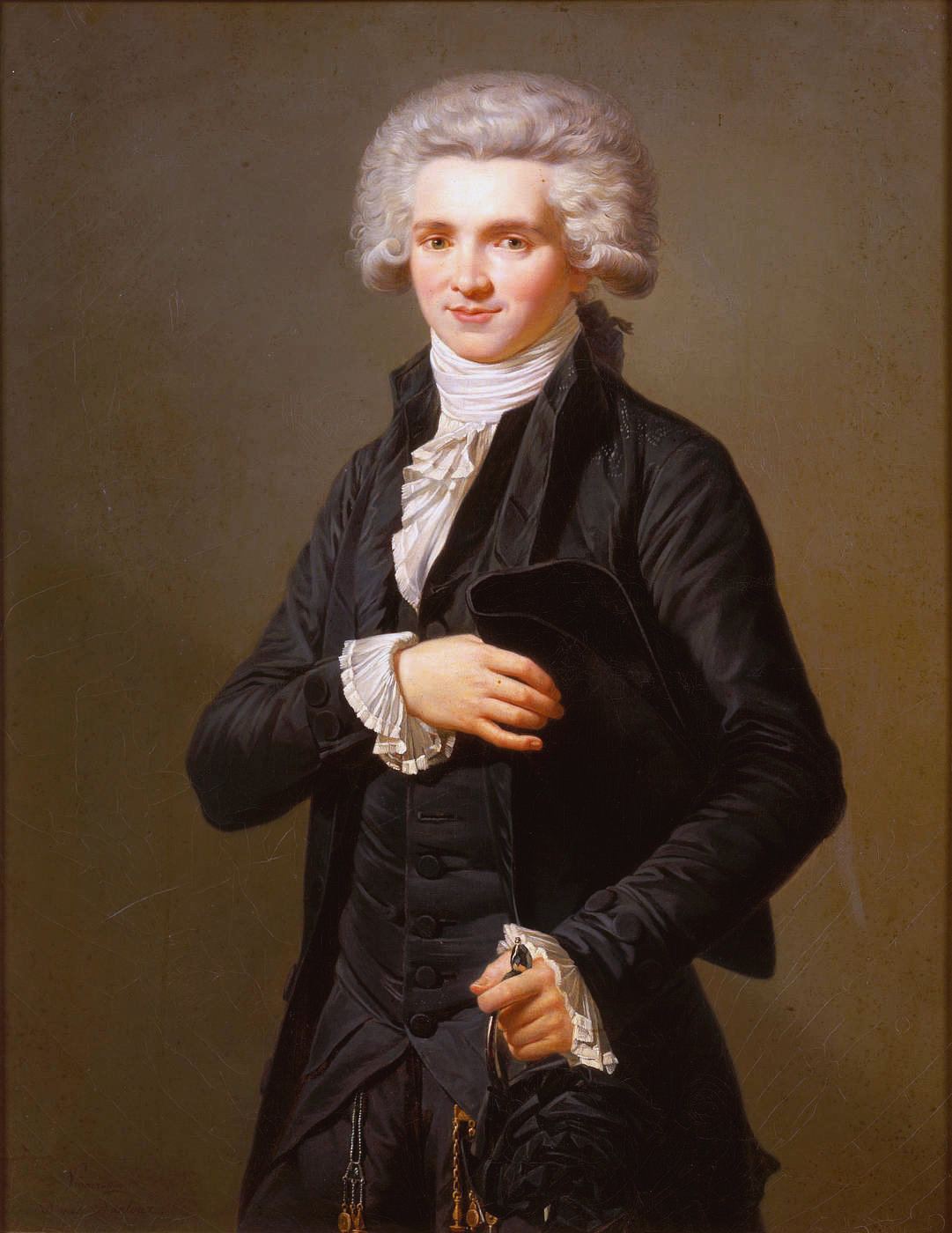
Historical context
Maximilien Robespierre rose from deputy in the Constituent Assembly to one of the best-known leaders of the Jacobin movement and the Committee of Public Safety. His political career became closely associated with democratic rhetoric, revolutionary emergency government and the Terror.
Robespierre's career links several phases of the Revolution: constitutional debate, republican politics, the Jacobin Club, the Committee of Public Safety and Thermidor. His fall in July 1794 became the symbolic endpoint of the Revolution's most radical governing phase.
World History Database records
The records below are selected from the 814-record French Revolution archive using this page's subject criteria and are ordered chronologically.
Election for Artois
Artois electors sent Robespierre to the Estates General as one of their Third Estate representatives.
Religious Freedom Debate
Robespierre spoke during debates on rights and religious liberty as the Assembly shaped the Declaration of Rights.
Friends of the Constitution
Robespierre becomes associated with the Society of the Friends of the Constitution as radical political debate grows in Paris.
Constituent Assembly
Maximilien Francois Marie Robespierre was appointed Member of Constituent Assembly.
Estates General
Maximilien Francois Marie Robespierre was appointed Member of Estates General.
Voting Rights
Robespierre argues against property qualifications and gains support among radical democrats in the club.
Self-Denying Ordinance
Robespierre successfully argued that members of the Constituent Assembly should not sit in the next legislature.
Aftermath
Robespierre argues that the kings flight reveals a deep crisis of trust in the monarchy.
Aftermath of Varennes
Argues that the king's flight exposes a grave crisis of trust in the monarchy.
Flight to Varennes
After the kings flight to Varennes Robespierre and other Jacobins question the future of constitutional monarchy.
Champ de Mars
The Champ de Mars massacre deepens the division between moderate constitutionalists and more radical Jacobins.
Champ de Mars Massacre
The massacre deepens the split between radical Jacobins and moderate constitutionalists.
Constituent Assembly Ovation
At the Constituent Assembly's close, crowds singled out Petion and Robespierre for a public ovation.
Constituent Assembly Ovation
Crowds acclaimed Robespierre at the close of the Constituent Assembly, reflecting his growing popular reputation.
War Debate
Maximilien Francois Marie Robespierre opposed Brissotin arguments for revolutionary war.
Declaration of War
Maximilien Francois Marie Robespierre opposed the War of Liberation because foreign countries are not ready for liberation.
Jacobin Club
Maximilien Francois Marie Robespierre became a member of the Jacobin Club.
War Debate
Robespierre warns in the club that war may strengthen generals and endanger the Revolution.
Election to National Convention
Robespierre was elected to the National Convention and took his place among the Montagnards.
Republic
The new French Republic creates a political setting in which the Jacobin Club becomes more openly republican.
Execution
Robespierre supported the death sentence for Louis XVI, arguing that the former king had betrayed the nation.
Convention
Maximilien Francois Marie Robespierre became a Convention deputy for Paris.
Party Leader
Maximilien Francois Marie Robespierre became a leading figure of the Mountain.
Execution of Louis XVI
The execution of Louis XVI intensifies conflict between Jacobins Girondins and foreign enemies of the Republic.
Coup
The Jacobins assumed more and more power during the spring of 1793, with the support of the Parisian mob, which overawed the Convention, culminating in a coup at the end of May.
Coup
The Jacobins will hold power until the summer of 1794, and they repeatedly purged the Convention of those they held disloyal to the Republic.
Coup
ending with a widespread program of execution, the Reign of Terror in their last months.
Execution
The Jacobins will hold power until the summer of 1794, and they repeatedly purged the Convention of those they held disloyal to the Republic, ending with a widespread program of execution, the Reign of Terror in their last months.
Reign of Terror
Robespierre promoted a Republic of Virtue while Jacobin rule intensified repression before his overthrow on 9 Thermidor.
Committee of General Security
The Committee is already entering a more powerful and active phase, which would see it become a de facto dictatorship alongside its similarly powerful partner, the Committee of General Security.
Committee of Public Safety
Robespierre joined the Committee of Public Safety as it expanded control over wartime policy, the Terror and the levee en masse.
Committee of Public Safety
Robespierre joins the Committee of Public Safety while Jacobin influence over revolutionary government increases.
National Convention
The Committee is responsible for interpreting and applying the decrees of the National Convention, and thus for implementing some of the most stringent policies of the Terror and the levee en masse.
Reform of Armed Forces
The Decree for the Levee en Masse is made.
Reign of Terror
Popular pressure places terror on the order of the day as Jacobin dominated government confronts war and revolt.
Committee of Public Safety
The broad and centralized powers of the Committee are codified by the Law of 14 Frimaire (also known as the Law of Revolutionary Government).
Revolutionary Government
The Law of 14 Frimaire centralises revolutionary government under the Convention and its committees.
Republic of Virtue
Couthon supports Robespierre and Saint-Just in promoting virtue discipline and revolutionary government.
Political Morality Report
Robespierre linked republican government with civic virtue in a major report on political morality.
Reform of Paris Commune
The Paris commune is reorganized, Hebertists are replaced by supporters of Robespierre.
Execution of Dantonists
Danton and several allies are executed leaving Robespierre and the committees more isolated.
Supreme Being Decree
Robespierre presented the report that led the Convention to recognize the Supreme Being and the immortality of the soul.
Assassination
Robespierre survived an assassination attempt.
Assassination
Cecile Renault failed in an attempt to assassinate Robespierre.
Assassination
Robespierre survived an assassination attempt by Cecile Renault.
President of National Convention
Robespierre became president of the National Convention shortly before the Festival of the Supreme Being.
Festival of Supreme Being
Maximilien Francois Marie Robespierre was appointed High Priest for a festival of the supreme being.
Festival of Supreme Being
Robespierre promotes the Festival of the Supreme Being as part of his vision of civic virtue.
Festival of Supreme Being
Presides over the deistic worship of the supreme being held on the Champ de Mars.
Committee of General Security
The Law of 22 Prairial, proposed by the Committee of Public Safety and enacted on June 10, 1794, went further in establishing the iron control of the Revolutionary Tribunal and, above it, the Committee's of Public Safety and General Security.
Reform of Legal System
In revolutionary tribunals juries have to decide between acquital or death. In revolutionary tribunals Defence lawyers are banned. Allows juries to convict without hearing evidence. A law is passed establishing the Great Terror.
Revolutionary Tribunal
In revolutionary tribunals juries have to decide between acquital or death. In revolutionary tribunals Defence lawyers are banned.
Thermidor Crisis
Robespierre addresses the National Convention and warns of unnamed conspirators within the government.
Thermidor Crisis
Robespierre refuses to name the deputies he accuses and increases fear among members of the Convention.
Thermidor Crisis
Saint-Just prepares to defend the Committee of Public Safety as opposition to Robespierre grows.
Thermidor Crisis
Saint-Just prepares to defend Robespierre and the authority of the Committee of Public Safety.
Arrest of Louis Antoine Saint-Just
Saint-Just is arrested with Robespierre and Couthon after the Convention turns against them.
Arrest of Robespierre
The Convention orders Robespierre arrested after deputies shout down his attempts to speak.
Arrest of Robespierre
The convention orders the arrest of Robespirre.
Commune Revolt
Robespierre is brought to the Hotel de Ville as the Commune tries to create an armed uprising.
Coup
Paul Francois Barras was prominent in the overthrow of Robespierre.
Coup
Robespierre was overthrown during the revolution of 9 Thermidor.
Execution
The Jacobin Club is closed after the execution of Robespierre and other members on 9 Thermidor of the year II (27 July 1794).
Thermidor
Robespierre is denounced in the Convention on 9 Thermidor and the Jacobin political system begins to collapse.
Thermidor Crisis
Amar aligns with opponents of Robespierre as the Convention turns against the Jacobin leadership.
Thermidor Crisis
Barere accepts the turn against Robespierre and supports emergency measures by the Convention.
Thermidor Crisis
Billaud-Varenne denounces Robespierre and joins the deputies demanding his arrest.
Thermidor Crisis
Carnot stands with members of the government who reject Robespierres domination.
Thermidor Crisis
Collot dHerbois presides during the stormy Convention session against Robespierre.
Thermidor Crisis
Couthon is arrested with Robespierre and other leading Robespierrists.
Thermidor Crisis
Fleuriot-Lescot uses the Paris Commune to support Robespierre after the arrest order.
Thermidor Crisis
Hanriot attempts to mobilise armed support for Robespierre in Paris.
Thermidor Crisis
Le Bas remains loyal to Robespierre during the crisis and is arrested with the faction.
Thermidor Crisis
Legendre helps prevent Robespierre from rallying support in the Convention.
Thermidor Crisis
Payan encourages the Commune to rally the sections in defence of Robespierre.
Thermidor Crisis
Augustin Robespierre demands to share the fate of his brother and is arrested.
Thermidor Crisis
Saint-Just is interrupted before he can deliver his defence of Robespierre.
Thermidor Crisis
Tallien attacks Robespierre before the National Convention and helps start the revolt of 9 Thermidor.
Capture
Augustin Robespierre is injured after trying to escape from the Hotel de Ville.
Capture
Convention troops capture Robespierre after the Commune defence collapses.
Death of Maximilien Francois Marie Robespierre
Taken from the hotel de ville and guillotined with 21 of his supporters.
Dismissal
Robespierre was removed from the Revolutionary Tribunal.
Execution
Robespierre is executed and the Jacobin Club loses its dominant position in revolutionary politics.
Execution
Robespierre is executed by guillotine on 10 Thermidor after being declared an outlaw.
Execution
Saint-Just is executed with Robespierre and other allies after the Thermidorian revolt.
Execution
Saint-Just is executed with Robespierre and other leading supporters.
Committee of Public Safety
The ultimate political vehicle for the Jacobin movement was the Reign of Terror overseen by the Committee of Public Safety, who were given executive powers to purify and unify the Republic.
Execution
Robespierre tries to found the Republic of Virtue, until the Jacobins last purge, 9 Thermidor, in July 1794, executed Robespierre himself.
Jacobin Club
Jacobin rule increasingly depended on the Committee of Public Safety until Robespierre’s overthrow weakened the movement.
Reign of Terror
The Reign of Terror reached its political peak under the emergency committees before Robespierre’s fall on 9 Thermidor.
Jacobin Club
Robespierre tries to found the Republic of Virtue, until the Jacobins last purge, 9 Thermidor, in July 1794, executed Robespierre himself.
Jacobin Club
The ultimate political vehicle for the Jacobin movement was the Reign of Terror overseen by the Committee of Public Safety, who were given executive powers to purify and unify the Republic.
Jacobin Club
Thermidor is an alliance between those who felt Robespierre had gone too far and those who felt he had not gone far enough they were unable to maintain their control of the Convention.
Jacobin Club
eased out of power and the Jacobins dissolve.
Thermidor
Robespierre’s overthrow on 9 Thermidor united opponents of different factions and began a rapid decline in Jacobin power.
Thermidorian Reaction
Fouche survives the fall of Robespierre and aligns with the Thermidorian order.
Editorial provenance
Compiled and edited by World History Database
Historical context is editorial material; the chronology is generated from the World History Database French Revolution records.
Last reviewed: September 2026.
Reference points: Assemblée nationale — Révolution française · Archives nationales — 1789
Continue exploring