Captain
Napoleon I
Napoleon I joined the Army of Carteaux acting against Marseille and Toulon.
The republican recapture of Toulon in 1793. Explore the related historical entries from the same archive as the main French Revolution records.
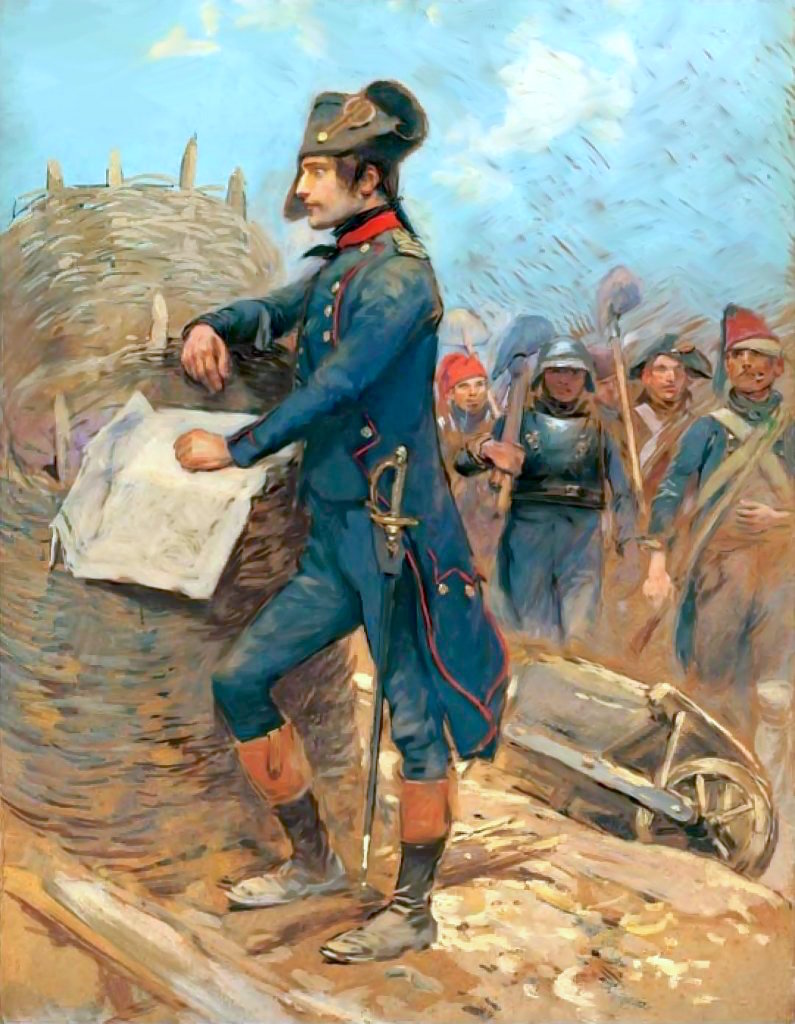
Napoleon I joined the Army of Carteaux acting against Marseille and Toulon.
Admiral Hood's ships arrived after royalist and federalist opponents of the Convention invited foreign support. The intervention gave the Coalition access to a crucial French naval base.
Representative Saliceti helped direct the recovery of Toulon for the Convention. Retaking the port was important because its fleet and dockyards were major strategic assets.
Spanish naval forces joined the British led occupation of Toulon. The intervention transformed a domestic rebellion into a major Coalition operation against the Republic.
Hood's ships relied on coastal fortifications to protect the fleet. Control of the harbor approaches was therefore central to the survival of the foreign occupation.
Bonaparte studied the positions from which cannon could threaten enemy shipping. He concluded that control of the heights commanding the inner anchorage was vital.
General Carteaux led French troops advancing against the rebellious port. His army had to overcome fortified approaches protected by royalists and foreign soldiers.
Carteaux's troops established positions around Toulon while artillery officers tried to improve their effect. The slow progress revealed the difficulty of besieging a well defended coastal base.
Barras was sent on mission to the Army of Italy and became involved in Republican operations around Toulon.
Commissioners attached to the republican army encouraged the accumulation of artillery and manpower. Their intervention connected the siege's conduct to the Convention's political priorities.
Napoleon I was appointed Chef de Bataillon at the siege of Toulon.
Napoleon I was appointed major.
Coalition soldiers improved the fortifications guarding the key heights above Toulon's anchorage. The redoubt became a major obstacle to the republican plan for retaking the city.
Bonaparte advocated capturing positions controlling the entrance to the harbor. These heights included the strongpoint later known as Fort Mulgrave or Little Gibraltar.
Napoleon developed an artillery plan aimed at positions controlling the harbour during the siege of Toulon.
O Hara was wounded and captured during fighting outside Toulon. The incident weakened the Allied land command and encouraged the French besiegers.
General Doppet briefly replaced Carteaux during the stalled operation against Toulon. The command changes reflected frustration with the speed and coordination of the republican assault.
Dugommier took command after earlier commanders failed to seize the town. He supported a more coordinated effort to capture the strategically decisive fortifications.
Hood's ships maintained communications and support for the defending garrison. Allied naval control helped prolong the city's resistance against republican land forces.
Republican artillery positions outside Toulon drew a counterattack from Allied defenders. Fighting over the batteries demonstrated how much control of artillery sites mattered to the siege.
Bonaparte sought additional cannon and ammunition for siege batteries. Concentrating effective artillery was essential to challenging the enemy's defended positions.
General La Poype directed French forces attacking from the eastern side of Toulon. His operations complemented the principal assault focused on positions controlling the harbor.
Bonaparte's guns increasingly challenged ships and coastal defenders occupying the harbor. The growing threat made the capture of the southern heights even more consequential.
Bonaparte's siege guns contributed to the attack on the stronghold overlooking Toulon's anchorage. The capture of the position was decisive because cannon could then threaten the fleet.
Napoleon helped direct the assault on the fortified position known as Fort Mulgrave during the final operations at Toulon.
Dugommier's forces captured the fortified height after fierce fighting. The success undermined the enemy position within the harbor and forced the Allies to plan evacuation.
The fall of commanding positions made continued occupation of Toulon untenable. Hood prepared to remove Allied troops and as many ships and refugees as possible.
British naval officers attempted to destroy French warships and stores that could not be taken away. The demolitions caused major losses to the naval facilities as the Allies withdrew.
Spanish vessels joined the Allied evacuation after the collapse of the harbor defense. The departure ended Spain's direct military presence in the occupied port.
The successful artillery operations helped force the Anglo-allied evacuation of Toulon and restored the port to Republican control.
The republican army retook the port after the foreign garrison departed. Control of the principal Mediterranean naval base returned to the French Republic.
Napoleon I was appointed brigadier general at age 24.
The young officer's effective handling of artillery drew notice after Toulon fell. His subsequent promotion marked an important acceleration in his military career.
Following Allied attempts to disrupt forward batteries, Bonaparte continued strengthening the republican gun line. His work sustained pressure on fortifications surrounding the harbor.
Bonaparte was wounded in the fighting that led to the capture of the key heights. His role in the siege subsequently attracted favorable attention from republican authorities.
Representatives on mission reported the capture of Toulon as a major political and military victory. Restoring the harbor also gave republican authorities control over remaining ships and infrastructure.
The French commander assembled forces for an attack against the heavily defended heights. Capturing these works promised to make continued Allied naval occupation impossible.
Retaking Toulon did not immediately restore the Mediterranean fleet's strength. The siege and Allied destruction had caused losses requiring extensive rebuilding.
La Poype's troops maintained pressure against the eastern defensive sector. Their action helped prevent Allied commanders from concentrating every reserve against the main assault.
Representative Fréron was attached to the republican operations and later the reprisals at Toulon. Military recovery of the city became intertwined with punishment of alleged rebels.
The recovery of Toulon was followed by severe reprisals against people accused of supporting the royalist revolt. Fréron's role revealed the punitive aspect of republican reconquest.
British general Charles O Hara assumed important command responsibilities within the Toulon defenses. His troops supported the protection of the harbor fortifications and allied positions.
Republican authorities adopted a revolutionary name for the recovered city. The change expressed official condemnation of the revolt and celebration of the victorious Mountain.
The siege demonstrated Bonaparte's ability to connect artillery placement with strategic objectives. His growing reputation helped open opportunities for subsequent appointments in the revolutionary armies.
During the republican siege of Toulon, Bonaparte assumed responsibility for improving French artillery positions. His concentration of guns against the allied anchorage was central to the plan for retaking the port.
French troops captured the fortified heights guarding Toulon's harbour after a difficult assault. Bonaparte's artillery preparations contributed to making the allied naval position untenable.
French forces recaptured Toulon in December after occupying positions that commanded the harbor. Barras was a political representative during the victory, which secured an important Mediterranean naval base.
After Toulon passed into the hands of royalists supported by allied fleets, Barras worked with representatives and commanders organizing its recovery. The episode placed civilian political supervisors close to siege operations.
The recovery of Toulon was followed by harsh punishments against people accused of supporting the royalist occupation. Barras and other representatives were associated with the republican authority that supervised the aftermath.
The recapture of Toulon established Bonaparte's reputation as an unusually capable artillery officer. He received promotion to general of brigade following the operation.
Republican officers advanced an artillery-centered plan to force the allied fleet from Toulon's harbor. Barras was among the Convention representatives overseeing the military effort in which Bonaparte distinguished himself.
Political violence following the reconquest continued to shape local memories and national controversy. Revolutionary justice in the port exemplified the difficulties of reconciling security with civilian protection.