President of National Convention
Bertrand Barere
The Convention placed Barere in the presidential chair as proceedings against Louis XVI moved toward formal trial.
The Convention tries the former king, 1792–1793. Explore the related historical entries from the same archive as the main French Revolution records.
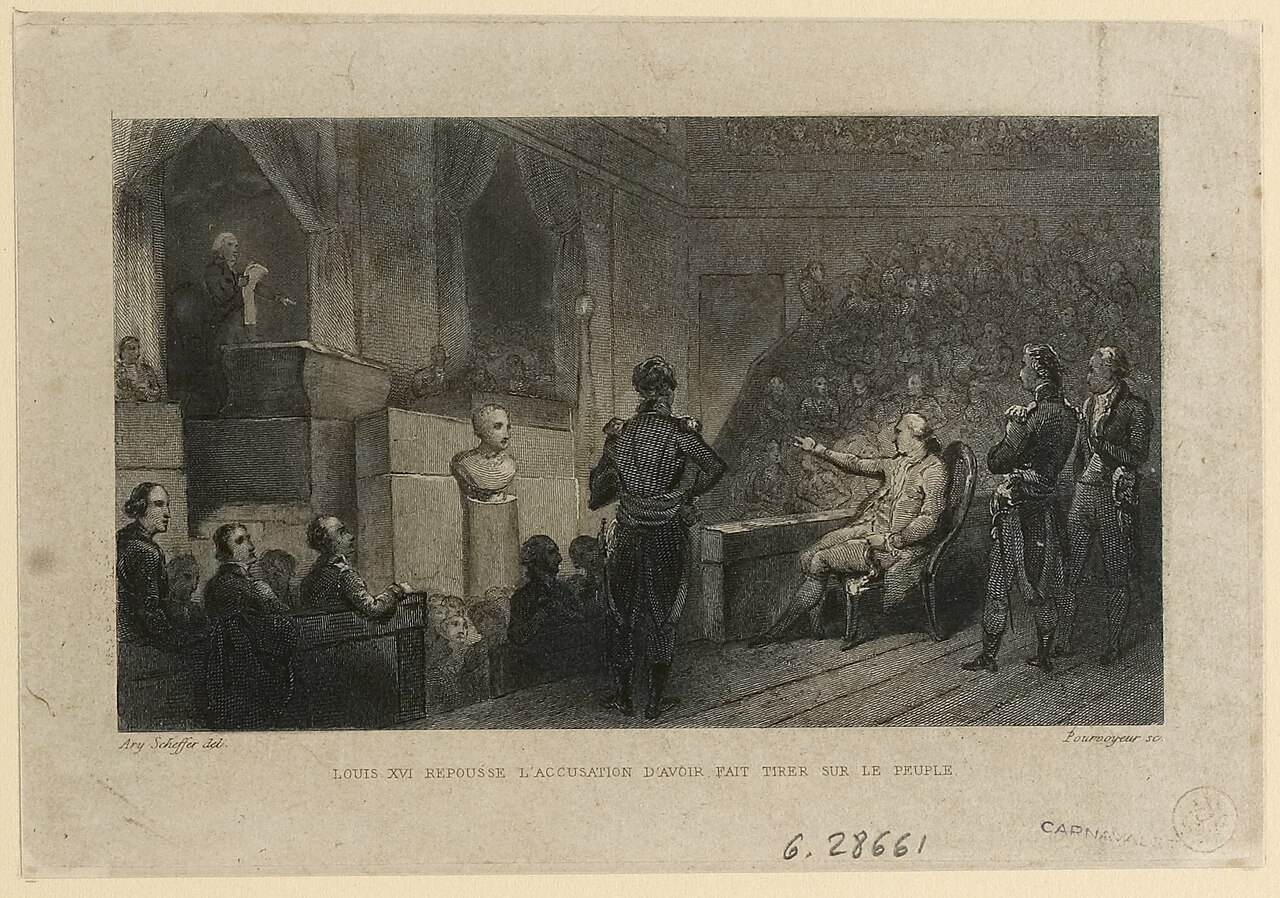
The Convention placed Barere in the presidential chair as proceedings against Louis XVI moved toward formal trial.
Robespierre opposed viewing the former king's fate as a routine criminal trial. He regarded the Revolution's survival as the central question before the Convention.
The former king appeared before the deputies to answer accusations arising from his government and contacts with foreign powers. Proceedings unfolded in a legislature acting simultaneously as accuser and judge.
Counsel Raymond de Sèze presented a defence of Louis XVI before the Convention. He disputed the legality of retroactively punishing conduct protected by the former constitution.
Louis XVI was tried before the National Convention while Marie Antoinette remained detained with the children. The proceedings made the survival of the former royal family increasingly precarious.
Saint-Just used the royal trial debate to insist that national sovereignty could not be subordinated to a former monarch's legal privileges.
Louis XVI dismissed ministers associated with Roland and the Girondins, triggering fierce accusations that the crown was undermining national defence.
Participates in the Convention for the trial of Louis XVI.
Vergniaud took the Convention's presidential chair during the decisive January phase of Louis XVI's trial.
Saint-Just argues that the former king must be judged as an enemy of the people and the Revolution.
The Convention voted that Louis XVI was guilty of conspiracy against public liberty and state security. His condemnation marked an unprecedented judicial reckoning with the conduct of a reigning monarch.
Louis XVI was sentenced to death.
Vergniaud presided over the formal communication of the Convention's vote to sentence Louis XVI to death. The result transformed the legal dispute into an urgent argument over execution and postponement.
Barras voted for the death of Louis XVI without an appeal to the people or a suspension of sentence.
The appeal against Louis death sentence is turned down.
After voting for the death sentence, the Convention rejected delaying its implementation. The failure of the reprieve ensured that the former king would be executed without an extended political settlement.
Santerre was responsible for military security during the execution of Louis XVI. Guard formations protected the procession and sought to deter attempts at intervention.
The execution of Louis XVI intensifies conflict between Jacobins Girondins and foreign enemies of the Republic.
Santerre supervised National Guard forces assigned to maintain order when Louis XVI was executed. The deployment helped demonstrate the republic's control over the capital.
The former king was guillotined after his conviction by the National Convention. Marie Antoinette became a widow in prison and faced growing pressure for her own prosecution.
Brissot supported consulting the French electorate over the former king's fate. The Convention rejected the appeal, leaving the deputies to decide Louis XVI's sentence themselves.
Buzot shared the Girondin suspicion that pressure from the capital could distort national decisions. The argument for broader electoral judgment reflected anxieties about the Convention's independence.
Brissot supported referring the fate of Louis XVI to a wider popular decision. This proposal failed and deepened his faction's division from deputies advocating immediate execution.
Vergniaud took part in debates on the former king's punishment and the appeal to the people. The decision revealed differences within the Convention about sovereignty and political necessity.
Brissot argued for consulting the electorate about the judgment on the former king. His position reflected anxiety that a unilateral Convention decision would further divide the Republic.
Brissot voted for Louis XVI's death with conditions related to popular ratification. The position reflected Girondin concern about both royal guilt and the political consequences of immediate execution.
Robespierre called for the former king's execution as a safeguard for the republic. The decision marked a decisive break with constitutional monarchy and increased foreign hostility.
Danton supported a decisive disposition of Louis XVI's case by the Convention. The execution made the republic's conflict with monarchist powers more acute.
Saint-Just favored execution of Louis XVI in keeping with his argument that kingship was incompatible with national sovereignty. His position helped establish his reputation for ideological severity.
Vergniaud presided during decisive proceedings in the trial of Louis XVI, when the Convention held the former monarch responsible for offences against liberty.
During the trial of Louis XVI, Desmoulins took part in the Convention's historic deliberations. The eventual execution marked a complete break with the constitutional monarchy he had criticized.
Brissot supported an appeal to the people over the king's fate, arguing for electoral involvement in a decision with lasting constitutional consequences.
Barras voted to execute Louis XVI during the Convention's judgment of the former king. The decision placed him among deputies whose political futures were tied to the survival of the Republic.
Jean Marie Roland left his ministerial position amid intensifying conflicts that linked the trial of Louis XVI to rivalry between Girondins and their opponents.
Barras opposed a suspension of Louis XVI's sentence and sided with deputies demanding that the judgment be carried out without further delay.
Saint-Just supported a death sentence for Louis XVI, putting his ideas about revolutionary sovereignty into practice.
Danton supported the death sentence for Louis XVI during the Convention's proceedings against the deposed monarch.
Carnot voted for the death sentence in the Convention's trial of Louis XVI and thereby joined the deputies later described as regicides.