1962 16th October
Cuban Missile Crisis
Ball joined the first senior discussions and examined diplomatic consequences of attacking Soviet missile installations in Cuba.
Cold War · October 1962 · permanent subject timeline
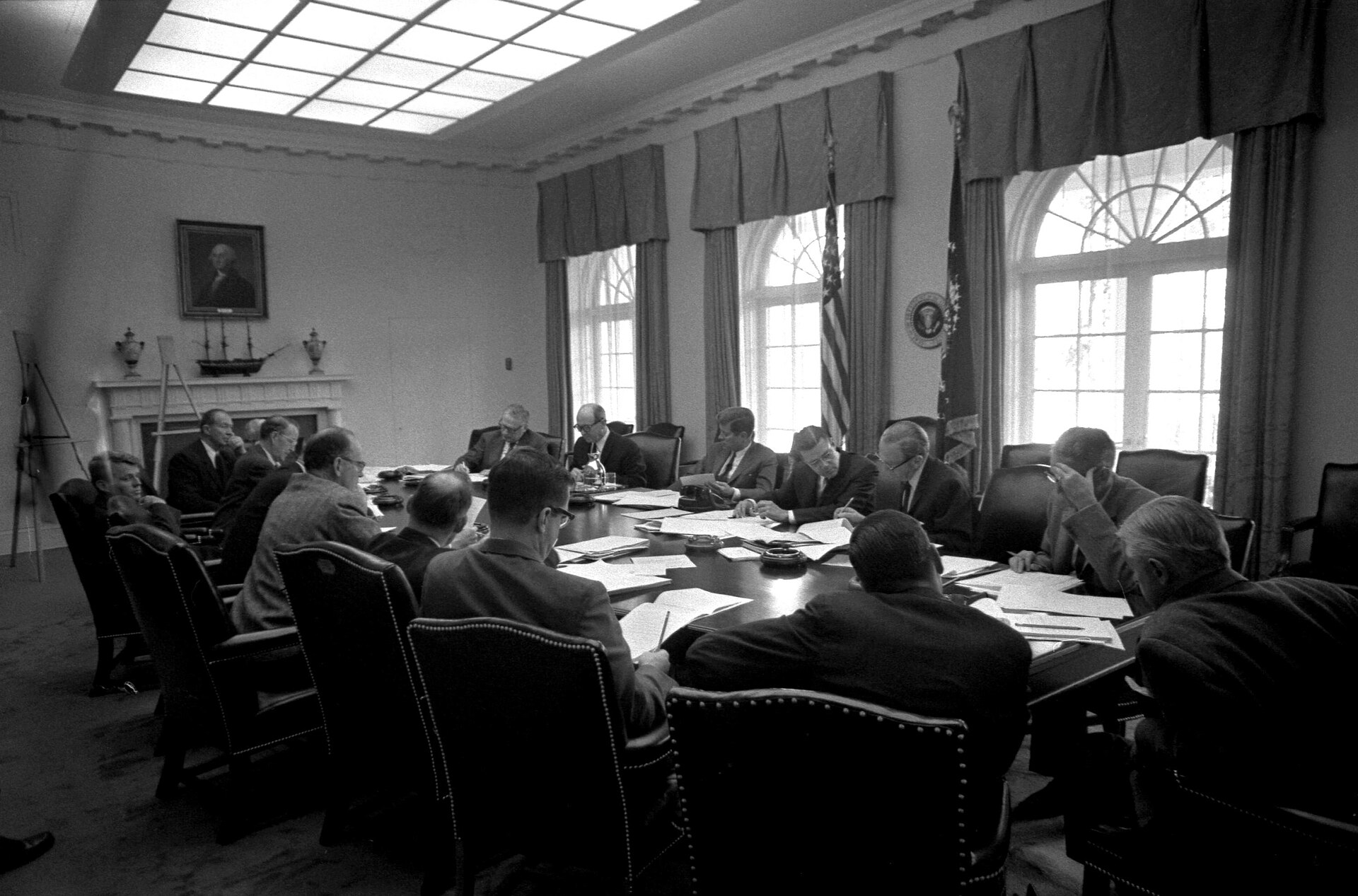
White House debate over air strikes, invasion, diplomacy and naval quarantine. This page combines historical context with 48 matching records drawn directly from the World History Database Cuban Missile Crisis archive.
Historical context
Kennedy's senior advisers met repeatedly in secret after the missile evidence reached the White House. They considered air strikes, invasion, diplomatic pressure and a naval quarantine while assessing military and political risks.
The deliberations show how close the United States came to choosing direct military action. The eventual quarantine strategy was intended to apply pressure while preserving room for negotiation.
World History Database records
The records below are selected from the 195-record Cuban Missile Crisis archive and rendered as static HTML in chronological order.
Cuban Missile Crisis
Ball joined the first senior discussions and examined diplomatic consequences of attacking Soviet missile installations in Cuba.
Cuban Missile Crisis
Bundy informed Kennedy at 8:45 a.m. that a major international crisis had developed.
Cuban Missile Crisis
Dillon joined the crisis deliberations and supported careful evaluation of the economic and political consequences of military action.
Cuban Missile Crisis
Kennedy convened his principal advisers at 11:45 a.m. to examine the missile evidence and possible responses.
Cuban Missile Crisis
Kennedy ordered continued secrecy while advisers studied the risks of surprise attack, quarantine, and invasion.
Cuban Missile Crisis
Kennedy ordered that the discovery of Soviet missiles remain secret while his advisers evaluated military and diplomatic options.
Cuban Missile Crisis
Robert Kennedy participated in the secret advisory meetings that later became known as ExComm.
Cuban Missile Crisis
Robert Kennedy joined the first crisis discussions and questioned the political and moral consequences of a surprise attack on Cuba.
Cuban Missile Crisis
Lundahl briefed Kennedy directly on the U-2 photographs and explained how analysts identified the Soviet missile equipment.
Cuban Missile Crisis
McNamara discussed military options including surveillance, quarantine, air strikes, and invasion.
Cuban Missile Crisis
Rusk joined discussions of diplomatic, political, and military responses to the Soviet deployment.
Cuban Missile Crisis
Taylor and the Joint Chiefs developed plans for attacks against missile sites and other military targets.
Cuban Missile Crisis
Bundy coordinated meetings and intelligence distribution as advisers compared military and political responses to the missile deployment.
Cuban Missile Crisis
Gilpatric helped assess air-strike and quarantine options while the Defense Department prepared forces for possible action.
Cuban Missile Crisis
Kennedy continued reviewing air-strike, invasion, quarantine, and diplomatic alternatives with his advisers.
Cuban Missile Crisis
McCone briefed officials on expanding intelligence evidence and the estimated readiness of the missile sites.
Cuban Missile Crisis
McNamara asked military planners to refine blockade, air-strike, and invasion options while the President considered how to respond.
Cuban Missile Crisis
Rusk examined diplomatic consequences of air strikes, invasion, and quarantine while the missile discovery remained secret.
Cuban Missile Crisis
Stevenson urged consideration of a diplomatic settlement alongside military pressure.
Cuban Missile Crisis
Gromyko told Kennedy that Soviet assistance to Cuba was defensive and denied an offensive deployment.
Cuban Missile Crisis
Gromyko assured Kennedy that Soviet assistance to Cuba was defensive while the President already possessed evidence of offensive missile sites.
Cuban Missile Crisis
Kennedy told Soviet Foreign Minister Andrei Gromyko that the United States would not tolerate offensive missiles in Cuba; Gromyko denied that offensive Soviet weapons were being deployed.
Cuban Missile Crisis
Kennedy restated his public warning to Gromyko without revealing that the missile sites had been photographed.
Cuban Missile Crisis
Kennedy met Soviet Foreign Minister Andrei Gromyko while withholding knowledge of the photographed missile sites.
Cuban Missile Crisis
Lundahl's analysts continued comparing new imagery to Soviet missile systems and locating additional offensive installations.
Cuban Missile Crisis
McCone reported continuing intelligence analysis as reconnaissance identified additional missile and bomber-related installations.
Cuban Missile Crisis
McNamara worked on a quarantine plan designed to halt additional offensive weapons without immediately attacking existing missile sites.
Cuban Missile Crisis
Rusk participated in preparations for the Gromyko meeting and supported maintaining secrecy about the photographic evidence.
Cuban Missile Crisis
Stevenson proposed exploring a negotiated settlement that could remove the Soviet missiles while avoiding a direct military confrontation.
Cuban Missile Crisis
Taylor presented military assessments emphasizing that an air strike might have to be followed by a larger invasion of Cuba.
Cuban Missile Crisis
Thompson used his experience with Khrushchev to advise that Soviet intentions and domestic pressures should be interpreted cautiously.
Cuban Missile Crisis
Kennedy maintained scheduled campaign appearances while secret crisis deliberations continued in Washington.
Cuban Missile Crisis
Kennedy left Washington for campaign appearances while advisers continued secret deliberations about Cuba.
Cuban Missile Crisis
Robert Kennedy argued that an unannounced air strike could resemble the attack on Pearl Harbor.
Cuban Missile Crisis
Bundy helped organize the decision process that produced Kennedy's choice of a naval quarantine.
Cuban Missile Crisis
Kennedy returned to Washington and presided over a National Security Council meeting on the response.
Cuban Missile Crisis
The White House announced that Kennedy had a cold as he cancelled remaining campaign appearances.
Cuban Missile Crisis
Kennedy selected a naval quarantine as the initial response while retaining stronger military options.
Cuban Missile Crisis
Robert Kennedy supported the quarantine option as a measured response that preserved room for further diplomatic pressure.
Cuban Missile Crisis
McNamara organized the naval interception plan and continued preparations for air strikes and invasion.
Cuban Missile Crisis
McNamara briefed Kennedy on naval interception procedures and the military preparations supporting the proposed quarantine.
Cuban Missile Crisis
Rusk supported the quarantine decision while the State Department prepared allied consultations and diplomatic notifications.
Cuban Missile Crisis
Sorensen helped draft language explaining the quarantine and the administration's demand for removal of Soviet offensive weapons.
Cuban Missile Crisis
Taylor supervised continued planning for air strikes and invasion after Kennedy selected the quarantine as the first step.
Cuban Missile Crisis
Bundy coordinated White House preparations for the President's address and the formal establishment of ExComm.
Cuban Missile Crisis
Kennedy formally established the Executive Committee of the National Security Council.
Cuban Missile Crisis
Bundy participated in the intense ExComm deliberations over the U-2 loss and Khrushchev's changing settlement terms.
Cuban Missile Crisis
Dillon joined the ExComm debate on how to answer Khrushchev while avoiding immediate escalation on the crisis's most dangerous day.
Editorial provenance
Compiled and edited by World History Database.
Historical context is editorial material; the chronology is generated from World History Database Cuban Missile Crisis records.
Last reviewed: September 2026.
FRUS: Cuban Missile Crisis and Aftermath · JFK Library · U.S. National Archives
Continue exploring