Cold War · October 1962

Cuban Missile Crisis Timeline 1962

Explore records covering the discovery of Soviet missiles in Cuba, Kennedy's ExComm deliberations, the naval quarantine, Soviet and Cuban decision-making, military deployments, United Nations diplomacy, U-2 reconnaissance and the negotiated withdrawal.

195 database records

Historical overview

Thirteen days of confrontation: missiles, quarantine, diplomacy and nuclear risk

The archive follows the secret Soviet deployment through U-2 discovery, White House deliberations, the naval quarantine, U.N. confrontation, the dangerous final weekend and the withdrawal agreement.

Prelude and Soviet deployment

U.S. pressure on Castro's government and fears of another invasion helped shape the Soviet decision to deploy nuclear-capable missiles to Cuba under Operation Anadyr.

U-2 discovery

U-2 reconnaissance on 14 October photographed missile installations near San Cristóbal. The images were analysed and brought to the White House, where Kennedy's advisers began secret deliberations.

ExComm and the quarantine

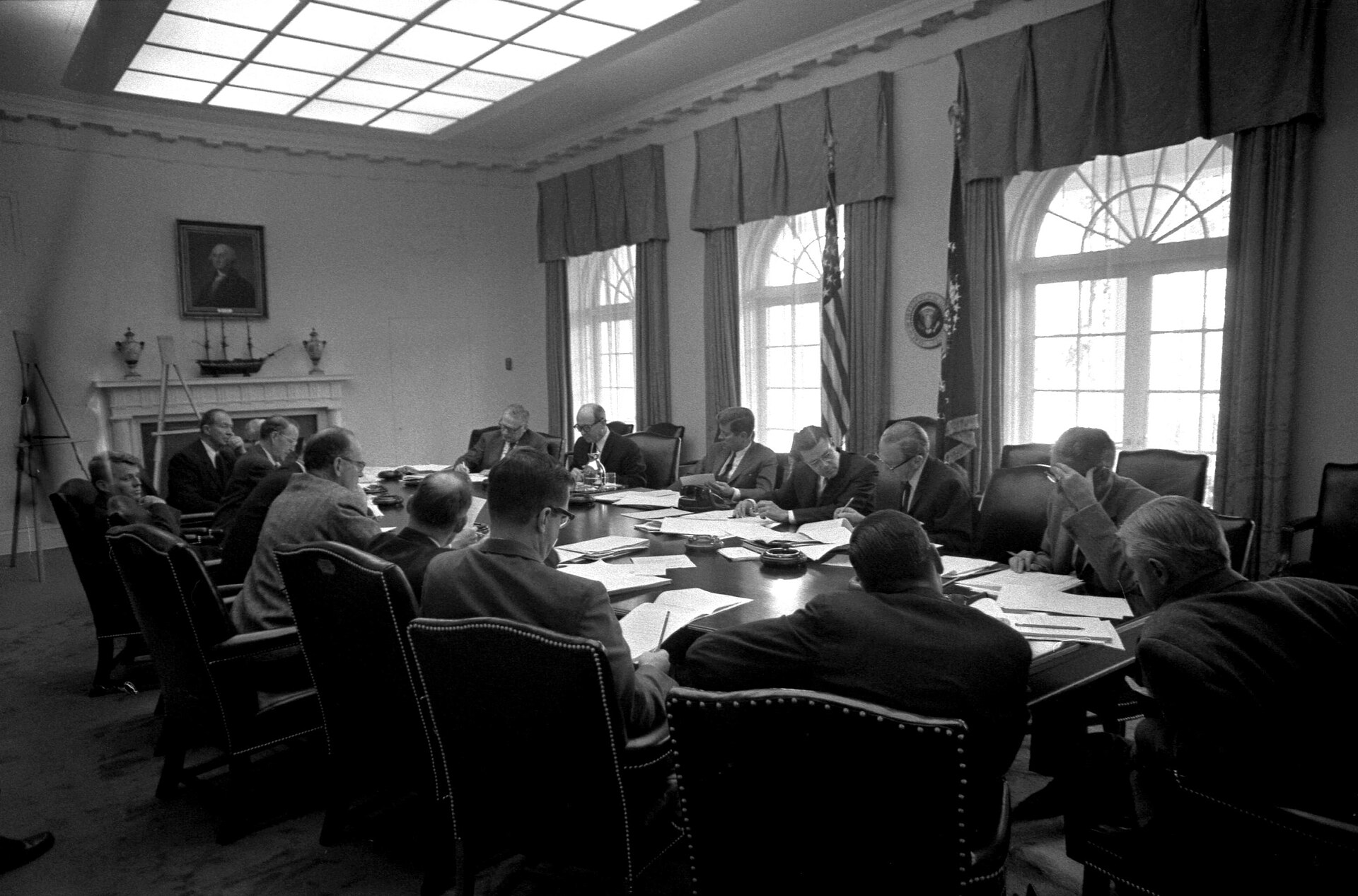
Officials debated air strikes, invasion and diplomacy before Kennedy selected a naval quarantine. On 22 October he publicly announced the missile discovery and demanded removal of the offensive weapons.

United Nations and back channels

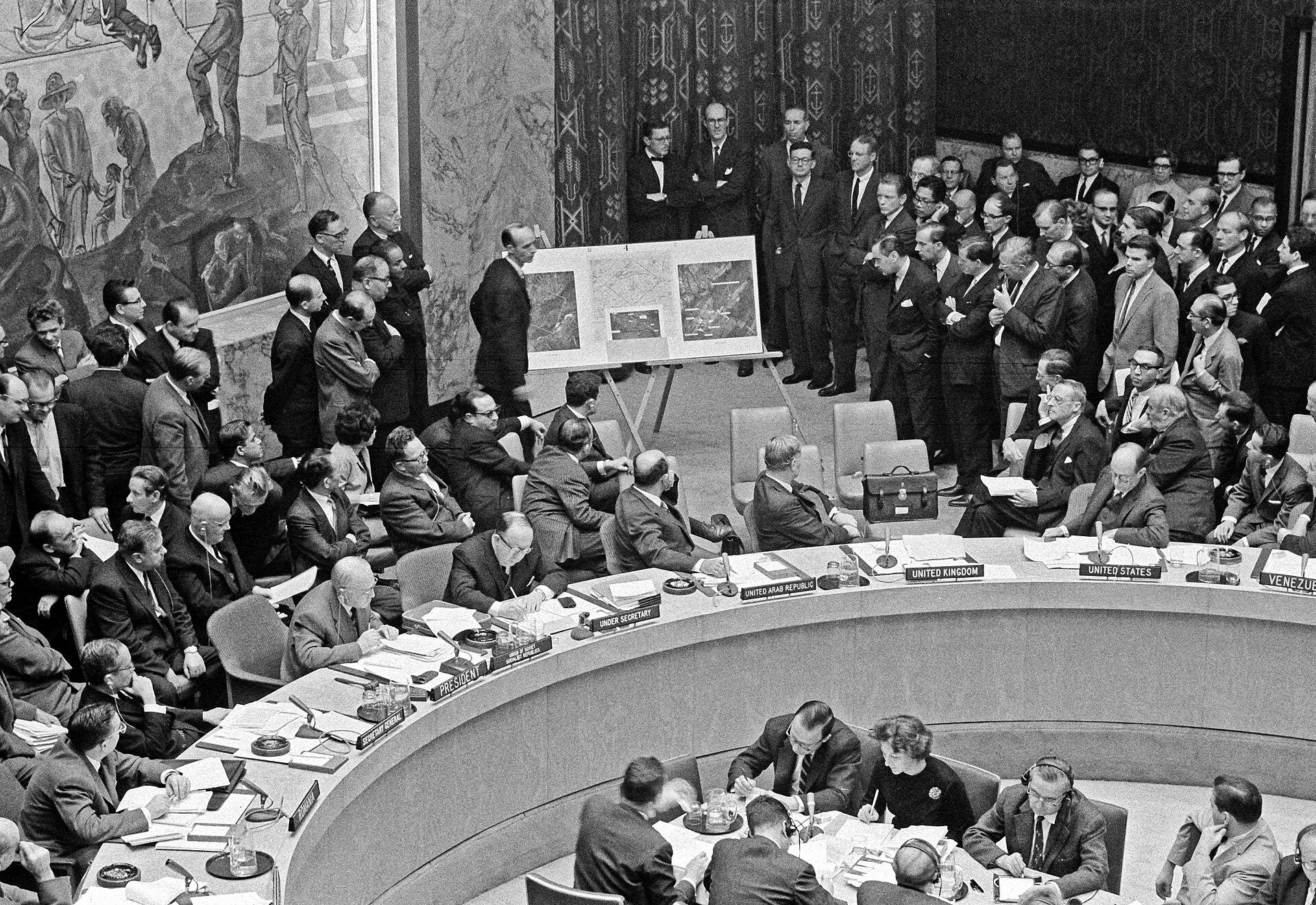
Adlai Stevenson challenged Soviet denials at the Security Council while formal messages and private contacts involving Robert Kennedy, Dobrynin, Scali and Feklisov explored settlement terms.

Black Saturday

On 27 October a U-2 was shot down over Cuba, submarine B-59 faced signalling depth charges, another U-2 strayed over Soviet territory and Moscow publicly linked settlement to U.S. Jupiter missiles in Turkey.

Settlement and verification

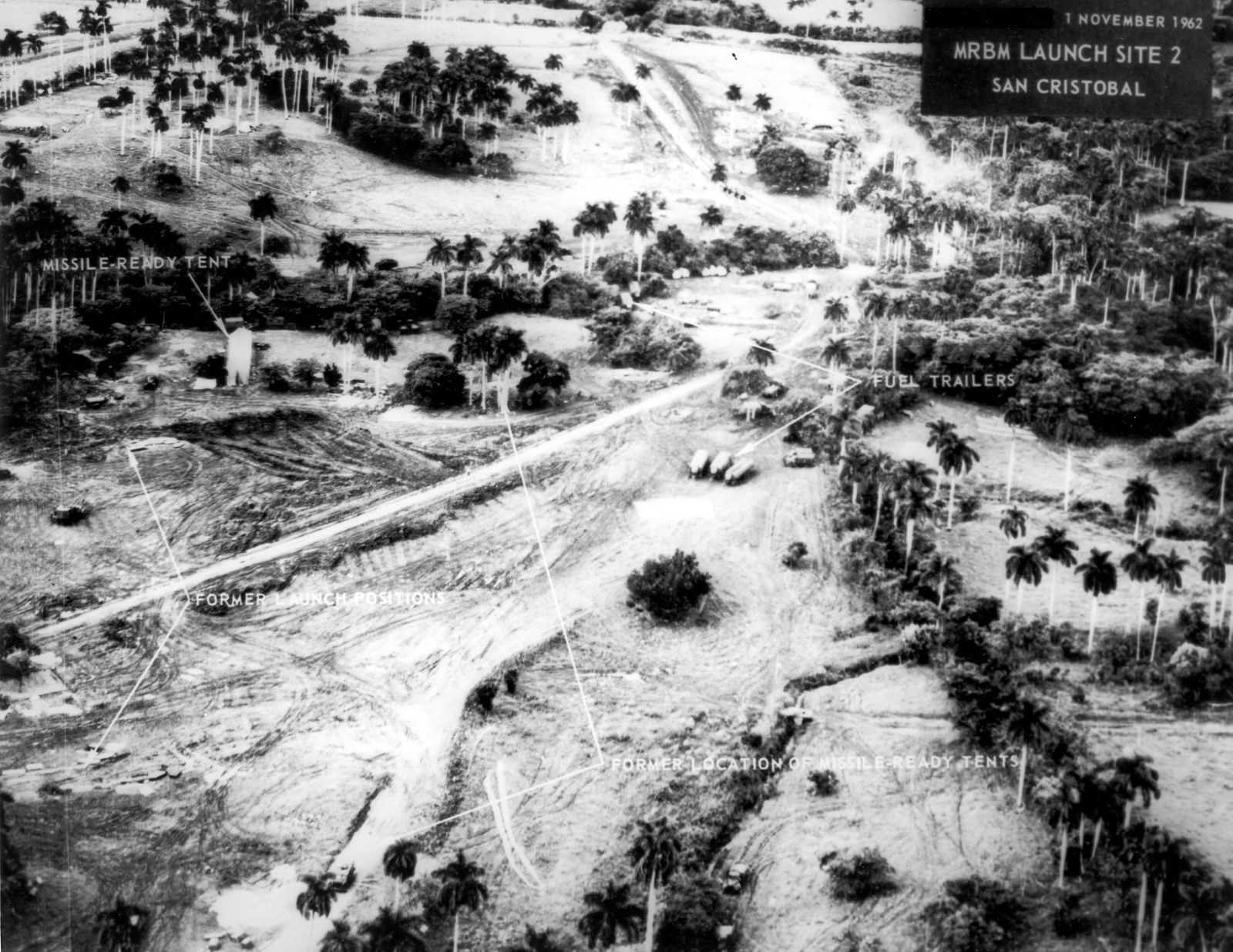
Khrushchev announced missile withdrawal on 28 October. Dismantlement and verification continued into November, and Kennedy ended the naval quarantine on 20 November after agreement on Soviet IL-28 bombers.

1962 14th OctoberU-2 photographs missile sites 1962 16th OctoberKennedy briefed; ExComm begins 1962 18th OctoberKennedy meets Gromyko 1962 22nd OctoberTelevised address and quarantine 1962 24th OctoberQuarantine line confrontation 1962 25th OctoberStevenson at the U.N. 1962 27th OctoberBlack Saturday 1962 28th OctoberKhrushchev agrees to withdraw missiles 1962 20th NovemberU.S. quarantine lifted

Historical photographs

Reconnaissance evidence, ExComm and United Nations diplomacy

Public-domain U.S. government and military images are stored locally for stable display, with the original Wikimedia Commons source pages retained for provenance.
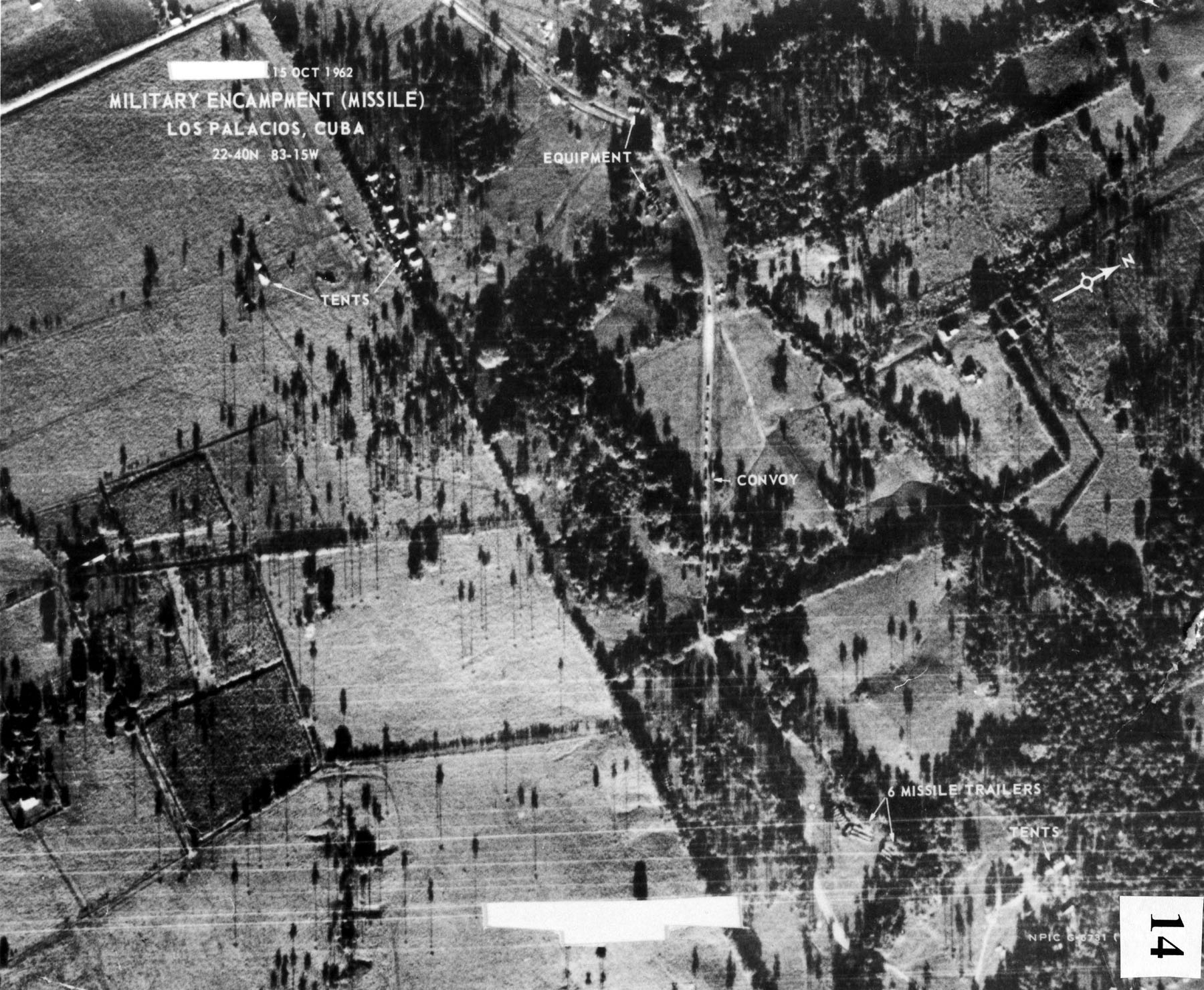
U-2 reconnaissance photograph showing Soviet missile deployment near San Cristobal on 14 October 1962
U-2 missile evidence, 14 October 1962. Photograph used to confirm Soviet missile deployment. Source.
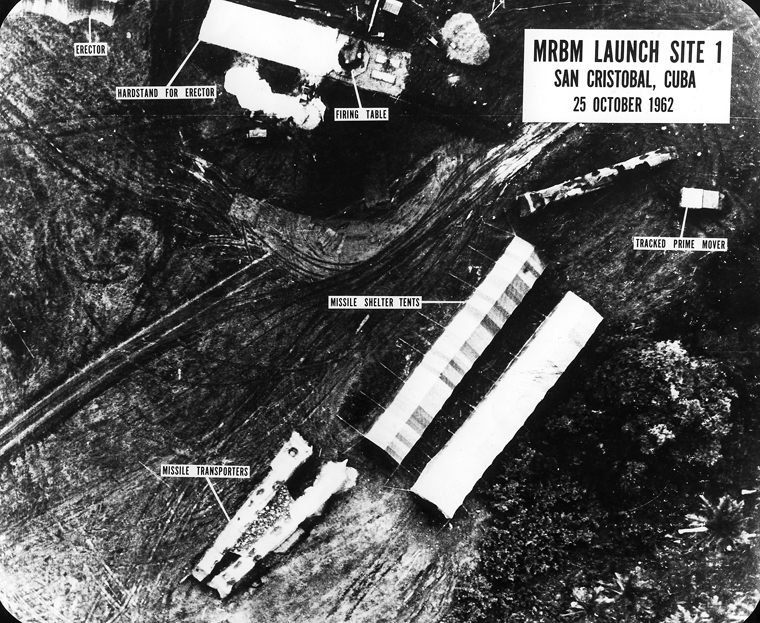
Medium-range ballistic missile launch site at San Cristobal, Cuba on 25 October 1962
San Cristóbal MRBM site, 25 October. U.S. Department of Defense photograph. Source.
Adlai Stevenson displays Cuban missile photographs at the United Nations Security Council on 25 October 1962
Stevenson at the U.N., 25 October. Missile photographs shown during the Security Council confrontation with Valerian Zorin. Source.
President John F Kennedy meets members of ExComm on 29 October 1962
ExComm meeting, 29 October. President Kennedy and senior advisers after the peak of the crisis. Source.
Aerial view of the San Cristobal missile site on 1 November 1962 during dismantlement and verification
San Cristóbal, 1 November. Aerial reconnaissance during the withdrawal and verification phase. Source.

Permanent subject pages

Explore the crisis by day, decision, diplomacy and person

These crawlable pages are generated from the same 195-record archive. Each combines historical context with matching chronology records rendered as static HTML.

17 archive records · 1961–1962Operation Mongoose and Invasion FearsThe failed Bay of Pigs legacy, covert pressure on Cuba and Soviet-Cuban fears of another invasion4 archive records · 1962Operation AnadyrThe secret Soviet deployment of missiles, troops, aircraft and equipment to Cuba23 archive records · 1962U-2 Reconnaissance and Missile DiscoveryAerial photography, intelligence analysis and the confirmation of Soviet offensive missile sites48 archive records · 1962ExComm DeliberationsWhite House debate over air strikes, invasion, diplomacy and naval quarantine12 archive records · 196216 October 1962: ExComm BeginsKennedy is informed of the missile sites and secret White House deliberations begin12 archive records · 196218 October 1962: Kennedy Meets GromykoKennedy confronts Soviet assurances while keeping U.S. intelligence secret10 archive records · 196220 October 1962: Kennedy Chooses the QuarantineThe White House moves away from an immediate air strike toward a naval quarantine20 archive records · 196222 October 1962: Kennedy's Address and Quarantine AnnouncementThe United States publicly reveals the missile sites and demands their removal10 archive records · 196223 October 1962: Quarantine ProclamationThe legal and military machinery of the U.S. naval quarantine is put into effect9 archive records · 196224 October 1962: The Quarantine LineSoviet shipping approaches the U.S. interception zone as military readiness rises6 archive records · 196225 October 1962: Stevenson Confronts Zorin at the United NationsAdlai Stevenson presents missile evidence to the U.N. Security Council15 archive records · 196226 October 1962: Khrushchev's First Letter and Back-channel DiplomacyA possible settlement emerges through messages and unofficial contacts25 archive records · 196227 October 1962: Black SaturdayU-2 incidents, submarine danger, competing Soviet messages and maximum nuclear risk20 archive records · 196228 October 1962: Missile Withdrawal AgreementKhrushchev announces that the Soviet missiles in Cuba will be dismantled and removed48 archive records · 1962Naval Quarantine of CubaU.S. naval interception operations and the effort to stop further offensive weapons deliveries13 archive records · 1962United Nations DiplomacySecurity Council confrontation, U Thant mediation and international efforts to prevent war22 archive records · 1962Kennedy–Khrushchev Letters and Back-channel DiplomacyThe messages, unofficial contacts and private bargaining that helped resolve the crisis10 archive records · 1962Jupiter Missiles in Turkey and the Secret SettlementThe hidden connection between Soviet missiles in Cuba and U.S. Jupiter missiles in Turkey24 archive records · 1962Military Escalation and Nuclear RiskAir-strike planning, invasion preparations, DEFCON 2, U-2 incidents and submarine danger51 archive records · 1962Missile Dismantlement and VerificationRemoving Soviet offensive weapons and proving that the deployment was being reversed5 archive records · 1962IL-28 Bomber Removal and the End of the QuarantineThe final dispute over Soviet bombers and Kennedy's decision to lift the quarantine128 archive records · 1961–1962United States Response to the Cuban Missile CrisisPresidential, intelligence, diplomatic and military decision-making in Washington46 archive records · 1962Soviet Union and the Cuban Missile CrisisKhrushchev, Soviet military deployment, diplomacy and withdrawal decisions20 archive records · 1962Cuba and Fidel Castro during the Missile CrisisCuban security concerns, deployment cooperation and Castro's role in the crisis43 archive records · 1961–1962John F. Kennedy and the Cuban Missile CrisisThe U.S. president's decisions from intelligence discovery to quarantine and settlement11 archive records · 1962Robert F. Kennedy and the Cuban Missile CrisisThe Attorney General's role in ExComm and the secret Dobrynin negotiations17 archive records · 1962Fidel Castro and the Cuban Missile CrisisThe Cuban prime minister's role in deployment, defence and the final days of the crisis12 archive records · 1962Nikita Khrushchev and the Cuban Missile CrisisThe Soviet leader's decision to deploy missiles and his eventual withdrawal agreement11 archive records · 1962John McCone and CIA IntelligenceCIA assessment of Soviet intentions, missile evidence and site readiness10 archive records · 1962Robert McNamara and the Cuban Missile CrisisThe U.S. Defense Secretary's role in quarantine operations and military planning8 archive records · 1962Dean Rusk and the Cuban Missile CrisisThe Secretary of State's diplomatic role during the confrontation7 archive records · 1962McGeorge Bundy and the Cuban Missile CrisisThe National Security Advisor who briefed Kennedy and participated in ExComm7 archive records · 1962Adlai Stevenson at the United NationsThe U.S. representative who publicly challenged the Soviet Union over the Cuban missiles6 archive records · 1962Maxwell Taylor and the Cuban Missile CrisisThe Chairman of the Joint Chiefs of Staff during military planning5 archive records · 1962Anatoly Dobrynin and the Cuban Missile CrisisThe Soviet ambassador at the centre of the secret Washington channel5 archive records · 1962Rodion Malinovsky and Operation AnadyrThe Soviet defence minister involved in the secret military deployment5 archive records · 1962Llewellyn Thompson and the Cuban Missile CrisisThe former U.S. ambassador to Moscow who advised Kennedy on Khrushchev5 archive records · 1962Theodore Sorensen and the Cuban Missile CrisisKennedy's special counsel and a central participant in drafting and crisis deliberations5 archive records · 1962Anastas Mikoyan and the Cuban SettlementThe senior Soviet official sent to Cuba during the withdrawal phase4 archive records · 1962Andrei Gromyko and the Cuban Missile CrisisThe Soviet foreign minister who met Kennedy during the secret phase4 archive records · 1962Sergei Biryuzov and the Cuban Missile DeploymentThe Soviet strategic rocket commander involved in assessing and preparing the deployment
Showing all Cuban Missile Crisis records. 195 records displayed

Sources and editorial review

Sources and further reading

Compiled and edited by World History Database.

The historical overview provides context for the site's 195 structured Cuban Missile Crisis records. The chronology preserves the database's stored dates, people, countries, places, events and descriptions.

Last reviewed: September 2026.