1962 14th October
Cuban Missile Crisis
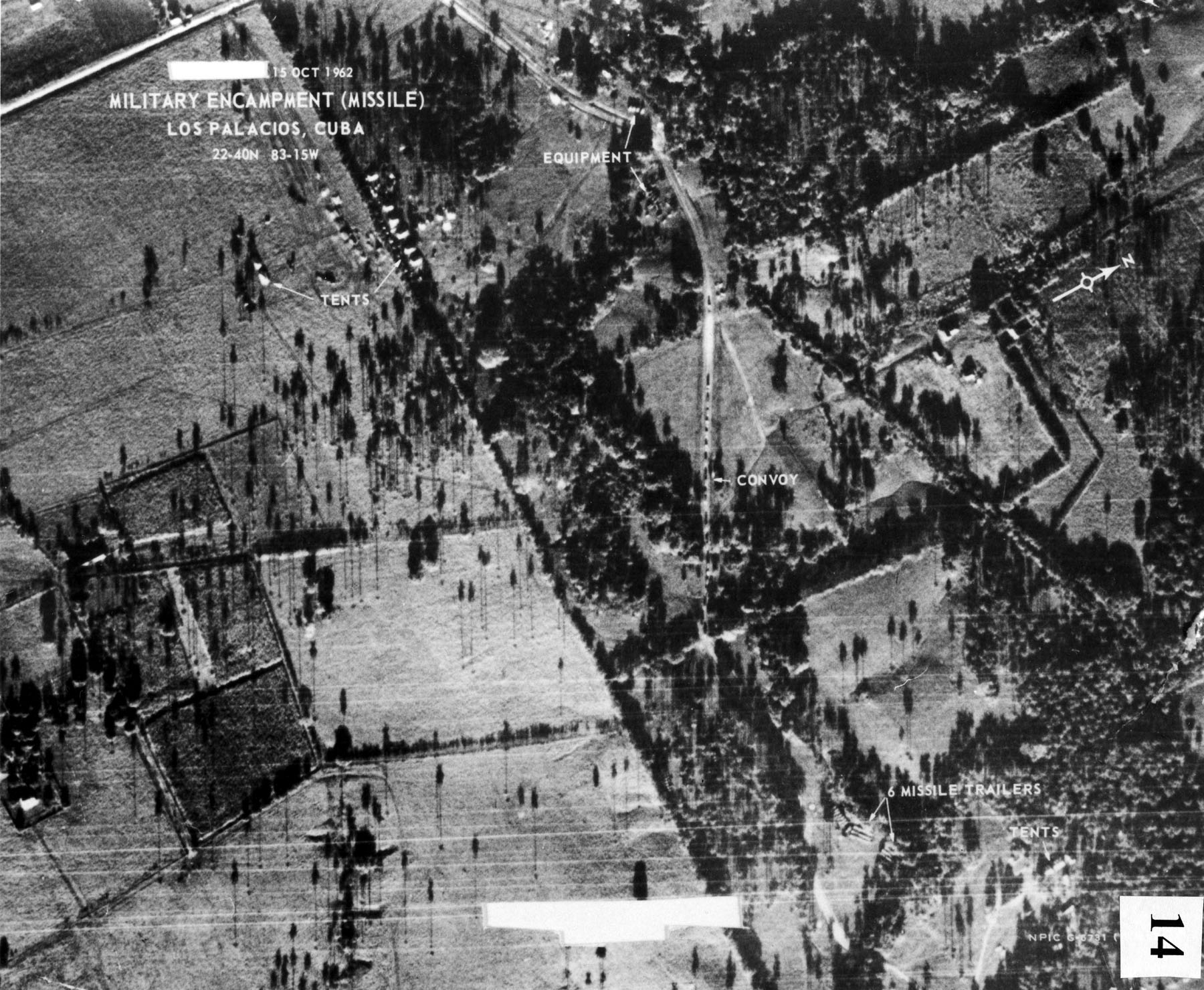
Heyser flew a U-2 mission that obtained 928 photographs during a six-minute pass over western Cuba.
Cold War · October 1962 · permanent subject timeline
Aerial photography, intelligence analysis and the confirmation of Soviet offensive missile sites. This page combines historical context with 23 matching records drawn directly from the World History Database Cuban Missile Crisis archive.
Historical context
High-altitude U-2 reconnaissance produced photographic evidence of Soviet medium-range missile installations in Cuba. Intelligence analysts identified launch sites, transporters, construction activity and related military facilities.
The photographic evidence transformed suspicion into a documented strategic crisis and gave President Kennedy's advisers the basis for debating military, diplomatic and naval responses.
World History Database records
The records below are selected from the 195-record Cuban Missile Crisis archive and rendered as static HTML in chronological order.
Cuban Missile Crisis
Heyser flew a U-2 mission that obtained 928 photographs during a six-minute pass over western Cuba.
Cuban Missile Crisis
Bundy learned that photographic evidence confirmed Soviet offensive missile installations in Cuba.
Cuban Missile Crisis
Photographic analysts identified missile transporters, erectors, and launch-site construction in the U-2 imagery.
Cuban Missile Crisis
Lundahl briefed Kennedy directly on the U-2 photographs and explained how analysts identified the Soviet missile equipment.
Cuban Missile Crisis
Kennedy restated his public warning to Gromyko without revealing that the missile sites had been photographed.
Cuban Missile Crisis
Kennedy met Soviet Foreign Minister Andrei Gromyko while withholding knowledge of the photographed missile sites.
Cuban Missile Crisis
Lundahl's analysts continued comparing new imagery to Soviet missile systems and locating additional offensive installations.
Cuban Missile Crisis
McCone reported continuing intelligence analysis as reconnaissance identified additional missile and bomber-related installations.
Cuban Missile Crisis
Rusk participated in preparations for the Gromyko meeting and supported maintaining secrecy about the photographic evidence.
Cuban Missile Crisis
The Organisation of American States unanimously supports the US decision to quarantine Cuba and , by the end of the day, all naval vessels are in place. Reconnaissance photos reveal that Soviet missiles are poised for launch.
Cuban Missile Crisis
Taylor maintained military readiness while the quarantine was implemented and reconnaissance missions increased over Cuba.
Cuban Missile Crisis
Zorin faced Stevenson's presentation of aerial photographs after declining to confirm that Soviet missiles had been installed in Cuba.
Cuban Missile Crisis
Stevenson confronted Valerian Zorin at the Security Council and presented reconnaissance photographs demonstrating Soviet missile installations.
Cuban Missile Crisis
Pliyev's command faced intense pressure as American reconnaissance continued and a Soviet surface-to-air unit shot down Anderson's U-2.
Cuban Missile Crisis
A Soviet surface-to-air missile shot down Anderson's unarmed U-2 over Cuba, killing him.
Cuban Missile Crisis
Bundy participated in the intense ExComm deliberations over the U-2 loss and Khrushchev's changing settlement terms.
Cuban Missile Crisis
Kennedy postponed retaliation for the U-2 loss while advisers pursued a diplomatic solution.
Cuban Missile Crisis
Maultsby's U-2 accidentally entered Soviet airspace during a mission over the Arctic and escaped interception.
Cuban Missile Crisis
McNamara argued against automatic retaliation after the loss of Rudolf Anderson's U-2, helping preserve time for negotiation.
Cuban Missile Crisis
Taylor advised on military responses after Anderson's U-2 was destroyed by a surface-to-air missile over Cuba.
Cuban Missile Crisis
Castro reiterated demands concerning Guantanamo, reconnaissance flights, economic pressure, and support for exile attacks against Cuba.
Cuban Missile Crisis
Kennedy instructed his advisers to handle the settlement cautiously while reconnaissance monitored dismantling at Cuban missile sites.
Cuban Missile Crisis
McCone reviewed reconnaissance evidence showing dismantled missile equipment being moved toward Cuban ports for shipment.
Editorial provenance
Compiled and edited by World History Database.
Historical context is editorial material; the chronology is generated from World History Database Cuban Missile Crisis records.
Last reviewed: September 2026.
FRUS: Cuban Missile Crisis and Aftermath · JFK Library · U.S. National Archives
Continue exploring