1962 17th October
Cuban Missile Crisis
Stevenson urged consideration of a diplomatic settlement alongside military pressure.
Cold War · October 1962 · permanent subject timeline
Security Council confrontation, U Thant mediation and international efforts to prevent war. This page combines historical context with 13 matching records drawn directly from the World History Database Cuban Missile Crisis archive.
Historical context
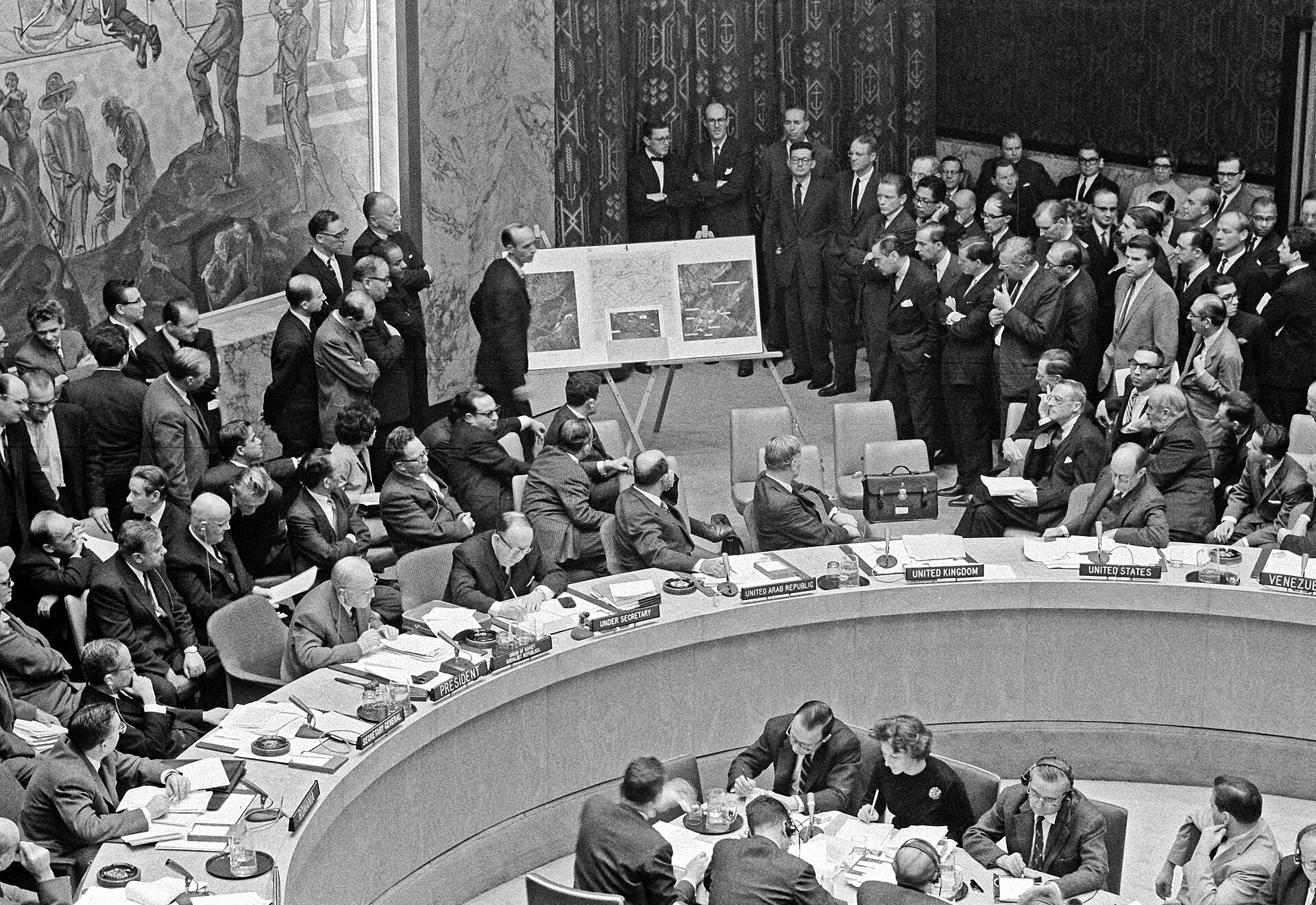
The United Nations became an important diplomatic arena during the crisis. Adlai Stevenson confronted Valerian Zorin at the Security Council while Acting Secretary-General U Thant appealed for restraint and helped explore a peaceful settlement.
U.N. diplomacy provided a public forum for evidence and accusations while also creating channels that reduced the risk of direct military confrontation.
World History Database records
The records below are selected from the 195-record Cuban Missile Crisis archive and rendered as static HTML in chronological order.
Cuban Missile Crisis
Stevenson urged consideration of a diplomatic settlement alongside military pressure.
Cuban Missile Crisis
Stevenson proposed exploring a negotiated settlement that could remove the Soviet missiles while avoiding a direct military confrontation.
Cuban Missile Crisis
Kennedy returned to Washington and presided over a National Security Council meeting on the response.
Cuban Missile Crisis
Kennedy formally established the Executive Committee of the National Security Council.
Cuban Missile Crisis
Stevenson prepared the United States diplomatic case for presentation before the United Nations Security Council.
Cuban Missile Crisis
Zorin challenged the American quarantine at the Security Council and rejected United States accusations about offensive Soviet weapons.
Cuban Missile Crisis
Stevenson defended the quarantine before the Security Council and challenged Soviet claims about the nature of the Cuban deployment.
Cuban Missile Crisis
Zorin refused to answer Stevenson's demand for an immediate admission that Soviet missiles were present in Cuba.
Cuban Missile Crisis
Zorin faced Stevenson's presentation of aerial photographs after declining to confirm that Soviet missiles had been installed in Cuba.
Cuban Missile Crisis
Kennedy replied to U Thant and affirmed his desire for a peaceful and verifiable settlement.
Cuban Missile Crisis
Stevenson confronted Valerian Zorin at the Security Council and presented reconnaissance photographs demonstrating Soviet missile installations.
Cuban Missile Crisis
Stevenson worked with U Thant on proposals intended to reduce the risk of a naval or military clash.
Cuban Missile Crisis
Stevenson continued United Nations negotiations concerning verification, withdrawal, and arrangements for ending the quarantine.
Editorial provenance
Compiled and edited by World History Database.
Historical context is editorial material; the chronology is generated from World History Database Cuban Missile Crisis records.
Last reviewed: September 2026.
FRUS: Cuban Missile Crisis and Aftermath · JFK Library · U.S. National Archives
Continue exploring