1962 18th October
Cuban Missile Crisis
Stevenson proposed exploring a negotiated settlement that could remove the Soviet missiles while avoiding a direct military confrontation.
Cold War · October 1962 · permanent subject timeline
Removing Soviet offensive weapons and proving that the deployment was being reversed. This page combines historical context with 51 matching records drawn directly from the World History Database Cuban Missile Crisis archive.
Historical context
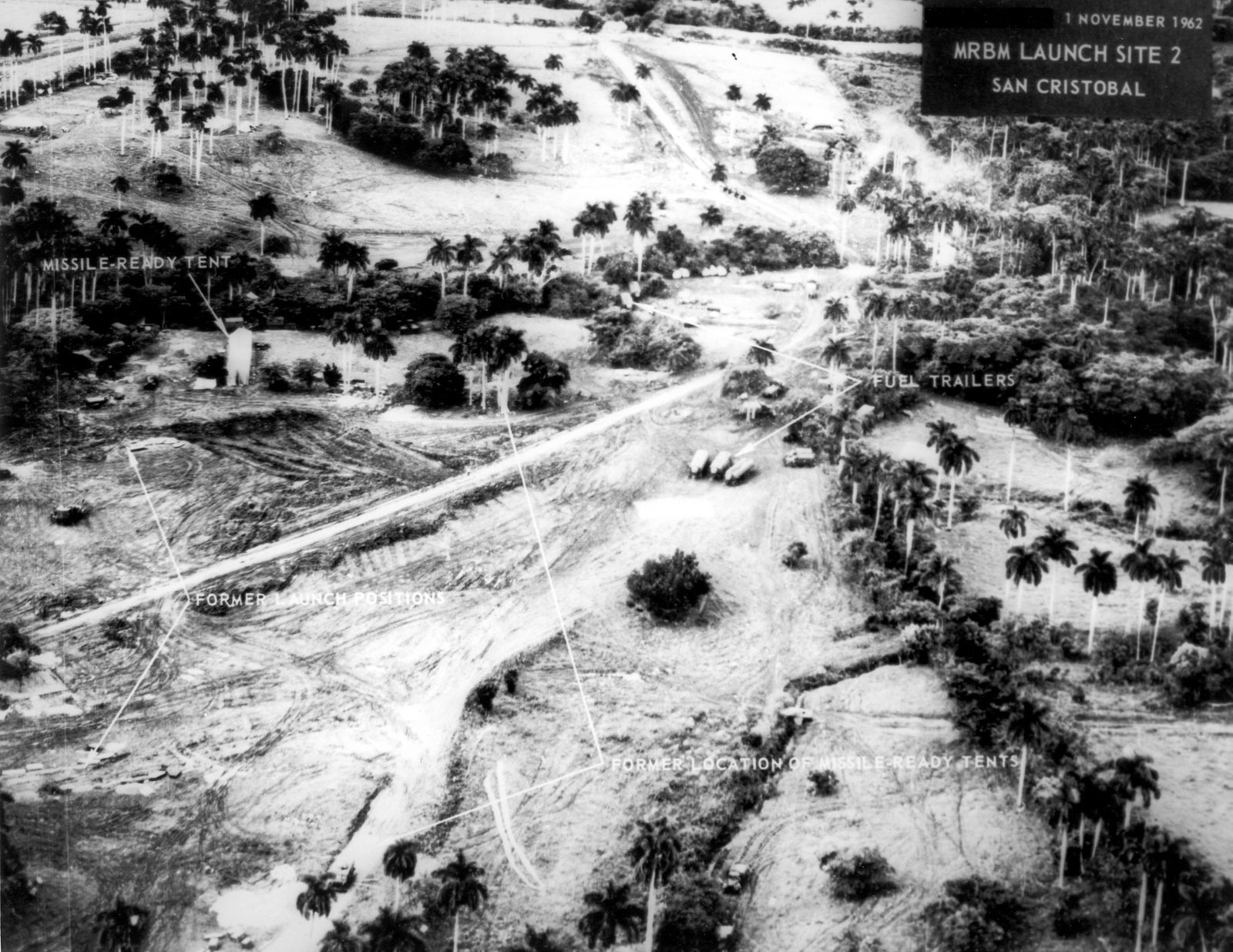
After Khrushchev's 28 October announcement, U.S. intelligence monitored dismantlement, removal and shipment of missile equipment while the two sides disputed inspection and verification arrangements.
Ending the crisis required more than a political promise. Washington wanted evidence that offensive systems were actually being dismantled and removed before normal naval conditions resumed.
World History Database records
The records below are selected from the 195-record Cuban Missile Crisis archive and rendered as static HTML in chronological order.
Cuban Missile Crisis
Stevenson proposed exploring a negotiated settlement that could remove the Soviet missiles while avoiding a direct military confrontation.
Cuban Missile Crisis
Sorensen helped draft language explaining the quarantine and the administration's demand for removal of Soviet offensive weapons.
Cuban Missile Crisis
Castro mobilized Cuban forces after Kennedy announced the quarantine and demanded removal of the Soviet offensive missiles.
Cuban Missile Crisis
Malinovsky placed Soviet military commands on heightened alert after Kennedy announced the quarantine and demanded missile removal.
Cuban Missile Crisis
Pliyev placed Soviet forces in Cuba on increased readiness after Kennedy announced the quarantine and demanded missile withdrawal.
Cuban Missile Crisis
Kennedy orders Khrushchev to remove all the missile bases and their deadly contents. Kennedy orders a naval quarantine of Cuba in order to prevent Russian ships from bringing additional missiles and construction materials.
Cuban Missile Crisis
Kennedy demanded dismantlement of the missile sites and removal of the offensive weapons from Cuba.
Cuban Missile Crisis
McNamara reviewed rules governing interception, inspection, and possible seizure of vessels carrying prohibited military equipment.
Cuban Missile Crisis
Khruschev sends a letter to Kennedy suggesting that the sites would be dismantled if the United States gave its reassurance that it would not invade Cuba.
Cuban Missile Crisis
Khrushchev sent Kennedy a lengthy private message proposing missile withdrawal in return for a pledge that Cuba would not be invaded.
Cuban Missile Crisis
Khrushchev sends a letter to Kennedy suggesting that the sites would be dismantled if the United States gave its reassurance that it would not invade Cuba.
Cuban Missile Crisis
Robert Kennedy supported giving diplomacy more time after Khrushchev sent a message offering missile removal for a non-invasion pledge.
Cuban Missile Crisis
Scali reported a Soviet back-channel proposal linking missile removal to a United States pledge not to invade Cuba.
Cuban Missile Crisis
Dobrynin heard Robert Kennedy privately indicate that the obsolete Jupiter missiles in Turkey would be removed after the Cuban crisis.
Cuban Missile Crisis
Khrushchev publicly added removal of American Jupiter missiles from Turkey to the terms he sought for resolving the crisis.
Cuban Missile Crisis
Kennedy answered Khrushchev's first proposal and offered a non-invasion assurance after verified missile removal.
Cuban Missile Crisis
Kennedy authorized Robert Kennedy to tell Dobrynin privately that American Jupiter missiles in Turkey would later be removed.
Cuban Missile Crisis
Robert Kennedy warned Dobrynin that events could soon escape political control if the Soviet missiles were not withdrawn.
Cuban Missile Crisis
Khrushchev agrees to remove the Soviet missiles from Cuba. Castro demands that the USA evacuate Cuba's Guantanamo naval base.
Cuban Missile Crisis
Castro issued five demands for a broader settlement and rejected foreign inspection on Cuban territory.
Cuban Missile Crisis
Castro learned that Khrushchev had agreed to remove the missiles without first securing Cuban approval of the settlement.
Cuban Missile Crisis
Raul Castro helped manage Cuban military readiness after Moscow announced that the strategic missiles would be withdrawn.
Cuban Missile Crisis
Biryuzov's missile forces received orders to dismantle the Cuban launch sites and prepare the strategic missiles for return shipment.
Cuban Missile Crisis
Dobrynin reported American reactions to Moscow as the Soviet government announced acceptance of the missile-withdrawal settlement.
Cuban Missile Crisis
Gromyko participated in implementing the diplomatic settlement after Khrushchev agreed to withdraw the offensive missiles.
Cuban Missile Crisis
Khrushchev agrees to remove the Soviet missiles from Cuba. Khruschev removes the missiles but on the understanding the USA does not invade Cuba.
Cuban Missile Crisis
Khrushchev ordered the offensive missiles dismantled and returned to the Soviet Union under the emerging settlement.
Cuban Missile Crisis
Malinovsky transmitted orders connected with dismantling and returning the offensive missile systems after the political settlement.
Cuban Missile Crisis
Bundy helped coordinate immediate follow-up after the Soviet decision to dismantle and remove the offensive missiles.
Cuban Missile Crisis
Kennedy directed officials to continue verification and quarantine measures until Soviet offensive weapons were actually removed.
Cuban Missile Crisis
McCone advised that surveillance must continue to verify dismantling and removal after Khrushchev accepted the settlement.
Cuban Missile Crisis
McNamara directed the military to maintain pressure and surveillance while Soviet forces began preparing the missiles for removal.
Cuban Missile Crisis
Rusk directed diplomatic work on verification and implementation after Moscow announced that the missiles would be removed.
Cuban Missile Crisis
Sorensen assisted with Kennedy's public response welcoming the Soviet decision to remove the missiles from Cuba.
Cuban Missile Crisis
Taylor kept United States forces at high readiness while officials awaited evidence that Soviet dismantling had begun.
Cuban Missile Crisis
Khrushchev defended the settlement to Soviet leaders while implementation shifted toward dismantling, shipment, and verification.
Cuban Missile Crisis
Kennedy instructed his advisers to handle the settlement cautiously while reconnaissance monitored dismantling at Cuban missile sites.
Cuban Missile Crisis
Robert Kennedy urged continued caution as the administration moved from immediate confrontation toward verification and settlement.
Cuban Missile Crisis
Stevenson continued United Nations negotiations concerning verification, withdrawal, and arrangements for ending the quarantine.
Cuban Missile Crisis
Khrushchev continued correspondence with Kennedy about verification and the remaining questions surrounding Soviet military equipment in Cuba.
Cuban Missile Crisis
McCone reviewed reconnaissance evidence showing dismantled missile equipment being moved toward Cuban ports for shipment.
Cuban Missile Crisis
Castro resisted intrusive international inspection proposals while discussing implementation of the Soviet withdrawal with Mikoyan.
Cuban Missile Crisis
Mikoyan defended Moscow's decision to remove the strategic missiles despite Castro's anger over being excluded from the final agreement.
Cuban Missile Crisis
Mikoyan continued difficult negotiations with Cuban leaders over inspections, tactical weapons, and Soviet military equipment remaining on the island.
Cuban Missile Crisis
Khrushchev resisted American demands over Soviet IL-28 bombers while negotiations continued after the ballistic missiles were dismantled.
Cuban Missile Crisis
Mikoyan pressed for acceptance of Soviet decisions concerning withdrawal of weapons while seeking to preserve the alliance with Cuba.
Cuban Missile Crisis
Khrushchev accepted removal of the IL-28 bombers, clearing the principal remaining obstacle to ending the American quarantine.
Cuban Missile Crisis
Mikoyan's negotiations helped manage the final stages of Soviet withdrawal as the United States prepared to end the quarantine.
Cuban Missile Crisis
Kennedy ordered the naval quarantine lifted after agreement on removal of the Soviet IL-28 bombers.
Cuban Missile Crisis
McNamara oversaw the military transition from quarantine operations after the remaining Soviet IL-28 bombers were scheduled for withdrawal.
Cuban Missile Crisis
Khrushchev agrees to remove the missiles in exchange for a US commitment not to invade Cuba and that the US will remove American MRBMs targeting Russia from Turkey and Italy.
Editorial provenance
Compiled and edited by World History Database.
Historical context is editorial material; the chronology is generated from World History Database Cuban Missile Crisis records.
Last reviewed: September 2026.
FRUS: Cuban Missile Crisis and Aftermath · JFK Library · U.S. National Archives
Continue exploring