1958 1st January
EEC Treaty Enters into Force
Heads the Federal German government when the Treaty of Rome enters into force and the EEC begins operating.
European integration · permanent subject timeline
The EEC's first decade: institutions, common policies and internal disputes. This page combines historical context with 55 matching records drawn directly from the World History Database EEC archive.
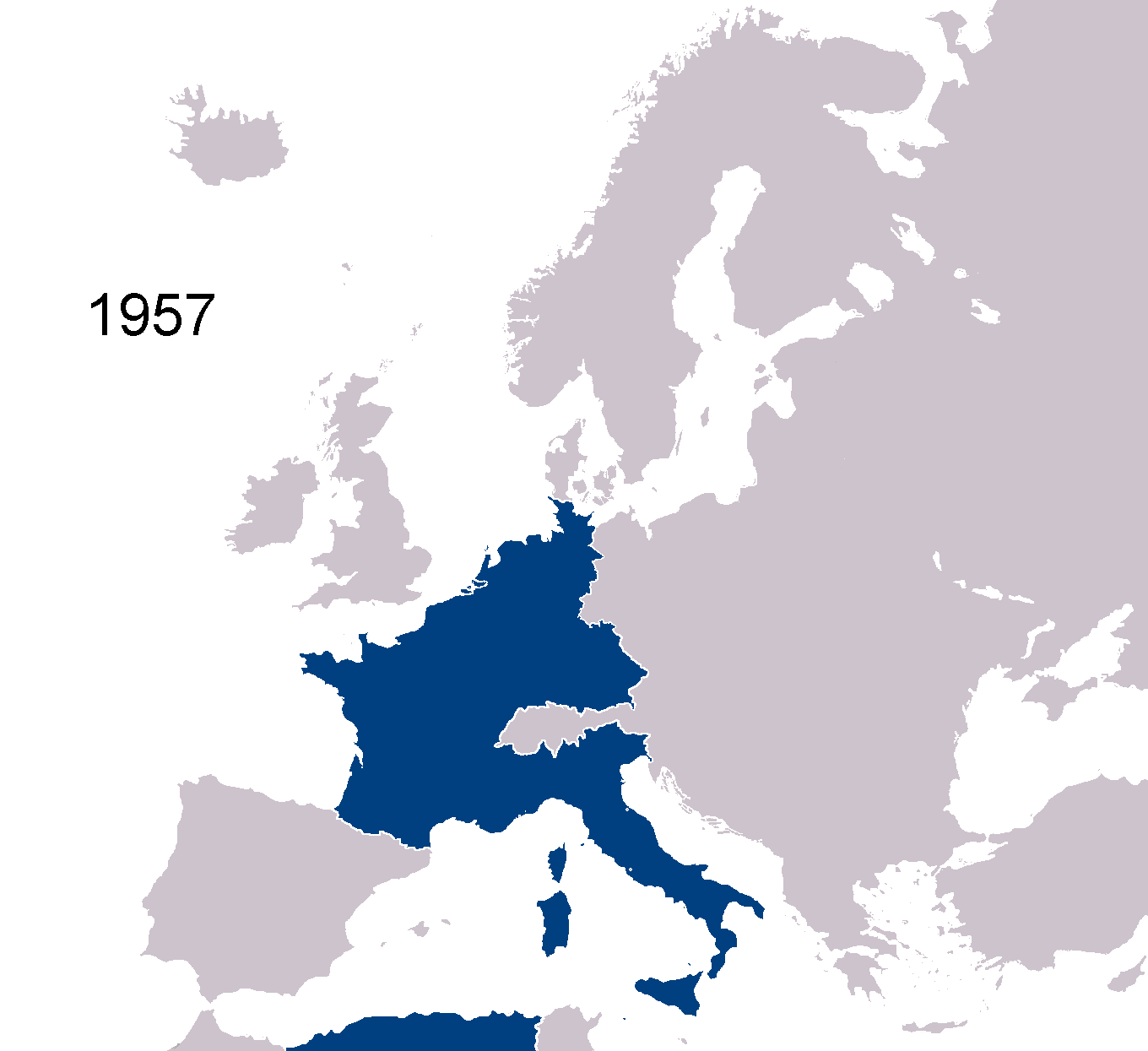
Historical context
During its first decade the EEC built common institutions, developed agricultural policy, reduced internal trade barriers and debated how far political integration should go.
The 1960s established the EEC as a durable economic community while disputes over supranational authority, enlargement and national sovereignty defined the limits of integration.
World History Database records
The records below are selected from the 936-record EEC and European integration archive and rendered as static HTML in chronological order.
EEC Treaty Enters into Force
Heads the Federal German government when the Treaty of Rome enters into force and the EEC begins operating.
EEC Treaty Enters into Force
Heads the Italian government when the Treaty of Rome enters into force and the EEC begins operating.
European Parliamentary Assembly Presidency
Schuman became the first President of the European Parliamentary Assembly created for the new European Communities.
Stresa Agricultural Conference
Heads the government as Stresa hosts the six-country agricultural conference shaping the future Common Agricultural Policy.
First EEC Commission
Becomes the first President of the Commission of the European Economic Community.
Intergovernmental Europe Policy
De Gaulle promoted cooperation between sovereign European states while resisting further transfer of national powers to supranational institutions.
Bonn European Summit
Participates in the Bonn summit where the Six seek proposals for closer political cooperation.
British EEC Application Received
Receives Harold Macmillan's letter requesting negotiations on British accession while serving as President-in-Office of the EEC Council.
Council Reply to British Application
As Council President-in-Office, informs Britain that the EEC Council agrees to begin accession negotiations.
Fouchet Plan, The
Christian Fouchet developed proposals for a political union of European states as France sought a more intergovernmental model of cooperation.
Fouchet Plan, The
Christian Fouchet drafted proposals for a European political union reflecting French preference for cooperation between sovereign states.
Fouchet Plan, The
The idea is to form a new 'Union of States', an interGovernmental alternative to the European Communities
Fouchet Plan, The
Written by Christian Fouchet, France's ambassador to Denmark
Common Agricultural Policy Launch
Heads the Italian government as the EEC begins implementing the Common Agricultural Policy.
Common Agricultural Policy Launch
Serves as president as Italy enters the first operational phase of the Common Agricultural Policy.
Common Agricultural Policy Launch
De Gaulle strongly supported the Common Agricultural Policy as a central economic interest for France within the EEC.
Agricultural Market Integration
Couve de Murville represented French interests as the EEC developed common agricultural market arrangements.
Fouchet Plan, The
De Gaulle backed the Fouchet Plan, which proposed a political union based on cooperation between European governments.
Fouchet Plan, The
Draws up the Fouchet Plan for a union of European based around the EU
Fouchet Plan, The
De Gaulle fears a loss of French influence in the European Communities, which was becoming more and more supranational so the Plan is an attempt to keep the balance of power in France's favour
Fouchet Plan, The
De Gaulle supported the Fouchet proposals as an alternative to further supranational expansion of the European Communities.
Fouchet Plan, The
Draws up the Fouchet Plan for a union of Europe based around the EU
Fouchet Plan, The
The Fouchet negotiations failed when other Community members rejected France's preferred intergovernmental model.
Fouchet Plan, The
The success of the European Communities and the lack of enthusiasm of other states stops the Fouchet Plan
Unification
Draws up the Fouchet Plan for a union of European based around the EU
British Membership Veto
De Gaulle publicly opposed Britain's first application to join the European Economic Community.
Franco-German European Cooperation
The Elysee Treaty strengthened Franco-German consultation, reinforcing a partnership central to later Community development.
EEC Enlargement Opposition
Couve de Murville defended the French government's reservations about British entry into the Community.
Community Agricultural Financing
De Gaulle pressed for stable Community financing of the Common Agricultural Policy, a major French priority.
Merger Treaty Signature
France joined the agreement to create a single Commission and Council for the three European Communities.
Merger Treaty
Heads the West German government when the Six sign the Merger Treaty creating a single Council and Commission.
Merger Treaty
Represents Italian foreign policy as the Merger Treaty is signed in Brussels.
Merger Treaty
Heads the Italian government when the Six sign the Merger Treaty for the European Communities.
Empty Chair Crisis
France began boycotting Council meetings during the Empty Chair crisis over agricultural finance and institutional voting.
Council Boycott
Couve de Murville defended France's withdrawal from Council meetings during the Empty Chair dispute.
European Court of Human Rights
Appointed President (1965-1968) of the European Court of Human Rights
Politics
Appointed President (1965-1968) of the European Court of Human Rights
Luxembourg Compromise
The Luxembourg Compromise ended the Empty Chair crisis and protected unanimity when a member claimed vital national interests.
Luxembourg Compromise
Leads West Germany as the Luxembourg Compromise ends the institutional crisis caused by France's empty-chair policy.
Return to Community Council
France resumed participation in Community Council business after the Luxembourg Compromise.
Second EEC Application Announcement
The Labour Government announces its intention to make a second application to join the EEC
EEC Membership Conditions
Pompidou says Britain will have to devalue before being considered for EEC membership
Merger Treaty Takes Effect
The Merger Treaty took effect, creating a single Commission and Council for the three European Communities.
Merger Treaty Enters into Force
Heads the Italian government when the Merger Treaty creates a single Commission and Council for the Communities.
Unified European Communities Institutions
Serves as foreign minister when the Communities begin operating with unified executive institutions.
Second British Membership Veto
De Gaulle again opposed British membership, delaying enlargement of the European Communities.
Customs Union Completion
France joined the other EEC members in completing the customs union and abolishing internal customs duties.
EEC Customs Union Completed
Heads the German government when the EEC customs union is completed ahead of the original Treaty of Rome timetable.
EEC Customs Union Completed
Heads the Italian government when customs duties between EEC members are abolished completely.
EEC Customs Union Completed
Serves as foreign minister when the EEC customs union reaches completion.
Hague Summit Relaunch
Pompidou backed completion, deepening and enlargement of the Communities at the Hague summit.
Hague European Summit
Represents Germany as leaders open the Hague summit on completion, deepening and enlargement of the European Communities.
Hague European Summit
Represents Italy as Community leaders open the Hague summit on completion, deepening and enlargement.
Hague Enlargement Decision
Supports the Hague agreement to open enlargement negotiations with applicant countries including Britain, Denmark and Ireland.
Hague Enlargement Decision
Supports the Hague agreement to begin enlargement negotiations and strengthen European cooperation.
Editorial provenance
Compiled and edited by World History Database.
Historical context is editorial material; the chronology is generated from World History Database EEC records.
Last reviewed: September 2026.
Continue exploring