1948
Council of Europe
During the last days of his first administration, Schuman's Government proposed plans that later resulted in the Council of Europe and the European Community single market
European integration · permanent subject timeline
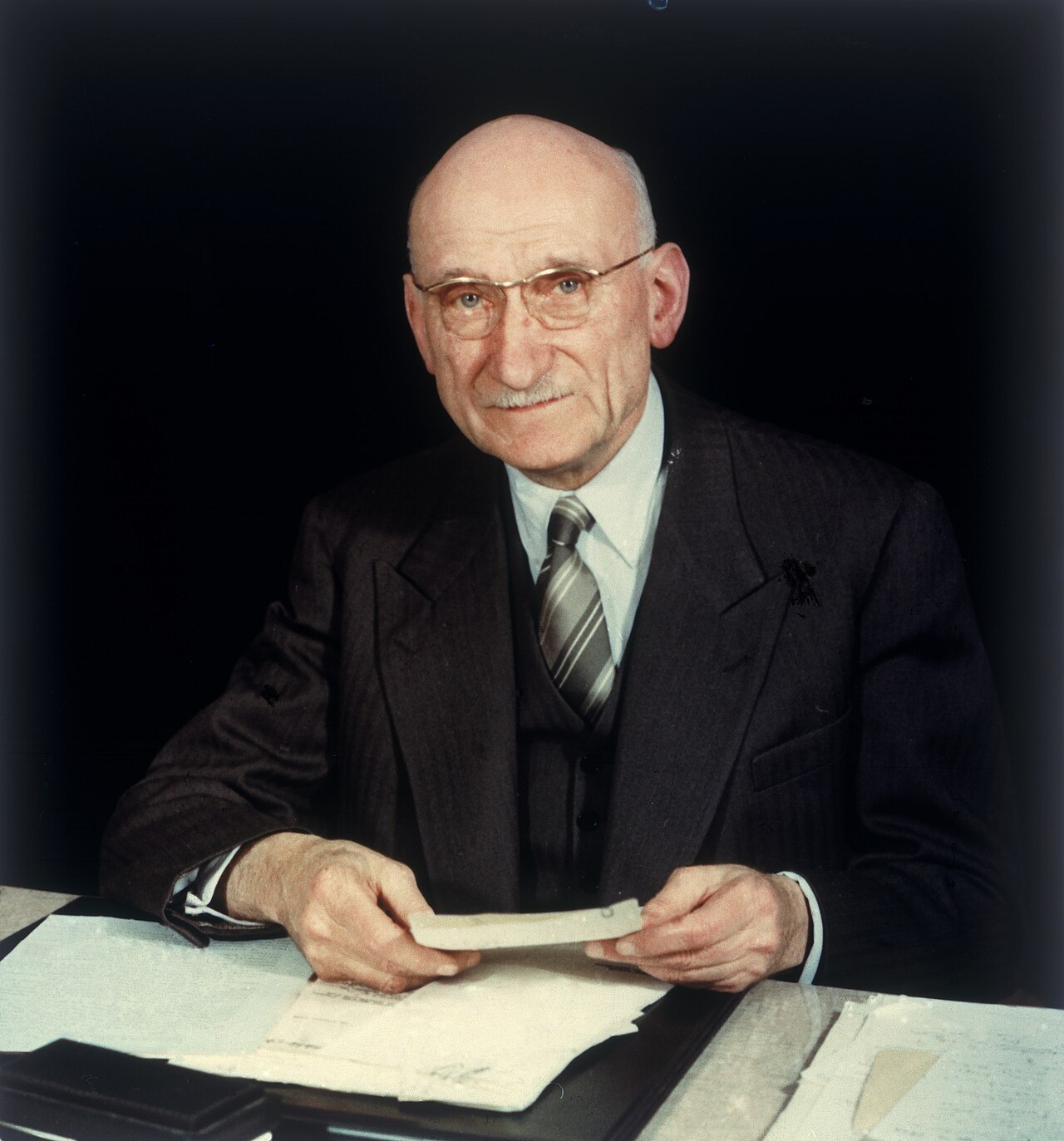
French foreign minister associated with the 1950 declaration that launched the Schuman Plan. This page combines historical context with 31 matching records drawn directly from the World History Database EEC archive.
Historical context
Robert Schuman promoted the pooling of French and German coal and steel and became one of the central political architects of early European integration.
His declaration led to the ECSC and helped establish the institutional approach later extended through the Treaties of Rome.
World History Database records
The records below are selected from the 936-record EEC and European integration archive and rendered as static HTML in chronological order.
Council of Europe
During the last days of his first administration, Schuman's Government proposed plans that later resulted in the Council of Europe and the European Community single market
Council of Europe
Schuman's government promoted post-war European cooperation, including initiatives that contributed to the Council of Europe and later supranational integration.
Council of Europe
As French Foreign Minister, Schuman supported the creation of the Council of Europe, whose Statute was signed in London on 5 May 1949.
Council of Europe
At the signing of it's Statutes at St James's Palace, London, 5 May 1949, the founding States agreed to defining the frontiers of Europe based on the principles of human rights and fundamental freedoms that Schuman enunciated.
Council of Europe
He also announced a coming supranational union for Europe that saw light as the European Coal and Steel Community and other such Communities within a Union framework of common law and democracy.
Council of Europe
Schuman continued advocating supranational European cooperation while serving as French Foreign Minister.
Council of Europe
The Council of Europe and was created within the tight schedule Schuman had set.
Council of Europe
The Council of Europe was established in 1949 as part of the wider post-war movement toward European cooperation.
European Coal and Steel Community
At the signing of it's Statutes at St James's Palace, London, 5 May 1949, the founding States agreed to defining the frontiers of Europe based on the principles of human rights and fundamental freedoms that Schuman enunciated.
European Coal and Steel Community
He also announced a coming supranational union for Europe that saw light as the European Coal and Steel Community and other such Communities within a Union framework of common law and democracy.
European Coal and Steel Community
The Council of Europe and was created within the tight schedule Schuman had set.
Schuman Declaration
Schuman publicly proposed pooling French and German coal and steel production under a common High Authority.
Schuman Plan
Proposes a community to integrate the coal and steel industries of Europe, the two elements necessary to make weapons of war
Schuman Plan
Schuman proposed pooling French and German coal and steel production under a common High Authority, opening the way to the ECSC.
Opening of Coal and Steel Negotiations
France opened negotiations with five partner states on the institutional arrangements for pooling coal and steel production.
ECSC Founding Treaty
Schuman represented France's commitment to the Treaty of Paris and the new supranational Coal and Steel Community.
European Coal and Steel Community
France and five partner states signed the Treaty of Paris, establishing the European Coal and Steel Community.
European Coal and Steel Community
On 18 April 1951 six founder members sign the Treaty of Paris (1951) that formed the basis of the European Coal and Steel Community. They declared this date and the corresponding democratic, supranational principles to be the 'real foundation of Europe'
Treaty of Paris
On 18 April 1951 six founder members sign the Treaty of Paris (1951) that formed the basis of the European Coal and Steel Community. They declared this date and the corresponding democratic, supranational principles to be the 'real foundation of Europe'
European Coal and Steel Community
The EU grows out of the European Coal and Steel Community by the 6 founders, Belgium, The Netherlands, Luxembourg, Germany, France & Italy
European Coal and Steel Community
The six founding states used the ECSC as the first supranational step toward the later European Economic Community.
European Coal and Steel Community Origins
The EU grows out of the European Coal and Steel Community by the 6 founders, Belgium, The Netherlands, Luxembourg, Germany, France & Italy
Schuman Declaration
The Treaty of Paris created the ECSC, providing an institutional model for the later European Economic Community.
Schuman Declaration
Within one year, on 18 April 1951, the six founding members signed the Treaty of Paris. It created the European Coal and Steel Community - Europe’s first supranational Community. This organization paved the way for the European Economic Community and subsequently the European Union, which is still run by the innovative type of European institutions conceived in 1950
Treaty of Paris
France joined West Germany, Italy and the Benelux countries in signing the Treaty of Paris establishing the ECSC.
Treaty of Paris
France, Italy, the Benelux countries (Belgium, Netherlands and Luxembourg) together with West Germany sign the Treaty of Paris creating the European Coal and Steel Community the following year
European Coal and Steel Community
The European Coal and Steel Community is created, this takes over the role of the International Authority for the Ruhr and lifts some restrictions on German industrial productivity
Schuman Plan
The European Coal and Steel Community is created, this takes over the role of the International Authority for the Ruhr and lifts some restrictions on German industrial productivity
European Coal and Steel Community
The Treaty of Paris entered into force, bringing the European Coal and Steel Community formally into existence.
Euratom
The Treaties of Rome, 1957, created the Economic community and the nuclear non-proliferation Community, Euratom. Together with interGovernmental machinery of later treaties, these eventually evolved into the European Union
European Parliamentary Assembly Presidency
Schuman became the first President of the European Parliamentary Assembly created for the new European Communities.
Editorial provenance
Compiled and edited by World History Database.
Historical context is editorial material; the chronology is generated from World History Database EEC records.
Last reviewed: September 2026.
Continue exploring