Physicist timeline
Enrico Fermi Physics Timeline
This static page gathers the Physics records in the database for Enrico Fermi.
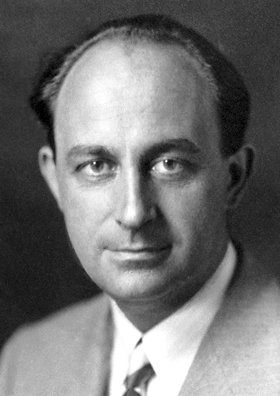
Enrico Fermi in the Physics archive
This static timeline brings together 58 physics records for Enrico Fermi, spanning 1901–1954. The records connect the physicist with events including Birth of Enrico Fermi, Early Physics Studies, Scuola Normale Superiore Fellowship, Pisa Physics Research, Early Scientific Publication, Doctorate in Physics.
Locations and countries represented in this timeline include Italy, United States of America. Use the chronological table below to follow the sequence of research, discoveries, appointments and related events.
Continue with the Physicists A–Z index, Physics topic timelines, or the complete Physics search.
Physics records
| Date | Person | Event | Place | Description |
|---|---|---|---|---|
| 29 September 1901 | Enrico Fermi Physicist | Birth of Enrico Fermi | Rome, Italy | Enrico Fermi is born in Rome on 29 September 1901 and later becomes one of the leading physicists of the twentieth century. |
| 1915 | Enrico Fermi Student | Early Physics Studies | Rome, Italy | As a teenager, Fermi intensively studies mathematics and physics and begins performing experiments with his friend Enrico Persico. |
| 1918 | Enrico Fermi Student | Scuola Normale Superiore Fellowship | Pisa, Italy | Wins a competitive fellowship to the Scuola Normale Superiore in Pisa and begins advanced university study in physics. |
| 1919 | Enrico Fermi Student | Pisa Physics Research | Pisa, Italy | Undertakes advanced experimental and theoretical physics work at Pisa while developing an unusually broad command of contemporary physics. |
| 1921 | Enrico Fermi Student | Early Scientific Publication | Pisa, Italy | Publishes early scientific work while still a student at Pisa, demonstrating growing expertise in theoretical and experimental physics. |
| 1922 | Enrico Fermi Doctoral Student | Doctorate in Physics | Pisa, Italy | Receives his doctorate in physics from the University of Pisa after completing studies at the Scuola Normale Superiore. |
| 1922 | Enrico Fermi Physicist | Relativity Research | Pisa, Italy | Publishes work on relativistic mechanics and electrodynamics during the period immediately following completion of his doctorate. |
| 1923 | Enrico Fermi Research Fellow | Göttingen Fellowship | Göttingen, Italy | Spends several months in Göttingen on an Italian government fellowship working in the intellectual environment surrounding Max Born. |
| 1923 | Enrico Fermi Physicist | Quantum Theory Studies | Göttingen, Italy | Studies emerging quantum theory in Göttingen and deepens his familiarity with the mathematical methods being applied to atomic physics. |
| 1924 | Enrico Fermi Lecturer | Florence Lectureship | Florence, Italy | Returns to Italy and becomes lecturer in mathematical physics and mechanics at the University of Florence. |
| 1924 | Enrico Fermi Research Fellow | Leiden Rockefeller Fellowship | Leiden, Italy | Works in Leiden on a Rockefeller Fellowship with Paul Ehrenfest and becomes more closely connected to leading European theoretical physicists. |
| 1925 | Enrico Fermi Lecturer | Quantum Gas Research | Florence, Italy | Investigates quantum gases and statistical problems that directly precede his formulation of Fermi statistics. |
| 1926 | Enrico Fermi Physicist | Fermi Gas Theory | Florence, Italy | Applies his new statistics to an ideal gas of particles subject to the Pauli exclusion principle and establishes the theoretical basis of a degenerate Fermi gas. |
| 1926 | Enrico Fermi Physicist | Fermi-Dirac Electron Statistics | Rome, Italy | Develops quantum statistics for indistinguishable particles obeying the Pauli exclusion principle, providing the statistical framework now known as Fermi-Dirac statistics. |
| 1926 | Enrico Fermi Professor | Rome Theoretical Physics Chair | Rome, Italy | Wins the newly created chair of theoretical physics at the University of Rome and begins building an influential research school. |
| 1927 | Enrico Fermi Professor | Rome Physics Group Formation | Rome, Italy | Builds a collaborative group of young physicists in Rome that later becomes famous for major advances in nuclear and particle physics. |
| 1927 | Enrico Fermi Professor | Thomas-Fermi Atomic Model | Rome, Italy | Develops the statistical Thomas-Fermi model for estimating the distribution of electrons in many-electron atoms. |
| 1928 | Enrico Fermi Professor | Introduction to Atomic Physics Teaching | Rome, Italy | Expands advanced teaching in atomic and theoretical physics at Rome and trains a generation of Italian physicists in modern quantum methods. |
| 1929 | Enrico Fermi Professor | Royal Academy of Italy Membership | Rome, Italy | Is elected to the Royal Academy of Italy, receiving national recognition for his rapidly growing scientific reputation. |
| 1930 | Enrico Fermi Professor | Quantum Electrodynamics Work | Rome, Italy | Pursues research in quantum electrodynamics and spectroscopic theory while leading the theoretical physics programme in Rome. |
| 1931 | Enrico Fermi Professor | Rome Nuclear Physics Shift | Rome, Italy | Begins shifting the focus of his research group from atomic spectroscopy toward the emerging problems of nuclear physics. |
| 1932 | Enrico Fermi Professor | Neutron Physics Programme | Rome, Italy | Recognizes the importance of the newly discovered neutron and starts directing increasing attention toward neutron-induced nuclear processes. |
| 1933 | Enrico Fermi Physicist | Beta Decay Theory Development | Rome, Italy | Formulates the fundamental ideas of his beta-decay theory by combining quantum field concepts with Wolfgang Pauli's neutrino hypothesis. |
| October 1934 | Enrico Fermi Physicist | Slow Neutron Enhancement | Rome, Italy | Discovers with his Rome group that slowing neutrons with hydrogen-rich material such as paraffin greatly increases their effectiveness in producing nuclear reactions. |
| 1934 | Enrico Fermi Physicist | Artificial Radioactivity Programme | Rome, Italy | Organizes a systematic programme of neutron irradiation experiments that produces artificial radioactivity in many different elements. |
| 1934 | Enrico Fermi Physicist | Beta Decay Electron Theory | Rome, Italy | Develops a quantitative theory of beta decay in which an electron and a neutrino are created during a weak nuclear transformation. |
| 1934 | Enrico Fermi Physicist | Neutron Bombardment | Rome, Italy | Bombards many elements, including uranium, with neutrons during experiments on neutron-induced artificial radioactivity. |
| 1934 | Enrico Fermi Physicist | Neutron Irradiation of Elements | Rome, Italy | Leads the Rome group in exposing a wide range of elements to neutrons and cataloguing the radioactive products created by nuclear transformations. |
| 1934 | Enrico Fermi Physicist | Slow Neutron Theory Interpretation | Rome, Italy | Interprets the enhanced effectiveness of moderated neutrons as a consequence of their reduced speed and greater probability of nuclear capture. |
| 1935 | Enrico Fermi Professor | Neutron Physics Consolidation | Rome, Italy | Consolidates the Rome group's results on neutron-induced reactions and establishes slow-neutron methods as a major tool of experimental nuclear physics. |
| 1935 | Enrico Fermi Professor | Nobel Prize Nomination | Rome, Italy | Receives nominations for the Nobel Prize in Physics as international recognition of his neutron and nuclear research grows. |
| 1936 | Enrico Fermi Professor | International Neutron Research Recognition | Rome, Italy | Becomes internationally recognized as a leading authority on neutron physics through continued publications, lectures and experimental results. |
| 1937 | Enrico Fermi Professor | Nobel Prize Nominations Continue | Rome, Italy | Receives numerous additional Nobel Prize nominations from prominent physicists who recognize the importance of his neutron research. |
| 1938 | Enrico Fermi Nobel Laureate | Departure from Fascist Italy | Stockholm, Italy | Uses the journey to Stockholm for the Nobel ceremony as the opportunity to leave Fascist Italy permanently with his wife Laura and their children. |
| 1938 | Enrico Fermi Nobel Laureate | Emigration to the United States | New York, Italy | Travels from Stockholm to the United States after receiving the Nobel Prize and begins a new phase of his scientific career in America. |
| 1938 | Enrico Fermi | Nobel Prize | Stockholm, Italy | Receives the Nobel Prize in Physics for demonstrating neutron-induced radioactivity and for discoveries concerning nuclear reactions produced by slow neutrons. |
| 1939 | Enrico Fermi Professor | Columbia University Professorship | New York, Italy | Joins Columbia University as professor of physics and continues neutron research soon after arriving in the United States. |
| 1939 | Enrico Fermi Physicist | Columbia Uranium Neutron Experiments | New York, Italy | Conducts neutron experiments on uranium at Columbia University while investigating whether a self-sustaining nuclear chain reaction could be achieved. |
| 1939 | Enrico Fermi Physicist | Fermi Szilard Neutron Experiments | New York, Italy | Works with Leo Szilard and other collaborators on experiments designed to measure neutron production and absorption in uranium and graphite systems. |
| 1939 | Enrico Fermi Physicist | Recognition of Chain Reaction Possibility | New York, Italy | Recognizes that uranium fission can release secondary neutrons and therefore may permit a self-sustaining nuclear chain reaction. |
| May 1944 | Enrico Fermi Physicist | LOPO Reactor | Los Alamos, Italy | Helps bring the LOPO reactor at Los Alamos to criticality, demonstrating an aqueous homogeneous reactor fueled with enriched uranium. |
| 11 July 1944 | Enrico Fermi Physicist | United States Citizenship | United States of America | Becomes a naturalized citizen of the United States together with his wife Laura Fermi. |
| 1944 | Enrico Fermi Physicist | Los Alamos F Division Leadership | Los Alamos, United States of America | Leads a Los Alamos division concerned with advanced theoretical and experimental problems related to neutron physics and weapon development. |
| 1944 | Enrico Fermi Physicist | Move to Los Alamos | Los Alamos, United States of America | Moves to Los Alamos and joins the laboratory effort to solve scientific problems associated with designing the first atomic weapons. |
| 16 July 1945 | Enrico Fermi Physicist | Trinity Test Observation | Alamogordo, United States of America | Observes the Trinity nuclear test and performs a simple paper-drop experiment to make an immediate estimate of the explosion's yield. |
| 1945 | Enrico Fermi Physicist | Interim Committee Scientific Panel | Washington, United States of America | Serves on the scientific panel advising the Interim Committee on issues concerning the wartime use and postwar implications of atomic energy. |
| 1946 | Enrico Fermi Professor | Postwar Nuclear Physics Programme | Chicago, United States of America | Establishes an energetic postwar research programme at Chicago spanning nuclear physics, particle physics and theoretical problems. |
| 1946 | Enrico Fermi Professor | University of Chicago Professorship | Chicago, United States of America | Accepts a professorship at the University of Chicago's Institute for Nuclear Studies and returns to fundamental research after the war. |
| 1947 | Enrico Fermi Physicist | Cosmic Ray Research | Chicago, United States of America | Studies high-energy cosmic-ray interactions and develops theoretical models for how energetic particles produce secondary particles in the atmosphere. |
| 1948 | Enrico Fermi Physicist | Particle Acceleration Theory | Chicago, United States of America | Develops ideas explaining how charged particles can gain energy through repeated interactions with moving magnetic fields in astrophysical environments. |
| 1949 | Enrico Fermi Physicist | Fermi Acceleration Mechanism | Chicago, United States of America | Publishes a theory of stochastic particle acceleration that later becomes known as second-order Fermi acceleration. |
| 1950 | Enrico Fermi Physicist | Pion Nucleon Scattering Research | Chicago, United States of America | Uses the Chicago cyclotron to investigate pion-nucleon interactions and helps establish important experimental results in emerging particle physics. |
| 1951 | Enrico Fermi Physicist | High Energy Particle Experiments | Chicago, United States of America | Continues high-energy experiments with mesons and nucleons, combining rapid estimates with detailed measurements to test models of particle interactions. |
| 1952 | Enrico Fermi Physicist | Fermi Pasta Ulam Work | Los Alamos, United States of America | Collaborates with John Pasta and Stanislaw Ulam on numerical studies of nonlinear coupled oscillators that later become foundational in nonlinear dynamics. |
| 1953 | Enrico Fermi Professor | Final Chicago Research Programme | Chicago, United States of America | Continues teaching and conducting research at the University of Chicago while advising younger physicists on nuclear and particle physics problems. |
| 28 November 1954 | Enrico Fermi Physicist | Death of Enrico Fermi | Chicago, United States of America | Enrico Fermi dies in Chicago on 28 November 1954 after a career that transformed quantum statistics, nuclear physics and reactor science. |
| 1954 | Enrico Fermi Physicist | Last Scientific Lectures | Chicago, United States of America | Continues lecturing and discussing current problems in physics during the final year of his life despite declining health. |
| 1954 | Enrico Fermi Physicist | Legacy in Nuclear and Particle Physics | Chicago, United States of America | Leaves a scientific legacy spanning quantum statistics, beta decay, neutron physics, controlled chain reactions, particle acceleration and high-energy physics. |
More physicist timelines
Einstein, Albert121 recordsSchrodinger, Erwin Rudolf Josef Alexander80 recordsHiggs, Peter Ware34 recordsSalam, Abdus24 recordsCurie, Pierre23 recordsBohr, Niels Henrik David15 recordsThomson, Joseph John9 recordsHeisenberg, Werner8 recordsChadwick, James7 recordsGalilei, Galileo8 recordsRutherford, Ernest3 records