1846
Election
Elected to the US House of Representatives
Historical biography timeline
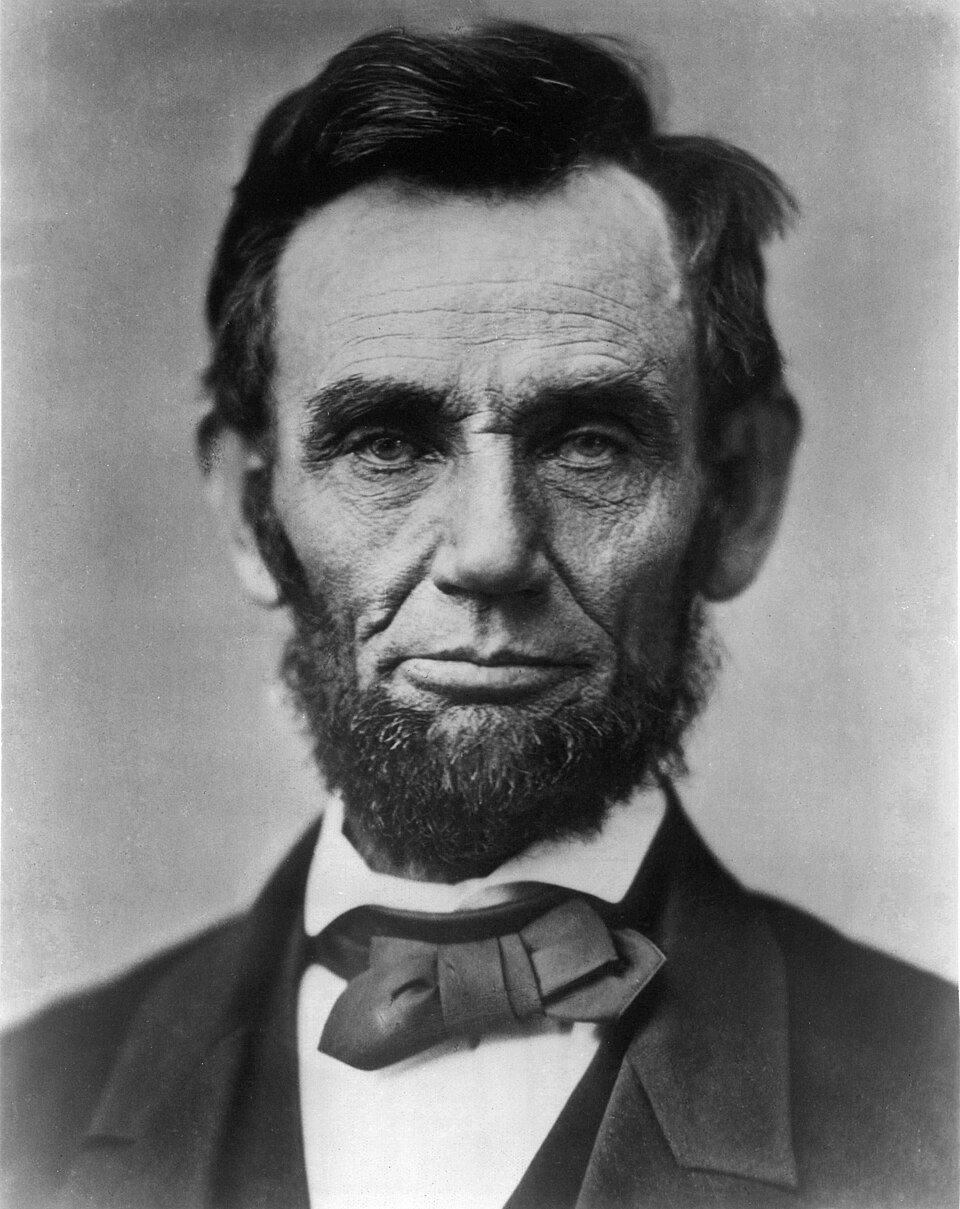
Explore a static chronology of 198 World History Database records for Abraham Lincoln. The page is generated from the same biography records used by the searchable database, making important life events directly crawlable and readable.
Life and historical importance
Sixteenth president of the United States, Lincoln led the Union through the American Civil War and made emancipation a central war aim. His leadership helped preserve the Union and destroy legal slavery, and his assassination in 1865 fixed his place among the most consequential American presidents.
Editorial overview by World History Database. The chronology below is generated from the site's structured biography records.
Chronology
Records are ordered by year, month and day where dates are available. The wording below comes from the World History Database biography collection.
Election
Elected to the US House of Representatives
Presidential Campaign
Supports Zachary Taylor as the Whig candidate in the 1848 presidential election
Anti-Slavery Coaltion
Kansas Nebraska Act helps unite anti slavery Whigs Free Soilers and Democrats against the spread of slavery
Kansas Nebraska Act
Lincoln returns to politics after passage of the Kansas Nebraska Act
Anti-Slavery Coaltion
Anti slavery opponents in Illinois organize against the Kansas Nebraska Act
Anti-Slavery Coaltion
Lincoln condemns the Kansas Nebraska Act and argues against the expansion of slavery
Anti-Slavery Coaltion
Lincoln campaigns against the extension of slavery into western territories
Peoria Speech
Lincoln attacks the Kansas Nebraska Act and the spread of slavery in his Peoria speech
Anti-Slavery Coaltion
Anti Nebraska candidates gain support in Illinois politics after Lincolns return to public debate
Republican Party
Republican Party begins forming as an anti slavery coalition that Lincoln later joins
Anti-Slavery Coaltion
Lincoln receives support for the United States Senate from anti slavery legislators in Illinois
Anti-Slavery Coaltion
Lincoln withdraws from the Senate contest to help prevent a pro slavery Democrat from winning
Anti-Slavery Coaltion
Illinois anti slavery forces organize at Bloomington and strengthen the Republican movement
Anti-Slavery Coaltion
Republicans hold their first national convention as the anti slavery coalition becomes a national party
Republican Popular Vote
Republicans gain strong popular support but fail to win enough legislative seats
Senate Election
Illinois voters choose legislators who will decide the Senate contest
Senate Election
Republicans win more popular votes but Democrats retain control of the legislature and reelect Stephen Douglas
Lincoln Douglas Debate
Lincoln debates Douglas at Galesburg and strengthens his Republican profile
Chicago Speech
Lincoln answers Douglas and defends the Republican position in Chicago
House Divided Speech
Lincoln accepts the Senate nomination with his House Divided speech
Republican Senate Nomination
Illinois Republicans nominate Lincoln as their candidate for the United States Senate
Senate Campaign
Lincoln begins campaigning against Stephen A Douglas for the Illinois Senate seat
Springfield Speech
Lincoln continues his Senate campaign with a major Springfield speech
Freeport Doctrine
Lincoln forces Douglas to explain how settlers could restrict slavery after the Dred Scott decision
Lincoln Douglas Debate
Lincoln debates Douglas at Ottawa in the first joint debate
Lincoln Douglas Debate
Lincoln debates Douglas at Freeport and presses him on territorial slavery
Lincoln Douglas Debates
Lincoln debates Stephen Douglas over slavery and popular sovereignty during the Illinois Senate campaign
Lincoln Douglas Debate
Lincoln debates Douglas at Jonesboro during the Illinois Senate campaign
Lincoln Douglas Debate
Lincoln debates Douglas at Charleston before a large Illinois crowd
Lincoln Douglas Debate
Lincoln debates Douglas at Quincy in the sixth joint debate
Lincoln Douglas Debate
Lincoln closes the joint debate series against Douglas at Alton
Republican Canvass
Lincoln campaigns across Illinois for Republican legislative candidates
Senate Defeat
Lincoln loses the Senate contest but gains national recognition
Leavenworth Speech
Lincoln speaks at Leavenworth during his Kansas tour
Ohio Campaign
Lincoln speaks in Columbus during the Ohio Republican campaign
Ohio Campaign
Lincoln addresses Cincinnati Republicans and answers Southern criticism
Ohio Campaign
Lincoln campaigns for Republican candidates during his Ohio speaking tour
Wisconsin State Fair
Lincoln speaks at the Wisconsin State Fair on labor and free society
Kansas Tour
Lincoln visits Kansas Territory as a rising Republican speaker
Post Debate Reputation
Republicans begin treating Lincoln as a national figure after the debates with Douglas
Republican Correspondence
Lincoln writes to Republican allies and expands his national political network
Republican Leadership
Lincoln becomes a serious Republican prospect for national office
Hartford Speech
Lincoln addresses Hartford Republicans before the presidential campaign
Pre Election Campaign
Lincoln remains in Springfield on the eve of the presidential election
New Haven Speech
Lincoln speaks to Connecticut Republicans during his New England tour
Presidential Election
Lincoln defeats Stephen Douglas John C Breckinridge and John Bell in the 1860 presidential election
Presidential Election
Lincoln is elected 16th President of the United States
Decatur Convention
Illinois Republicans promote Lincoln as the Rail Candidate
Illinois Republican Convention
Illinois Republicans endorse Lincoln for the presidency at Decatur
Rail Candidate
Lincoln supporters use the rail splitter image to strengthen his popular appeal
Cooper Union Address
Lincoln delivers the Cooper Union Address and impresses eastern Republicans
New England Speaking Tour
Lincoln speaks across New England after the Cooper Union Address
Acceptance Letter
Lincoln formally accepts the Republican presidential nomination
Nomination Notification
Republican leaders notify Lincoln of his nomination for President
Party Leader
Lincoln becomes the national standard bearer of the Republican Party
Republican National Convention
Republicans open their national convention in Chicago
Republican Nomination
Lincoln is chosen as the Republican candidate for the 1860 presidential election
Republican Nomination
Lincoln wins the Republican presidential nomination on the third ballot
Republican Platform
Republicans adopt a national platform opposing the expansion of slavery
Vice Presidential Ticket
Republicans nominate Hannibal Hamlin as Lincolns running mate
Campaign Biography
Republicans circulate campaign biographies presenting Lincoln as a self made western candidate
Campaign Headquarters
Lincoln conducts much of the presidential campaign from Springfield
Republican Newspapers
Republican newspapers promote Lincoln as a moderate and electable candidate
Campaign Strategy
Lincoln avoids major public speaking while Republican organizers run the national campaign
Wide Awakes
Republican Wide Awake clubs campaign for Lincoln with public rallies and torchlight parades
Four Way Contest
Lincoln campaigns in a four candidate presidential race
Northern Electoral Strategy
Republicans focus on winning free state electoral votes
Campaign Correspondence
Lincoln manages political correspondence with Republican allies across the country
Republican Rallies
Republican rallies promote Lincoln as the candidate of free labor and national growth
Final Campaign Weeks
Republicans intensify campaign work before the national election
October State Elections
Republican state victories strengthen confidence in Lincolns presidential campaign
Secession of South Carolina
South Carolina votes to secede after Lincolns election
Slave State Secession
Texas convention votes to secede from the Union
Morrill Tariff
The Morrill Tariff raises import duties shortly before Lincoln takes office.
Annual Message to Congress
Lincoln sends his first annual message to Congress
First Inaugural Address
Lincoln declares that the Union is perpetual and appeals for preservation of the Constitution
Inauguration
Lincoln is inaugurated as the 16th President of the United States
Inauguration
Federal troops protect the capital during Lincolns first inauguration
President of USA
Lincoln begins his first term as President of the United States
Union Preservation
Lincoln states that his constitutional duty is to preserve protect and defend the Union
Special Session of Congress
Lincoln addresses a special session of Congress at the start of his presidency
Attorney General
Lincoln appoints Edward Bates as Attorney General
Cabinet Formation
Lincoln forms his first cabinet after taking office
Interior Appointment
Lincoln appoints Caleb B Smith as Secretary of the Interior
Postmaster Appointment
Lincoln appoints Montgomery Blair as Postmaster General
Treasury Appointment
Lincoln appoints Salmon P Chase as Secretary of the Treasury
Federal Income Tax
Revenue Act introduces the first federal income tax in United States history
Revenue Act
Lincoln signs the Revenue Act creating new federal revenue measures
Slave State Secession
Arkansas votes to secede from the Union after the outbreak of war
Slave State Secession
Tennessee voters approve secession from the Union
Slave State Secession
Eleven slave states have seceded while four slave states remain in the Union
Secession of Mississippi
Mississippi becomes the second state to secede from the Union
Slave State Secession
Mississippi becomes the second slave state to secede from the Union
Secession of Florida
Florida becomes the third state to secede from the Union
Slave State Secession
Florida becomes the third slave state to secede from the Union
Secession of Alabama
Alabama becomes the fourth state to secede from the Union
Slave State Secession
Alabama becomes the fourth slave state to secede from the Union
Bombardment of Fort Sumter
Confederate artillery opens fire on the Union garrison at Fort Sumter
Siege of Fort Sumter
Confederate forces begin the attack on Fort Sumter in Charleston Harbor
Crittenden Compromise
Lincoln opposes compromise measures that would protect slavery in federal territory
Secession of Georgia
Georgia becomes the fifth state to secede from the Union
Slave State Secession
Georgia becomes the fifth slave state to secede from the Union
Slave State Secession
Louisiana becomes the sixth slave state to secede from the Union
Call for Volunteers
Lincoln calls on state governors to provide troops to suppress the rebellion
Call for Volunteers
Lincoln calls for 75000 volunteers after the attack on Fort Sumter
Slave State Secession
Virginia convention votes to secede after the attack on Fort Sumter
Surrender of Fort Sumter
Union forces agree to surrender Fort Sumter after the bombardment
Slave State Secession
North Carolina convention votes to secede from the Union
National Loan Act
Lincoln signs legislation authorizing federal borrowing and treasury notes
Secession Crisis
Lincolns election intensifies the secession crisis before his inauguration
Bureau of Internal Revenue
Revenue Act establishes the Bureau of Internal Revenue
Pacific Railway Act
Lincoln signs the Pacific Railway Act supporting a transcontinental railroad
Pacific Railway Act
Lincoln signs the Pacific Railway Act supporting construction of the first transcontinental railroad
Revenue Act
Lincoln signs a broader Revenue Act expanding federal tax administration
Transcontinental Railroad
Pacific Railway Act grants federal support for construction of the transcontinental railroad
Annual Message to Congress
Lincoln sends his second annual message to Congress
Agricultural Colleges
Federal land grants are authorized to support agricultural and mechanical colleges
Morrill Land Grant Colleges Act
Lincoln signs the Morrill Act supporting land grant colleges
Homestead Act
The Homestead Act offers public land to settlers who improve and occupy it.
Pacific Railway Act
The Pacific Railway Act supports construction of a transcontinental railroad with land and bonds.
Morrill Anti Bigamy Act
Lincoln signs legislation restricting bigamy in United States territories
Legal Tender Act
Lincoln signs the Legal Tender Act authorizing United States notes
United States Notes
Federal paper currency is authorized as legal tender
Department of Agriculture Act
Lincoln signs legislation creating the United States Department of Agriculture
Homestead Act
Lincoln signs the Homestead Act opening western public land to settlers
Battle of Antietam
Union forces halt Lees invasion of Maryland and give Lincoln the opportunity to issue emancipation policy
Emancipation War Aim
Preliminary proclamation makes abolition in Confederate controlled areas an official Union war objective
Loyal War Governors Conference
Northern governors meet at Altoona and support Lincoln and the Union war effort
Preliminary Emancipation Proclamation
Lincoln announces that enslaved people in rebellious areas will be declared free on January 1 1863
Preliminary Emancipation Proclamation
Lincoln issues the preliminary Emancipation Proclamation after the Battle of Antietam
Preliminary Emancipation Proclamation
Lincoln makes emancipation a central Union war aim
Preliminary Emancipation Proclamation
Lincoln warns rebellious states that enslaved people will be declared free unless they return to the Union
Currency Administration
Lincoln administration expands federal control over national currency
Public Land Policy
Lincoln administration promotes settlement through expanded public land policy
Emancipation Proclamation
Lincoln issues the final Emancipation Proclamation
Emancipation Proclamation
Lincoln issues the Emancipation Proclamation freeing enslaved people in rebellious areas
Foreign Neutrality
Emancipation policy makes foreign recognition of the Confederacy less likely
Slavery
Emancipation Proclamation changes the Civil War into a war for Union and freedom
Idaho Territory
Lincoln signs legislation organizing Idaho Territory
National Academy of Sciences
Lincoln signs the act incorporating the National Academy of Sciences
Thanksgiving Proclamation
Lincoln issues a proclamation establishing a national Thanksgiving observance
Annual Message to Congress
Lincoln sends his third annual message to Congress
Ten Percent Plan
Lincoln announces a reconstruction plan for loyal governments in former Confederate states
Arizona Territory
Lincoln signs legislation organizing Arizona Territory
Comptroller of the Currency
National Banking Act creates the Office of the Comptroller of the Currency
National Banking Act
Lincoln signs the National Banking Act creating a system of national banks
West Virginia Statehood
West Virginia becomes the 35th state of the Union
Gettysburg Address
Lincoln arrives in Gettysburg before the cemetery dedication ceremony
Gettysburg Address
Lincoln attends the dedication of the Soldiers National Cemetery at Gettysburg
Gettysburg Address
Lincoln calls for a new birth of freedom and renewed dedication to preserving the Union
Gettysburg Address
Lincoln delivers the Gettysburg Address at the dedication of the Soldiers National Cemetery
Gettysburg Address
Lincoln honors Union dead and links their sacrifice to the survival of democratic government
Gettysburg Address
Lincoln redefines the Civil War as a struggle for Union and a new birth of freedom
Gettysburg Address
Lincoln speaks after Edward Everett at the Gettysburg cemetery dedication ceremony
National Thanksgiving Day
The United States observes a national Thanksgiving Day under Lincolns proclamation
Transcontinental Railroad Terminus
Lincoln selects Council Bluffs as the eastern terminus for the Union Pacific railroad
Northern Pacific Railway Charter
Lincoln signs legislation chartering the Northern Pacific Railway
Pacific Railway Act Amendments
Amendments strengthen support for Central Pacific construction eastward from California
Pacific Railway Act Amendments
Amended law accelerates work toward completing the first transcontinental railroad
Pacific Railway Act Amendments
Amendments increase support for Union Pacific construction westward from the Missouri River
Pacific Railway Act Amendments
Lincoln signs amendments expanding support for the transcontinental railroad project
Pacific Railway Act Amendments
Lincoln signs amendments strengthening federal support for the transcontinental railroad
Pacific Railway Act Amendments
Federal land grants and bonds encourage railroad construction across the western territories
National Bank Act
Lincoln signs the National Bank Act revising the national banking system
Commissioner of Immigration
Immigration Act creates federal machinery to encourage immigrant labor and settlement
Immigration Act
Lincoln signs legislation encouraging immigration to the United States
Annual Message to Congress
Lincoln sends his fourth annual message to Congress
National Union Nomination
National Union Convention nominates Lincoln for a 2nd term
Presidential Election
Lincoln is reelected President on the National Union ticket
Presidential Election
Lincoln wins reelection as President of the United States
General in Chief
Lincoln assigns Ulysses S Grant to command the armies of the United States
Coinage Act
Lincoln signs the Coinage Act authorizing new federal coinage
In God We Trust Coinage
Federal coinage begins using the motto In God We Trust
Two Cent Coin
Coinage Act authorizes the two cent coin for United States currency
Montana Territory
Lincoln signs legislation organizing Montana Territory
Yosemite Grant
Lincoln signs the Yosemite Grant protecting Yosemite Valley and Mariposa Grove
Nevada Statehood
Nevada becomes the 36th state of the Union
Hampton Roads Conference
Confederate commissioners seek terms that might preserve Southern political authority after the war
Hampton Roads Conference
Conference ends without agreement as Union leaders demand reunion and Confederate leaders reject surrender terms
Hampton Roads Conference
Lincoln insists that restoration of the Union is required before any peace settlement can be made
Hampton Roads Conference
Lincoln meets Confederate commissioners aboard the steamer River Queen to discuss possible peace terms
Hampton Roads Conference
Lincoln meets Confederate representatives but no peace settlement is reached
Hampton Roads Conference
Lincoln refuses to recognize Confederate independence during the peace conference
President of USA
Lincoln begins his 2nd term as President of the United States
Second Inaugural Address
Lincoln delivers his second inaugural address as victory over the Confederacy approaches
Second Inaugural Address
Lincoln speaks of reunion and reconstruction in his second inaugural address
Second Inauguration
Lincoln is inaugurated for his second presidential term
Second Term
Lincoln begins his 2nd term as President of the United States
Burial
Lincoln is buried in Springfield Illinois
Treasury Appointment
Lincoln appoints Hugh McCulloch as Secretary of the Treasury
Surrender at Appomattox
Robert E Lee surrenders to Ulysses S Grant at Appomattox Court House
Assassination of Abraham Lincoln
John Wilkes Booth enters the presidential box at Fords Theatre and shoots Lincoln during a performance of Our American Cousin
Assassination of Abraham Lincoln
John Wilkes Booth shoots Lincoln at Fords Theatre
Assassination of Abraham Lincoln
After being shot Lincoln is carried across the street to Petersen House where doctors attend him through the night
Assassination of Abraham Lincoln
Members of the cabinet military officers and family gather at Lincolns bedside during his final hours
Assassination of Abraham Lincoln
News of Lincolns death spreads across the United States triggering national mourning and memorial services
Assassination of Abraham Lincoln
Vice President Andrew Johnson prepares to assume the presidency following Lincolns death
Death of Abraham Lincoln
Lincoln dies after being assassinated at Fords Theatre the previous night
Search the database
Use the interactive Biography search to combine this person with country, category, sub-category and event filters.
Editorial provenance
Compiled and edited by World History Database
Biography timelines are compiled from the World History Database and checked against established historical and biographical reference sources.
Last reviewed: September 2026.
Reference points include Encyclopaedia Britannica biographies, The National Archives, Library of Congress, and U.S. National Archives. Individual database records may draw on additional specialist sources appropriate to the person, period or event.
Related biographies