1644 1st July
Battle of Marston Moor
Reluctant to fight at all but persuades Rupert to postpone the battle 1 day
English Civil War · permanent subject timeline
The decisive 1644 Parliamentarian and Scottish victory in northern England. This page combines historical context with 25 matching records drawn directly from the World History Database English Civil War archive.
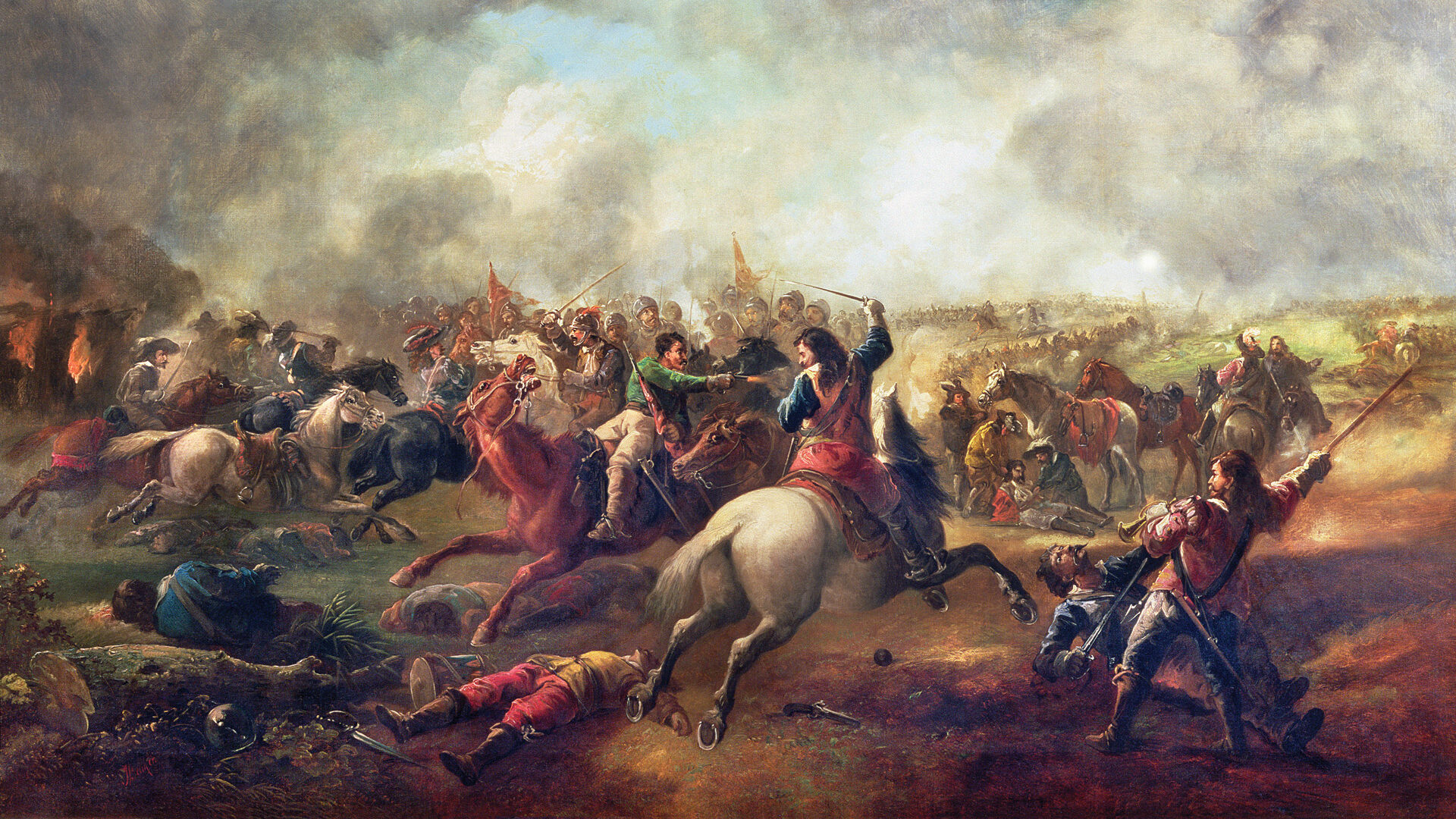
Historical context
On 2 July 1644 the allied Parliamentarian and Scottish army defeated the Royalist forces near York. Oliver Cromwell's cavalry played an important role in the fighting on the allied left.
Marston Moor effectively ended Royalist dominance in northern England and strengthened Cromwell's military reputation. It was one of the largest battles of the Civil Wars.
World History Database records
The records below are selected from the 1,090-record English Civil War archive and rendered as static HTML in chronological order.
Battle of Marston Moor
Reluctant to fight at all but persuades Rupert to postpone the battle 1 day
Battle of Marston Moor
Arrives at Marston Moor, 6 miles west of York on the Knaresborough Rd
Battle of Marston Moor
Commands the Royalist Horse
Battle of Marston Moor
Totally defeated Newcastle departs for Hamburg. Commands the Royalist "whitecoats" but only 30 survive
Battle of Marston Moor
Royalist defeat near York which loses Charles stronghold in the nth. 4,000 Royalists are killed & 1,500 taken prisoner
Battle of Marston Moor
Fights at Marston Moor on the side of the English Parliament
Battle of Marston Moor
Commands Manchesters Foot & for a time takes charge of Cromwell's cavalry
Battle of Marston Moor
Cromwell commands Eastern Association cavalry as Parliament and the Scots defeat Prince Rupert.
Battle of Marston Moor
Sweeps away Gorings horse by attacking the Royalists from the rear. Defeats the Royalists near York, leaving 4,000 dead & taking 1,500 prisoners. Cromwell's first major victory, personally commands 2,500 men
Battle of Marston Moor
Colonel Charles Fairfax is killed in action at the Battle of Marston Moor
Battle of Marston Moor
A gathering of eager national forces within a few square miles of ground naturally led to a battle, and Marston Moor proves decisive for the struggle in the north.
Battle of Marston Moor
Cromwell relieves Fairfax and Parliament is victorious.
Battle of Marston Moor
Fairfax's horse meets Gorings 1st line and charges them successfully.
Battle of Marston Moor
The city of York is taken after the Battle of Marston Moor, and nearly the whole of the north submits to the Parliament.
Battle of Marston Moor
Thomas Fairfax Cameron, 3rd commands the right suffering heavy losses from Goring.
Battle of Marston Moor
Fairfax fights on the Parliamentarian side during the major victory at Marston Moor.
Battle of Marston Moor
Fights for Parliament
Battle of Marston Moor
Commands the Scottish dragoons on the side of the English Parliament
Battle of Marston Moor
Commands the Royalist horse on the left flank
Battle of Marston Moor
Fights for the Royalists at Marston Moor, on the losing side
Battle of Marston Moor
As a 2nd to Goring commands some of the Royalist cavalry, taken prisoner by the Scots
Battle of Marston Moor
Commands a Parliamentary regiment at the Battle of Marston Moor
Battle of Marston Moor
Rupert commands the Royalist army defeated by Parliamentarian and Scottish forces at Marston Moor.
Battle of Marston Moor
Stabs Cromwell in the neck & is made Viscount Dungannon. Commands a regiment under Lord Byron
Battle of Marston Moor
Leads the Parliaments cavalry
Editorial provenance
Compiled and edited by World History Database.
Historical context is editorial material; the chronology is generated from World History Database English Civil War records.
Last reviewed: September 2026.
English Heritage · National Army Museum · UK Parliament · Cromwell Museum
Continue exploring