1944 15th May
Operation Overlord
The US will invade Utah & Omaha beaches, the British Gold & Juno & the Canadians Sword
D-Day and Normandy · permanent subject timeline
The Canadian assault sector on the Normandy coast. This page combines historical context with 5 matching records drawn directly from the World History Database Normandy archive.
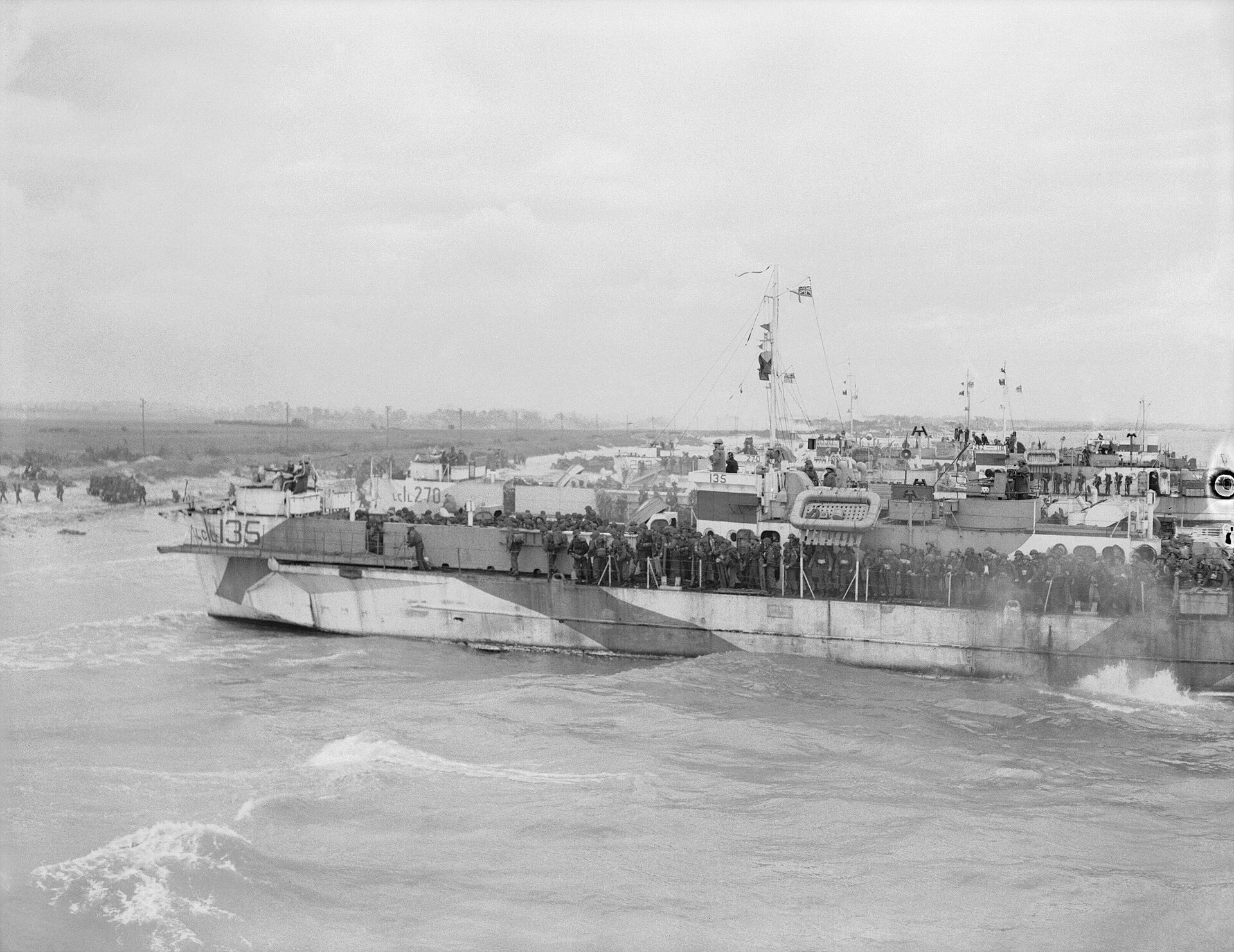
Historical context
Canadian forces landed at Juno Beach after overcoming coastal obstacles, rough water and fortified German positions. Units then advanced inland toward their assigned objectives.
The Canadian landings secured a central part of the Allied beachhead and fed directly into the subsequent battles around Caen and the Canadian advance toward Falaise.
World History Database records
The records below are selected from the 455-record D-Day and Normandy archive and rendered as static HTML in chronological order.
Operation Overlord
The US will invade Utah & Omaha beaches, the British Gold & Juno & the Canadians Sword
Advance on Caen
Foster's brigade pushed inland from Juno Beach toward the western approaches to Caen.
Operation Overlord
Keller commanded the Canadian division landing on Juno Beach and advancing toward the Caen-Bayeux road.
Operation Overlord
Major General Rod Keller, the Canadian commander at Juno Beach, reports to General Crerar in England at 10:30, "Beach-head gained. Well on our way to our immediate objectives"
Operation Overlord
Juno is the second most heavily defended of the five landing sites chosen by the Allies, General Wilhelm Richter is in charge of the 716th Division guarding the beach, with 11 heavy batteries of 155 mm guns and 9 medium batteries of 75 mm guns
Editorial provenance
Compiled and edited by World History Database.
Historical context is editorial material; the chronology is generated from World History Database D-Day and Normandy records.
Last reviewed: September 2026.
Continue exploring