The records below are selected from the 455-record D-Day and Normandy archive and rendered as static HTML in chronological order.
1944 5th June
Capture of Horsa Bridge
Major John Howard · Great Britain · Horsa Bridge · World War, 2nd
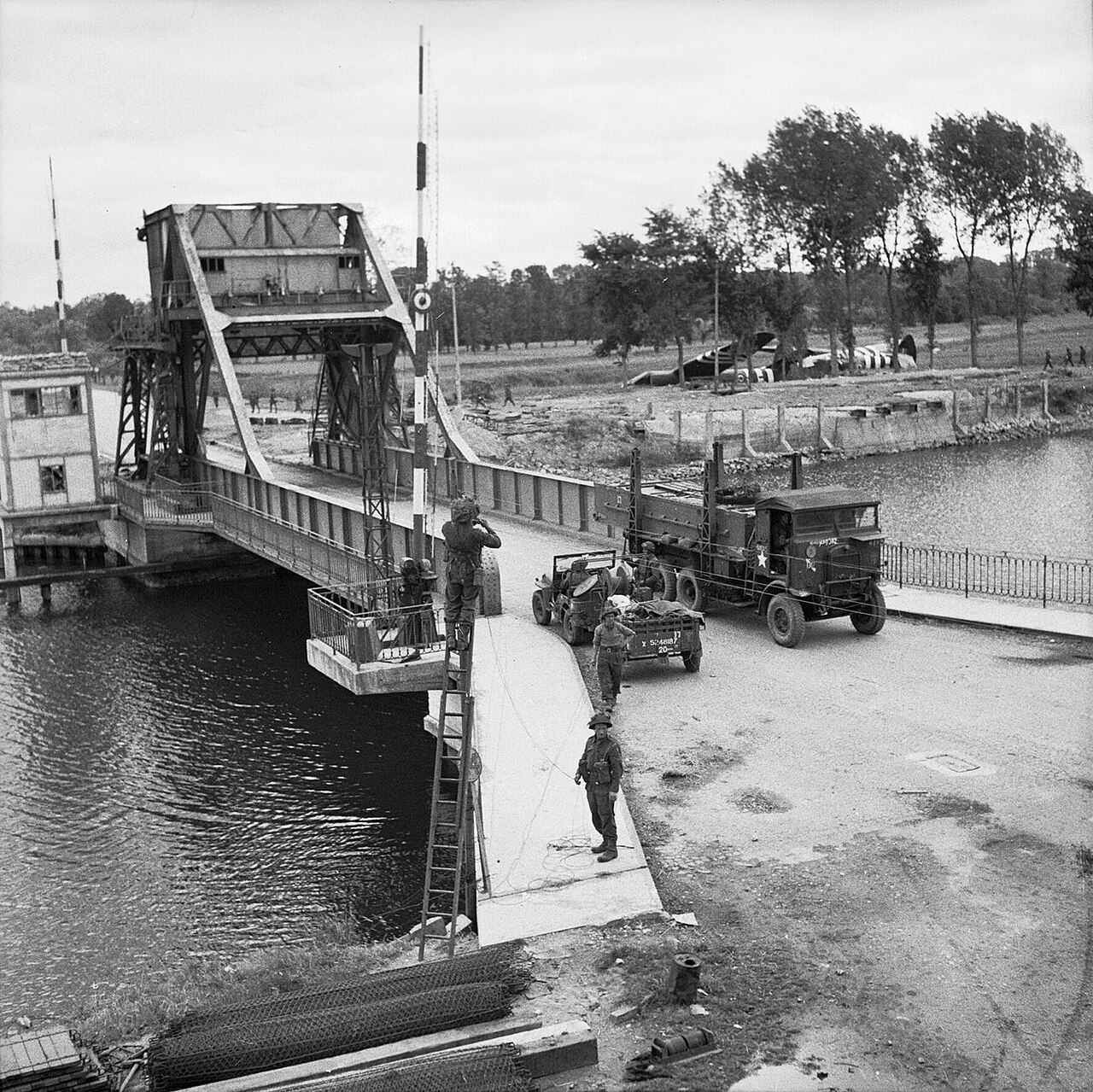
The attackers pour out of their battered gliders, completely surprising the German defenders, and take Horsa & Pegasus bridges within 10 minutes. A force of 181 men, led by Major John Howard, take off from RAF Tarrant Rushton in Dorset, southern England in six Horsa gliders to capture Pegasus Bridge, and also "Horsa Bridge", a few hundred yards to the east, over the Orne River
1944 5th June
Operation Overlord
Major John Howard · Great Britain · Benouville · World War, 2nd
Commands infantryman who land by glider & capture 2 bridges codenamed Pegasus & Horsa
1944 6th June
Capture of Pegasus Bridge
Lieutenant Danny Brotheridge · Great Britain · Pegasus Bridge · World War, 2nd
Lieutenant Brotheridge is killed crossing the bridge in the first minutes of the assault and thus becomes the first member of the invading Allied armies to die in combat on D-Day. Leads the infantry capture of 2 bridges codenamed Pegasus & Horsa. 1st Allied death in Normandy
1944 6th June
Capture of Pegasus Bridge
Commander of 6th Airbourne Division Richard Gale · Great Britain · Pegasus Bridge · World War, 2nd
Parachutes behind enemy lines & captures Benouville, including Pegasus Bridge
1944 6th June
Capture of Pegasus Bridge
Major John Howard · Great Britain · Pegasus Bridge · World War, 2nd
Commands infantryman who land by glider & capture 2 bridges codenamed Pegasus & Horsa
1944 6th June
Capture of Pegasus Bridge
Commander of 6th Para Brig Nigel Poett · Great Britain · Pegasus Bridge · World War, 2nd
Parachutes behind enemy lines & helps secure Pegasus Bridge
1944 6th June
Capture of Pegasus Bridge
Richard Todd · Great Britain · Pegasus Bridge · World War, 2nd
One of the members of the 7th Battalion reinforcements is young actor Richard Todd who would, nearly two decades later, play Major Howard in the film The Longest Day
1944 6th June
Operation Overlord
Lieutenant Danny Brotheridge · Great Britain · Pegasus Bridge · World War, 2nd
Leads the infantry capture of 2 bridges codenamed Pegasus & Horsa. 1st Allied death in Normandy
1944 6th June
Operation Overlord
Commander of 6th Airbourne Division Richard Gale · Great Britain · Benouville · World War, 2nd
Parachutes behind enemy lines & captures Benouville, including Pegasus Bridge
1944 6th June
Operation Overlord
Commander of 6th Para Brig Nigel Poett · Great Britain · Pegasus Bridge · World War, 2nd
Parachutes behind enemy lines & helps secure Pegasus Bridge
1944 6th June
Siege of Benouville
Commander of 6th Airbourne Division Richard Gale · Great Britain · Benouville · World War, 2nd
Parachutes behind enemy lines & captures Benouville, including Pegasus Bridge