A special White House unit is formed after the Pentagon Papers leak and becomes connected with covert political operations.
Watergate historical archive
Search the scandal through people, dates, places and events
This page contains 931 structured Watergate records. Records are not displayed automatically: use a search term or one of the filters below to choose what you want to see.
The archive covers the break-in, the Committee to Re-elect the President, the FBI and press investigations, Senate hearings, the White House tapes, the special prosecutor, impeachment proceedings, Richard Nixon's resignation and the legal and political aftermath.
From a break-in to a White House investigation
In the early hours of 17 June 1972, five men were arrested inside the Democratic National Committee headquarters at the Watergate complex in Washington, D.C. Evidence soon connected members of the burglary team to President Richard Nixon's re-election organisation. The investigation then widened from the break-in itself to campaign intelligence, political funding and attempts to obstruct or conceal the inquiry.
Resignation, prosecutions and institutional reform
The scandal produced criminal cases against senior administration and campaign figures, a constitutional confrontation over the White House tapes and House impeachment proceedings. Nixon resigned on 9 August 1974 before the full House voted on impeachment. Congress subsequently revised federal campaign-finance law, while the Supreme Court's decision in United States v. Nixon rejected an absolute presidential claim to withhold evidence in the criminal process.
Major events in the Watergate scandal
Follow the main stages from the White House Plumbers and the 1972 break-in through the Senate investigation, tapes battle, impeachment crisis and Nixon resignation. Select a linked stage for a crawlable background page, or use the database filters below for record-level detail.
Five burglars are arrested inside the Democratic National Committee headquarters at the Watergate complex.
G. Gordon Liddy and James W. McCord Jr. are convicted on all counts arising from the Watergate break-in.
The Senate establishes the Select Committee on Presidential Campaign Activities to investigate the break-in, cover-up and campaign abuses.
Public Senate hearings expose testimony about campaign operations, White House conduct and the developing cover-up investigation.
Archibald Cox is sworn in as Watergate special prosecutor, beginning the investigation that later produces the confrontation over the White House tapes.
Alexander Butterfield discloses the existence of the presidential taping system, making the recordings central evidence.
The Senate Watergate Committee and special prosecutor Archibald Cox subpoena White House recordings and documents needed for the investigation.
Nixon orders the dismissal of special prosecutor Archibald Cox; senior Justice Department officials resign rather than carry out the order.
The Senate committee announces the discovery of an 18½-minute gap in a recording of a June 20, 1972 Nixon-Haldeman conversation.
The Supreme Court unanimously orders Nixon to surrender subpoenaed White House recordings to the special prosecutor.
The House Judiciary Committee approves articles concerning obstruction of justice, abuse of power and failure to comply with subpoenas.
The White House releases transcripts of June 23, 1972 conversations showing Nixon directing an effort to restrict the FBI's Watergate investigation.
Richard Nixon leaves office, becoming the first U.S. president to resign.
President Gerald Ford grants former President Nixon a full pardon for federal offences Nixon had committed or might have committed while president.
Explore Watergate in detail
Open permanent subject, person and year pages with database records rendered directly in the page. These pages provide focused chronologies and archival source links while the searchable archive below remains available for the full dataset.
Senate Watergate CommitteeCommittee creation, televised hearings, subpoenas and the final report.
Sam ErvinChairman of the Senate Select Committee on Presidential Campaign Activities.
Howard BakerRepublican vice chairman and participant in the committee hearings.
H. R. HaldemanWhite House conversations, tapes, resignation and Watergate proceedings.
John DeanWhite House counsel, cooperation with investigators and Senate testimony.
White House tapesRecorded conversations, subpoenas and the constitutional dispute over access.
Watergate in 1973A selected chronology of the investigation’s pivotal year.
The break-in, investigation and resignation
Public-domain U.S. federal government photographs are stored locally for the page. Each caption retains a link to the archival or Wikimedia Commons source used for provenance.
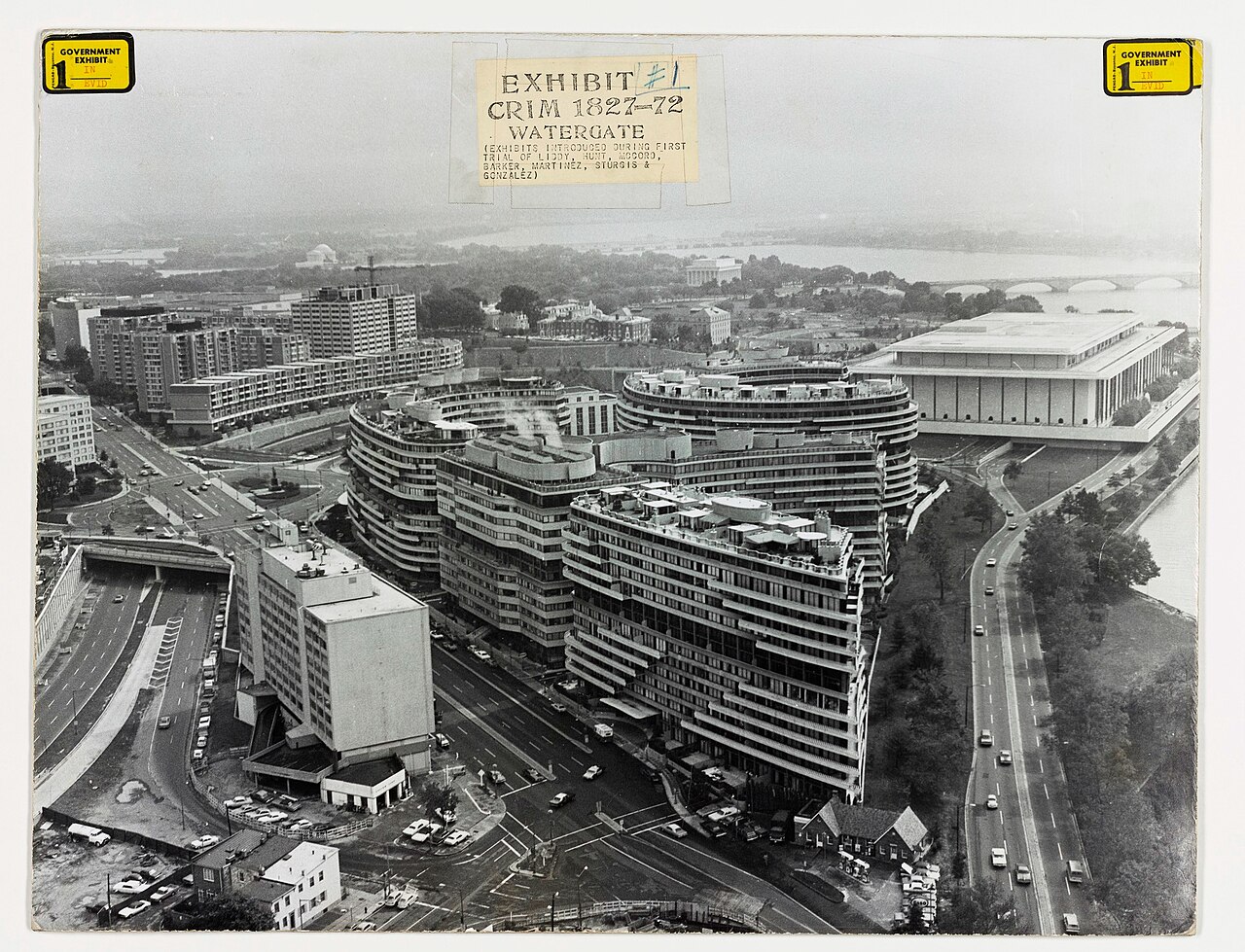
The Democratic National Committee offices in this Washington complex were burglarised on 17 June 1972.
U.S. District Court / National Archives source →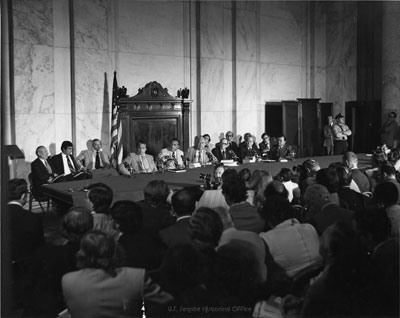
The Senate committee's televised 1973 hearings brought testimony about the break-in and cover-up to a national audience.
U.S. Senate Historical Office source →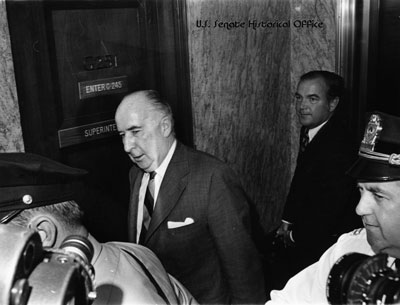
Former Attorney General and Nixon campaign chairman John Mitchell arrives for testimony before the Senate Watergate Committee.
U.S. Senate Historical Office source →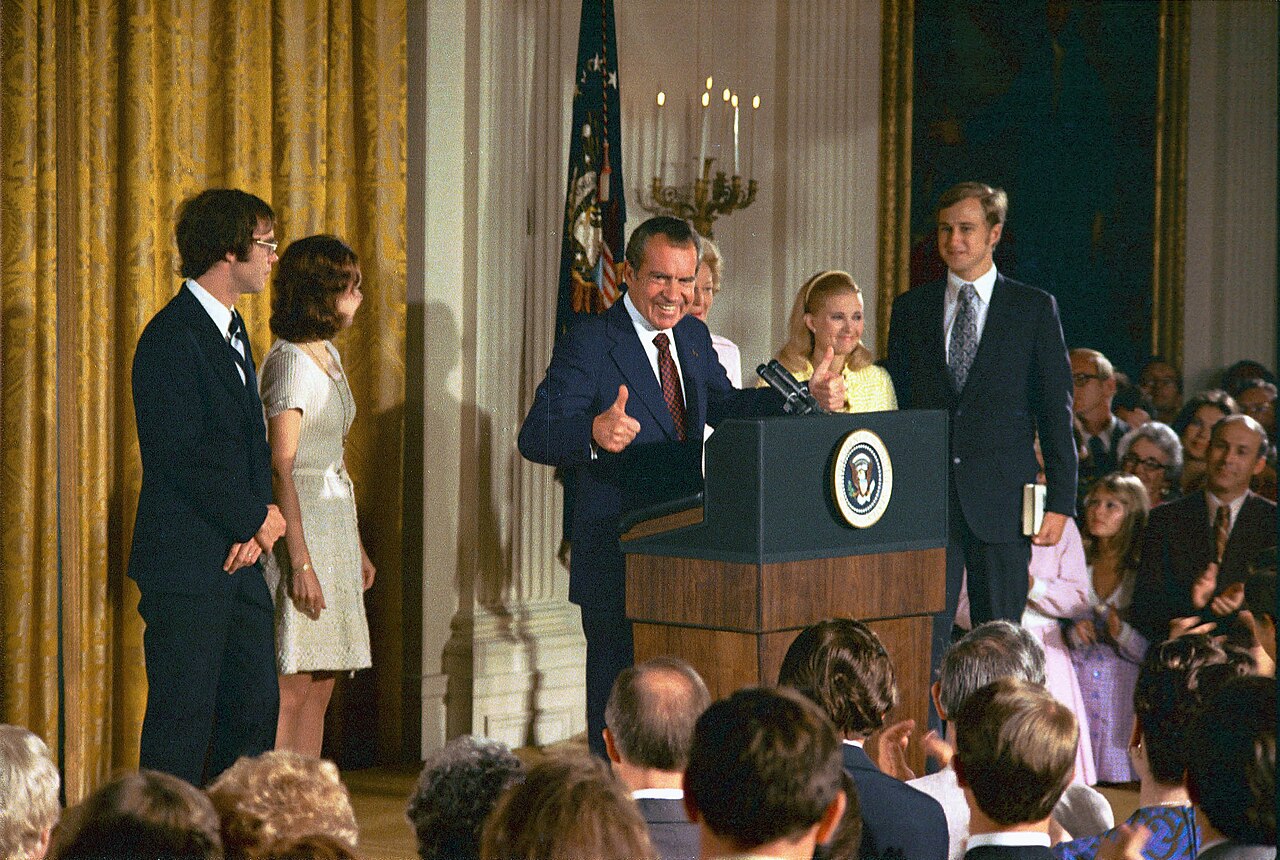
Richard Nixon addresses White House staff on 9 August 1974, the day his resignation took effect.
White House Photo Office source →0 matching records
Enter a search term or select a filter to display records