William Matthew Byrne
United States District Judge
Pentagon Papers Trial Begins
Byrne begins presiding over the federal trial of Daniel Ellsberg and Anthony Russo.
The Watergate investigation accelerated during 1973. The Senate created its select committee in February, public hearings began in May, Alexander Butterfield disclosed the White House taping system in July, and subpoenas for presidential recordings followed.
The year also included John Dean’s testimony, the confrontation over access to the tapes and the October events that became known as the Saturday Night Massacre. The records below provide a cross-section of the database chronology for 1973.
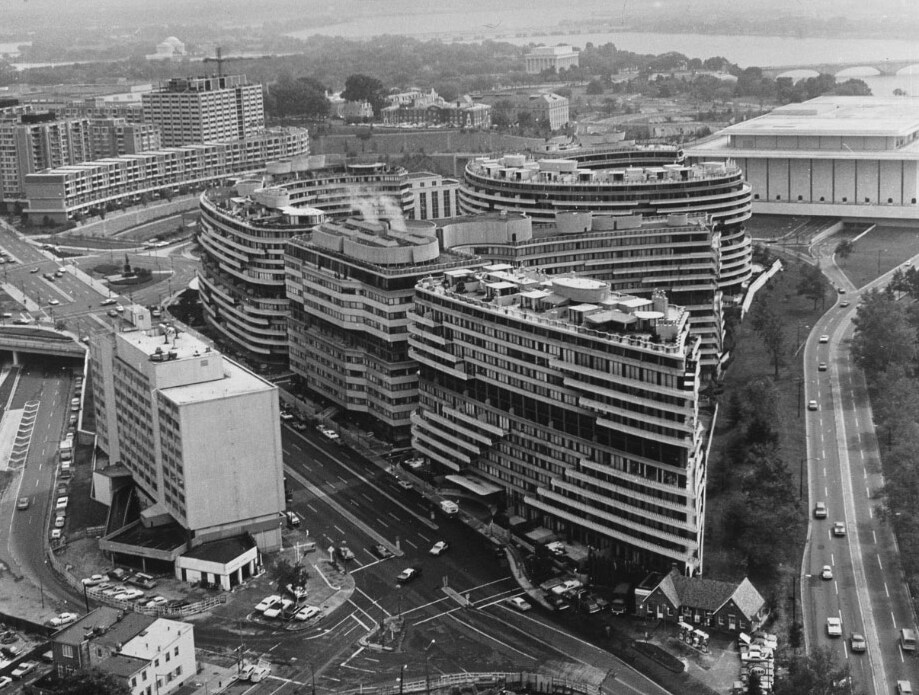
The record cards below are rendered directly in this page’s HTML. They are selected from the World History Database Watergate dataset; the source links beneath each record group provide authoritative context for the chronology.
Byrne begins presiding over the federal trial of Daniel Ellsberg and Anthony Russo.
Jury selection begins in the Watergate break-in trial of Liddy and James McCord before Chief Judge John Sirica in federal district court.
Pleads guilty with Virgilio Gonzalez, Eugenio Martinez and Frank Sturgis during the Watergate break-in trial.
George Gordon Liddy is convicted of conspiracy, burglary and wiretapping charges arising from the Watergate operation.
John Ehrlichman appears with Richard Nixon in the 16-minute White House recording numbered 856-004; the Watergate Special Prosecution Force later included the recording in its transcript collection.
John Ehrlichman appears with Richard Nixon in the 22-minute White House recording numbered 862-004; the Watergate Special Prosecution Force later included the recording in its transcript collection.
Hunt met campaign attorney Paul O'Brien while pressing concerns that financial and other commitments made to him had not been fulfilled.
John Dean appears with Richard Nixon and H. R. Haldeman in the 33-minute White House recording numbered 882-012; the Watergate Special Prosecution Force later included the recording in its transcript collection.
In the letter, McCord stated that he had been pressured to plead guilty and remain silent, that he had perjured himself during the trial, that the break-in was not a CIA operation, and that other, as yet unnamed Government officials.
Richard Nixon appears with John Dean in the 14-minute White House recording numbered 037-175; the Watergate Special Prosecution Force later included the recording in its transcript collection.
Richard Nixon appears with H. R. Haldeman in the 4-minute White House recording numbered 884-007; the Watergate Special Prosecution Force later included the recording in its transcript collection.
Discusses with Nixon the possible use of campaign contributions for Watergate defendants and the risk that such payments could appear to obstruct justice.
John Mitchell appears with Richard Nixon, John Dean, John Ehrlichman, and H. R. Haldeman in the 88-minute White House recording numbered 422-033; the Watergate Special Prosecution Force later included the recording in its transcript collection.
John Ehrlichman appears with Richard Nixon, H. R. Haldeman, and Ronald Ziegler in the 109-minute White House recording numbered 423-003; the Watergate Special Prosecution Force later included the recording in its transcript collection.
McCord tells investigators that G. Gordon Liddy said senior Nixon campaign officials had approved the burglary and surveillance operation.
Discusses draft language concerning John Dean, Dean's forthcoming grand-jury testimony, executive privilege and possible responses to Watergate accusations.
The New York Times reports that McCord told Senate investigators that payments for Watergate defendants came through the Committee to Re-Elect the President.
John Ehrlichman appears with Richard Nixon in the 29-minute White House recording numbered 038-037; the Watergate Special Prosecution Force later included the recording in its transcript collection.
John Ehrlichman appears with Richard Nixon and H. R. Haldeman in the 47-minute White House recording numbered 896-004; the Watergate Special Prosecution Force later included the recording in its transcript collection.
John Ehrlichman appears with Richard Nixon in the 31-minute White House recording numbered 896-006; the Watergate Special Prosecution Force later included the recording in its transcript collection.
H. R. Haldeman appears with Richard Nixon and John Ehrlichman in the 19-minute White House recording numbered 897-003; the Watergate Special Prosecution Force later included the recording in its transcript collection.
Richard Nixon appears with H. R. Haldeman in the 22-minute White House recording numbered 897-011; the Watergate Special Prosecution Force later included the recording in its transcript collection.
Rose Mary Woods appears with Richard Nixon and H. R. Haldeman in the 11-minute White House recording numbered 898-006; the Watergate Special Prosecution Force later included the recording in its transcript collection.
Ronald Ziegler appears with Richard Nixon, H. R. Haldeman, and John Ehrlichman in the 43-minute White House recording numbered 898-023/899-001; the Watergate Special Prosecution Force later included the recording in its transcript collection.
John Ehrlichman appears with Richard Nixon and H. R. Haldeman in the 34-minute White House recording numbered 902-001; the Watergate Special Prosecution Force later included the recording in its transcript collection.
H. R. Haldeman appears with Richard Nixon in the 22-minute White House recording numbered 903-006; the Watergate Special Prosecution Force later included the recording in its transcript collection.
Nixon requested that White House Counsel John Dean write him a report about everything he knew about the Watergate matter, and he sent Dean to Camp David to write it.
H. R. Haldeman appears with Richard Nixon in the 8-minute White House recording numbered 038-156; the Watergate Special Prosecution Force later included the recording in its transcript collection.
Richard Nixon appears with H. R. Haldeman, John Ehrlichman, and Ronald Ziegler in the 309-minute White House recording numbered 431-009; the Watergate Special Prosecution Force later included the recording in its transcript collection.
Nixon’s top White House staffers, H.R. Haldeman and John Ehrlichman, and Attorney General Richard Kleindienst resign over the scandal. White House counsel John Dean is fired.
The Senate Watergate committee begins its nationally televised hearings. Attorney General-designate Elliot Richardson taps former solicitor general Archibald Cox as the Justice Department’s special prosecutor for Watergate.
H. R. Haldeman appears with Richard Nixon in the 15-minute White House recording numbered 039-080; the Watergate Special Prosecution Force later included the recording in its transcript collection.
Participates in the continuing Phase I hearings as the committee examines the structure, personnel and activities of the Nixon reelection campaign.
Former White House Counsel John Dean did indeed made these allegations. He began with a seven-hour opening statement in which he laid out his knowledge of the entire campaign of White House espionage.
Privately confirms to Senate Watergate investigators that Nixon's White House used an automatic recording system, creating a new source of potential evidence.
Hunt testified before the Watergate grand jury about discussions concerning money, commitments, and sensitive work he had performed for White House officials.
Nixon refuses to turn over the presidential tape recordings to the Senate Watergate committee or the special prosecutor.
Participates as former White House chief of staff H. R. Haldeman begins testimony, bringing one of Nixon's closest former aides before the televised Watergate hearings.
Argues in federal court that the special prosecutor is entitled to subpoenaed White House recordings needed for the Watergate criminal investigation.
Takes part in another Phase II hearing as the committee examines testimony about campaign conduct, political operations and election-related practices.
Nixon, looking toward a solution to the tape dispute, offered what later came to known as the Stennis Compromise. U.S. Senator John C. Stennis (D-MS) would independently review the tapes and summarize them for the special prosecutor's office.
Nixon contacted the Solicitor General, Robert Bork, and ordered him, as acting head of the Justice Department in the wake of the previous resignations, to fire Cox. Bork reluctantly complied.
Participates as the committee resumes Phase II hearings and continues examining campaign practices, political operations and related evidence from the 1972 election.
Leads the opening of Phase III hearings devoted to campaign financing, expanding the committee's public inquiry into fundraising and financial practices surrounding the 1972 election.
At the end of a lengthy response to a question about his personal finances, the President famously said, "And so, that is where the money came from.
The disputed June 20, 1972 recording concerns a conversation between President Nixon and White House Chief of Staff H. R. Haldeman.
Haldeman's personal notes on the meeting indicate that the break-in was the subject under discussion. Nixon's secretary, Rose Mary Woods, in initial testimony about the tape, said, "The buttons said on and off, forward and backward.
Woods demonstrates how she says she could have accidentally erased part of a presidential recording while operating transcription equipment and reaching for a telephone.
The Washington Post receives the Pulitzer Prize for Public Service for its Watergate coverage, prominently associated with reporting by Bernstein and Bob Woodward.
Presses for financial support covering legal fees, family needs and expenses as payments to Watergate defendants become a central part of the cover-up investigation.
Reference context for this record group: National Archives — Watergate chronology · U.S. Senate — Watergate Committee history · Richard Nixon Presidential Library — White House tapes
The explanatory text and major chronology on this page were cross-checked against the following institutional sources. Individual database records may contain additional detail from the wider World History Database dataset.