1915 19th February
Battle of Gallipoli
What was to become the Battle of Gallipoli, a 10-month Battle of attrition, begins at 7.30am on February 19, 1915
First World War · permanent subject timeline
The Allied land campaign on the Gallipoli peninsula. This page combines historical context with 16 matching records drawn directly from the World History Database World War I battle archive.
Historical context
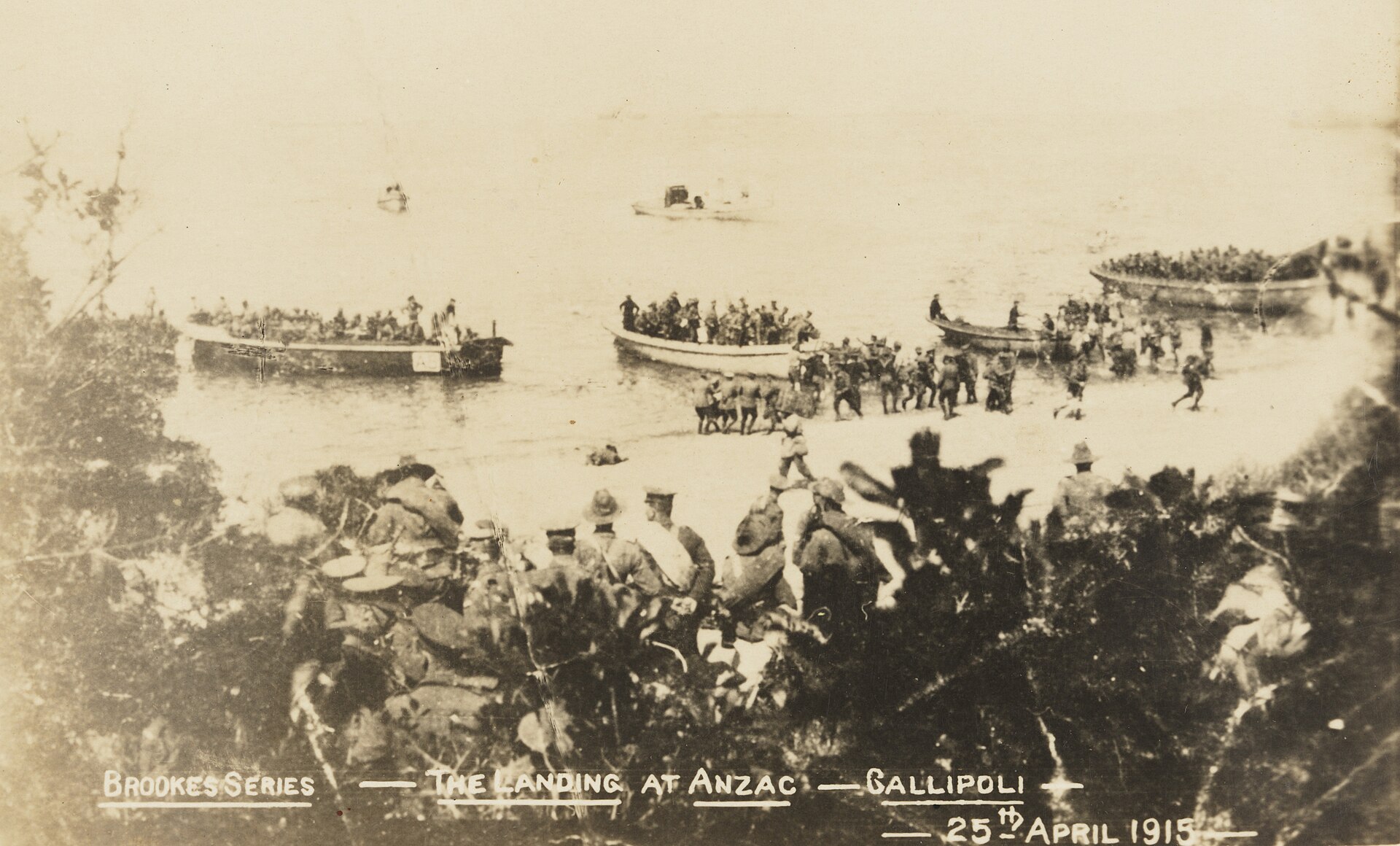
Allied forces landed on the Gallipoli peninsula from April 1915 in an attempt to support the Dardanelles strategy. British, French, Australian and New Zealand troops established beachheads but failed to break through determined Ottoman defenses.
The campaign ended in evacuation without achieving its strategic objectives. Gallipoli became central to Australian and New Zealand national memory and strengthened the reputation of Ottoman commanders including Mustafa Kemal.
World History Database records
The records below are selected from the 572-record World War I battles archive and rendered as static HTML in chronological order.
Battle of Gallipoli
What was to become the Battle of Gallipoli, a 10-month Battle of attrition, begins at 7.30am on February 19, 1915
Battle of Gallipoli
Demolition parties of Royal Marines raided the Sedd el Bahr and Kum Kale forts, meeting little opposition. Another attempt is made on February 25, this time the Ottomans evacuate the outer defences and the fleet enters the straits to engage the intermediate defences
Battle of Gallipoli
Proposes Greek troops help the Allies
Battle of Gallipoli
The event that decided the battle took place on the night of March 8 when the Ottoman minelayer Nusret laid a line of mines in Eren Key Bay, a wide bay along the Asian shore just inside the entrance to the straits
Battle of Gallipoli
The operation went ahead without the British or French becoming aware of the recent additions to the Ottoman minefields
Battle of Gallipoli
March 18 is a significant victory for the Ottoman Empire
Battle of Gallipoli
Lands a force of Australians & New Zealanders subsequently know as ANZAC Cove
Battle of Gallipoli
With the failure of the naval assault, the idea that land forces could advance around the backs of the Dardanelles forts and capture Istanbul gained support as an alternative, on 25 April, the Gallipoli Campaign is launched
Battle of Gallipoli
Commands the 1st troop landings on Gallipoli with the 29th Div & Australian & NZ corps
Battle of Gallipoli
Responsible for the Gallipoli front by leading the Mediterranean expeditionary force. Expects a 2 day advantage in which the Turks would be confused but is dissappointed. Celebrated as ANZAC day
Battle of Gallipoli
Reinforcements arrive when IX Corps land at Suvla
Battle of Gallipoli
A 2nd failed attempt is made to land at Gallipoli
Battle of Gallipoli
Despite heavy losses Churchill recommends troop reinforcements to the Dardanelles Comm
Battle of Gallipoli
The first day of troop withdrawal from Gallipolli
Battle of Gallipoli
Visits the Peninsular in November & recommends evacuation
Battle of Gallipoli
The Thirteenth Division suffers 50% losses before its transfer to Mesopotamia in March 1916
Editorial provenance
Compiled and edited by World History Database.
Historical context is editorial material; the chronology is generated from World History Database First World War records.
Last reviewed: September 2026.
Imperial War Museums · Commonwealth War Graves Commission · Australian War Memorial
Continue exploring