1806 9th April
Birth of Isambard Kingdom Brunel
Isambard Kingdom Brunel is born in Portsea, Portsmouth, the son of engineer Marc Isambard Brunel and Sophia Kingdom.
Brunel engineering · permanent subject timeline
Civil engineer of railways, bridges, tunnels and pioneering steamships. This page combines historical context with 281 matching records drawn directly from the World History Database Brunel chronology.
Historical context
Isambard Kingdom Brunel was born at Portsea in 1806 and trained in mathematics, drawing and practical engineering before working with his father on the Thames Tunnel. He went on to direct major railway, bridge, dock and steamship projects during Britain's industrial expansion.
Brunel's significance lies in the scale and integration of his engineering. He treated routes, structures, stations, ships and machinery as parts of connected transport systems and repeatedly pushed materials, dimensions and construction methods beyond established practice.
World History Database records
The records below are selected from the 361-record Brunel chronology and are rendered as static HTML in chronological order.
Birth of Isambard Kingdom Brunel
Isambard Kingdom Brunel is born in Portsea, Portsmouth, the son of engineer Marc Isambard Brunel and Sophia Kingdom.
Education
By the age of eight Brunel has learned Euclidean geometry and shows strong ability in mathematics and mechanics.
Education
At the age of fourteen Brunel begins advanced studies at the Henri Quatre college in Caen.
Mechanical Drawing
Brunel develops advanced mathematical and drawing skills during his education in France.
French Education
Brunel continues technical studies in Paris before entering practical engineering work.
Return to England
Brunel completes his education in France and returns to England to begin his engineering career.
Apprenticeship
Brunel studies precision engineering and horology under the celebrated clockmaker Abraham-Louis Breguet.
Breguet Workshop
Brunel gains precision engineering experience in Abraham-Louis Breguet's workshop.
Education
Brunel continues his mathematical education at the Lycee Henri-IV in Paris.
Engineering Education
Brunel is ruled ineligible for admission to the Ecole Polytechnique because he is a foreign national.
Engineering Assistant
Brunel becomes an assistant to his father and gains practical experience on a range of engineering proposals.
Gas Engine
Brunel and his father experiment with a high-pressure gas engine as an alternative to conventional steam power.
Thames Tunnel
Brunel joins the Thames Tunnel project after his father is appointed engineer for the crossing beneath the River Thames.
Tunnel Shield
Brunel works with his father on the shield system used for the Thames Tunnel.
Thames Tunnel
Construction of the Thames Tunnel begins ceremonially and Brunel lays the second brick after his father.
Assistant Engineer
Brunel serves as assistant engineer under resident engineer John Armstrong during the early tunnel works.
Resident Engineer
Brunel takes over as resident engineer of the Thames Tunnel after John Armstrong resigns through illness.
Thames Tunnel
Brunel becomes resident engineer after John Armstrong resigns because of illness and exhaustion.
Chief Engineer
Brunel assumes full responsibility for directing the engineering work inside the Thames Tunnel.
Thames Tunnel
The River Thames breaks into the tunnel and Brunel helps evacuate the workers before directing repairs to the breach.
Tunnel Banquet
A banquet is held inside the Thames Tunnel to demonstrate confidence in the pioneering construction project.
Diving Operations
Brunel uses diving equipment and surface inspections to locate and repair the breach above the flooded tunnel.
Rescue
Brunel is pulled from the flooded tunnel after being trapped by timber and swept through the workings.
Thames Tunnel
A major tunnel flood kills six workers and seriously injures Brunel, forcing him to withdraw from the project.
Recovery
While recovering from his tunnel injuries Brunel develops ideas for a suspension bridge across the Avon Gorge.
Thames Tunnel
Brunel leaves the Thames Tunnel project because his injuries prevent him from continuing as resident engineer.
Institution of Civil Engineers
Brunel becomes an associate member of the Institution of Civil Engineers.
Avon Gorge Bridge Design
Enters the competition while still a young independent engineer.
Clifton Suspension Bridge
Brunel submits designs to the competition for a suspension bridge across the Avon Gorge at Clifton.
First Clifton Bridge Competition
Submits designs to the first Clifton Suspension Bridge competition.
Royal Society
Brunel is elected a Fellow of the Royal Society in recognition of his scientific and engineering promise.
Second Clifton Suspension Bridge Competition
Submits revised designs in the second competition for a bridge across the Avon Gorge.
Telford Competition Judgement Challenged
Brunel continues promoting his Avon Gorge design after Thomas Telford rejects the first competition entries and proposes his own bridge.
Clifton Bridge Engineer Appointed
Brunel is appointed engineer for the Clifton Suspension Bridge after his revised design is selected.
Clifton Suspension Bridge
A ceremony marks the start of construction and work begins on the Clifton side of the gorge.
Clifton Suspension Bridge
Construction is halted after the Bristol riots damage confidence and stop subscriptions to the bridge company.
Bristol Docks
Brunel is appointed engineer to Bristol Docks and begins improving the harbour's engineering works.
Clifton Bridge Cost Estimate Prepared
Brunel estimates the suspension bridge project at about fifty-seven thousand pounds, including architectural treatment of the towers.
Clifton Main Span Fixed at 214 Metres
Brunel's accepted scheme uses a main suspension span of about 214 metres across the Avon Gorge.
Clifton Suspension Bridge
Brunel secures acceptance of his revised suspension bridge design and becomes project engineer.
Construction
Work begins on the Clifton Suspension Bridge, one of Brunel's earliest major independent projects.
Bristol Docks
Brunel designs a deep scouring sluice to draw accumulated silt from the harbour into the tidal River Avon.
Bristol Docks
Brunel designs three shallow sluices to regulate the water level within Bristol's Floating Harbour.
Bristol Docks
Brunel investigates the severe accumulation of mud and silt affecting shipping in Bristol's Floating Harbour.
Bristol Docks
Brunel recommends a dredging drag boat to scrape mud from the quay walls toward the harbour's scouring sluice.
Personal Life
Brunel meets Mary Elizabeth Horsley through his friendship with his brother-in-law Benjamin Hawes.
Great Western Railway
Brunel is appointed engineer for the proposed railway between Bristol and London.
Great Western Railway
The proposed Great Western Railway route between Bristol and London is formally announced.
Railway Survey
Brunel surveys the proposed Great Western Railway route on horseback and negotiates with landowners.
Three-Month GWR Route Survey Completed
Brunel completes an intensive survey of the proposed London-to-Bristol railway and presents a route engineered for speed and gentle gradients.
GWR Level Route Principle Defended
Brunel argues for a railway kept as level and straight as practicable so trains can run faster and more efficiently.
Great Western Railway Act Receives Approval
Parliament authorises construction of the Great Western Railway between London and Bristol.
Great Western Steamship Company
The Great Western Steamship Company is formed to develop Brunel's transatlantic steamship plan.
Broad Gauge Engineering Case Presented
Brunel promotes the seven-foot broad gauge as a means of providing stability, speed and passenger comfort.
Great Western Railway
Parliament authorises the Great Western Railway and allows construction of Brunel's London to Bristol route.
Transatlantic Steamship
Brunel proposes extending the Great Western transport system from Bristol to New York by steamship.
Engagement
Brunel proposes marriage to Mary Elizabeth Horsley during a family walk in London.
Marriage
Brunel marries Mary Elizabeth Horsley and later establishes a home and office in Westminster.
Leigh Woods Abutment Foundation Laid
Construction restarts with the foundation stone for the Leigh Woods abutment laid on the western side of the gorge.
Box Tunnel
Brunel begins sinking exploratory shafts to examine the geology along the proposed route through Box Hill.
Broad Gauge
Brunel adopts a broad railway gauge of seven feet and one quarter inch for the Great Western Railway.
Broad-Gauge Bridge Clearances Standardised
Brunel's broad gauge determines the generous track widths and spans required for many early Great Western bridges.
Clifton Suspension Bridge
Construction resumes after renewed commercial confidence brings further investment to the project.
GWR Main-Line Construction Contracts Let
Construction of the London-to-Bristol main line proceeds through multiple major contracts under Brunel's overall engineering direction.
Hanwell Viaduct Works
The viaduct becomes an early showpiece of Brunel's railway engineering.
Railway Construction
Large-scale construction begins on Brunel's Great Western Railway between London and Bristol.
South Devon Main-Line Survey Completed
Brunel surveys a railway route between Exeter and Plymouth that later becomes the South Devon Railway.
South Wales Railway Engineering
Extends his railway engineering work into industrial South Wales.
Taff Vale Railway Appointment
Is appointed engineer for the Taff Vale Railway project.
Wharncliffe Viaduct Construction
Directs construction of the Wharncliffe Viaduct for the Great Western Railway.
SS Great Western
The wooden paddle steamship SS Great Western is launched at Bristol under Brunel's direction.
Clifton Suspension Bridge
The main contractors fail financially, but the bridge towers are raised in unfinished stone.
First Major GWR Structure
The structure is the first major engineering work completed on the GWR.
Great Western Hull Built by William Patterson
William Patterson's Bristol yard constructs Brunel's large wooden paddle steamship for the Great Western Steamship Company.
Institution of Civil Engineers
Brunel becomes a full member of the Institution of Civil Engineers.
Wharncliffe Becomes First Major GWR Structure
The Wharncliffe Viaduct becomes the first major completed structure on Brunel's Great Western Railway.
Wharncliffe Viaduct Completed
Completes the Wharncliffe Viaduct on the Great Western Railway.
Great Western Sea Trial Completed
SS Great Western completes an early sea trial before beginning her first Atlantic service.
Brunel Injured during Great Western Fire
Brunel is injured after falling about twenty feet during the confusion surrounding the Great Western engine-room fire.
Great Western Engine-Room Fire Contained
An engine-room fire breaks out as Great Western prepares for her maiden Atlantic voyage but is extinguished with limited ship damage.
SS Great Western
SS Great Western departs Bristol on her first Atlantic voyage to New York.
SS Great Western
SS Great Western reaches New York and demonstrates the commercial practicality of regular steamship crossings.
Great Western Railway
The first public section of the Great Western Railway opens between Paddington and Maidenhead.
Paddington Station
The first temporary Great Western Railway terminus at Paddington opens for services between London and Maidenhead.
Box Tunnel
Work begins on Box Tunnel through Box Hill for the Great Western Railway.
Brunel GWR Overbridge
The structure reflects Brunel's broad-gauge railway design.
Dumb Bell Bridge
Designs the sharply skewed Dumb Bell Bridge beneath the Great Western Railway.
Early Broad-Gauge Bridge
The bridge preserves Brunel's early broad-gauge engineering approach.
Early Brunel Iron Bridge
The work is among Brunel's earliest iron bridge designs.
Early GWR Broad-Gauge Operations Begin
The first working section of the Great Western Railway demonstrates Brunel's broad-gauge track and early bridge designs.
Early GWR Overbridge
The bridge forms part of Brunel's first London-to-Maidenhead contracts.
Great Britain Project Begins as City of New York
Early plans for Brunel's second major steamship envisage a wooden paddle vessel initially called City of New York.
Great Western Maiden Voyage Passenger Loss
Many booked passengers cancel after the fire, leaving only a small number aboard when Great Western departs for New York.
Leigh Road Bridge
Completes the Leigh Road overbridge on the early Great Western Railway.
Maidenhead Railway Bridge
Construction of Brunel's low-arched brick railway bridge across the Thames is completed.
Middlegreen Road Bridge
Completes an early Great Western Railway overbridge at Middlegreen Road.
Paddington Canal Iron Bridge
Designs an early iron bridge across the Paddington Arm of the canal.
St Mary's Road Bridge
Completes the St Mary's Road bridge on the Great Western Railway.
Taplow Skew Bridge
Solves a difficult road crossing with an ingenious skew arch.
Maidenhead Railway Bridge
Maidenhead Railway Bridge opens to traffic and vindicates Brunel's unusually flat arch design.
SS Great Britain
Construction begins on Brunel's iron-hulled transatlantic steamship SS Great Britain.
Box Tunnel
Difficult rock strata and heavy water ingress delay excavation, with less than half of the tunnel completed.
Bath GWR Bridge
The Tudor-Gothic bridge forms part of Brunel's Bristol-Bath railway works.
Brook Road Bridge
Completes Brook Road Bridge for the Great Western Railway near Bath.
Commercial Electric Telegraph
Supports installation of electric telegraph wires beside the Great Western Railway.
GWR Shareholder Challenge Defeated
Brunel successfully defends his engineering decisions when dissatisfied shareholders attempt to remove him from the railway project.
Iron Hull Recommended for Great Britain
Brunel and the building committee recommend changing the new steamship from wood to iron construction.
Paddington-West Drayton Telegraph
The Paddington-West Drayton link becomes an early commercial telegraph installation.
River Avon Viaduct Design Developed
Brunel develops the masonry viaduct carrying the Great Western Railway across the River Avon in Wiltshire.
Bath-Bristol Railway Section Opens
The Great Western section between Bristol and Bath opens, using Brunel's broad gauge and associated masonry structures.
Bristol Temple Meads Opens
Opens his original Bristol Temple Meads terminus.
Original Bristol Terminus
Trains begin running from Brunel's Bristol station toward Bath.
Swindon Railway Works
Daniel Gooch proposes locomotive works at Swindon and Brunel supports creation of a major railway centre there.
Screw Propulsion Report Submitted
Brunel submits a detailed report recommending screw propulsion instead of paddle wheels for the new Great Britain.
Wootton Bassett-Chippenham Section Opens
Another section of Brunel's Great Western main line opens between Wootton Bassett and Chippenham.
SS Great Britain
Brunel orders SS Great Britain to be redesigned for screw propulsion instead of paddle wheels.
Archimedes Screw Trials Studied
Brunel studies Francis Pettit Smith's screw-propelled Archimedes during trials and demonstrations at Bristol.
Bath Avon Railway Bridge
The crossing carries the Great Western Railway through the city.
Bath Spa Skew Bridge
Designs the skew bridge immediately west of Bath Spa station.
Bourton Church Bridge Completed
A Brunel-designed accommodation bridge is completed on the Challow to Wootton Bassett section of the Great Western Railway.
By Brook Culvert Completed
Brunel's stone culvert over By Brook is completed as part of the Great Western route through the Box area.
Cheltenham and Great Western Union Bridge
The limestone bridge uses Brunel's characteristic elliptical arch.
Clifton Chain Contract Awarded
The Copperhouse Foundry at Hayle receives the contract to manufacture suspension chains for Brunel's Clifton bridge.
Dorchester Street Railway Bridge
The structure carries Brunel's Great Western route through central Bath.
Gatehampton Viaduct
Completes the original Gatehampton Viaduct across the River Thames.
Great Britain Screw Conversion Approved
The steamship directors accept Brunel's recommendation and approve converting the vessel to screw propulsion.
Highnams Farm Bridge
Designs a Great Western Railway bridge near Saltford.
Kemble Railway Bridge
Designs an accommodation bridge south of Kemble for the railway.
Keynsham Railway Crossing
The bridge forms part of Brunel's Bristol-to-Bath railway section.
Moulsford Thames Crossing
The viaduct forms part of the pioneering Great Western main line.
Moulsford Viaduct
Completes the original Moulsford Viaduct across the Thames.
River Chew Bridge
Designs the Great Western Railway crossing over the River Chew.
Saltford GWR Bridge
The masonry structure belongs to the pioneering Bristol-Bath section.
St James Railway Bridge
Completes the skew railway bridge over the Avon at Bath.
Thames Railway Crossing
The elegant masonry crossing carries Brunel's broad-gauge railway.
Twerton Railway Works
The structure incorporates arches, railway facilities and workers' accommodation.
Twerton Viaduct Completed
Completes the long Twerton Viaduct for the Great Western Railway.
Twerton Worker Housing Integrated into Viaduct
Brunel incorporates railway facilities and workers' dwellings into the long masonry viaduct at Twerton.
Box Tunnel
The opposing tunnel workings meet with an alignment error of less than two inches and construction is completed.
Box Tunnel
Box Tunnel opens as the longest railway tunnel in the world at the time.
Great Western Railway
The complete Great Western Railway route between London and Bristol opens for through services.
London-Bristol Through Journey Established
Completion of the main line allows continuous railway travel between London and Bristol in about four hours.
Bath Railway Footbridge
The structure becomes a surviving element of Brunel's original railway.
Box Tunnel West Portal Architecture Completed
The western entrance is finished with a more elaborate architectural treatment than the simpler eastern portal.
Box Tunnel Workforce Expanded
Brunel pushes the main contractor to increase the Box Tunnel workforce from about twelve hundred to four thousand men.
Chippenham GWR Crossing
The viaduct opens with the completed Great Western route.
Chippenham Railway Viaduct
Completes the principal railway viaduct at Chippenham.
Chippenham Viaduct Opens
Brunel's railway viaduct at Chippenham opens with the completed Great Western route.
Great Western Main Line Reaches 116 Miles
The completed London-to-Bristol main line extends roughly 116 miles and embodies Brunel's integrated railway design.
Quaker's Yard Viaduct
Completes the Quaker's Yard viaduct for the Taff Vale Railway.
Sydney Gardens Footbridge
Completes a railway footbridge through Sydney Gardens in Bath.
Taff Vale Viaduct Completed
The crossing supports rail access for the South Wales iron industry.
Clifton Anchor Tunnels Completed
The bridge towers, abutments and four anchor tunnels are substantially completed before the project again runs short of money.
Great Britain Chain-Drive Machinery Developed
The ship's machinery uses a large chain drive to transmit engine power to the screw propeller.
HMS Rattler
Brunel assists the Royal Navy in fitting HMS Rattler with screw propulsion and suitable engines.
Swindon Railway Works
The Great Western Railway works open at New Swindon and become a major centre for locomotive engineering.
Thames Tunnel
The Thames Tunnel opens to pedestrians after eighteen years of construction begun under Marc and Isambard Brunel.
Medical Emergency
Brunel accidentally inhales a half-sovereign coin and later designs equipment to help remove it.
Prince Albert Attends Great Britain Launch
Prince Albert attends the public launch of SS Great Britain in Bristol's Floating Harbour.
SS Great Britain
SS Great Britain is launched as the largest ship in the world and a pioneering iron screw steamship.
Clifton Ironwork Funding Shortfall
Construction stalls because the bridge company lacks the funds needed to complete the chains and roadway.
Clifton Suspension Bridge
Funds are exhausted and construction stops before the chains and roadway can be completed.
Great Britain Six-Masted Rig Completed
SS Great Britain is equipped with a six-masted schooner rig designed to reduce the sailing manpower required.
South Devon Railway Route Survey Reused
Earlier survey work by Brunel helps shape plans for extending broad-gauge railway communication from Exeter toward Plymouth.
SS Great Britain
SS Great Britain is completed for service but remains delayed by limitations in Bristol Harbour.
South Devon Railway Act Secured
Parliament authorises the South Devon Railway, enabling Brunel's route from Exeter toward Plymouth to proceed.
SS Great Britain
SS Great Britain finally leaves Bristol Floating Harbour after modifications are made to the harbour locks.
Atmospheric Traction Recommended to South Devon
Brunel recommends atmospheric propulsion for the South Devon Railway, expecting savings and greater freedom in gradients and curves.
SS Great Britain
SS Great Britain departs Liverpool for New York on her first transatlantic voyage.
SS Great Britain
SS Great Britain is completed and prepared for transatlantic passenger service.
SS Great Britain
SS Great Britain reaches New York after becoming the first iron steamship to cross the Atlantic Ocean.
Atmospheric Pumping Machinery Contracted
Contracts are placed for stationary engines and equipment needed to operate Brunel's atmospheric railway system.
Hungerford Bridge Completed
Its chains are later reused to complete the Clifton Suspension Bridge.
Hungerford Suspension Bridge
Completes the Hungerford Suspension Bridge across the Thames.
Institution of Civil Engineers
Brunel is elected to the council of the Institution of Civil Engineers.
Exeter-Teignmouth Steam Service Opens
The first South Devon section opens with conventional locomotives while the atmospheric equipment is still being installed.
SS Great Britain
SS Great Britain runs aground in Dundrum Bay during a transatlantic voyage.
South Devon Line Reaches Newton
The South Devon Railway extends from Teignmouth to Newton while Brunel continues preparing atmospheric traction.
Gauge War
Brunel defends the Great Western broad gauge as Parliament regulates the gauges permitted on future railways.
SS Great Britain
SS Great Britain completes two transatlantic round trips during her second season of passenger service.
First Atmospheric Piston Carriage Tested
The first piston carriage is delivered and makes an initial atmospheric test run from Exeter.
Brunel and Samuda Atmospheric Trial
Brunel and Jacob Samuda take part in an early test journey that exposes weaknesses in pumps and traction pipes.
Atmospheric Goods Train Demonstration
An atmospheric-powered train hauls eleven goods wagons on the South Devon Railway during experimental running.
SS Great Britain
SS Great Britain is refloated after remaining stranded in Dundrum Bay for nearly a year.
Atmospheric Railway
Brunel's atmospheric railway opens to Teignmouth using stationary engines and vacuum pipes for propulsion.
Public Atmospheric Service to Teignmouth
Regular passenger services begin using atmospheric propulsion between Exeter and Teignmouth.
Atmospheric Railway
Atmospheric railway services reach Newton Abbot as Brunel continues testing the experimental system.
Atmospheric Service Extended to Newton
Atmospheric passenger working extends from Teignmouth to Newton on Brunel's South Devon system.
Entire Exeter-Newton Timetable Goes Atmospheric
All scheduled trains between Exeter and Newton temporarily operate using Brunel's atmospheric traction system.
Royal Albert Bridge
Brunel launches a survey cylinder into the River Tamar to investigate foundations for the future bridge.
Atmospheric Railway
The atmospheric railway closes after persistent leakage and high maintenance costs make it impractical.
Atmospheric Working Abandoned
Persistent leakage, unreliable equipment and high operating costs lead to abandonment of atmospheric traction on the South Devon Railway.
Fifteen-Inch Atmospheric Pipe Used
The relatively level Exeter-to-Newton section uses fifteen-inch traction pipes to propel atmospheric trains.
Ivybridge Timber Viaduct Opens
A Brunel-designed viaduct opens on the South Devon route as part of the extension toward Plymouth.
Larger Atmospheric Pipes Planned for South Devon Banks
Brunel plans larger traction pipes for the steeper section beyond Newton where greater pulling force is required.
Plymbridge Road Overbridge Completed
A Brunel-designed elliptical railway overbridge is completed for the South Devon Railway near Plympton.
Tamar Bridge Preliminary Works Begin
Early work begins on Brunel's proposed railway crossing of the River Tamar before the project is later restarted.
Death of Marc Brunel
Brunel's father and engineering mentor Marc Isambard Brunel dies.
Bristol Swing Bridge Construction
Designs a wrought-iron swing bridge for Bristol Harbour.
Chepstow Rail Bridge Construction
Begins work on the railway bridge across the River Wye at Chepstow.
Chepstow Tubular Pier System Developed
Brunel develops tubular iron supports for the railway crossing of the River Wye at Chepstow.
North Entrance Lock Bridge
The bridge forms part of Brunel's improvements to the entrance locks.
Windsor Railway Bridge
Designs the wrought-iron railway bridge carrying the Windsor branch over the Thames.
Windsor Thames Bridge Bowstring Design
Brunel develops a wrought-iron bow-and-string railway crossing over the Thames for the Windsor branch.
Windsor-Slough Thames Crossing
The bow-and-string design anticipates later work at Saltash.
Wye Bridge Works Begin
The tubular design influences Brunel's later Royal Albert Bridge.
Brunel Swivel Bridge
The Brunel Swivel Bridge is completed as part of improvements to the locks at Bristol Harbour.
Institution of Civil Engineers
Brunel becomes a vice-president of the Institution of Civil Engineers.
Paddington Station
Brunel presents preliminary plans for rebuilding Paddington as a grand permanent railway terminus.
Mickleton Tunnel Contract Dispute Escalates
Brunel arrives with a large workforce during a bitter contractor dispute at Mickleton Tunnel, prompting local magistrates to intervene.
Clifton Chains Diverted from Original Project
Material intended for the unfinished Clifton bridge is disposed of after the project loses its remaining construction funds.
Clifton Materials Ordered Sold
Brunel is ordered to suspend the unfinished bridge works and sell materials and plant to satisfy creditors.
Snow Hill Station
The Great Western Railway opens its Birmingham station at Snow Hill.
Chepstow Approach Plate Girders Used
Brunel employs wrought-iron plate girders for approach spans and decking at the Chepstow railway bridge.
Chepstow Inverted-W Main Girder Completed
The Chepstow railway bridge uses Brunel's distinctive large inverted-W tubular girder over the River Wye.
Chepstow Railway Bridge
Brunel completes the tubular railway bridge over the River Wye at Chepstow.
Great Eastern Long-Range Concept Developed
Brunel develops a huge steamship intended to reach distant destinations without repeatedly stopping to take on coal.
SS Great Eastern
Brunel develops the concept of an exceptionally large steamship able to reach distant destinations without refuelling.
Paddington Station
The Great Western Railway approves Brunel's plans for a grand permanent terminus at Paddington.
Cornish Pier Foundation Ceremony
The foundation for a Cornish-side pier of the Royal Albert Bridge is formally laid at Saltash.
Clifton Bridge Works Abandoned
Construction of the Clifton Suspension Bridge is completely abandoned.
Clifton Construction Suspended
The unfinished project remains dormant when its statutory time limit expires.
Great Eastern Combined Paddle and Screw Propulsion
The Great Eastern is designed with both paddle wheels and a screw propeller driven by separate machinery.
Great Eastern Double-Hull Principle Adopted
Brunel's Great Eastern design uses a double iron hull to provide exceptional structural strength and internal subdivision.
Paddington Station
Brunel designs the permanent station with architectural detailing undertaken by Matthew Digby Wyatt.
Royal Albert Bridge
Brunel finalises the distinctive lenticular truss design for the railway bridge across the River Tamar.
South Wales Railway Network Integration
Brunel's broad-gauge engineering links major South Wales industrial routes with the wider Great Western system.
Paddington Station
The first Great Western Railway service departs from Brunel's new Paddington Station before completion of the roof.
SS Great Eastern
The keel of SS Great Eastern is laid at John Scott Russell's shipyard in Millwall.
Paddington Station
Brunel's permanent Paddington Station formally opens with a three-span wrought-iron and glazed train shed.
Royal Albert Bridge
Construction begins on Brunel's Royal Albert Bridge across the River Tamar between Devon and Cornwall.
Floating Gun Batteries
Brunel submits designs for floating gun batteries intended for use during the Crimean War.
Great Eastern Side-Launch Method Planned
Because of the ship's enormous length and the narrow Thames, Brunel plans to launch Great Eastern sideways.
Royal Albert Bridge Works Restarted
Major construction restarts on the Tamar railway bridge after the earlier preliminary phase.
Renkioi Hospital
The War Office asks Brunel to design a prefabricated military hospital for the Crimean War.
Renkioi Hospital
Brunel completes his modular hospital design six days after receiving the commission.
Renkioi Hospital
The prefabricated Renkioi Hospital is assembled and prepared to receive British military patients.
Great Eastern Five-Funnel Arrangement Developed
The giant steamship is designed with five funnels serving its extensive steam machinery.
Renkioi Bathing and Sanitary Facilities Planned
The modular wards include dedicated washing, bathing and sanitary facilities rather than relying on improvised arrangements.
Renkioi Drainage Network Designed
Brunel incorporates systematic drainage and sewerage into the hospital plan to improve sanitation.
Renkioi Fifty-Bed Ward Module Designed
Brunel develops a standard hospital unit divided into two twenty-five-bed wards for rapid prefabricated construction.
Renkioi Hospital
Designs a prefabricated hospital for wounded soldiers.
Renkioi Hospital Components Prefabricated in Britain
Standardised timber and iron components are manufactured in Britain for shipment to the Dardanelles site.
Renkioi Jetty-to-Hospital Railway Planned
A small railway is incorporated into the site plan to move stores and patients from the landing jetty toward the hospital.
Renkioi Kitchens Integrated with Ward Ranges
Purpose-built kitchens are positioned to serve groups of hospital wards efficiently.
Renkioi Laundries Integrated with Sanitation System
Dedicated laundries are included in the prefabricated complex and connected with the hospital's drainage arrangements.
Renkioi Modular Expansion Planned
Brunel's prefabricated layout allows the hospital to expand rapidly as additional ward buildings are shipped and assembled.
Renkioi Thousand-Bed Layout Prepared
Brunel develops a large modular plan capable of accommodating roughly one thousand military patients.
Renkioi Ventilation System Integrated
The hospital design includes planned ventilation so fresh air can be distributed through the prefabricated ward buildings.
SS Great Eastern
Work on SS Great Eastern stops temporarily after John Scott Russell's shipbuilding business becomes bankrupt.
Central Tamar Pier Capped
The central river pier is completed to the stage needed for erection of its upper iron support structure.
Great Eastern Construction Resumes after Financial Crisis
Work continues after disruption caused by John Scott Russell's financial difficulties and bankruptcy.
First Royal Albert Truss Floated
The first great main-span truss is floated into position on barges before being raised above the river.
First Tamar Truss Turned into Alignment
Tugs, naval vessels and hundreds of workers manoeuvre the first main truss through the river into alignment with its piers.
SS Great Eastern
The first attempt to launch SS Great Eastern sideways ends in failure and the death of a worker.
Portrait
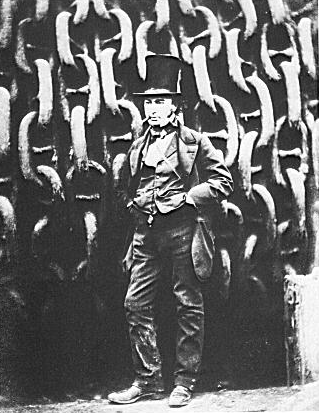
Robert Howlett photographs Brunel standing before the launching chains of SS Great Eastern.
Great Eastern Launching Chains and Rams Prepared
Brunel prepares heavy chains and hydraulic equipment for the difficult sideways launch of the enormous ship.
SS Great Eastern
SS Great Eastern is finally floated after repeated and costly launching attempts.
First Tamar Span Raised to Final Height
Hydraulic jacks lift the first main truss to its final height about one hundred feet above the water.
Second Royal Albert Truss Floated
The second main span is floated into the Tamar to complete the paired crossing arrangement.
Royal Albert First Test Train Crosses
A South Devon locomotive makes the first test crossing of Brunel's Royal Albert Bridge.
Royal Albert Bridge
The Royal Albert Bridge passes its official Board of Trade inspection and load tests.
Royal Albert Bridge
Prince Albert formally opens the Royal Albert Bridge, although illness prevents Brunel from attending.
Royal Albert Bridge
Public railway services begin across the Royal Albert Bridge as the Cornwall Railway opens through Saltash.
Stroke
Brunel suffers a severe stroke shortly before the first sea trials of SS Great Eastern.
Death of Isambard Kingdom Brunel
Isambard Kingdom Brunel dies at the age of fifty-three after a career transforming railways, bridges, tunnels and ships.
Brunel Crosses Saltash Bridge
The crossing marks completion of one of his final major bridge projects.
Cornwall Railway Connection Completed
Completion of the Tamar crossing allows the Cornwall Railway to connect directly with the South Devon broad-gauge network.
First Crossing of Royal Albert Bridge
Crosses the completed Royal Albert Bridge while seriously ill.
Royal Albert Bowstring Tubular Principle Completed
Brunel combines tubular compression arches with suspension chains to create the bridge's distinctive bowstring structural system.
Royal Albert Bridge Cost Held below £225000
The completed bridge is recorded as costing under two hundred and twenty-five thousand pounds.
Royal Albert Engineering Inscription Added
The Cornish portal carries the prominent inscription 'I K BRUNEL ENGINEER 1859' as part of the completed bridge.
Royal Albert Main Spans Set at 135 Metres
The completed bridge uses two principal spans of about 135 metres each across the navigable Tamar.
Royal Albert Navigation Clearance Achieved
The bridge provides the high navigation clearance demanded by the Admiralty while carrying the railway across the Tamar.
Royal Albert Seventeen Approach Spans Completed
Seventeen approach spans connect Brunel's two main river spans with the railway on both banks.
Three Bridges Engineering Work
The structure becomes one of Brunel's rare surviving iron bridges.
Windmill Bridge Opens
Completes the combined road, rail and canal crossing known as Windmill Bridge.
Clifton Suspension Bridge
Chains from Brunel's dismantled Hungerford Suspension Bridge are purchased for use in completing the Clifton bridge.
Clifton Suspension Bridge
Construction restarts under a revised design by William Henry Barlow and John Hawkshaw.
Clifton Suspension Bridge
The Clifton Suspension Bridge opens to the public as a memorial to Brunel five years after his death.
Clifton Suspension Bridge
The completed structure is tested by placing about five hundred tons of stone across the bridge deck.
Editorial provenance
Compiled and edited by World History Database
Historical context is editorial material; the chronology is generated from World History Database Brunel records.
Last reviewed: September 2026.
Brunel Museum · Brunel's SS Great Britain · Science Museum Group Collection
Continue exploring