1823
Thames Tunnel
Brunel prepares a plan for a tunnel between Rotherhithe and Wapping using his patented tunnelling shield.
Brunel engineering · permanent subject timeline
The pioneering tunnel beneath the River Thames at Rotherhithe and Wapping. This page combines historical context with 23 matching records drawn directly from the World History Database Brunel chronology.
Historical context
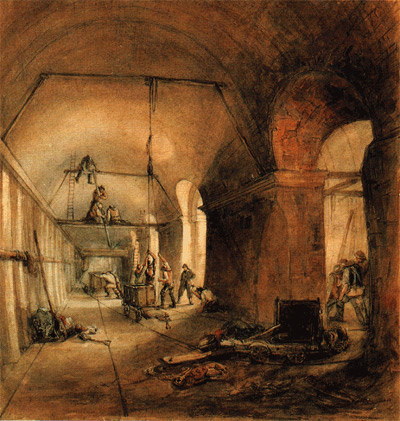
The Thames Tunnel was built beneath the river between Rotherhithe and Wapping using Marc Brunel's tunnelling shield. Construction began in the 1820s and was repeatedly interrupted by flooding, finance problems and dangerous working conditions.
The project became the first successful tunnel driven beneath a navigable river. It brought father and son together in one of the most ambitious civil-engineering projects of the period and proved the practical potential of shield tunnelling.
World History Database records
The records below are selected from the 361-record Brunel chronology and are rendered as static HTML in chronological order.
Thames Tunnel
Brunel prepares a plan for a tunnel between Rotherhithe and Wapping using his patented tunnelling shield.
Thames Tunnel Company
The proposed Thames Tunnel Company is announced after Brunel presents his scheme to supporters and investors.
Thames Tunnel Company
Parliament incorporates the Thames Tunnel Company and authorises construction of the river crossing.
Thames Tunnel
Brunel joins the Thames Tunnel project after his father is appointed engineer for the crossing beneath the River Thames.
Tunnel Shield
Brunel works with his father on the shield system used for the Thames Tunnel.
Thames Tunnel
Construction of the Thames Tunnel begins ceremonially and Brunel lays the second brick after his father.
Thames Tunnel
Construction begins ceremonially on Brunel's tunnel beneath the River Thames.
Rotherhithe Shaft Sinking Method Applied
A large brick shaft is constructed and sunk under its own weight to create the working access for the Thames Tunnel.
Resident Engineer
Brunel takes over as resident engineer of the Thames Tunnel after John Armstrong resigns through illness.
Thames Tunnel
Brunel becomes resident engineer after John Armstrong resigns because of illness and exhaustion.
Chief Engineer
Brunel assumes full responsibility for directing the engineering work inside the Thames Tunnel.
Thames Tunnel
The River Thames breaks into the tunnel and Brunel helps evacuate the workers before directing repairs to the breach.
Tunnel Banquet
A banquet is held inside the Thames Tunnel to demonstrate confidence in the pioneering construction project.
Thames Tunnel
A major tunnel flood kills six workers and seriously injures Brunel, forcing him to withdraw from the project.
Thames Tunnel
Brunel leaves the Thames Tunnel project because his injuries prevent him from continuing as resident engineer.
Government Loan
A government loan provides the Thames Tunnel Company with funds needed to resume construction.
Thames Tunnel
A larger improved tunnelling shield is assembled and excavation beneath the Thames resumes.
Improved Tunnel Shield Installed
A larger improved shield is assembled so excavation of the Thames Tunnel can resume after the long suspension.
Knighthood
Queen Victoria knights Marc Isambard Brunel in recognition of his engineering work and the approaching completion of the Thames Tunnel.
Thames Tunnel
Excavation reaches the Wapping side and the main tunnelling work beneath the Thames is completed.
Final Thames Tunnel Excavation Completed
The principal excavation beneath the Thames reaches completion, leaving finishing work before the pedestrian tunnel can open.
Thames Tunnel
The Thames Tunnel opens to pedestrians after eighteen years of construction begun under Marc and Isambard Brunel.
Thames Tunnel
The Thames Tunnel opens to the public as the first successful tunnel beneath a navigable river.
Editorial provenance
Compiled and edited by World History Database
Historical context is editorial material; the chronology is generated from World History Database Brunel records.
Last reviewed: September 2026.
Brunel Museum · Brunel's SS Great Britain · Science Museum Group Collection
Continue exploring