1769 25th April
Birth of Marc Isambard Brunel
Marc Isambard Brunel is born at Hacqueville in Normandy to Jean Charles Brunel and Marie-Victoire Lefebvre.
Brunel engineering · permanent subject timeline
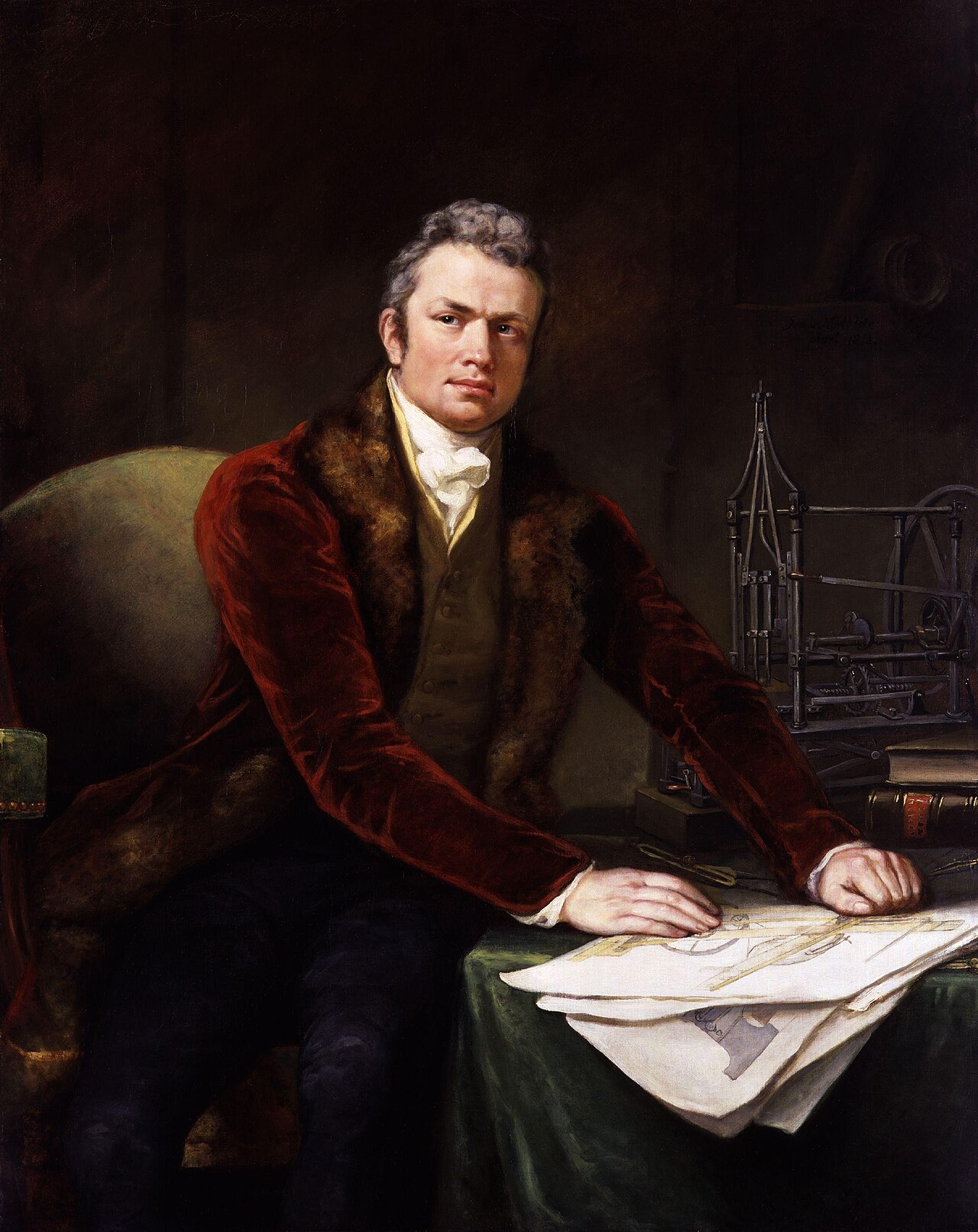
Engineer, inventor and pioneer of mechanised production and tunnelling. This page combines historical context with 79 matching records drawn directly from the World History Database Brunel chronology.
Historical context
Marc Isambard Brunel was born in Normandy in 1769, worked in France and the United States, and settled in Britain in 1799. His career ranged from surveying and dockyard machinery to mass production and the pioneering shield system used to drive the Thames Tunnel.
Marc connected late eighteenth-century mechanical invention with the large-scale industrial engineering of nineteenth-century Britain. His block-making machinery demonstrated highly organized mechanised manufacture, while his tunnelling shield established a principle that transformed underground construction.
World History Database records
The records below are selected from the 361-record Brunel chronology and are rendered as static HTML in chronological order.
Birth of Marc Isambard Brunel
Marc Isambard Brunel is born at Hacqueville in Normandy to Jean Charles Brunel and Marie-Victoire Lefebvre.
Carpentry
Brunel studies carpentry and develops practical skill while also showing ability in drawing and mathematics.
Education
Brunel is sent to a seminary in Rouen for a classical education intended to prepare him for the priesthood.
French Navy
Brunel enters the French Navy as a cadet after receiving instruction in naval subjects.
Navigation
During naval voyages to the West Indies Brunel gains experience of ships, navigation and marine construction.
French Navy
Brunel's naval service ends when his frigate pays off its crew and he returns to Normandy.
Sophia Kingdom
Brunel meets Sophia Kingdom, an English governess living in France, before revolutionary danger separates them.
Castorland Survey
Joins a survey of French-owned land near Lake Ontario.
Emigration
Brunel flees revolutionary France and sails from Le Havre for the United States aboard the Liberty.
Lake Ontario Land Survey
Begins professional surveying work soon after reaching North America.
Canal Route Survey
His engineering ability brings increasing responsibility on the canal project.
Hudson-Lake Champlain Canal Survey
Surveys a proposed canal linking the Hudson River and Lake Champlain.
Chief Engineer of New York
Becomes chief engineer of New York while still in his twenties.
New York Engineering Appointment
Takes responsibility for major civic and defence engineering work.
Cannon Foundry Machinery
Introduces machinery for casting and boring artillery.
Narrows Defence Plans
Applies engineering experience to strengthening New York harbour defences.
New York Harbour Defences
Prepares defence plans for channels around Staten Island and Long Island.
Arrival
Brunel lands at Falmouth and travels to London to pursue his engineering proposals.
Mechanical Drawing Patent
Continues developing mechanical inventions after arriving in Britain.
Writing and Drawing Machine Patent
Takes out a British patent for a writing and drawing machine.
Marriage
Brunel marries Sophia Kingdom after the couple are reunited in London.
Admiralty Block Machinery Proposal
Brunel presents the Admiralty with his proposal to mechanise the production of ships' pulley blocks for the Royal Navy.
Block Machinery Models Developed with Maudslay
Brunel works with Henry Maudslay on precision models and machine components needed for his naval block-making system.
Henry Maudslay
Brunel works with Henry Maudslay to produce models and machinery for the manufacture of ships' pulley blocks.
Block-making Patent
Brunel obtains a patent covering machinery for manufacturing ships' pulley blocks.
Sequential Block Production System Designed
Brunel develops a linked sequence of specialised machines so pulley blocks can be produced repeatedly to standard dimensions.
Portsmouth Block Mills
Samuel Bentham recommends installation of Brunel's block-making machinery at Portsmouth Dockyard.
Portsmouth Machinery Installation Recommended
Samuel Bentham supports installing Brunel's block machinery at Portsmouth Dockyard, moving the system toward large-scale naval use.
Portsmouth Block Mills
The first series of Brunel's machines is installed to manufacture medium-sized pulley blocks.
Portsmouth Block Mills
A second series of Brunel's machines is installed to manufacture smaller pulley blocks.
Block Mill Sawing Operations Mechanised
Brunel's machinery mechanises the sawing and preparation of timber blanks used to make Royal Navy pulley blocks.
Block Mill Mortising Operations Mechanised
Specialised machinery cuts repeated mortises and openings in block components with greater consistency than hand production.
Portsmouth Block Mills
A third series of machines for large pulley blocks completes the main block-making installation.
Block Mill Shaping Operations Mechanised
Brunel's Portsmouth system shapes pulley-block shells by machine as part of an integrated production sequence.
Birth of Isambard Kingdom Brunel
Brunel's son Isambard Kingdom Brunel is born and later becomes a leading civil and mechanical engineer.
Portsmouth Block Mills
The block-making plant is judged capable of meeting the Royal Navy's full requirement for pulley blocks.
Mass Production
The Portsmouth Block Mills produce about one hundred and thirty thousand pulley blocks using Brunel's mechanised system.
Portsmouth Labour Saving Demonstrated
The block-making system demonstrates that a small mechanised workforce can replace much larger numbers of skilled manual workers.
Admiralty Payment
The Admiralty agrees a substantial payment to Brunel for the savings created by his block-making machinery.
Army Boot Machinery
Develops mass-production equipment for footwear during the Napoleonic Wars.
Army Boot Production
Uses mechanised methods to produce large quantities of military footwear.
Boot-Making Machine Patent
Patents machinery intended to mechanise the manufacture of boots.
Mechanised Footwear Manufacture
Army demand supports Brunel's boot-manufacturing enterprise.
Steam Sawmill
Brunel recommends installing a steam-powered sawmill at Chatham Dockyard to replace manual saw-pit labour.
Battersea Sawmill
Brunel operates a mechanised sawmill at Battersea designed to cut timber and manufacture veneers.
Royal Society Fellowship Election
Brunel is elected a Fellow of the Royal Society in recognition of his mechanical and civil engineering achievements.
Battersea Sawmill
Brunel's mechanised sawmill is destroyed by fire, contributing to his later financial difficulties.
River Neva Tunnel
Brunel proposes a tunnel beneath the River Neva at Saint Petersburg and continues developing protected tunnelling methods.
Royal Society
Brunel is elected a Fellow of the Royal Society in recognition of his engineering achievements.
Battersea Sawmill
The Battersea sawmill is rebuilt and Brunel resumes work on mechanised timber processing.
Shield Compartment Principle Patented
Brunel patents a tunnelling shield divided into protected working compartments, allowing excavation and brick lining to advance together.
Tunnelling Shield
Brunel patents a tunnelling shield that allows miners to excavate in protected compartments while brickwork is built behind them.
Debt
Financial losses and unpaid obligations lead to Brunel's imprisonment for debt in the King's Bench Prison.
Release
The government grants money to clear Brunel's debts after concern that he may leave Britain to work in Russia.
Thames Tunnel
Brunel prepares a plan for a tunnel between Rotherhithe and Wapping using his patented tunnelling shield.
Thames Tunnel Company
The proposed Thames Tunnel Company is announced after Brunel presents his scheme to supporters and investors.
Thames Tunnel Company
Parliament incorporates the Thames Tunnel Company and authorises construction of the river crossing.
Thames Crossing Investors Mobilised
Brunel secures financial and political support for a tunnel between Rotherhithe and Wapping using his shield method.
Thames Tunnel
Construction begins ceremonially on Brunel's tunnel beneath the River Thames.
Rotherhithe Shaft
The sinking shaft is completed and Brunel's tunnelling shield is assembled beneath the Rotherhithe site.
Rotherhithe Shaft Sinking Method Applied
A large brick shaft is constructed and sunk under its own weight to create the working access for the Thames Tunnel.
Thirty-Six Shield Cells Put into Use
Brunel's shield divides the excavation face into thirty-six protected cells so miners can work while masonry is built immediately behind them.
Tunnel Brick Lining Advanced behind Shield
Bricklayers construct the permanent tunnel lining directly behind the moving shield as excavation progresses beneath the Thames.
Tunnel Flood
The River Thames breaks into the workings and Brunel directs efforts to save the tunnel and repair the breach.
Riverbed Breach Repair Directed
After the first major inundation, Brunel directs repairs from the riverbed and prepares the workings for renewed excavation.
Tunnel Flood
A major flood kills six workers, seriously injures Isambard Kingdom Brunel and forces suspension of the tunnel works.
Tunnel Safety Paper Prepared for Royal Society
Brunel prepares observations on repairing the riverbed breach and protecting workers against another sudden inundation.
French Engineering Honour
France recognises Brunel's international engineering achievements.
Legion of Honour
Receives appointment to the French Legion of Honour.
Babbage Engine Relocation Report
Brunel joins Bryan Donkin and others in reporting to the Treasury on moving Charles Babbage's calculating engine.
HMS Thetis Treasure Recovery Advice
Brunel corresponds with the Royal Society about engineering methods connected with recovering treasure from the wreck of HMS Thetis.
Government Loan
A government loan provides the Thames Tunnel Company with funds needed to resume construction.
Thames Tunnel
A larger improved tunnelling shield is assembled and excavation beneath the Thames resumes.
Improved Tunnel Shield Installed
A larger improved shield is assembled so excavation of the Thames Tunnel can resume after the long suspension.
Knighthood
Queen Victoria knights Marc Isambard Brunel in recognition of his engineering work and the approaching completion of the Thames Tunnel.
Thames Tunnel
Excavation reaches the Wapping side and the main tunnelling work beneath the Thames is completed.
Final Thames Tunnel Excavation Completed
The principal excavation beneath the Thames reaches completion, leaving finishing work before the pedestrian tunnel can open.
Thames Tunnel
The Thames Tunnel opens to the public as the first successful tunnel beneath a navigable river.
Death of Marc Isambard Brunel
Sir Marc Isambard Brunel dies in Westminster after a career in civil and mechanical engineering.
Editorial provenance
Compiled and edited by World History Database
Historical context is editorial material; the chronology is generated from World History Database Brunel records.
Last reviewed: September 2026.
Brunel Museum · Brunel's SS Great Britain · Science Museum Group Collection
Continue exploring