Chernobyl 25–26 April 1986: Hour-by-Hour Accident Timeline
A detailed reconstruction of the final day before the Chernobyl disaster and the accident itself, from the start of the planned shutdown through the turbine rundown test, reactor destruction, firefighting and first government response.
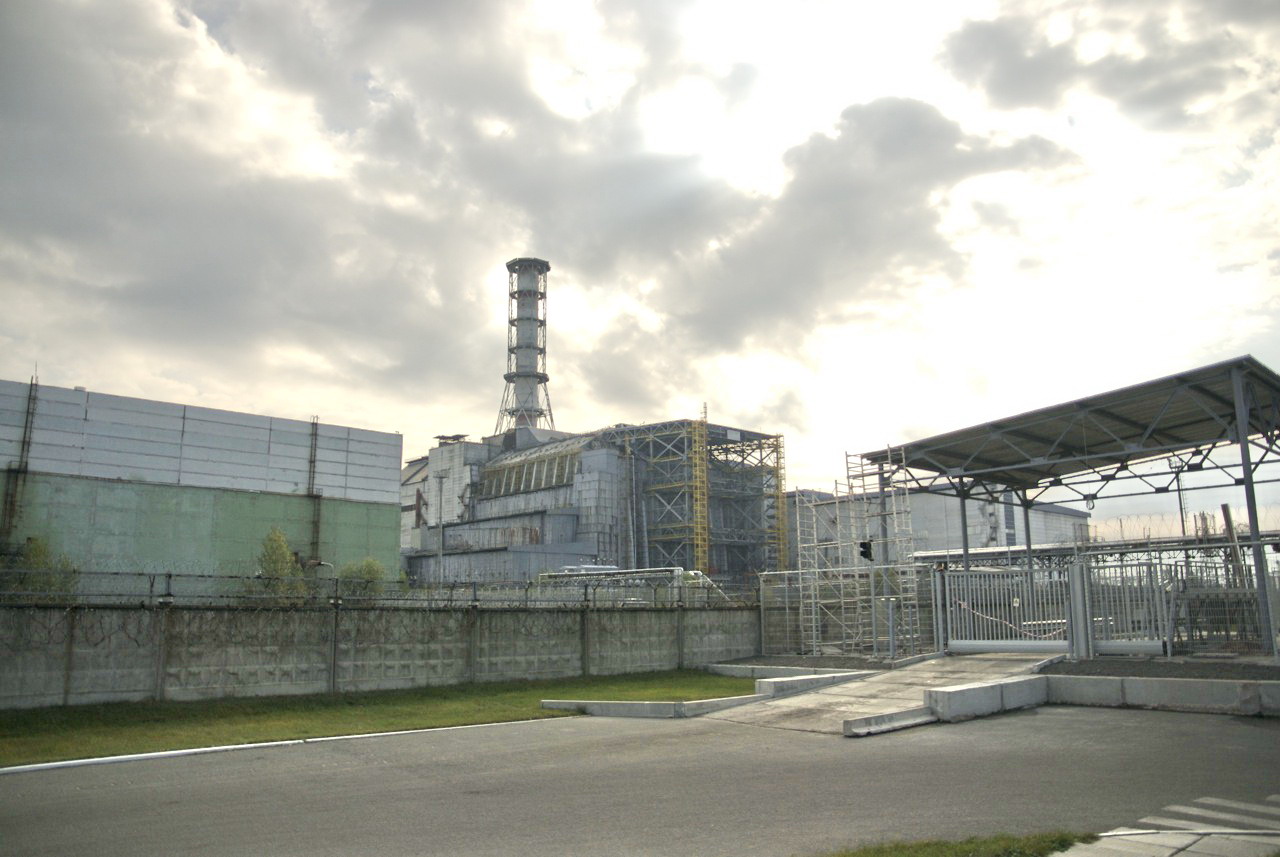
The day before the explosion
Unit 4 is being shut down for planned maintenance. The turbine rundown experiment is intended to test whether a coasting turbine can temporarily power cooling pumps after loss of external electrical supply and before diesel generators take over.
The scheduled shutdown of Unit 4 starts and reactor power begins to fall gradually.
The reduction stops at about 1,600 MW thermal.
The emergency core cooling system is isolated as specified by the test programme. The Kyiv grid controller asks the plant to keep supplying power, so the test is delayed.
The grid controller permits the shutdown to continue after the long delay.
The operating shift changes while Unit 4 is still being prepared for the turbine rundown test.
00:00–01:23: unstable low-power operation
The delayed shutdown continues into the night shift. A sharp power drop, xenon poisoning, control-rod withdrawal, high coolant flow and low operating reactivity margin leave the RBMK in a difficult operating state.
Reactor power has fallen to about 720 MW thermal and continues decreasing.
During transfer between regulating systems, reactor power falls rapidly to roughly 30 MW thermal. Later reassessment did not establish a simple operator-error explanation.
The trip signal is blocked in accordance with the test and operating arrangements. INSAG-7 later corrected the timing given in the earlier account.
The reactor stabilises near 200 MW thermal. Later calculations show the operating reactivity margin was below the required minimum.
A standby main circulation pump is added on the left cooling circuit as part of test preparation.
A further pump is started on the right circuit. Higher coolant flow changes reactor conditions and complicates steam-drum level control.
Operators raise feedwater flow to restore steam-drum level. Pressure and level regulation remain difficult.
Post-accident calculations put the ORM at eight manual control rods, below the required minimum of 15.
The shift supervisors consider the unit ready and the oscilloscope used for the test is switched on.
01:23:04–about 01:24
The turbine coast-down lasts only seconds before the reactor enters a destructive transient. INSAG-7 substantially revised the earlier 1986 interpretation and placed more emphasis on RBMK design characteristics and control-rod behaviour.
The turbine stop valves close. Four main circulation pumps supplied by the coasting turbine begin to run down. Recorded parameters initially remain within the expected range for the test conditions.
The emergency shutdown button is pressed and control rods begin entering the core. The reason AZ-5 was pressed has not been definitively established.
Emergency signals indicate a rapid rise in power; power exceeds 530 MW thermal and continues increasing.
The first pair of rundown main circulation pumps disconnects, followed immediately by the second pair.
Main circulation pump flow readings and steam-separator drum pressure and water level change rapidly.
Flow partially recovers in some pumps while pressure and drum levels continue rising.
Signals indicate increased pressure in the reactor space and loss of 48-volt power to control-rod drive mechanisms.
The operating log records severe shocks and control rods stopping before full insertion. The reactor structure is destroyed and the core is exposed.
01:28 through the rest of 26 April
The response becomes a combined plant, firefighting, medical, military, scientific and government operation.
The first group of firefighters reaches the accident scene and begins attacking fires around Unit 4 and adjacent structures.
Firefighters localise the roof fire on Unit 3, helping prevent spread into the neighbouring unit.
The principal roof fire on Unit 4 is brought under local control.
Reinforcements have brought roughly 250 firefighters to the site; dozens are directly involved in fire-control work.
World History Database records place Nikolai Fomin learning of the accident at about four in the morning and travelling to the plant. Viktor Bryukhanov is already involved in plant emergency management.
The principal fires are reported quenched, although the destroyed reactor continues releasing radioactive material.
Plant personnel continue water-injection attempts, dosimetry, rescue and inspection work. Anatoly Sitnikov reports catastrophic reactor destruction.
World History Database records include Vladimir Pikalov conducting radiological reconnaissance and Nikolai Antoshkin organising helicopter support.
Boris Shcherbina and Valery Legasov reach the Chernobyl area. The commission begins coordinating reactor assessment, radiation monitoring and emergency measures.
Photojournalist Igor Kostin records some of the earliest aerial images of the destroyed Unit 4; radiation damages much of the exposed film.
Plant, government, military, medical and scientific organisations are working simultaneously. Pripyat has not yet been evacuated; full evacuation begins on 27 April.
What is established, and what remains disputed
Control room, plant management and first response
The replacement World History Database dataset contains static records for Anatoly Dyatlov, Alexander Akimov, Leonid Toptunov, Yuri Tregub, Boris Stolyarchuk, Viktor Bryukhanov, Nikolai Fomin, Valery Legasov, Boris Shcherbina, firefighters, dosimetrists, engineers and cleanup personnel.
Chronology references
The Chernobyl Accident: Updating of INSAG-1, the principal later technical reassessment.
Used for named-person response records where the supplied archive supports them.