1964–2019 · Design to confinement

Chernobyl Timeline: Reactor Design, Construction, Disaster and New Safe Confinement

Follow Chernobyl from the origins of the RBMK design and construction of the plant through Unit 4 commissioning, the 1986 accident, the response and investigations, final plant closure and the New Safe Confinement.

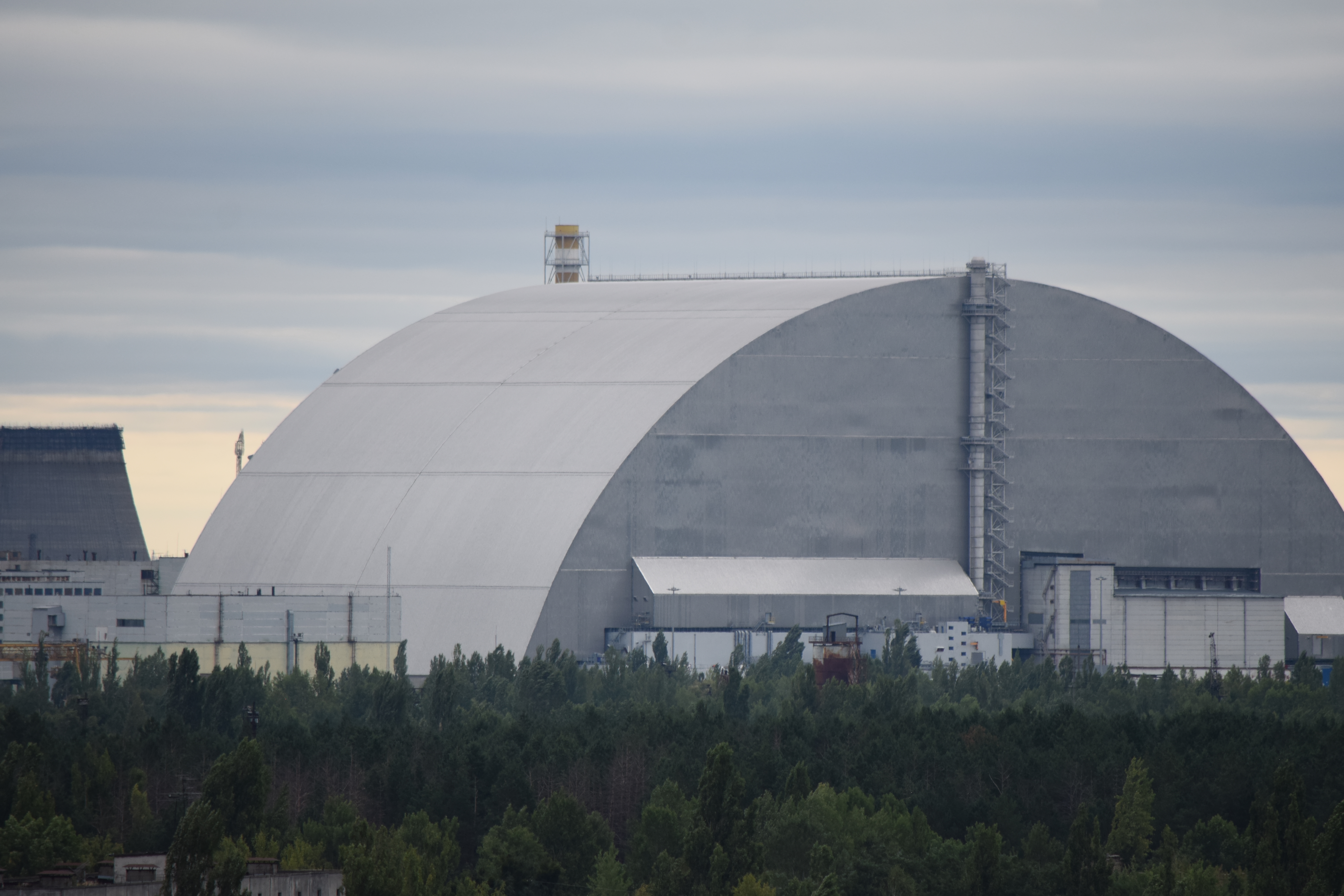
New Safe Confinement over Chernobyl Reactor 4
The New Safe Confinement over the destroyed Unit 4 and the 1986 Shelter.
Looking for the accident night itself? Open the 25–26 April 1986 hour-by-hour Chernobyl timeline for the shutdown, turbine test, AZ-5 and the first emergency response.

Design, construction and Unit 4 commissioning

The station grew from the Soviet RBMK programme into a four-unit nuclear complex.

RBMK design developed

The Soviet RBMK design emerged in the mid-1960s as a graphite-moderated, light-water-cooled pressure-channel reactor. Its large individual fuel channels and online refuelling capability distinguished it from most other power-reactor designs.

World Nuclear Association · RBMK reactors

Chernobyl NPP administration established

The USSR Ministry of Energy and Electrification establishes an administration for the nuclear power plant under construction near Kopachi in Kyiv Region.

Chornobyl NPP · Construction history

First concrete placed

The first cubic metre of concrete is placed in the foundation of the main generating building, marking the start of major civil construction.

Chornobyl NPP · Construction stages

Unit 1 enters the grid

Turbogenerator No. 2 is connected to the grid and Chernobyl Unit 1 is commissioned.

Chornobyl NPP · Construction stages

Unit 3 commissioned

Unit 3 enters service as the plant expands to its second-stage RBMK-1000 units.

Chornobyl NPP · Construction stages

First fuel loaded into Unit 4

The first fuel assembly is loaded into the Unit 4 reactor during physical commissioning. The World History Database also records this milestone under plant director Viktor Bryukhanov.

Chornobyl NPP / World History Database

Unit 4 turbine-generators connected

Turbogenerator No. 7 is connected on 21 December and No. 8 on 30 December, bringing Unit 4 into grid operation.

Chornobyl NPP · Construction stages

Unit 4 reaches 1,000 MW

Unit 4 reaches its 1,000 MW design electrical output more than three months ahead of schedule.

Chornobyl NPP · Construction stages

Test, accident and emergency response

A failed earlier turbine coast-down test led to the repeat test scheduled during the April 1986 maintenance shutdown.

Earlier turbine-rundown test

A previous turbine coast-down test did not provide the required electrical result, so a repeat with modified voltage-regulator arrangements was planned for the 1986 shutdown.

World Nuclear Association · Accident sequence

Shutdown test and destruction of Unit 4

The scheduled shutdown begins on 25 April. The turbine rundown test starts at 01:23:04 on 26 April; within seconds the reactor enters a destructive power excursion.

IAEA INSAG-7 / World Nuclear Association

Pripyat evacuated

Pripyat is evacuated. Helicopter operations begin dropping neutron-absorbing and other materials toward the destroyed reactor.

Chornobyl NPP · Accident and its elimination

Evacuation expands

Authorities decide to evacuate inhabitants from the 30-kilometre zone and additional contaminated settlements.

Chornobyl NPP · Accident and its elimination

Major releases fall sharply

After water-removal, cooling and other emergency measures, specialists conclude that a renewed self-sustaining chain reaction is not expected and airborne releases decrease sharply.

Chornobyl NPP · Accident and its elimination

Decision to enclose Unit 4

Government decisions establish long-term preservation of the destroyed unit. Multiple Shelter concepts are evaluated, with a solution chosen that uses surviving Unit 4 structures where possible.

Chornobyl NPP · Shelter history

International review in Vienna

Soviet experts present a detailed account at the IAEA Post-Accident Review Meeting. The World History Database records Valery Legasov leading the Soviet technical presentation.

IAEA / World History Database

Original Shelter accepted

The preserved Unit 4 and rapidly constructed Shelter are accepted for maintenance. The Shelter is completed in only 206 days.

Chornobyl NPP · Shelter history

Investigation, reassessment and plant closure

Later technical reassessment, especially INSAG-7, placed substantially more emphasis on RBMK design characteristics and shortcomings in the wider nuclear-safety system than the earliest official account.

Investigations and prosecutions

Soviet investigations examine reactor operation, the test programme and plant management. In July 1987 Viktor Bryukhanov, Nikolai Fomin and Anatoly Dyatlov receive prison sentences.

World History Database / legal proceedings

INSAG-7 revises the interpretation

The IAEA's updated assessment shifts greater emphasis toward RBMK physical characteristics, control-rod and safety-system design, and weaknesses in safety information supplied to operators.

IAEA · INSAG-7

Agreement on plant closure

Ukraine, G7 governments and the European Commission sign a memorandum covering closure of the remaining Chernobyl units and international assistance.

Chornobyl NPP / EBRD

Unit 1 permanently shut down

Unit 1 is permanently closed as the station moves toward complete decommissioning.

Chornobyl NPP · Shutdown history

Shelter Implementation Plan and Fund

The Shelter Implementation Plan establishes the long-term strategy for stabilising the 1986 structure and developing a durable confinement. The EBRD-managed Chernobyl Shelter Fund is established.

EBRD

Chernobyl stops generating electricity

At 13:17, Unit 3 is shut down permanently, ending electricity generation at the plant.

Chornobyl NPP · Shutdown history

From the Shelter to the New Safe Confinement

The international programme stabilised the emergency 1986 Shelter and built a giant movable arch intended to support long-term dismantling and containment.

New Safe Confinement contract awarded

The contract to construct the New Safe Confinement is awarded to the Novarka consortium formed by VINCI and Bouygues.

EBRD

Original Shelter stabilisation completed

Major stabilisation work on the 1986 Shelter is completed before erection of the new arch.

EBRD

NSC arch construction begins

Assembly of the giant steel arch begins in a lower-radiation area away from the destroyed reactor.

EBRD

Second arch half reaches full height

The second half of the New Safe Confinement is lifted to its full height of about 108 metres.

EBRD

Two arch halves joined

The two halves of the roughly 36,000-tonne structure are joined to create the complete 257-metre-span arch.

EBRD

NSC slid over Unit 4

The arch is moved about 327 metres into its final position over the 1986 Shelter and destroyed reactor.

EBRD

Final commissioning test completed

A 72-hour trial operation is completed successfully, marking the safe physical completion of the New Safe Confinement.

EBRD

Technical and historical references

EBRD

Making Chornobyl safe, covering the Shelter Implementation Plan and New Safe Confinement.

World Nuclear Association

RBMK reactor design and accident sequence.

Editorial review. Compiled and edited by World History Database. Historical chronology and source links last reviewed 27 September 2026. Technical accident claims are distinguished from World History Database record material in the provenance section below.
Provenance. Named-person and selected Unit 4 commissioning material is drawn from the replacement Chernobyl dataset supplied to the World History Database. Construction, reactor-design, investigation, shutdown and New Safe Confinement milestones not contained in that dataset are supplementary editorial chronology based on the linked Chornobyl NPP, IAEA, EBRD and World Nuclear Association sources.

Continue exploring