1642 3rd June
Petition
Fairfax presents a Yorkshire petition urging the King to return to Westminster.
English Civil War · permanent subject timeline
Commander-in-chief of the New Model Army. This page combines historical context with 108 matching records drawn directly from the World History Database English Civil War archive.
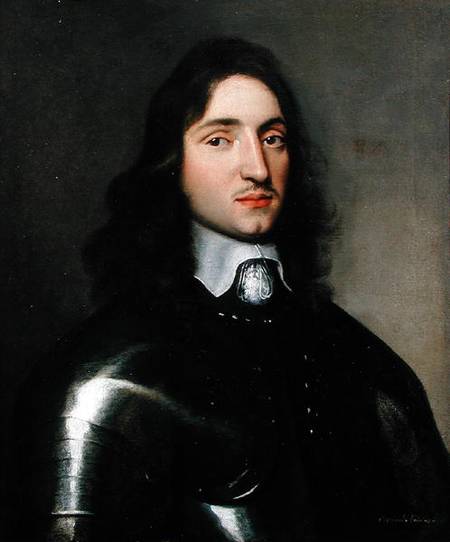
Historical context
Thomas Fairfax built his reputation in the northern war before becoming commander-in-chief of the New Model Army in 1645. He led Parliament's principal field army through Naseby and the campaigns that ended the First Civil War.
Fairfax was the senior professional commander behind Parliament's decisive military victories. His later political reservations also illustrate divisions between army leadership and radical politics.
World History Database records
The records below are selected from the 1,090-record English Civil War archive and rendered as static HTML in chronological order.
Petition
Fairfax presents a Yorkshire petition urging the King to return to Westminster.
Commander of Cavalry
Fairfax receives command of Parliamentarian cavalry operating in Yorkshire.
Capture of Leeds
Captures Leads for the Parliamentarians
Battle of Seacroft Moor
Fairfax suffers a severe defeat while withdrawing Parliamentarian infantry toward Leeds.
Capture of Wakefield
Captures Wakefield for the Parliamentarians
Capture of Wakefield
Helps command the Parliamentary foot as Thomas Fairfax captures Wakefield
Battle of Adwalton Moor
The Parliamentary forces are driven back to Hull. Defeated by the Royalists near Bradford. After the Battle of Adwalton Moor the royalists occupy the West Riding of Yorkshire
Battle of Adwalton Moor
Fairfax fights in the Parliamentarian defeat at Adwalton Moor and withdraws as Royalist power expands across Yorkshire.
Capture of York
Helps capture York for the Parliamentarians
Battle of Winceby
Combines with Cromwell & Manchester to check the Governor of Newark
Battle of Winceby
Fairfax fights with Parliament's forces at Winceby, where the Royalist field army in Lincolnshire is defeated.
Capture of Newcastle
Helps capture Newcastle for the Parliamentarians
Defence of Hull
Fairfax helps prevent Hull from falling during the Royalist siege, preserving an important Parliamentarian base in Yorkshire.
Capture of London
Captures Leads for the Parliamentarians
Battle of Nantwich
Defeats Irish Royalists & local troops who have laid siege to Nantwich
Battle of Nantwich
Fairfax helps defeat Byron's Royalist army at Nantwich, relieving the town and weakening Royalist control in Cheshire.
Battle of Selby
Defeats the Royalists under Lord Bellasis & captures Selby
Battle of Selby
Lord Newcastles Royalist force of 5,000 is trapped in York
Battle of Selby
Fairfax defeats Royalist forces at Selby, helping open the way for Parliamentarian pressure on York.
Covenanters
The Covenanters & Parliament join forces at Tadcaster
Mobilization
The Covenanters & Parliament join forces at Tadcaster
Siege of York
Begins the siege where Newcastle is stranded with 5,000 men but is relieved by Rupert
Battle of Marston Moor
Colonel Charles Fairfax is killed in action at the Battle of Marston Moor
Battle of Marston Moor
A gathering of eager national forces within a few square miles of ground naturally led to a battle, and Marston Moor proves decisive for the struggle in the north.
Battle of Marston Moor
Cromwell relieves Fairfax and Parliament is victorious.
Battle of Marston Moor
Fairfax's horse meets Gorings 1st line and charges them successfully.
Battle of Marston Moor
The city of York is taken after the Battle of Marston Moor, and nearly the whole of the north submits to the Parliament.
Battle of Marston Moor
Thomas Fairfax Cameron, 3rd commands the right suffering heavy losses from Goring.
Battle of Marston Moor
Fairfax fights on the Parliamentarian side during the major victory at Marston Moor.
Death of Charles Fairfax
Colonel Charles Fairfax is killed in action at the Battle of Marston Moor
Siege of York
The city of York is taken after the Battle of Marston Moor, and nearly the whole of the north submits to the Parliament
Siege of York
Resumes the siege of York after victory at Marston Moor
New Model Army Command
Fairfax is appointed to command the New Model Army and begins organising Parliament's new national field force.
New Model Army
Fairfax becomes commander of the New Model Army created to improve Parliament's war effort.
Mobilization
Marches out from Windsor prior to the Battle of Naseby
Mobilization
Reaches Blandford & detaches 6 regiments for the relief of Taunton
Mobilization
Arrives at Nuneham near Oxford & is joined by Cromwell
Siege of Oxford
Siege of Oxford by Fairfax and the New Model Army
Siege of Leicester
Rupert captures and ransacks Leicester in an attempt to draw Fairfax away from Oxford
Siege of Oxford
Rupert captures and ransacks Leicester in an attempt to draw Fairfax away from Oxford
Capture of Leicester
After Royalists take Leicester Fairfax is ordered nth
Siege of Oxford
Marches to Newport Pagnell on his way to besiege Oxford
Mobilization
Fairfax arrives at Newport Pagnell where is joined by Vermuyden & his 2,500 horse
Battle of Borough Hill
Initial contact between Fairfax and the King's army at Borough Hill
Mobilization
Cromwell joins forces with Fairfax & Parliament has an Army of more than 13,000 men
Mobilization
Fairfax arrives 12 miles from where Charles is at Daventry to the latters surprise
Capture of Gainsborough
Leads his main force into Gainsborough while his main scouts enter Naseby
Battle of Naseby
With Cromwell's help defeats Charles force of 7,500. Leaves Guilsborough in the early hours & by sunrise the Army is ready on Naseby Bridge. A decisive victory over the royalists
Battle of Naseby
Fairfax commands the New Model Army in the decisive defeat of Charles I at Naseby.
Battle of Naseby
Fairfax directs the New Model Army at Naseby and wins the decisive victory over Charles I's main field army.
Capture of Leicester
Fairfax takes back Leicester
Capture of Dorchester
Fairfax meets the Clubmen of Dorset and Wiltshire at Dorchester
Battle of Langport
Fairfax boldly attacks Gorings strong defences at the Battle of Langport
Battle of Langport
Fairfax defeats Goring's Royalist army and opens the west of England to Parliamentarian advance.
Battle of Langport
Fairfax defeats the last major Royalist field army in the west at Langport and continues the New Model Army's advance.
Capture of Bridgewater
Fairfax takes Bridgewater
Siege of Bridgewater
Fairfax takes Bridgewater
Capture of Sherborne Castle
Fairfax assaults and captures Sherborne Castle
Siege of Sherborne Castle
Fairfax assaults and captures Sherborne Castle
Siege of Bristol
Fairfax begins Parliament's campaign to retake Bristol.
Siege of Bristol
Siege of Bristol by Fairfax begins
Capture of Bristol
Fairfax captures Bristol for Parliament.
Capture of Bristol
Prince Rupert surrenders Bristol to Parliament under Fairfax
Captain
Appointed Captain General of the New Model Army
New Model Army
Organised into 12 infantry & 11 cavalry regiments & 1 dragoon regiment. Becomes the 1st Commander of the New Model Army
Surrender
Hopton agrees surrender terms to Fairfax as Truro is captured from the Royalists
Siege of Oxford
Fairfax receives Oxford's surrender and ends the king's wartime capital.
Surrender of Oxford
Fairfax receives the surrender of Oxford, ending the Royalists' principal headquarters and effectively closing the First Civil War.
Battle of Langport
Commands the New Model Army to victory over Goring, a final blow to the Royalist cause
Siege of Oxford
Oxford capitulates following the final siege of Oxford, and by the end of September 1646 Charles had neither army nor garrison in England, following the surrender of Thomas Blagge at Wallingford Castle after a siege conducted by Fairfax
Siege of Wallingford Castle
Oxford capitulates following the final siege of Oxford, and by the end of September 1646 Charles had neither army nor garrison in England, following the surrender of Thomas Blagge at Wallingford Castle after a siege conducted by Fairfax
Capture of Dartmouth
Discovers letters from the Queen enlisting French support. Captures Dartmouth
Arrest of Thomas Fairfax
Charles I is deliverred by the Scots to the commissioners of Parliament, Fairfax meets the King beyond Nottingham, and accompanies him during the journey to Holdenby
Capture of Torrington
Captures Torrington from the Royalists
Peace Treaty
Signs a peace Treaty with Lord Ralph Hopton who agrees to disband his forces
Capture of Exeter
Captures the garrison ar Exeter & Princess Henrietta becomes a prisoner of Parliament
Army Council
The Army Council supports the Solemn Engagement of the Army, drawn up because Parliament seeks to disband the New Model Army before settling arrears, indemnity and the soldiers' grievances
Grandees
Fairfax stands at the head of the New Model Army Grandees as officers and Agitators adopt the Solemn Engagement, resisting parliamentary disbandment until soldiers' arrears, indemnity and grievances are secured
Heads of the Proposals
Fairfax's Army leadership approves the completed Heads of the Proposals as the New Model Army's official basis for a national settlement
Constitution of England
The Levelllers demand a dissolution of Parliament within a year and substantial changes to the constitution of future Parliaments, which were to be regulated by an unalterable "law paramount"
Dissolution of Parliament
The Levelllers demand a dissolution of Parliament within a year and substantial changes to the constitution of future Parliaments, which were to be regulated by an unalterable "law paramount"
Levellers
The Levellers demand a dissolution of Parliament within a year and substantial changes to the constitution of future Parliaments, to be regulated by an unalterable law paramount. At least five regiments of cavalry elect new unofficial agitators and produce "The Case of the Army Truly Stated", which is presented to Sir Thomas Fairfax
Levellers
Senior officers in the Army, nicknamed the Grandees, are angered by "The Case of the Army Truly Stated" and order the unofficial Agitators to explain their principles before the General Council of the Army at the Putney Debates
Levellers
Senior officers in the Army, nicknamed the Grandees, are angered by The Case of the Armie Truly Stated and invite the New Agents and their civilian supporters to debate their proposals before the General Council of the Army at the Putney Debates
Putney Debates
Senior officers in the Army (nicknamed "Grandees") were incensed by the "Case of the Army" and ordered the unofficial Agitators to give an account of their principles before the General Council of the Army, known as the Putney Debates
Putney Debates
Fairfax is absent through illness, but the debates take place under the authority of the Army command that sought to prevent division between officers and rank-and-file soldiers
Putney Debates
Senior officers in the Army, nicknamed the Grandees, are angered by The Case of the Armie Truly Stated and invite the New Agents and their civilian supporters to explain their principles before the General Council of the Army at the Putney Debates
Agreement of the People
Fairfax's authority is used as the Army Council meetings are suspended, leaving the Agreement of the People unadopted as the Army's official constitutional programme
Army Council
Fairfax's authority is used as the Army Council meetings are suspended and the Agitators are ordered back to their regiments, limiting the Leveller challenge to the officer leadership
Grandees
Fairfax's authority is used by the Grandees to suspend the Army Council meetings and send Agitators back to their regiments, ending the open phase of the Putney Debates
Putney Debates
Fairfax's authority is used as the Army leadership orders Agitators and representative officers back to their regiments, bringing the debates to a temporary close
Agitators
Fairfax's authority is used at the Ware rendezvous to suppress Leveller-influenced Agitator resistance, restore Army discipline and end the immediate challenge to the Grandees
Battle of Maidstone
Fairfax defeats Royalist insurgents at Maidstone during the Second Civil War and breaks the main Kentish rising.
Siege of Colchester
Fairfax receives the surrender of Colchester after a hard Royalist siege during the Second Civil War.
Dissolution of Parliament
Attempts to form a provisional Government around the Independent Members of Parliament
Parliament
Opposes Colonel Thomas Prides purge of Parliament
Provisional Government
Attempts to form a provisional Government around the Independent Members of Parliament
Execution
Fairfax leads the successful siege of Colchester, after the surrender of which he approves the execution of the Royalist leaders Sir Charles Lucas and Sir George Lisle, holding that these officers had broken their parole
Siege of Colchester
Fairfax leads the successful siege of Colchester, after the surrender of which he approves the execution of the Royalist leaders Sir Charles Lucas and Sir George Lisle, holding that these officers had broken their parole
Trial
Parliament passes an Ordinance setting up a High Court of Justice to try Charles I
Levellers
Puts down the Leveller mutiny
Rebellion
Puts down the Leveller mutiny
Remonstrance-Army
Introduces the Remonstrance of the Army to Parliament
Arrest of Charles I
Orders Charles I to be transferred to Hurst Castle
Constitution of England
Supports the restoration of a constitutional monarchy
Restoration
Supports the restoration of a constitutional monarchy
Restoration
Charles II the "merry monarch, scandalous and poor", is glad to obey the summons, and Fairfax provides the horse on which Charles rides at his coronation
Restoration
A "free" Parliament is called; Fairfax is elected member for Yorkshire, and is put at the head of the commission appointed by the House of Commons to wait upon Charles II, at the Hague and urges his speedy return
Editorial provenance
Compiled and edited by World History Database.
Historical context is editorial material; the chronology is generated from World History Database English Civil War records.
Last reviewed: September 2026.
English Heritage · National Army Museum · UK Parliament · Cromwell Museum
Continue exploring