1915 2nd January
Dardanelles Naval Strategy Advocated
Churchill proposes forcing the Dardanelles with naval power to threaten Constantinople and assist Russia.
First World War · Gallipoli · permanent subject timeline
The Allied attempt to force the Dardanelles by sea in early 1915. This page combines historical context with 104 matching records drawn directly from the World History Database Gallipoli archive.
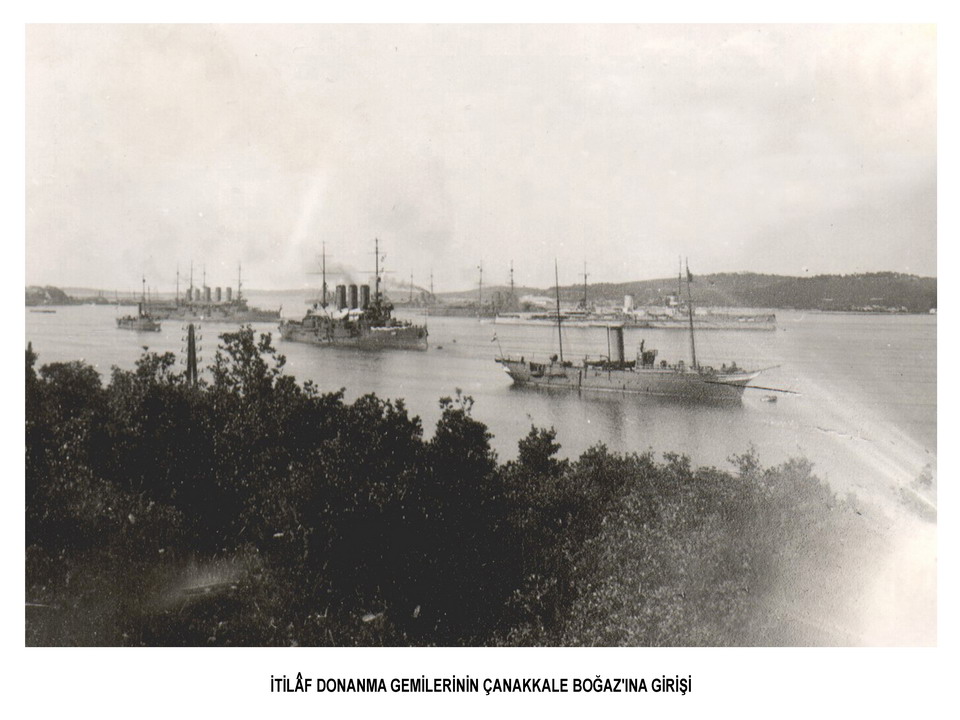
Historical context
British and French naval forces bombarded Ottoman fortifications and attempted to clear the Dardanelles minefields during February and March 1915. The main fleet attack on 18 March suffered severe losses and failed to force the straits.
Failure at sea helped drive the decision to land troops on the Gallipoli peninsula. The naval campaign exposed the difficulty of forcing a heavily defended narrow waterway without secure minesweeping and land control.
World History Database records
The records below are selected from the 319-record Gallipoli archive and rendered as static HTML in chronological order.
Dardanelles Naval Strategy Advocated
Churchill proposes forcing the Dardanelles with naval power to threaten Constantinople and assist Russia.
Battle of Dardanelles
Suggests an attack on the Dardanelles at a War Council meeting
Battle of Dardanelles
At Churchills request, the commander of the Royal Navys Mediterranean Squadron, Vice Admiral S.H. Carden proposed a plan for forcing the Dardanelles using battleships, submarines and minesweepers
Dardanelles Attack Plan Submitted
Carden submits a staged plan for reducing Ottoman forts and clearing the Dardanelles minefields.
Battle of Dardanelles
The British War Council resolve that the Admiralty should prepare for a naval expedition in February against the Dardanelles
Battle of Dardanelles
The British War Council approves the plan, and Carden is supplied with additional pre-Dreadnought battleships, the battleship HMS Queen Elizabeth and the battlecruiser HMS Inflexible. Churchill argues for just a naval attack at the War Council. Cabinet approves the attack with ships
War Council
The British War Council resolve that the Admiralty should prepare for a naval expedition in February against the Dardanelles
Battle of Dardanelles
The War Council accepts Churchills idea for a naval expedition to the Dardanelles. A plan to create a supply link to the Russian front & secure the Balkan states
Battle of Dardanelles
Churchill argues for just a naval attack at the War Council
War Council Approves Dardanelles Naval Operation
Asquith's War Council approves a naval operation intended to force the Dardanelles.
Battle of Dardanelles
An attack on the Dardanelles could give Russia a supply route and might encourage Bulgaria and Romania to join the allied side
Battle of Dardanelles
In a new year review submitted to the Prime Minister, Herbert Asquith, outlines two possible new fronts against the Germans, intended to break the stalemate and accompanying enormous loss of life which had rapidly set in on the western front.
Battle of Dardanelles
The Russian plea for assistance, coupled with a perception of the Ottoman Empire as a weak enemy ("the sick man of Europe"), made the prospect of a campaign in the Dardanelles seem appealing.
Battle of Dardanelles
The War Cabinet decides to send troops to the Dardanelles
Battle of Dardanelles
What was to become the Battle of Gallipoli, a 10-month Battle of attrition, begins at 7.30am on February 19, 1915. The War Cabinet decides to send troops to the Dardanelles. Only 6 British ships are involved & 3/4 of the Turkish guns survive. Bombardment of the outer ports of the Dardenalles begins
Dardanelles Troop Decision
The War Cabinet decides to send troops to the Dardanelles.
French Squadron Joins Dardanelles Bombardment
Guepratte leads French warships in the opening Allied bombardment of the Dardanelles forts.
Outer Batteries Withstand Opening Bombardment
Cevat's gunners resist the first large Allied bombardment of the straits.
Outer Fort Bombardment Opens
Carden directs the opening Allied bombardment of Ottoman forts guarding the entrance to the Dardanelles.
Battle of Dardanelles
George V & Churchill inspect the Royal Naval Div before it sails to the Dardanelles
Battle of Dardanelles
The Allied fleet destroys outer forts of the Dardanelles
Battle of Dardanelles
George V & Churchill inspect the Royal Naval Div before it sails to the Dardanelles
Cape Helles Forts Reengaged
Carden resumes the naval assault and heavily engages the outer forts near Cape Helles.
French Ships Enter Strait for Close Bombardment
Guepratte's ships move closer to Ottoman positions as the outer forts are suppressed.
Marine Demolition Parties Landed
Carden sends demolition parties ashore to destroy abandoned Ottoman guns and fort installations.
Battle of Dardanelles
The operation was originally intended to be purely naval due to a lack of available troops and the independence of Lord of the admiralty Winston Churchill but.
Battle of Dardanelles
by early February, it was decided that more regular infantry was needed.
Dardanelles Naval Operation Accelerated
Churchill presses the Admiralty to begin systematic attacks on Ottoman forts and minefields.
Four-Stage Strait Reduction Plan Implemented
Carden begins implementing a phased plan to destroy outer forts, clear mines and attack the Narrows.
Battle of Dardanelles
Allied troops land at Kum-Kale, the Asiatic side of the Dardanelles
Nusret Mine Mission Prepared
Hakki prepares Nusret for a covert mining mission across Erenkoy Bay.
Erenkoy Mine Line Concealed from Allies
Cevat's defence preserves the newly laid Erenkoy mine line from Allied detection.
Mediterranean Expeditionary Force Command Received
Hamilton is appointed to command the force being assembled for land operations at the Dardanelles.
Narrows Bombardment Intensified
Carden intensifies attacks on forts covering the Narrows while minesweeping remains incomplete.
Carden Reports Strain before Decisive Attack
Carden reports severe strain as pressure mounts for a decisive fleet assault.
Dardanelles Command Passed to de Robeck
Carden leaves command through illness and de Robeck takes over the naval operation.
Dardanelles Fleet Command Assumed
De Robeck assumes command of the Allied naval force on the eve of the major Dardanelles attack.
Eighteenth March Battle Plan Confirmed
De Robeck confirms the plan for battleships to silence the forts while minesweepers clear a passage.
Battle of Dardanelles
A naval attack fails & the Inflexible & Irrepressible are lost
Battle of Dardanelles
Commands a naval attack fails & the Inflexible & Irrepressible are lost
Bouvet Sunk during Naval Assault
Guepratte's force suffers the sudden loss of Bouvet after the battleship strikes a mine.
Fleet Withdraws after Battleship Losses
De Robeck withdraws after mines and Ottoman fire sink three Allied battleships and damage several others.
French Battleship Line Commits to Narrows Attack
Guepratte leads the French battleship division into the central phase of the 18 March naval assault.
French Division Ordered into Second Line
Guepratte takes the French battleship division into the straits behind the first British line.
Inflexible Damaged by Erenkoy Mines
HMS Inflexible is badly damaged by a mine while withdrawing from the Narrows.
Irresistible Lost during Strait Assault
De Robeck's fleet loses HMS Irresistible after the battleship strikes a mine during the assault.
Main Dardanelles Naval Assault Ordered
De Robeck orders the principal British and French battleship attack against the Ottoman straits defences.
Narrows Batteries Engage Main Fleet
Cevat's forts engage the Allied battleships during the largest naval attack on the straits.
Ocean Lost during Withdrawal
HMS Ocean is lost after striking a mine while attempting to assist damaged ships.
Fleet Assault Suspended after Eighteenth March
De Robeck suspends another immediate battleship assault after the heavy losses of 18 March.
Renewed Minesweeping Urged after Eighteenth March
Keyes argues that determined minesweeping could still open a path through the straits.
Land Support Declared Necessary
De Robeck tells Allied commanders that troops are required to capture shore batteries before another naval advance.
Civilian Minesweeper Crews Replaced
Keyes supports using naval personnel when civilian trawler crews struggle under Ottoman fire.
Dardanelles Army Headquarters Established
Hamilton establishes headquarters and begins organising the multinational force for the peninsula invasion.
Mobile Howitzers Disrupt Minesweeping
Cevat uses concealed mobile artillery to harass civilian-crewed minesweepers operating at night.
Night Minesweeping Effort Intensified
Keyes pushes minesweepers deeper into the straits despite heavy fire and strong currents.
Twenty-Ninth Division Released for Dardanelles
Kitchener releases the 29th Division for Hamilton's Mediterranean Expeditionary Force.
AE2 Dardanelles Passage Begun
Stoker takes submarine AE2 into the defended Dardanelles on the morning of the Allied landings.
AE2 Ordered to Disrupt Ottoman Reinforcements
Stoker receives instructions to enter the Sea of Marmara and attack Ottoman communications.
AE2 Reaches Sea of Marmara
Stoker succeeds in taking AE2 through the Dardanelles into the Sea of Marmara.
Battle of Gallipoli
With the failure of the naval assault, the idea that land forces could advance around the backs of the Dardanelles forts and capture Istanbul gained support as an alternative, on 25 April, the Gallipoli Campaign is launched
Invasion Convoys Escorted to Gallipoli
De Robeck provides naval escort, bombardment and landing craft support for the invasion.
E14 Enters Dardanelles Minefields
Boyle takes submarine E14 beneath the Dardanelles minefields toward the Sea of Marmara.
Battle of Dardanelles
Demands an end to the Dardanelles campaign in cabinet. Accuses Churchill of being "a determined mad gambler"
Battle of Dardanelles
Churchill and Fisher continually quarreled throughout the campaign, and Fisher finally resigned on 15 May 1915 after repeated threats to do so
Battle of Dardanelles
Fishers resignation, on top of poor progress in the campaign, precipitated the fall of the Government and Churchills replacement as First Lord
Battle of Dardanelles
Fishers resignation, on top of poor progress in the campaign, precipitated the fall of the Government and Churchills replacement as First Lord. Churchill and Fisher continually quarreled throughout the campaign, and Fisher finally resigned on 15 May 1915 after repeated threats to do so
Resignation
Churchill calls for reinforcements for the Dardanelles despite Fishers wishes
E11 Dardanelles Passage Begins
Nasmith takes E11 through the heavily defended Dardanelles toward the Sea of Marmara.
E14 First Marmara Patrol Completed
Boyle returns through the Dardanelles after a successful first patrol in the Sea of Marmara.
E11 Ottoman Gunboat Destroyed
Nasmith attacks a patrol vessel during E11's first offensive sweep beyond the Dardanelles.
Battleship Support Reduced after U-Boat Losses
De Robeck withdraws major warships from close offshore support after submarine attacks sink Triumph and Majestic.
First E11 Marmara Patrol Ends
Nasmith returns after a patrol that sinks or damages numerous Ottoman vessels.
E14 Second Marmara Patrol Begins
Boyle again takes E14 through the straits for a second offensive patrol.
E14 Second Marmara Patrol Completed
Boyle returns from E14's second patrol after further disruption of Ottoman shipping.
Battle of Dardanelles
Writes to Asquith, Kitchener & Balfour suggesting a naval attack, the plea is rejected
Battle of Gallipoli
Despite heavy losses Churchill recommends troop reinforcements to the Dardanelles Comm
E11 Second Marmara Patrol Opens
Nasmith begins another patrol intended to disrupt reinforcements and supplies for Gallipoli.
Battle of Dardanelles
Proposes to the Dardanelles Committee Lloyd George replace Kitchener at the War Office. Proposes to the Dardanelles Committee French & Kitchener swap roles in Turkey & France
Committee of Dardanelles
Proposes to the Dardanelles Committee French & Kitchener swap roles in Turkey & France
Battle of Dardanelles
The Dardanelles Committee decides to recall Hamilton
Battle of Dardanelles
The Dardanelles Committee decides to recall Hamilton, his last generals command
Dismissal
Dismissed after the Dardanelles campaign, never given another command
Dardanelles Committee Reviews Campaign Failure
Asquith's government reviews the deteriorating campaign and competing demands for troops in the Balkans.
Battle of Dardanelles
At the outset of the operation, the expected role of the infantry was to be the occupation of Istanbul; the taking of the straits was to be accomplished by the Entente naval forces.
Battle of Dardanelles
The British hope to turn the Balkans against the Axis. The British hope to capture Constantinople & force Turkey to surrender
Battle of Dardanelles
The operation was originally intended to be purely naval due to a lack of available troops and the independence of Lord of the admiralty Winston Churchill but, by early February, it was decided that more regular infantry was needed.
Battle of Dardanelles
Venizelos wishes to send 3 Greek Divisions to the Dardanelles Constantine refuses. Venizelos resigns over Constantines policy
Battle of Dardanelles
Commands the military forces at the Dardanelles
Dardanelles Shore Defences Directed
Cevat directs Ottoman coastal artillery and mine defences protecting the Dardanelles approaches.
Dardanelles Expedition Ends after Helles Withdrawal
Monro reports completion of the final Helles evacuation, ending the Allied Dardanelles expedition.
Battle of Dardanelles
Involved in the successful bomardment of the outer-Dardanelles
Battle of Dardanelles
Forced to hand over his command to John de Robeck, due to ill health
Commission
Learns Asquith witheld documents in the Dardanelles enquiry which would clear him
Dardanelles
Decides not to allow documents from a Dardanelles enquiry to be released
Dardanelles Papers Withheld
Refuses release of documents connected with the Dardanelles inquiry.
Commission
The Cromer Commission is announced to investigate the Dardanelles Campaign
Commission
The formation of a Commission is announced to investigate the Dardanelles Campaign
Cromer Commission Announced
The Cromer Commission is announced to investigate the Dardanelles Campaign
Cromer Dardanelles Commission
Announces the Cromer Commission to investigate the Dardanelles campaign.
Commission
Writes to Earl Cromer asking to present his own case without Counsel
Commission
Cromer informs Churchill the Commission will meet secretly & Churchill cannot examine
Commission
Says there was full authority & at the time there was a reasonable prospect of success. Appears at the enquiry to defend the Dardanelles Campaign
Commission
The findings are published but Churchills evidence is not. Churchill has his account of the Antwerp expedition published in the Sunday Pictoral
Editorial provenance
Compiled and edited by World History Database.
Historical context is editorial material; the chronology is generated from World History Database Gallipoli and Dardanelles records.
Last reviewed: September 2026.
Continue exploring