1917 26th February
Demonstrations
The Volynskii Regiment fires on the crowd killing 40
Russian Revolution · permanent subject timeline
Bolshevik leadership from the return to Russia through the seizure of power. This page combines historical context with 246 matching records drawn directly from the World History Database Russian Revolution collection.
Historical context
Vladimir Lenin returned to Russia in April 1917 and argued that the revolution should move beyond support for the Provisional Government toward Soviet power. His political interventions pushed the Bolsheviks toward opposition to the war and preparation for socialist revolution.
Lenin gave the Bolsheviks a strategic direction distinct from socialist parties that favored cooperation with the Provisional Government. His insistence on transferring power to the soviets became decisive as the 1917 crisis intensified.
World History Database records
The records below are selected from the 726-record Russian Revolution collection and rendered as static HTML for reading and indexing.
Demonstrations
The Volynskii Regiment fires on the crowd killing 40
February Revolution
The first Joint Plenum of the Soviet of Workers and Soldiers Deputies issues Soviet Order No. 1: all soldiers units will elect Soldiers Committee's & the decree stipulates that soldiers will now accept orders from the Soldiers Soviet
Moscow Soviet
Formation of the Moscow Soviet
Soviet of Workers & Soldiers Deputies
The first Joint Plenum of the Soviet of Workers and Soldiers Deputies issues Soviet Order No. 1: all soldiers units will elect Soldiers Committee's & the decree stipulates that soldiers will now accept orders from the Soldiers Soviet
Negotiations
Duma & Soviet representitives reach agreement on the basis of an 8 point program
Lenins Letters from Afar, are published, though highly
Lenins Letters from Afar, are published, though highly abridged
Bolshevik Party
Lenin, Zinoviev, and other Bolsheviks arrive in Petrograd from exile in Switzerland, they are met at the train station by a large contigent of jubilent workers, soldiers, and party members
Congress of Soviets
Kerensky wishes to convene the Constituent Assembly to institute more Liberal reforms
Exile of Vladimir Ilyich Ulyanov Lenin
Lenin, Zinoviev, and other Bolsheviks arrive in Petrograd from exile in Switzerland, they are met at the train station by a large contigent of jubilent workers, soldiers, and party members
Exile of Vladimir Ilyich Ulyanov Lenin
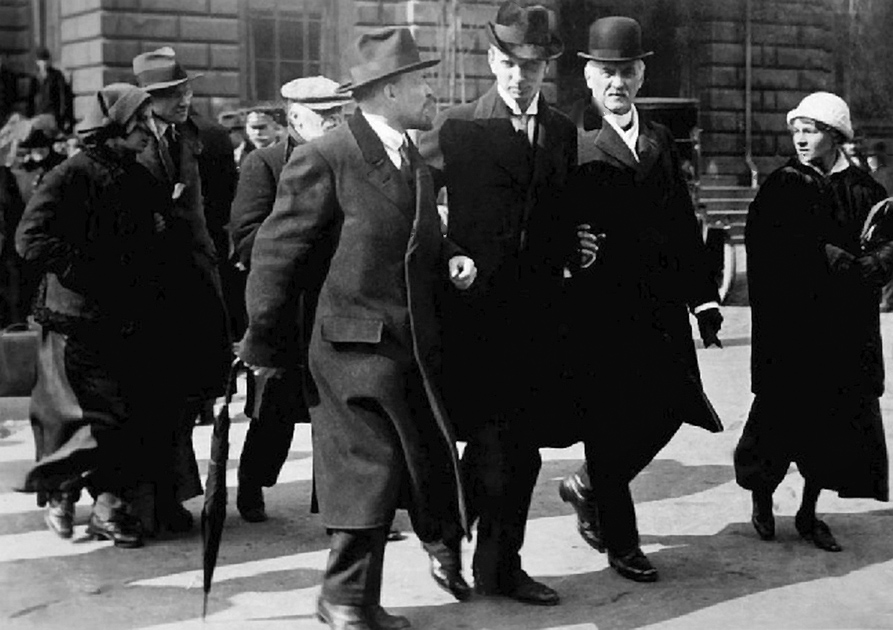
At Byelo-Ostrov Station, Finland Railway, Stalin, Ulyanova and a delegation of Petrograd and Sestroretsk working men and women meet Lenin on his return from exile and accompany him to Petrograd
Return from Switzerland
Lenin arrives at Finland Station after returning from exile and immediately challenges support for the Provisional Government.
April Theses
Calls for all power to pass to the Soviets.
April Theses
Asserts that Russia is "passing from the first stage of the revolutionwhich, owing to the insufficient class consciousness and organisation of the proletariat, placed power in the hands of the bourgeoisieto its second stage, which must place power in the hands of the proletariat and
April Theses
Calls for a new "revolutionary International, an International against the social-chauvinists and against the Center" which later becomes the Comintern (Third International) formed in 1919.
April Theses
Condemns the Provisional Government as bourgeois and urges "no support" for it, as "the utter falsity of all its promises should be made clear" & condemns World War I as a "predatory imperialist war" and the "revolutionary defensism" of foreign social democrat parties, calling for
April Theses
In Russian the "Aprelskiye Tezisy", the April Theses formed a programme developed by Lenin during the 1917 Russian Revolution in which Lenin calls for Soviet control of the state & When published the theses contributed to the July Days rising and to the subsequent coup
April Theses
Lenin delivers his April Thesis, states that Russia will become a republic of soviets.
April Theses
Lenin succeeded in persuading the Bolsheviks of his arguments as laid out in the April Theses and they provided much of the ideological groundwork that later led to the October Revolution.
April Theses
The April Theses are published in the Bolshevik newspaper Pravda and read by Lenin at two meetings of the All-Russia Conference of Soviets of Workers and Soldiers Deputies.
April Theses
of October 1917, bringing the Bolsheviks to power.
April Theses
revolutionary defeatism.
April Theses
the poorest sections of the peasants"
Bolshevik Party
In Russian the "Aprelskiye Tezisy", the April Theses formed a programme developed by Lenin during the 1917 Russian Revolution in which Lenin calls for Soviet control of the state & When published the theses contributed to the July Days rising and to the subsequent coup
Bolshevik Party
Lenin succeeded in persuading the Bolsheviks of his arguments as laid out in the April Theses and they provided much of the ideological groundwork that later led to the October Revolution.
Bolshevik Party
The April Theses are published in the Bolshevik newspaper Pravda and read by Lenin at two meetings of the All-Russia Conference of Soviets of Workers and Soldiers Deputies.
Bolshevik Party
of October 1917, bringing the Bolsheviks to power
Comintern
In the April Theses Lenin calls for a new "revolutionary International, an International against the social-chauvinists and against the Center" which later becomes the Comintern (Third International) formed in 1919. Calls for a new "revolutionary International, an International against the social-chauvinists and against the Center" which later becomes the Comintern (Third International) formed in 1919
International, 3rd
In the April Theses Lenin calls for a new "revolutionary International, an International against the social-chauvinists and against the Center" which later becomes the Comintern (Third International) formed in 1919. Calls for a new "revolutionary International, an International against the social-chauvinists and against the Center" which later becomes the Comintern (Third International) formed in 1919
Pravda
The April Theses are published in the Bolshevik newspaper Pravda and read by Lenin at two meetings of the All-Russia Conference of Soviets of Workers and Soldiers Deputies
Presentation of April Theses
Lenin presents the April Theses, rejecting support for the Provisional Government and demanding transfer of power to the Soviets.
Provisional Government
Condemns the Provisional Government as bourgeois and urges "no support" for it, as "the utter falsity of all its promises should be made clear" & condemns World War I as a "predatory imperialist war" and the "revolutionary defensism" of foreign social democrat parties, calling for revolutionary defeatism
The April Theses
Publication of "The April Theses"
July Days
His April Theses help shape slogans later used during the July Days.
Bolshevik Party
1st Bolshevik demonstrations in Petrograd & Moscow
Demonstrations
1st Bolshevik demonstrations in Petrograd & Moscow
Bolshevik Party
The Bolsheviks organize the Red Guard
Mobilization
The Bolsheviks organize the Red Guard
Chairman
Offers the "internationalist" Mensheviks a place on the editorial board of Pravda
Menshevik Party
Offers the "internationalist" Mensheviks a place on the editorial board of Pravda
Pravda
Offers the "internationalist" Mensheviks a place on the editorial board of Pravda
All Power to the Soviets
Bolsheviks use Soviet meetings to press their slogan.
Menshevik Party
Milyukov resigns, members of the Mensheviks and the Socialist Revolutionaries join the Government
Resignation
Milyukov resigns, members of the Mensheviks and the Socialist Revolutionaries join the Government
Congress of Soviets
1st Alln Congress of Soviets opens
Constitution of Russia
The First All Congress of Workers and Soldiers Soviets opens
Bolshevik Party
The Bolsheviks hold back from a coup
Coup
The Bolsheviks hold back from a coup
June Demonstration
Bolshevik slogans dominate the mass demonstration.
July Days
Criticises the Provisional Government as war weariness intensifies.
Provisional Government
The July Days refer to events that take place in Petrograd, Russia, between 3 July and 7 July (Julian calendar) (16 July 20 July, Gregorian calendar), when soldiers and industrial workers engage in spontaneous demonstrations against the Russian Provisional Government
July Days
Tries to assess whether the movement is premature.
July Days
Faces accusations that Bolsheviks are serving German interests.
July Days
The failed demonstrations force Bolshevik leaders onto the defensive.
July Days
Avoids arrest as attacks on Bolshevik offices intensify.
July Days
Hides near Razliv after the government issues arrest orders.
Exile of Vladimir Ilyich Ulyanov Lenin
Travels to Finland for a rest
July Days
Prepares to flee toward Finland while avoiding arrest.
July Days
Remains underground as the Bolshevik Party retreats tactically.
All Power to the Soviets
The machine gunners appeal met with a favorable response from the soldiers of the Moscow, Pavlovsky, Grenadiers, and 1st Reserve regiments who march to demonstrate under the slogan All Power to the Soviets
July Days
Machine-gunners and radical activists prepare demonstrations demanding Soviet power.
Menshevik Party
The Kadets walk out of the Russian Provisional Government, threatening the Mensheviks and the Socialist Revolutionaries (SRs) with the breakup of the Government coalition and a Government crisis results
Provisional Government
The Kadets walk out of the Russian Provisional Government, threatening the Mensheviks and the Socialist Revolutionaries (SRs) with the breakup of the Government coalition and a Government crisis results
July Days
Demonstrations begin among soldiers of the First Machine-Gun Regiment.
July Days
The July Days begin as soldiers and workers protest against the Provisional Government.
July Days
Workers and soldiers demand Soviet power as disorder spreads through Petrograd.
All Power to the Soviets
The Bolsheviks decide to provide leadership to the movement in order to give it an organized and peaceful character so.
All Power to the Soviets
The demands which the workers and soldiers take to the streets with in the July Days are influenced by the Bolshevik Party All Power to the Soviets.
All Power to the Soviets
during the afternoon of 17 July a peaceful demonstration of 500,000 workers, soldiers, and sailors under the slogan All Power to the Soviets is held.
Bolshevik Military Organisation
The demonstration is organized by the Bolshevik Military Organisation without initial authorization from the Central Committee after pressure from rank and file soldiers
Bolshevik Party
The Bolsheviks decide to provide leadership to the movement in order to give it an organized and peaceful character so during the afternoon of 17 July a peaceful demonstration of 500,000 workers soldiers
Bolshevik Party
The demands which the workers and soldiers take to the streets with in the July Days are influenced by the Bolshevik Party All Power to the Soviets.
Bolshevik Party
The demonstration is organized by the Bolshevik Military Organisation without initial authorization from the Central Committee after pressure from rank and file soldiers.
Bolshevik Party
and sailors under the slogan All Power to the Soviets is held
July Days
Anti-government demonstrations also spread beyond Petrograd to Moscow and other cities.
July Days
Bolsheviks try to give the mass movement a more organised and peaceful direction.
July Days
Government troops fire on demonstrators and the Soviet supports punitive measures.
July Days
The Bolshevik Military Organisation helps organise the armed demonstration.
July Days
The Central Committee tries to restrain the developing street movement.
July Days
Workers and soldiers march under the slogan All Power to the Soviets.
Menshevik Party
The military authorities send troops against the demonstration, leaving more than 700 people killed and wounded & the SRs and Mensheviks support punitive measures against the July Days insurgents. The Mensheviks oppose the demonstrations during the July Days
Bolshevik Party
The offices and printing plant of Pravda and the headquarters of the Bolshevik Central Committee are destroyed
July Days
An arrest order forces Lenin underground after Bolshevik offices are attacked.
Pravda
The offices and printing plant of Pravda and the headquarters of the Bolshevik Central Committee are destroyed
Provisional Government
The Provisional Government issues an order for the arrest of Lenin, who is forced to go underground
Bolshevik Recovery
Bolshevik recovery inside Soviets strengthens his position.
Coup
Writes to the Central Committee saying that the time is ripe for the seizure of power
All Power to the Soviets
Revives the slogan "all power to the Soviets"
Coup
Revives the slogan "all power to the Soviets"
Coup
Writes to the Central Committee a for a 2nd time urging it to seize power. Does not receive a reply from the Central Comm & threatens to resign
Insurrection Letters
Urges Bolsheviks to prepare seizure of power through Soviet organs.
Labour Service
States that after capitalism "universal labour service" is the order of the day
Return from Finland
Lenin secretly returns to Petrograd to press the Bolshevik leadership toward an immediate armed seizure of power.
Central Committee Insurrection Vote
Lenin persuades the Bolshevik Central Committee to approve preparations for an armed insurrection.
Coup
The Central Committee votes 10 to 2 for armed insurrection
October Revolution
Lenin and Stalin attend a meeting of the Party Central Committee where Lenins resolution on armed insurrection is approved and a 7 man Political Bureau of the CC headed by Lenin and Stalin is setup to direct the uprising
Bolshevik Party
The Bolshevik Congress summons a 2nd Congress of Soviets
Bolshevik Party
The Bolshevik Congress of Soviets of the Northern region opens. The Bolshevik Congress forms a "Northern Regional Committee"
Congress of Soviets
The Bolshevik Congress summons a 2nd Congress of Soviets
Congress of Soviets
The Bolshevik Congress of Soviets of the Northern region opens
Northern Regional Committee
The Bolshevik Congress forms a "Northern Regional Committee"
MRC
Approves the creation of the Military Revolutionary Committee
Negotiations
Declares military staff to be "Counter revolutionary"
Negotiations
23-24 October, negotiates with the military staff
Bolshevik Party
The Government occupies Petrograd & closes down Bolshevik newspapers
Capture of Petrograd
The Government occupies Petrograd & closes down Bolshevik newspapers
October Revolution
Lenin and Stalin direct the October armed uprising
Return to Petrograd
Returns secretly as the Soviet-backed uprising begins.
Capture of Moscow
Completes the occupation of Moscow
Capture of Petrograd
Declares the triumph of the workers & peasants revolution in Petrograd
Congress of Soviets
The 2nd alln Congress of Soviets proclaims transfer of power to the Soviets
Constitution of Russia
The 2nd alln Congress of Soviets proclaims transfer of power to the Soviets
Coup
The 2nd alln Congress of Soviets proclaims transfer of power to the Soviets. Declares the Provisional Government deposed
October Revolution
Lenin and Stalin direct the Second Alln Congress of Soviets of Workers and Soldiers Deputies
Provisional Government
Declares the Provisional Government deposed
Provisional Government Declared Overthrown
Lenin announces that the Provisional Government has been overthrown as the Bolsheviks consolidate control of Petrograd.
Bolshevik Party
The Bolsheviks open the 2nd Congress of Soviets
Capture of Kremlin
The Military Revolutionary Council troops seize the Kremlin
Capture of Saint Petersburg
The military revolutionary Council troops seize the Winter Palace
Chairman
Appointed Chairman of the Council of Peoples Commissars
Congress of Soviets
The Bolsheviks open the 2nd Congress of Soviets
Constitution of Russia
Congress approves the Council of Peoples Commissars
Council of People's Commissars Formed
Lenin becomes chairman of the Council of People's Commissars created by the Second Congress of Soviets.
Decree on Land
Lenin presents the Decree on Land abolishing private landed estates and transferring land for local redistribution.
Decree on Peace
Lenin presents the Decree on Peace calling for immediate negotiations toward a democratic peace without annexations or indemnities.
Death of Vladimir Ilyich Ulyanov Lenin
The Death Penalty abolished
Kerensky-Krasnov Rising
Lenin's government faces an armed challenge from Kerensky and Krasnov during the early consolidation of Bolshevik power.
Bolshevik Party
The Bolsheviks overthrow the Provisional Government on the eve of the meeting of Second All Congress of Soviets
Congress of Soviets
The Bolsheviks overthrow the Provisional Government on the eve of the meeting of Second All Congress of Soviets. Power is given to the 2nd Congress of Soviets but withdrawn after Lenins opposition
Coup
The Bolsheviks overthrow the Provisional Government on the eve of the meeting of Second All Congress of Soviets
Provisional Government
The Bolsheviks overthrow the Provisional Government on the eve of the meeting of Second All Congress of Soviets
Bolshevik Victory in Moscow
Bolshevik forces gain control of Moscow after prolonged street fighting against forces loyal to the former government.
October Revolution
Lenin wrote a proclamation calling Zinoviev and Kamenev "deserters", he never forgot their behavior, eventually making an ambiguous reference to their "October episode" in his Testament
Capture of Petrograd
The Soviets sieze power in Petrograd
Coup
Overthrows the Kerensky Government
Nationalization
The Bolshevik land decree abolishes private landed property and transfers land to peasant use
Decree on Workers Control
The Soviet government issues a decree establishing workers' control over production, accounting and enterprise administration.
Bolshevik Party
The Bolsheviks win 175 seats out of 707. In the Constituent Assembly elections the Bolsheviks win 9.8 of 41.7 million votes
Election
The Socialist Revolutionaries win 17.5 million votes. The Bolsheviks win 175 seats out of 707. In the Constituent Assembly elections the Bolsheviks win 9.8 of 41.7 million votes
Bolshevik Party
Bolsheviks decree the creation of Workers Committee's at placres of work
Workers Committees
In all enterprises of "state importance" all matters should be deferred to the state. Bolsheviks decree the creation of Workers Committee's at placres of work
Cadet Party
Outlaws the Cadet Party
Creation of Cheka
The Soviet government creates the Cheka to combat counter-revolution and sabotage.
Declaration of War
The Soviet Commissars declare war on the Cossack chiefs
Conference of Brest Litovsk
Drafts the peace proposals for the Brest Litovsk negotiations
Nationalization
The Red Guard occupies private banks & a decree is passed to nationalize them
Nationalization of Banks
The Soviet government nationalizes private banks and strengthens state control over the financial system.
Armistice with Central Powers
An armistice halts fighting between Soviet Russia and the Central Powers while formal peace negotiations continue.
Economy of Russia
The Vesenkha gains control over Government finance of industry & wages state wages
Nationalization
The Vesenkha gains control over Government finance of industry & wages state wages
Veshenka
The Vesenkha gains control over Government finance of industry & state wages
Bolshevik Party
A Bolshevik decree establishes the Supreme Economic Council over all economic bodies
Constitution of Russia
A Bolshevik decree establishes the Supreme Economic Council over all economic bodies
Economy of Russia
A Bolshevik decree establishes the Supreme Economic Council over all economic bodies
Independence of Russia
The Ukrainian Council proclaims Ukrainian independence
Independence of Ukraine
The Ukrainian Council proclaims Ukrainian independence
Nationalization
The Vesenkha decrees each region establish a Council of National Economy (Sovnarkhoz)
SEC
A Bolshevik decree establishes the Supreme Economic Council over all economic bodies
Sovnarkhozes
The Vesenkha decrees each region establish a Council of National Economy (Sovnarkhoz)
Bolshevik Party
A Bolshevik decree establishes the Supreme Economic Council over all economic bodies. The Bolsheviks overthrow the Provisional Government on the eve of the meeting of Second All Congress of Soviets. Publication of "Will The Bolsheviks Retain State Power?"
Congress of Alln Peasant
Addresses the Alln Peasant Congress
Constitution of Russia
A Bolshevik decree establishes the Supreme Economic Council over all economic bodies. In the April Theses states that Russia will become a republic of soviets
Declaration of War
Attacks the War as an "Imperialist struggle"
Imperialism the Highest Stage of Capitalism
Publication of "Will The Bolsheviks Retain State Power?". Publication of "The State & Revolution", officials will receive workers wages. Publication of "The State & Revolution". Publication of "Imperialism the Highest Stage of Capitalism"
Labour Service
States that after capitalism "universal labour service" is the order of the day. At the Alln Peasants Congress speaks for "labour service". At the Alln Peasants Congress asks for workers agricultural units
Sovnarkom
The Council of Peoples Commissars is founded, the Russian Government
The State and Revolution
Publication of "Will The Bolsheviks Retain State Power?". Publication of "The State & Revolution", officials will receive workers wages. Publication of "The State & Revolution". Publication of "Imperialism the Highest Stage of Capitalism"
The State and Revolution", officials will receive workers wages
Publication of "Will The Bolsheviks Retain State Power?". Publication of "The State & Revolution", officials will receive workers wages. Publication of "The State & Revolution". Publication of "Imperialism the Highest Stage of Capitalism"
Will The Bolsheviks Retain State Power?
Publication of "Will The Bolsheviks Retain State Power?". Publication of "The State & Revolution", officials will receive workers wages. Publication of "The State & Revolution". Publication of "Imperialism the Highest Stage of Capitalism"
Plot
A failed attempt is made on Lenins life
Bolshevik Party
The Constituent Assembly in which the Bolsheviks are a minority meets for one day before being suppressed
Constituent Assembly
The Constituent Assembly in which the Bolsheviks are a minority meets for one day before being suppressed
Dissolution of Constituent Assembly
The Bolshevik government prevents the Constituent Assembly from reconvening after its single contentious session.
Constitution of Russia
Dissolves the Constituent Assembly & "establishes the dictatorship of the proletariat"
Congress of Soviets
Proclaims the Soviet Russian Republic. Passes the "declaration of the rights of the toiling & exploited masses"
Mobilization
Sets up battalions for civil defense duties for digging trenches & surveillance
Declaration of Rights Adopted
The Congress adopts the Declaration of Rights of the Working and Exploited People as a statement of Soviet political principles.
Workers and Peasants Red Army Decree
The Soviet government decrees creation of the Workers' and Peasants' Red Army on a voluntary basis.
Constituent Assembly
Issues a decree abolishing the Constituent Assembly
Constitution of Russia
Issues a decree abolishing the Constituent Assembly
Church and State Separation
The Soviet government issues a decree separating church and state and removing the church's privileged legal position.
Confiscation of Church Property
Church property is confiscated & all religious instruction in the schools abolished
Nationalization
Church property is confiscated & all religious instruction in the schools abolished
Religious Instruction
Church property is confiscated & all religious instruction in the schools abolished
Congress of Soviets
Repudiates foreign & domestic debts
Calendar Reform Decree
The Soviet government adopts the Gregorian calendar, bringing Russian civil dating into line with Western Europe.
Diplomacy
Relations are severed with Romania
Constitution of Russia
Declaration of the USSR
Bolshevik Party
The Bolsheviks resolve that the Trades Unions become "organs of the socialist state"
Congress of Soviets
Congress of Soviets makes the Declaration of Rights of the Toiling & Exploited People
Congress of Trades Unions, 1st
Workers control is shifted from Factory Committee's to Trades Unions. The Bolsheviks resolve that the Trades Unions become "organs of the socialist state". Factory Committee's should be subject to the Alln Council of Workers control
Conscription
Introduces "universal labor obligation"
Declaration of Rights
Congress of Soviets makes the Declaration of Rights of the Toiling & Exploited People
Nationalization
The 3rd All-Russian Congress proclaims factories, mines & transport state property. The Merchant Fleet is taken over by decree
Reform of Workers Rights
Issues the "Declaration of the Rights of the Toiling & Exploited Masses"
German Offensive Resumes
Lenin confronts renewed German military advances after the Brest-Litovsk peace negotiations break down.
Acceptance of German Peace Terms
Lenin secures Bolshevik acceptance of harsh German peace terms as enemy forces advance rapidly into former imperial territory.
Bolshevik Party
The Bolshevik Party is renamed the Russian Communist Party. Opening of the 7th Congress of the Bolshevik Party
Congress of Bolsheviks, 7th
Opening of the 7th Congress of the Bolshevik Party
Russian Communist Party
The Bolshevik Party is renamed the Russian Communist Party
Seventh Party Congress
Lenin defends the Brest-Litovsk settlement when the Seventh Party Congress opens.
Bolshevik Party
Peoples Courts are introduced
Congress of Bolsheviks, 7th
Peoples Courts are introduced
Bolshevik Party
Cuts links with the discredited Social Democratic Party. 7th Congress resolution changes the name of the Bolshevik Party to the Communist Party
Communist Party
7th Congress resolution changes the name of the Bolshevik Party to the Communist Party
Congress of Bolsheviks, 7th
Cuts links with the discredited Social Democratic Party
Government Transfer to Moscow
Lenin and the Soviet government leave Petrograd for Moscow because the former capital is vulnerable to German attack.
Congress of Soviets
The 3rd Congress of Soviets ratifies the Treaty of Brest Litovsk
Fourth Congress Ratifies Brest-Litovsk
Lenin secures ratification of the Brest-Litovsk treaty by the Fourth All-Russian Congress of Soviets.
Bolshevik Party
The Bolshevik Government moves to Moscow
Capital
The Bolshevik Government moves to Moscow
Peoples Courts
Peoples Courts are introduced
Economy of Russia
A Decree outlaws the purchase & leasing of industrial & commercial business. A Decree compels all securities & bonds to be registered with the Government
Compulsory Military Training Decree
The Soviet government introduces compulsory military training for workers as it builds a more disciplined Red Army.
Inheritance
Inheritance is abolished
Bolshevik Party
Bolshevik troops open fire on workers protesting at food shortages in the town of Kolpino
Rebellion
Bolshevik troops open fire on workers protesting at food shortages in the town of Kolpino
Food Dictatorship Decree
The Soviet government strengthens emergency grain procurement powers as urban food shortages worsen.
Czechoslovak Legion Revolt
Lenin's government faces a widening military crisis as clashes with the Czechoslovak Legion spread along the Trans-Siberian Railway.
Red Army Conscription
The Soviet government introduces compulsory military service as the civil war expands and volunteer recruitment proves insufficient.
Economy of Russia
Helps found the Vesenkha to control the economy at the Alln Congress
Nationalization
The sugar industry is nationalized. The oil industry is nationalized
Vesenkha
Helps found the Vesenkha to control the economy at the Alln Congress
Committees of Poor Peasants
The Soviet government creates Committees of Poor Peasants to support grain procurement and weaken wealthier village households.
Large Industry Nationalization
The Soviet government nationalizes major industrial enterprises as state control of the wartime economy expands.
Nationalization
Issues a decree nationalizing all major areas of industry
Nationalization
Issues the decree nationalising large-scale industry during War Communism
Constitution of Russia
A Congress Opens in Moscow & approves the Soviet Constitution
Assassination Attempt on Lenin
Lenin is seriously wounded by gunfire after addressing workers at the Michelson factory in Moscow.
Plot
One bullet hits his neck & another hits his collarbone. An attempt on Lenins life as 3 shots are fired during an address at a labour rally
Cheka
The Petrograd Cheka Chief is assassinated
Rebellion
The Red Army search for suspects & Kronstadt sailors shoot 500 hostages. The Petrograd Cheka Chief is assassinated
Red Army
The Red Army search for suspects & Kronstadt sailors shoot 500 hostages
Bolshevik Party
Launch of the red terror to massacre prisoners & hostages throughout Bolshevik Russia
Red Terror
Launch of the red terror to massacre prisoners & hostages throughout Bolshevik Russia
Red Terror Decree
The Soviet government formally announces the Red Terror amid civil-war violence and attacks on Bolshevik leaders.
International Revolution
Lenin writes to Sverdlov & Trotsky saying that international revolution is imminent & urges preparations for a 3 million man Army
Economy of Russia
All domestic trade is nationalized
Nationalization
Shops are closed & their inventory used for barter with the peasants. All domestic trade is nationalized
Brest-Litovsk Treaty Annulled
The Soviet government annuls the Treaty of Brest-Litovsk after Germany's defeat in the First World War.
Workers Committees
Issues a decree establishing Workers Committee's in enterprises with 5 or more workers
Council of Workers and Peasants Defence
Lenin chairs the Council of Workers' and Peasants' Defence created to coordinate the Soviet war effort.
Committees of Poor Peasants Abolished
The Soviet government ends the separate Committees of Poor Peasants and merges their functions into local soviets.
Conscription
A Labour Code providing for males & females between 16 & 50 to render "labor service"
Soviet Labour Code
The Soviet government adopts a labour code regulating compulsory labour obligations and employment under the new state system.
Constitution of Russia
The Congress of Soviets cede their primacy of power to the Government
Labour Exchanges
Workers must register with Labour Exchanges if unemployed. Labour exchanges are set up by decree. Employers can only employ labour through Labour Exchanges
Editorial provenance
Compiled and edited by World History Database
Historical context is editorial material; the chronology is generated from World History Database Russian Revolution records.
Last reviewed: September 2026.
Continue exploring