World History Database · Revolution
Russian Revolution Timeline 1917–1918
Explore 726 Russian Revolution records covering the February Revolution, abdication of Nicholas II, Provisional Government, Petrograd Soviet, Lenin and the April Theses, July Days, Kornilov Affair, October Revolution, early Bolshevik government and the first crises of 1918. Use the searchable collection below or begin with the illustrated history and permanent subject timelines.
Brief history · 1917–1918
A brief history of the Russian Revolution
The Russian Revolution was a sequence of political breakdowns, mass movements and struggles for power that ended tsarist rule, destroyed the Provisional Government and created a Bolshevik-led Soviet state.
War, shortages and the crisis of tsarism
By 1917 the Russian Empire had been badly weakened by the First World War. Military losses, inflation, food and fuel shortages and disruption to transport intensified dissatisfaction with the government. The autocratic system had already been challenged by the 1905 Revolution, and wartime failures further damaged confidence in Nicholas II.
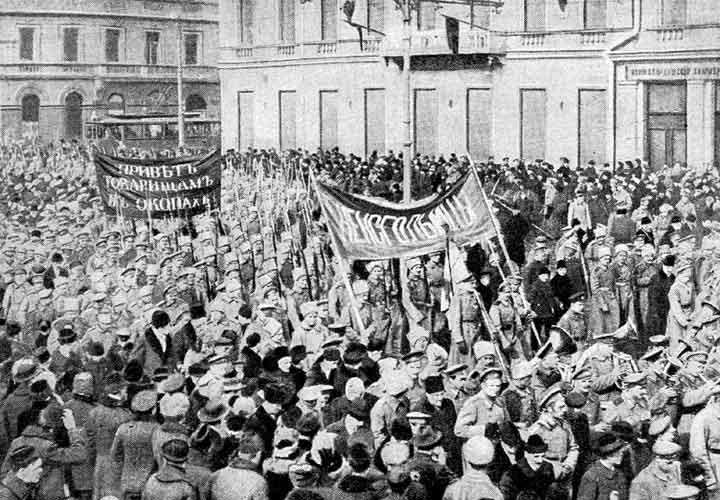
Petrograd became the center of the immediate crisis. Strikes and demonstrations over bread, wages and the war expanded rapidly in February 1917 under the old Russian calendar. When soldiers of the capital's garrison began to mutiny rather than suppress the crowds, the monarchy lost the armed support needed to restore order.
The February Revolution and the fall of Nicholas II
The collapse of imperial authority produced two competing centers of power. Duma leaders formed the Provisional Government, while workers and soldiers created the Petrograd Soviet. Nicholas II abdicated in March 1917, ending Romanov rule, but the disappearance of the monarchy did not resolve the central issues of war, land, food supply and political legitimacy.
The relationship between the government and Soviet is often described as dual power. The Provisional Government possessed formal ministerial authority, while the Soviet had deep influence among workers, soldiers and the Petrograd garrison.
Lenin, the April Theses and Bolshevik strategy
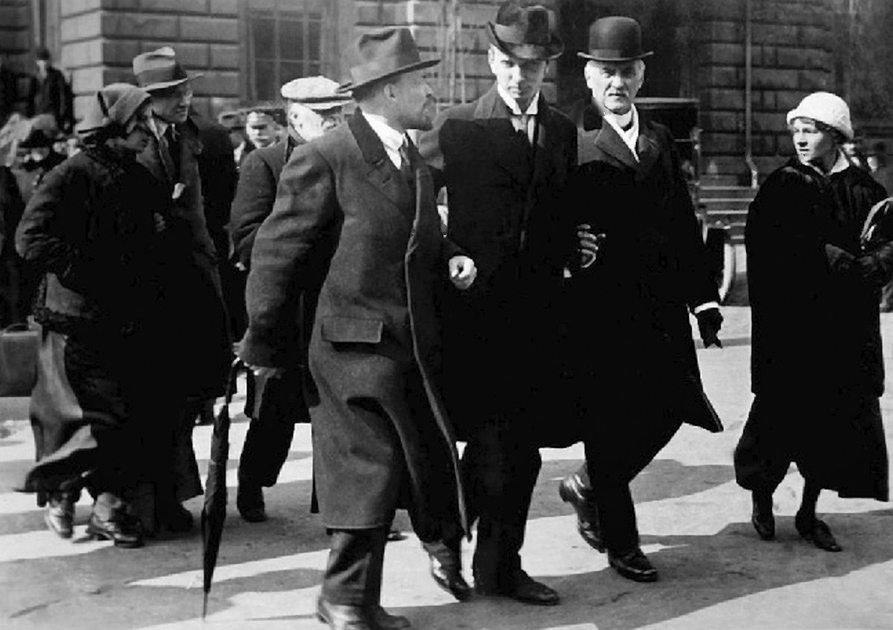
Vladimir Lenin returned from exile in April 1917 and argued that Bolsheviks should not support the Provisional Government. His April Theses called for an end to the war, transfer of power to the soviets and movement toward socialist transformation.
Russia's continued participation in the First World War remained a major source of conflict. The failure of the summer offensive and worsening social conditions undermined the government while Bolshevik slogans such as “All power to the Soviets” gained influence.
July Days and the Kornilov Affair
The July Days brought armed workers and soldiers into the streets of Petrograd demanding a transfer of power. The government suppressed the demonstrations, Bolshevik leaders were arrested or forced into hiding and Lenin left the capital.
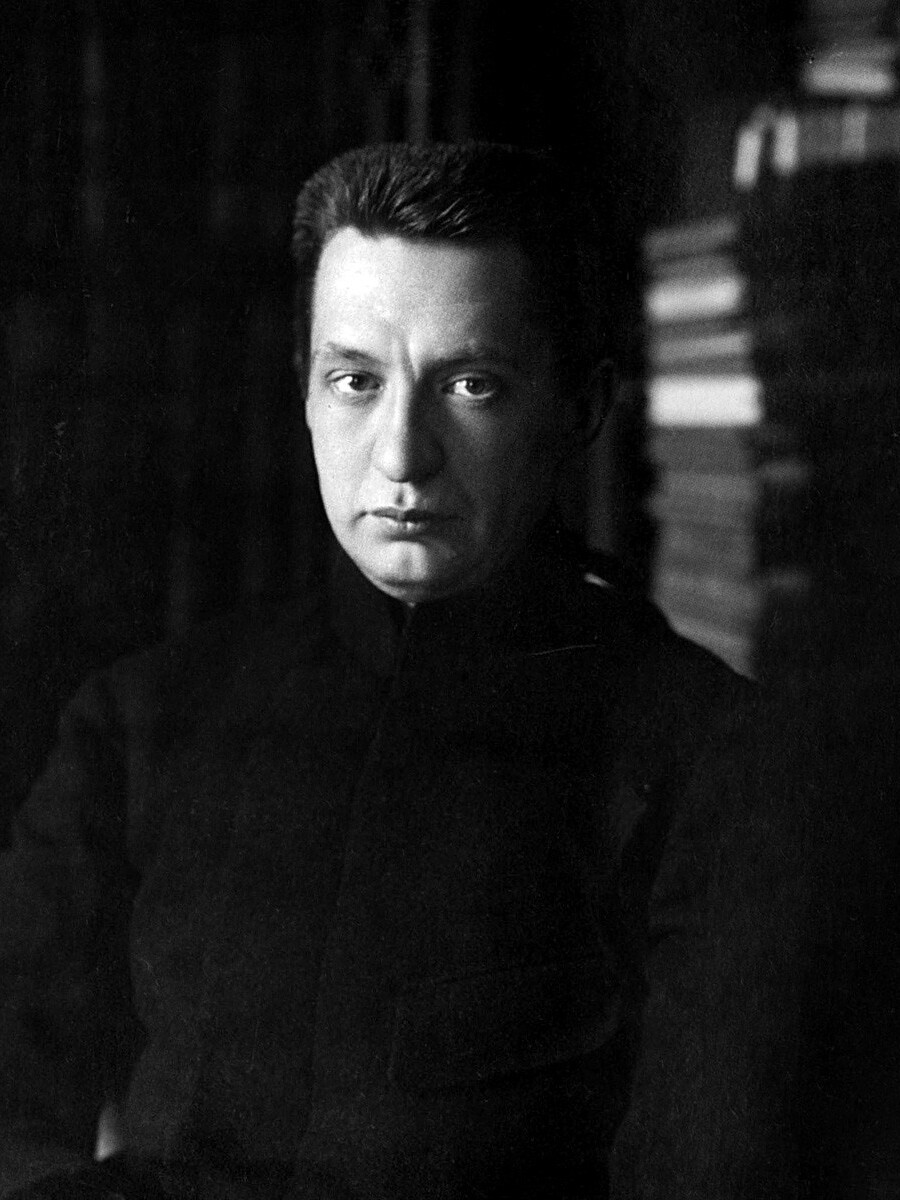
The Kornilov Affair reversed much of that damage. General Lavr Kornilov's confrontation with Alexander Kerensky created fears of a counter-revolutionary military move. Bolshevik activists helped mobilize resistance and the party's standing rose as Kerensky's authority weakened.
The October Revolution
By autumn 1917 the Bolsheviks had majorities in important soviets. The Petrograd Soviet's Military Revolutionary Committee coordinated Red Guards, soldiers and sailors as Bolshevik-led forces occupied strategic points and overthrew the Provisional Government.
Russia still used the Julian calendar in 1917, so 25 October Old Style corresponds to 7 November in the Gregorian calendar. Russia adopted the Gregorian calendar in early 1918.
From revolution to Soviet government and civil war
The new government issued decrees on peace and land, but conflict continued. The elected Constituent Assembly met in January 1918 and was dissolved after one sitting. The Treaty of Brest-Litovsk removed Soviet Russia from the First World War in March 1918 at severe territorial cost.
During 1918 armed resistance broadened into civil war. Bolshevik rule became more centralized, the Red Army and Cheka developed rapidly, and the former imperial family was killed at Ekaterinburg in July.
Historical photographs
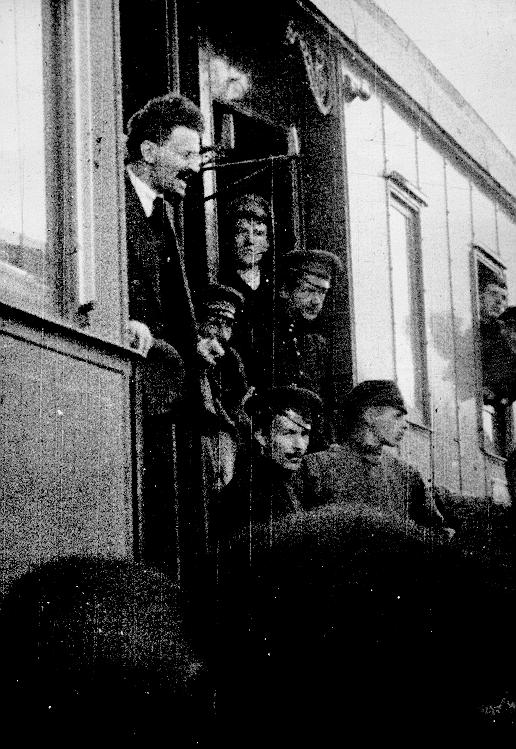
The Russian Revolution in contemporary images
Public-domain or CC0 photographs associated with the revolutionary year and its principal political actors.
Permanent subject pages
Explore the Russian Revolution by event, institution and person
These crawlable pages are generated from the same 726-record collection. Each combines explanatory history with matching database records rendered as static HTML.
Search records
Dropdowns are grouped A–Z, with numeric values under 0–9.
Collection summary
Most represented events
Most represented people
| Date | Person | Role | Event | Place | Historical record |
|---|
Sources and editorial review
Sources and further reading
Compiled and edited by World History Database
The historical overview supplies editorial context for the site's 726 structured Russian Revolution records. The database chronology preserves the site's stored event wording and dates.
Last reviewed: September 2026.