1642 15th July
Cambridgeshire Volunteers Authorised
Cromwell receives authority to raise volunteer companies in Cambridgeshire.
English Civil War · permanent subject timeline
Parliamentarian cavalry commander, New Model Army leader and later Lord Protector. This page combines historical context with 128 matching records drawn directly from the World History Database English Civil War archive.
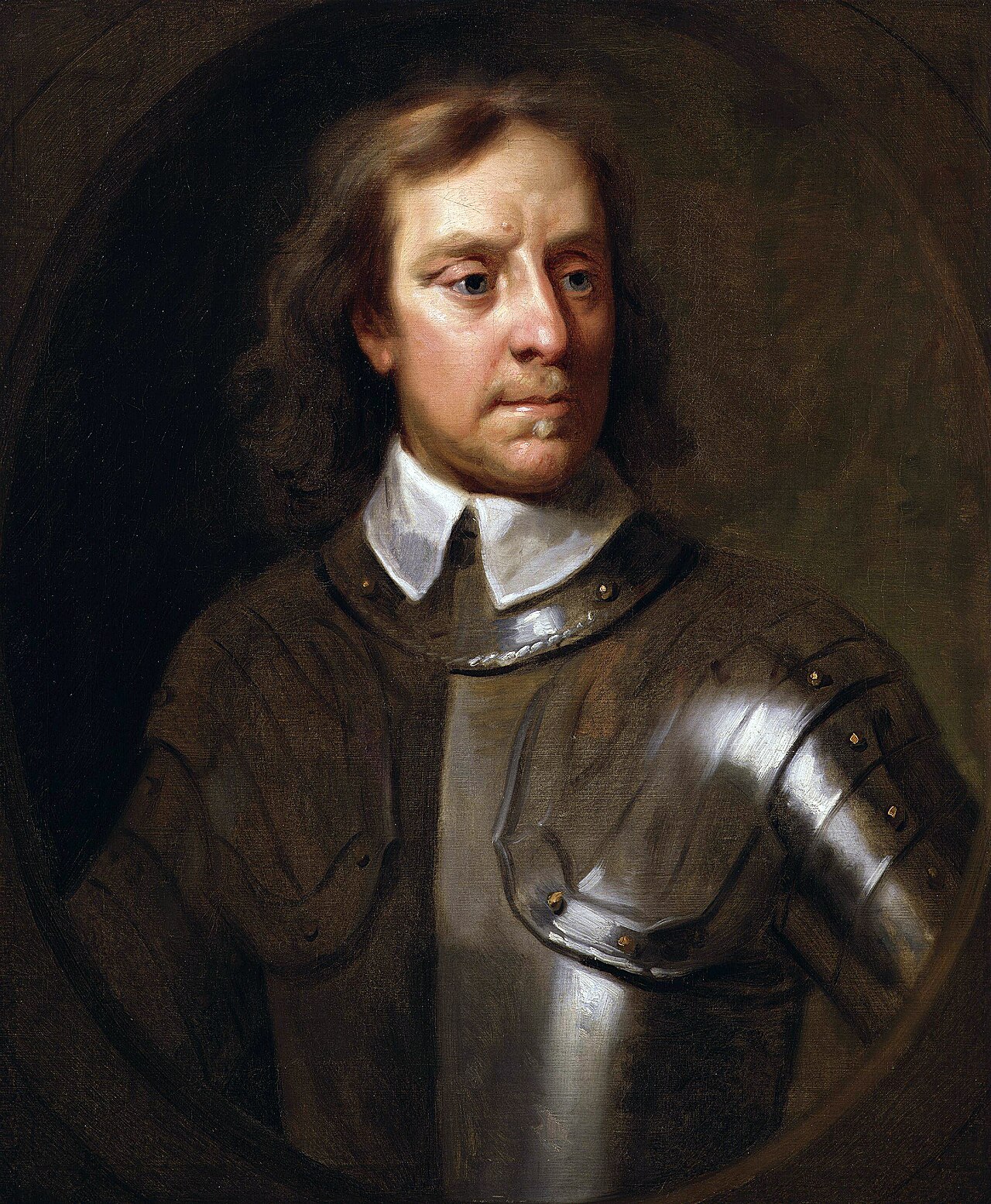
Historical context
Oliver Cromwell rose from local cavalry command to become one of Parliament's most effective military leaders. He fought in major campaigns including Marston Moor, Naseby, Preston, Dunbar and Worcester.
Cromwell's military and political career connected Parliament's wartime victory to the Commonwealth and Protectorate. He became the dominant political figure of the Interregnum.
World History Database records
The records below are selected from the 1,090-record English Civil War archive and rendered as static HTML in chronological order.
Cambridgeshire Volunteers Authorised
Cromwell receives authority to raise volunteer companies in Cambridgeshire.
Cavalry Troop Mustered
Cromwell musters a troop of horse for Parliament's army.
Commission as Captain of Horse
Cromwell receives authority to command a troop of horse raised around Huntingdon.
Battle of Edgehill
Cromwell commands a troop of Parliamentarian horse during the Edgehill campaign.
Disciplined Cavalry Recruitment
Cromwell begins recruiting cavalry selected for discipline and religious commitment.
Rebellion
Cromwell warns Parliament about possible Royalist and Catholic mobilisation in Monmouthshire.
Battle of Grantham
Cromwell defeats a larger Royalist cavalry force near Grantham and strengthens Parliament's position in Lincolnshire.
Battle of Grantham
1st victory for Cromwell & the Eastern association
Siege of Burghley
Leads a successful siege in Northamptonshire against the Countess of Essex
Battle of Gainsborough
Cromwell helps relieve Gainsborough and drives Royalist cavalry from the field.
Battle of Gainsborough
Wins a victory over Royalist forces
Mobilization
Parliament issues instructions for the impressment of 22,000 in London & the east
New Model Army
Parliament issues instructions for the impressment of 22,000 in London & the east
Alliance
Parliament promises to protect Scottish Presbyterianism
Battle of Winceby
Cromwell's cavalry helps defeat Royalist horse at Winceby during the struggle for Lincolnshire.
Battle of Winceby
Cromwell helps lead Parliamentarian cavalry in the victory at Winceby, strengthening Parliament's control of Lincolnshire.
County Associations
Counties are inefficient for managing armies so County Associations are formed
Reform of War Policy
Counties are inefficient for managing armies so County Associations are formed
Lieutenant
Signs the Covenant enabling him to take up the position of Lieutenant Colonel
Eastern Association Cavalry Command
Cromwell receives command of the Eastern Association cavalry and develops the disciplined mounted force later associated with his military reputation.
Battle of Marston Moor
Cromwell commands Eastern Association cavalry as Parliament and the Scots defeat Prince Rupert.
Battle of Marston Moor
Sweeps away Gorings horse by attacking the Royalists from the rear. Defeats the Royalists near York, leaving 4,000 dead & taking 1,500 prisoners. Cromwell's first major victory, personally commands 2,500 men
Cavalry Command at Marston Moor
Cromwell commands the Parliamentarian left-wing cavalry and helps turn the fighting at Marston Moor into a decisive Royalist defeat.
Siege of York
Resumes the siege of York after victory at Marston Moor
Capture of York
Leads the "Ironsides" & captures York
Capture of Newcastle
Commander of "Ironsides" during Parliaments capture of Newcastle
Second Battle of Newbury
Cromwell criticises missed opportunities after the Parliamentarian attack fails to destroy the king's army.
Second Battle of Newbury
Cromwell fights at Second Newbury and later urges a stronger pursuit of the withdrawing Royalist army.
Council of War
Advises a military defeat of the King after Manchester fails to persue him in battle
Criticism of Manchester
Cromwell criticises Manchester's conduct of the war and presses Parliament for a more vigorous military strategy.
Alliance
Helps form an alliance between Scotland & Parliament
Committee of Both Kingdoms
Appointed Member of Committee of Both Kingdoms
Independents
Appointed Leader of the Independents
Reform of Religious Toleration
Leads an Army sect demanding religious toleration & prosecution of criminals
Second in Command
Appointed 2nd-in-Command of the Parliamentary Army
Lieutenant
Appointed Lieutenant General of the Horse & Foot. Appointed 2nd-in-Command for Manchester
Surrender
The Royalists are defeated in the West, only Oxford remains as a serious threat. Sir Ralph Hopton signs articles of surrender at Exeter
Dismissal
Removes the existing Generals
Lieutenant
Fairfax succeeds Essex as Captain General & Cromwell becomes Lt General
Second-in-Command
Appointed 2nd-in-Command of the New Model Army under Sir Thomas Fairfax
Self-Denying Ordinance
Removes the existing Generals. Creates a New Model Army becoming 2nd-in-Command under Sir Thomas Fairfax. All MPs except Cromwell must relinquish military commissions within 40 days
Battle of Islip
Cromwell routs a detachment of Royalist horse at Islip during his raid against the king's artillery train.
Battle of Faringdon
Defeated in battle by the Earl of Norwich, George Goring
Skirmish at Faringdon
Royalist forces under Goring damage part of Cromwell's regiment near Faringdon after his Oxfordshire raid.
Siege of Oxford
Charles I and Goring evade Parliamentarian forces and leave Oxford during the campaigning season.
Mobilization
Advances toward Kenilworth before parliamentary orders redirect forces during the Oxford operations.
Mobilization
Joins Fairfax near Nuneham as Parliamentarian forces press operations around Oxford.
Mobilization
Serves with Fairfax near Oxford as Parliamentarian forces try to contain Charles I's army.
Battle of Preston
Wins victory over the Scots under Hamilton. The 1st Battle over which Cromwell has independent command
Mobilization
Arrives in Cambridge to gather horse and reinforce the Eastern Association before rejoining the main campaign.
Commander of New Model Army
The Commons approves Cromwell's appointment as 2nd in Command of the New Model Army
Mobilization
Cromwell moves toward Fairfax before the Naseby campaign as Parliament concentrates forces against Charles I.
Mobilization
Cromwell joins forces with Fairfax & Parliament has an Army of more than 13,000 men
Battle of Naseby
Commands Parliamentarian cavalry on the right and helps Fairfax defeat the king's main field army.
Battle of Naseby
Parliamentary victory, Charles has 7,500 men & Parliamentary forces number 13,500. Contributes to Charles downfall & the ascendancy of Cromwell & the independents
Cavalry Command at Naseby
Cromwell commands the New Model Army's horse at Naseby and turns his victorious cavalry against the Royalist infantry.
Royalist Infantry Flanked at Naseby
After defeating the Royalist cavalry, Cromwell redirects his horsemen against the Royalist foot and helps decide the battle.
Siege of Oxford
Establishes quarters around Holton while preparing pressure on the Royalist capital at Oxford.
Battle of Langport
Cromwell's cavalry contributes to Parliament's victory over Goring's forces at Langport.
Battle of Hambledon Hill
Cromwell routs Dorsetshire clubmen at Hambledon Hill
Assault on Bristol
Cromwell helps command Parliamentarian assaults on Bristol's defences.
Battle of Bristol
Prince Rupert is forced to return to Oxford, his forces intact. Defeats Prince Rupert & captures Bristol
Capture of Bristol
Defeats Prince Rupert & captures Bristol
Siege of Bristol
Commands part of the Parliamentarian assault around Prior's Hill fort during the storming of Bristol.
Siege of Bristol
Defeats Prince Rupert & captures Bristol
Battle of Devizes
Cromwell captures Devizes
Battle of Winchester
Cromwell captures Winchester
Siege of Bristol
Present at Stapleton near Fairfax's headquarters during Parliament's siege of Bristol.
Siege of Bristol
Present near Keynsham during Parliament's siege operations against Bristol.
Battle of Basingstoke
Secures the last major obstacle between London & the West Country. Defeats the Marquise of Winchester
Storming of Basing House
Cromwell storms Basing House and ends one of the strongest Royalist garrisons in southern England.
Storming of Basing House
Cromwell takes part in the storming of Basing House, removing a major Royalist stronghold controlling routes west of London.
Independents
Leads the Independents, a sect demanding religious toleration & prosecution of the war
New Model Army
The New Model Army is created by Oliver Cromwell & Thomas Fairfax. The Committee of Both Kingdoms recommends a new army of 22,000 run by Parliament. Persuades Parliament to adopt a new militia, maintained by impressment & taxation. Modeled after Cromwell's Ironsides
Siege of Oxford
Helps blockade Oxford to prevent Charles I joining forces with Prince Rupert and Prince Maurice.
Siege of Oxford
Oxford agrees surrender terms with Fairfax, ending the Royalist capital's resistance.
Army Council
Cromwell is associated with the Army leadership as officers and Agitators commit the Army not to disband until soldiers' pay, indemnity and political security are addressed
Grandees
Cromwell acts among the Army Grandees as the New Model Army refuses disbandment on Parliament's terms and insists that the soldiers' political and military grievances must be settled
Heads of the Proposals
Cromwell supports the Heads of the Proposals as a moderate Army settlement that would preserve limited monarchy while securing parliamentary and religious safeguards
Siege of London
Enters London with an Army & forces Parliament to take him & the other MPs back
Grandees
Cromwell chairs the Army Council at Putney for the Grandees, attempting to preserve Army unity while allowing Agitators and Leveller advisers to present their constitutional demands
Putney Debates
Cromwell argues that the meeting should receive the radicals' proposals in orderly fashion so that the Army can judge their intentions and preserve unity
Putney Debates
Cromwell chairs the opening session because Fairfax is absent and invites officers, soldiers and civilian advisers to speak on the public settlement after the First Civil War
Agreement of the People
Cromwell seeks to manage the dispute over the Agreement of the People, allowing the radicals to speak while trying to preserve Army unity and prevent a break with constitutional order
Grandees
Cromwell urges caution over breaking with monarchy, reflecting the Grandees' preference for a controlled settlement with Charles I rather than immediate adoption of the Leveller programme
Putney Debates
Cromwell discusses the King's negative voice and treats kingship as contractual, while resisting proposals that would immediately overthrow the monarchy
Putney Debates
Cromwell joins the effort to have proposals refined by committee, aiming to turn the dispute over the Agreement into a controlled constitutional programme
Agitators
Cromwell supports ending the open Army Council debates after the Agitators' demands threaten discipline and expose deep division between radical soldiers and senior officers
Putney Debates
Cromwell backs suspension of the Army Council meetings because the Grandees fear that continued debate over the King and the Agreement will damage military discipline
Army Council
Cromwell helps restore discipline at the Corkbush Field rendezvous after soldiers resist the Army Council's settlement, resulting in arrests and the execution of a mutineer
Grandees
Cromwell helps enforce the Grandees' settlement at the Corkbush Field rendezvous, suppressing Leveller-influenced resistance and restoring discipline within the New Model Army
Levellers
Cromwell suppresses Leveller-influenced resistance at the Corkbush Field rendezvous, restoring Army discipline after soldiers reject the Grandees' settlement and display slogans for England's freedom and soldiers' rights
Arrest of Charles II
Orders the abduction of Charles II at Holmby
Mobilization
Flees Parliament & joins an Army with 100 members of the House of Commons
Battle of Preston
Cromwell defeats the Engager army and breaks the main Royalist threat in the Second Civil War.
Battle of Preston
Cromwell attacks the Scottish Engager army near Preston and begins the three-day campaign that destroys the invasion supporting Charles I.
Battle of Winwick Pass
Fighting in the fields outside the town of Preston, the English Parliamentarian forces of Oliver Cromwell inflict a major reverse on the Anglo-Scottish Royalist army of the Duke of Hamilton
Royalist Army
Fighting in the fields outside the town of Preston, the English Parliamentarian forces of Oliver Cromwell inflict a major reverse on the Anglo-Scottish Royalist army of the Duke of Hamilton
Long Parliament
Divisions emerge culminating in Prides Purge when, under the orders of Oliver Cromwell's son-in-law Henry Ireton, Colonel Pride physically bars about half of the members of Parliament from taking their seats
Prides Purge
Divisions emerge culminating in Prides Purge when, under the orders of Oliver Cromwell's son-in-law Henry Ireton, Colonel Pride physically bars about half of the members of Parliament from taking their seats
Execution
In the wake of the ejections from the Long Parliament, the remnant, the Rump Parliament, arranges for the trial and execution of Charles I
Rump Parliament
In the wake of the ejections from the Long Parliament, the remnant, the Rump Parliament, arranges for the trial and execution of Charles I
Suppression of Burford Mutiny
Cromwell helps suppress the Leveller-linked mutiny at Burford after army units resist orders and challenge the authority of their commanders.
Commonwealth
The Rump Parliament is responsible for the setting up of the Commonwealth of England
Rump Parliament
The Rump Parliament is responsible for the setting up of the Commonwealth of England
Battle of Clonmel
Cromwells 8000 men eventually take the town from its 1000 Irish defenders, but not before they suffer heavy losses
Commander in Chief
Succeeds Fairfax as captain-general and commander in chief before the Scottish campaign.
Battle of Dunbar
Writes that lying outside Dunbar is consuming the army as sickness spreads before battle.
Battle of Dunbar
Defeats David Leslie's Scottish army at Dunbar and opens the route to Edinburgh.
Siege of Edinburgh
Begins operations around Edinburgh after victory at Dunbar weakens Scottish resistance in the south.
Surrender of Edinburgh Castle
Edinburgh Castle surrenders to Parliamentarian forces after Cromwell's army occupies southern Scotland.
Siege of Perth
Perth surrenders after Cromwell's advance cuts the Scottish army from supplies and reinforcements.
Mobilization
Joins forces with Lambert and Harrison at Warwick during the pursuit of Charles II.
Encirclement of Worcester
Cromwell tightens the Parliamentarian encirclement, leaving Charles II increasingly confined around Worcester and unable to continue toward London.
Mobilization
Arrives near Evesham south-east of Worcester with the army preparing to close on Charles II.
Artillery Deployment
Cromwell positions Parliamentarian artillery on the heights around Red Hill and Perry Wood east of Worcester.
Bombardment of Worcester
Cromwell's artillery begins bombarding Worcester from positions around Perry Wood as the Parliamentarian siege lines tighten.
Battle of Worcester
Cromwell leads a Parliamentarian army of about thirty thousand against Charles II's smaller Royalist and Scottish force at Worcester.
Bombardment from Fort Royal
Cromwell's forces turn captured guns at Fort Royal against Worcester as Royalist resistance disintegrates.
Capture of Fort Royal
Parliamentarian troops seize Fort Royal during Cromwell's final assault, breaking a major part of Worcester's south-eastern defence.
Crossing of the Severn
Cromwell personally leads three brigades across the Severn pontoon to reinforce the Parliamentarian attack west of the river.
Flanking Attack
Cromwell's brigades strike the Scottish flank while Fleetwood presses from the front, forcing the defenders away from the Teme.
Reinforcement of Perry Wood
Cromwell reinforces the eastern fighting after Charles II's counterattack threatens Parliamentarian positions around Perry Wood.
Battle Report
Cromwell reports the total defeat of the Royalist army and describes the victory at Worcester as a crowning mercy.
Demobilization after Worcester
Cromwell releases newly raised local forces after the victory, reducing the military burden on counties that had answered Parliament's call.
Dismantling Worcester Defences
Cromwell orders Worcester's walls pulled down and its defensive ditches filled after the Parliamentarian victory.
Prisoners at Worcester Cathedral
Thousands of Royalist prisoners are gathered at Worcester Cathedral while Cromwell's army secures the city after the battle.
Pontoon Bridge Preparations
Cromwell prepares floating bridges across the Severn and Teme so his separated wings can support one another during the assault.
Editorial provenance
Compiled and edited by World History Database.
Historical context is editorial material; the chronology is generated from World History Database English Civil War records.
Last reviewed: September 2026.
English Heritage · National Army Museum · UK Parliament · Cromwell Museum
Continue exploring