Constantinople and the eastern court
Constantine established Constantinople as an imperial capital in the fourth century. The city became the centre of an eastern government that preserved Roman law, imperial titles and political identity while Greek became increasingly dominant.
Justinian and imperial restoration
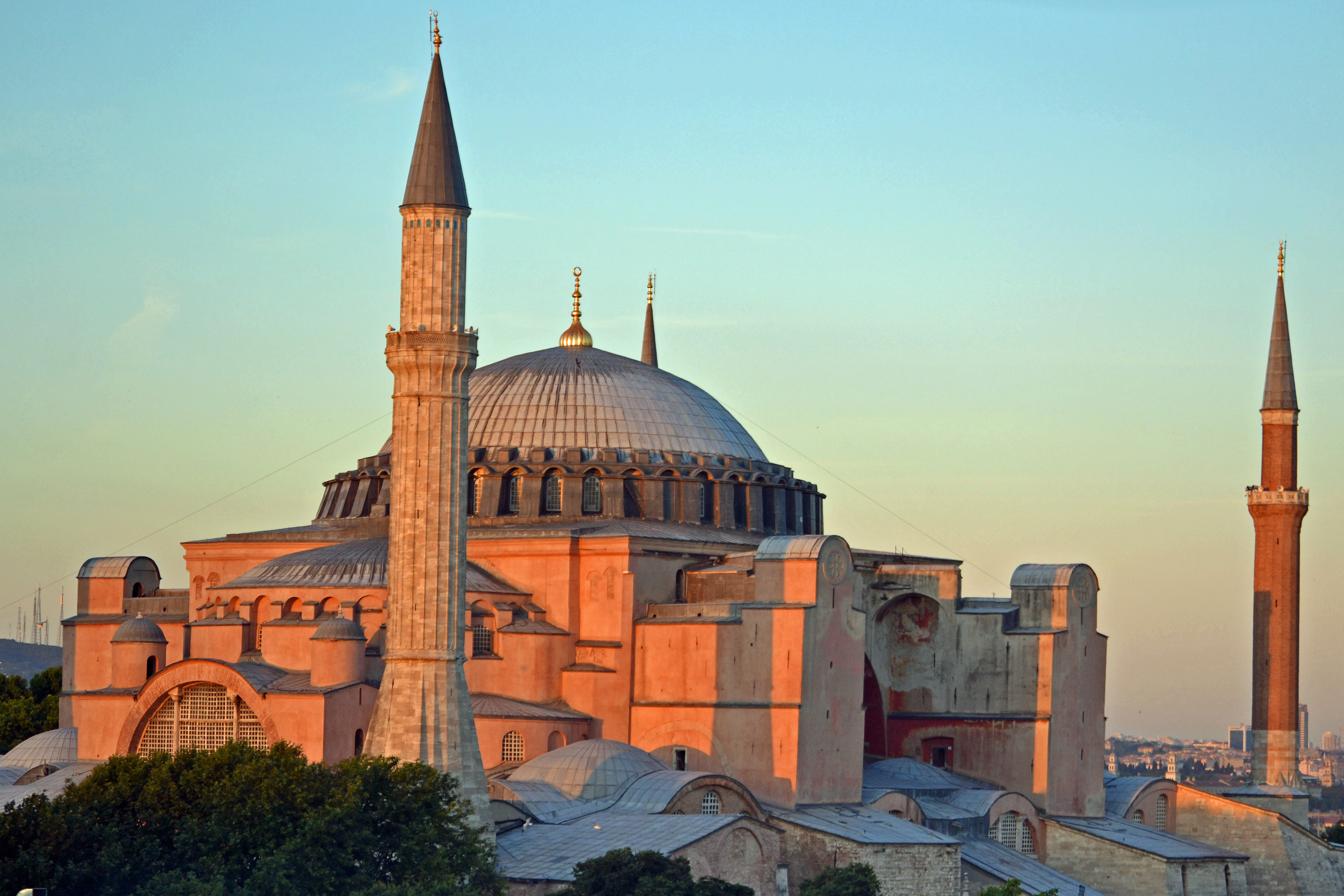
Justinian I pursued ambitious wars in the western Mediterranean and sponsored major legal and building programmes. Hagia Sophia became one of the most famous monuments of his reign and of Byzantine architecture.
Medieval dynasties
The Eastern Roman Empire passed through periods of contraction, recovery and civil conflict. Macedonian and Comnenian rulers were followed by the disruption of the Fourth Crusade and the restoration of imperial rule at Constantinople in 1261.
Palaeologan Empire and 1453
The Palaeologan period saw a smaller empire facing internal conflict and growing Ottoman power. Constantine XI was the final emperor when Constantinople fell to Mehmed II in 1453.
Use the interactive Roman Empire page to filter the World History Database by year, person, event, dynasty and subject.
Search Roman records