1642 4th January
Attempted Arrest of Five Members
Charles enters the Commons but finds the accused members have escaped.
English Civil War · permanent subject timeline
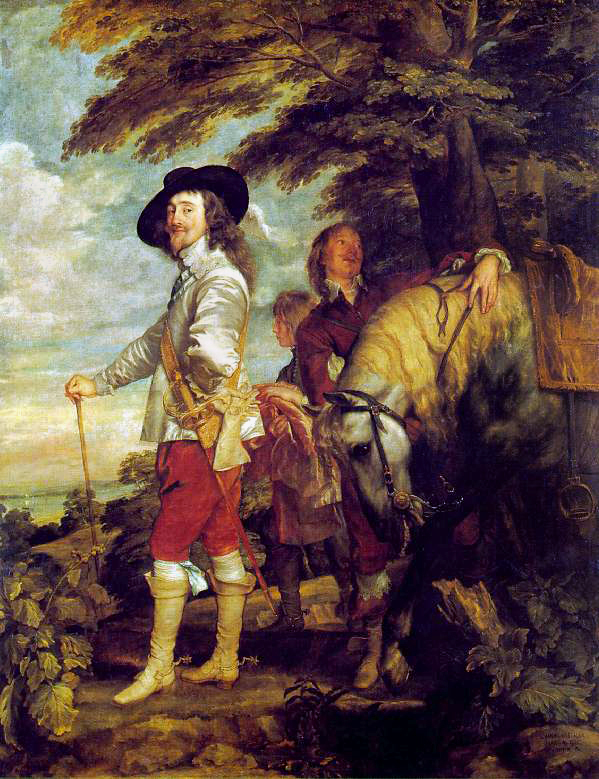
The king at the centre of the constitutional crisis and Civil Wars. This page combines historical context with 114 matching records drawn directly from the World History Database English Civil War archive.
Historical context
Charles I's conflicts with Parliament over taxation, religion, prerogative and control of the armed forces culminated in civil war. He personally led the Royalist cause and continued political negotiations after military defeat.
Charles's refusal to accept a lasting settlement with his opponents contributed to renewed war and his eventual trial and execution in 1649, one of the defining events of British constitutional history.
World History Database records
The records below are selected from the 1,090-record English Civil War archive and rendered as static HTML in chronological order.
Attempted Arrest of Five Members
Charles enters the Commons but finds the accused members have escaped.
King Approaches Hull
Charles travels from York to demand entry to Hull and its military magazine.
King Refused Entry to Hull
Hotham refuses Charles entry to Hull under Parliament's instructions.
First Commissions of Array
Charles issues commissions authorising supporters to muster county forces.
First Commissions of Array Issued
Charles authorises supporters to muster county forces through commissions of array.
Fleet Declares for Parliament
Most of the fleet rejects royal orders and accepts Parliament's admiral.
Royalist Siege of Hull
Charles directs an unsuccessful attempt to force Hull's Parliamentarian garrison to submit.
Withdrawal from Hull
Charles abandons the Hull siege after flooding and strong resistance frustrate the Royalists.
Hull Commissioners Dismissed
Charles dismisses parliamentary commissioners during renewed disputes over Hull.
Royal Proclamation against Parliament
Charles declares leading parliamentary opponents traitors and calls for their suppression.
Declaration of War
Charles raises the Royal Standard at Nottingham and summons supporters to arms.
Royal Standard at Nottingham
Charles arrives at Nottingham and begins formally assembling the Royalist army.
Royal Standard Raised
Charles raises his standard and formally summons supporters against Parliament.
Coventry Refuses Royal Entry
Coventry refuses Charles entry and denies the Royalists access to the fortified city.
Parliamentary Peace Conditions
Parliament demands that Charles lower his standard and withdraw treason accusations.
Peace Proposals after Coventry
After failing to secure Coventry, Charles offers negotiations while continuing mobilisation.
Royal Standard Re-Erected
The Royal Standard is raised again after the original standard collapses in bad weather.
Battle of Powick Bridge
Charles's Royalist cavalry defeats Parliament's advance guard at Powick Bridge.
Mobilization
Charles establishes a recruiting centre at Shrewsbury and draws support from Wales.
Parliamentarian Occupation of Oxford
Parliamentarian forces briefly occupy Oxford before the Royalist field army returns.
Royalist Recruitment at Shrewsbury
Charles gathers recruits, money and equipment before marching eastward.
Mobilization
Charles reaches Edgecote while seeking the Parliamentarian army before Edgehill.
Council of War
The Royalist council plans to secure Banbury and Oxford before advancing farther.
Royalist Council at Edgecote
Charles and his commanders plan the approach to Banbury and Oxford.
Battle of Edgehill
Charles fights the inconclusive Battle of Edgehill and continues his advance toward London.
Royal Centre at Edgehill
Charles remains with the Royalist centre during the inconclusive battle.
Banbury Secured for Royalists
Charles's army takes Banbury while advancing toward Oxford and London.
Capture of Banbury
The Royalist army secures Banbury during its march after Edgehill.
Oxford Becomes Royal Headquarters
Charles enters Oxford and develops the city as the principal Royalist headquarters.
Royal Headquarters Established at Oxford
Charles enters Oxford and begins establishing the city as his wartime headquarters.
Royalist Advance toward London
Charles prepares the Royalist army to advance from Oxford toward London.
Royalist Army Strengthened at Shrewsbury
Charles gathers recruits and cavalry support before marching toward the Midlands.
March toward London
The Royalist army begins moving toward the capital after Edgehill.
Royalist Advance to Reading
Charles reaches Reading while advancing toward London after Edgehill.
Royalist Army Reaches Reading
Charles reaches Reading while Parliamentarian forces reorganise nearer London.
Attack on Brentford Ordered
Charles orders Royalist troops to attack Parliament's outpost at Brentford.
Battle of Turnham Green
Charles confronts a larger Parliamentarian army and withdraws from Turnham Green.
Peace
Rejects proposals drawn up by the Lords & Parliament after the Battle of Edgehill
Siege of Gloucester
Fails to capture Gloucester
Rebellion
Signs a truce with the Irish rebels to free his troops for service in England
First Battle of Newbury
Charles fights Essex's army at the inconclusive First Battle of Newbury.
Capture of Reading
The Royalist Reading garrison is handed over to the Roundheads
Capture of Leicester
Leicester is sacked by Charles I & Prince Rupert
Battle of Aberdeen
Montrose expels the Covenentors from Aberdeen
Battle of Aberdeen
The Battle of Aberdeen is fought between Royalist & Covenanter forces
Siege of Aberdeen
Montrose expels the Covenentors from Aberdeen
Parliament
The new Parliament includes 100 members of the Commons & 30 peers. Opens his own Parliament in Christ Church Hall
Battle of Marston Moor
Royalist defeat near York which loses Charles stronghold in the nth. 4,000 Royalists are killed & 1,500 taken prisoner
Capture of York
Parliament captures York
Siege of York
Parliament captures York
Battle of Lostwithiel
The Royalists defeat Essex & capture 8,000 infantry. After their victory the Royalists are in a position to march on London
Siege of London
After victory at Lostwithiel the Royalists are in a position to march on London
Battle of Banbury
With 10,000 men faces Cromwell with 22,000. The Battle is inconclusive & Charles retreats to Oxford. Manages to avoid capture & defeat, returns to Donnington Castle
Second Battle of Newbury
Charles I escapes after the Second Battle of Newbury despite Parliamentarian attempts to trap his army.
Capture of Donnington
Captures Donnington Castle north west of Newbury
Invasion of Ireland
Withdraws his troops from Ireland & recruits Irish reinforcements. Makes peace with the Irish Confederation
Irish Confederation
Makes peace with the Irish Confederation
Peace
Signs a brief truce but breaks it when he refuses to accede to Parliaments terms
Treaty of Uxbridge
Signs a brief truce but breaks it when he refuses to accede to Parliaments terms
Battle of Stow-on-the-Wold
Charles I surrenders to the Scots rather than to Parliament. Charles final field force is crushed
Surrender
Charles I surrenders to the Scots rather than to Parliament
Self-Denying Ordinance
A modified Self-Denying Ordinance is passed by the Lords
Alliance
Leaves to Royalist stronghold of Oxford to negotiate with the Scots
Mobilization
Reaches Droitwich & leaves it 14th May
Siege of Chester
Reaches Market Drayton & recieves news that Brereton has raised the siege of Chester
Council of War
Charles decides to send Goring south west while he & Rupert head nth
Siege of Leicester
Charles I sacks Leicester, followed by his defeat at Naseby. Charels I captures Leicester waiting for Goring & Gerard to join forces with him
Capture of Leicester
With the help of Prince Rupert captures & sacks Leicester
Mobilization
Charles reaches Daventry where he learns that Oxford is no longer under siege
Battle of Naseby
Stands on high ground on East Farndon over Great Oxendon, 2 miles south of Harborough
Mobilization
Charles avoids Battle by marching from Borough Hill to Belvoit Castle
Battle of Naseby
The 1st Civil War lingers for another year until capitulation at Oxford 1 year later. Decisive victory for Parliamentary forces
Council of War
Calls a Council of War & decides to fight against Fairfax south of Market Harborough
Siege of Oxford
Cromwell prevents Charles joining forces with Prince Maurice & Prince Rupert
Battle of Stow-on-the-Wold
Charles writes to his Queen that he has not enough forces to resist or escape. All that remains are garrisons in Oxford, Newark, Pendennis, Exeter & Raglan
Peace
Will disband his forces if he can live as a King & have a few friends in service. Offers peace to the Independents
Arrest of Charles I
Leaves Oxford to surrender himself to the Scots at Newark
Escape of Charles I
Departs from Oxford in disguise
Surrender
Charless supporters believe he is heading for London but he surrenders to the Scots
Surrender
Slips out of Oxford in disguise
Surrender
Surrenders to the Scots at Newark after defeat at Stowe-on-the-Wold
Siege of Newark
Newark is surrendered to the Scots
Invasion of Scotland
Montrose receives a letter from Charles I asking him to withdraw from Scotland
Battle of Newark
Charles surrenders to the Scots
Siege of Oxford
Oxford is surrendered to Parliament, only Pendennis, Raglan & Harlech remain
Siege of Raglan
Raglan is surrendered to Parliament, ends military operations of the 1st civil war
Peace
Rejects the Newcastle Proposals to take the Covenant & Parliament control the militia
Arrest of Charles I
Parliament pays a 400,000 pounds ransom to Charles Scottish captors
Peerage
Makes the Earl of Glamorgan Duke of Somerset
Alliance
Sends Montreuil to Newark to prepare the Scots for his reception
Covenanters
The French send Montreuil to Scotland to negotiate peace with the Covenanters
Peace
The French send Montreuil to Scotland to negotiate peace with the Covenanters
Arrest of Princess Henrietta
Princess Henrietta is surrendered to Parliament
Surrender
John Berkley surrenders & surrenders Princes Henrietta to Parliament. John Berkley surrenders & ends the war in the west
Arrest of Charles I
Taken prisoner by the Army from Holmby House in Northamptonshire
Exile
Hosted by the Governor of Carisbrooke Castle
Exile
Escapes to the Isle of Wight
Alliance
The Scots promise to restore Charles if he restores Presbyterianism. Signs a secret Treaty at the Isle of Wight with the Scots. Promises to impose Presbyterianism for 3 yrs to gain Scottish support
Rebellion
Parliament renounces its allegiance to the King
Restoration
Promises to impose Presbyterianism for 3 yrs to gain Scottish military support
Diplomacy
Offers to repeal all the penal laws if the Vatican assists him to victory
Peace
Offers a seperate peace with the Independents in Parliament but they do not respond
Parliament
Following his Treaty with the Scots Parliament renounces allegiance to Charles I
Treaty of Scotland
Following his Treaty with the Scots Parliament renounces allegiance to Charles I
Arrest of Charles I
The Army siezes Charles I
Trial
The "Rump Parliament" of 60 members votes that Charles be brought to trial
Execution
In the wake of the ejections from the Long Parliament, the remnant, the Rump Parliament, arranges for the trial and execution of Charles I
Rump Parliament
In the wake of the ejections from the Long Parliament, the remnant, the Rump Parliament, arranges for the trial and execution of Charles I
Treason
Charles I goes on trial for treason
Trial
Charles I goes on trial for treason
Trial
Charles I goes on trial, he refuses to plead
Trial
Sentenced to death as a "tyrant, traitor & murderer"
Death of Charles I
Death of Charles I
Execution
Executed in front of the Whitehall Banqueting House; Charles II is proclaimed king in Scotland after the execution
Editorial provenance
Compiled and edited by World History Database.
Historical context is editorial material; the chronology is generated from World History Database English Civil War records.
Last reviewed: September 2026.
English Heritage · National Army Museum · UK Parliament · Cromwell Museum
Continue exploring