| 1583 |
Galileo Galilei
|
Pendulum Isochronism Observation |
Pisa, Italy
|
Galileo observes the regularity of a swinging cathedral lamp, an episode later associated with his investigations of pendulum motion. |
| 1583 |
Galileo Galilei
|
Study of Euclidean Geometry |
Italy
|
Galileo begins serious study of Euclid under Ostilio Ricci, strengthening the mathematical foundation of his later scientific work. |
| 19 November 1602 |
Galileo Galilei
|
Law of Chords |
Italy
|
In the same letter, Galileo formulates the law of chords concerning descent times along chords of a vertical circle. |
| 19 November 1602 |
Galileo Galilei
|
Pendulum Isochronism Letter |
Italy
|
Galileo writes to Guidobaldo del Monte describing his principle that pendulums of equal length have approximately equal periods. |
| 1612 |
Galileo Galilei
|
Discourse on Floating Bodies |
Italy
|
Galileo publishes a discourse defending Archimedean hydrostatics against Aristotelian explanations of why bodies float or sink. |
| 1626 |
Galileo Galilei
|
Magnet Armature Experiments |
Italy
|
Galileo reports experiments in which an iron armature greatly increases the lifting strength of a magnet. |
| 25 January 1627 |
Robert Boyle
|
Birth of Robert Boyle |
Ireland
|
Birth of Robert Boyle |
| 1638 |
Galileo Galilei
Natural Philosopher
|
Falling Bodies |
Leiden, Italy
|
Publishes mathematical treatment of falling bodies later absorbed into gravitational physics. |
| 1638 |
Galileo Galilei
|
Two New Sciences Published |
Leiden, Italy
|
Printing is completed for Galileo's Two New Sciences, a foundational work on strength of materials and mathematical treatment of motion. |
| 19 September 1648 |
Blaise Pascal
Mathematician and Physicist
|
Atmospheric Pressure Variation |
Puy de Dome, France
|
Demonstrates that atmospheric pressure decreases with altitude. |
| 19 September 1648 |
Blaise Pascal
Mathematician and Physicist
|
Puy de Dome Experiment |
Puy de Dome, France
|
Arranges pressure measurements at different elevations on Puy de Dome. |
| 1662 |
Robert Boyle
Scientist
|
Boyle's Law |
London, England
|
States that the volume of a gas varies inversely with pressure when temperature is constant. |
| 1662 |
Robert Boyle
Scientist
|
Spring of the Air |
London, England
|
Boyle publishes work explaining the spring and pressure of air, associated with Boyle's Law. |
| 1669 |
Rasmus Bartholin
Physician and Scientist
|
Double Refraction |
Copenhagen, Denmark
|
Publishes observations of double refraction in Iceland spar. |
| 1669 |
Rasmus Bartholin
Physician and Scientist
|
Iceland Spar Experiment |
Copenhagen, Denmark
|
Shows that one crystal can split a light ray into two paths. |
| November 1679 |
Robert Hooke
Natural Philosopher
|
Newton Correspondence |
London, England
|
Corresponds with Newton about falling bodies and orbital paths. |
| 1690 |
Christaan Huygens
|
Treatise On Light |
Netherlands
|
Publication of "Treatise On Light" |
| 1690 |
Christiaan Huygens
Mathematician
|
Cause of Gravity |
Leiden, Netherlands
|
Publishes mechanical ideas about gravity and centrifugal force in cosmological context. |
| 1736 |
Anders Celsius
Astronomer and Physicist
|
Lapland Meridian Expedition |
Tornio, Sweden
|
Participates in measurements of a meridian arc near the Arctic Circle. |
| 1736 |
Anders Celsius
Astronomer and Physicist
|
Measurement of Earths Shape |
Tornio, Sweden
|
Supports evidence that Earth is flattened at the poles. |
| 1756 |
James Watt
Instrument Maker
|
University Instrument Maker |
Glasgow, Great Britain
|
Begins work as a mathematical instrument maker for the University of Glasgow. |
| 1757 |
James Watt
Instrument Maker
|
Macfarlane Observatory Instruments |
Glasgow, Great Britain
|
Restores and installs astronomical instruments for the University's new Macfarlane Observatory. |
| May 1765 |
James Watt
Engineer
|
Separate Steam Condenser |
Glasgow, Great Britain
|
Develops the idea of the separate steam condenser while working in Glasgow. |
| 1766 |
Henry Cavendish
|
Discovery of Hydrogen |
Great Britain
|
First recognizes hydrogen as a substance distinct from other flammable gases, who is credited with its discovery. Discovers hydrogen, "inflammable air" |
| 20 January 1775 |
Andre-Marie Ampere
|
Birth of Andre-Marie Ampere |
Lyons, France
|
Birth of Andre-Marie Ampere |
| 1777 |
Hans Christian Oersted
|
Birth of Hans Christian Oersted |
Netherlands
|
Birth of Hans Christian Oersted, founder of the science of electromagnetism |
| 1785 |
Charles-Augustin de Coulomb
Physicist
|
Coulomb Law |
Paris, France
|
Uses a torsion balance to measure forces between electric charges. |
| 1785 |
Charles-Augustin de Coulomb
Physicist
|
Electrostatic Force Measurement |
Paris, France
|
Establishes the inverse-square law governing electrostatic attraction and repulsion. |
| 1789 |
Georg Simon Ohm
|
Birth of Georg Simon Ohm |
Germany
|
Birth of Georg Simon Ohm |
| 22 September 1791 |
Michael Faraday
Scientist · Experimental scientist
|
Birth of Michael Faraday |
Newington Butts, Great Britain
|
Birth of Michael Faraday |
| 1798 |
Henry Cavendish
Natural Philosopher
|
Cavendish Experiment |
London, Great Britain
|
Measures Earth's density with a torsion balance, enabling later determination of the gravitational constant. |
| 1818 |
Augustin-Jean Fresnel
Physicist
|
Diffraction Theory |
Paris, France
|
Strengthens the transverse-wave interpretation of light. |
| 1818 |
Augustin-Jean Fresnel
Physicist
|
Wave Theory of Light |
Paris, France
|
Presents a mathematical wave theory explaining optical diffraction. |
| 1819 |
Francois Arago
Physicist and Astronomer
|
Arago Spot Experiment |
Paris, France
|
Observes a bright point at the centre of a circular shadow. |
| 1819 |
Francois Arago
Physicist and Astronomer
|
Poisson Bright Spot |
Paris, France
|
Confirms a surprising prediction of Fresnels wave theory. |
| 1819 |
George Gabriel Stokes
|
Birth of George Gabriel Stokes |
Ireland
|
Birth of George Gabriel Stokes |
| 21 April 1820 |
Hans Christian Oersted
Physicist
|
Electromagnetism Demonstration |
Copenhagen, Denmark
|
Observes an electric current deflecting a nearby compass needle. |
| 21 April 1820 |
Hans Christian Oersted
Physicist
|
Magnetic Effect of Electric Current |
Copenhagen, Denmark
|
Establishes an experimental connection between electricity and magnetism. |
| 2 January 1822 |
Rudolf Julius Emanuel Clausius
|
Birth of Rudolf Julius Emanuel Clausius |
Koszalin, Germany
|
Birth of Rudolf Julius Emanuel Clausius |
| 1822 |
William Sturgeon
|
Invention of Electromagnet |
Great Britain
|
Invents the 1st electromagnet |
| 1822 |
Robert William Thomson
|
Birth of Robert William Thomson |
Great Britain
|
Birth of Robert William Thomson |
| 26 June 1824 |
William Thomson Kelvin, 1st
Baron
|
Birth of William Thomson |
Belfast, Great Britain
|
Birth of William Thomson |
| 1824 |
Nicolas Leonard Sadi Carnot
|
Discovery of Thermodynamics |
France
|
Helps discover the 2nd law of Thermodynamics |
| 1824 |
Nicolas Leonard Sadi Carnot
|
Reflections on the Motive Power of Fire |
France
|
Publication of "Reflections on the Motive Power of Fire" |
| 1827 |
Georg Simon Ohm
|
Discovery of Ohms Law |
Germany
|
Discovers Ohms Law, volts = Impdendence x resitance |
| 1831 |
Michael Faraday
|
Discovery of Electro-Magnetism |
Great Britain
|
Discovers Electro-Magnetic Induction |
| 1834 |
William Thomson Kelvin
Student
|
University Matriculation |
Glasgow, Great Britain
|
Matriculates at the University of Glasgow while still a child. |
| 25 February 1837 |
Thomas Davenport
Inventor
|
Electric Motor Patent |
Washington, United States of America
|
Receives United States patent number 132 for an electromagnetic motor. |
| 25 February 1837 |
Thomas Davenport
Inventor
|
First United States Electric Motor Patent |
Washington, United States of America
|
Secures the first United States patent issued for an electric motor. |
| 24 July 1837 |
Louis Agassiz
Naturalist
|
Glacial Theory |
Neuchatel, Switzerland
|
Publicly advances the theory of a widespread prehistoric glacial period. |
| 24 July 1837 |
Louis Agassiz
Naturalist
|
Neuchatel Glacial Address |
Neuchatel, Switzerland
|
Presents evidence that extensive ancient ice once covered large regions. |
| 23 November 1837 |
Johannes Diderik van Der Waals
|
Birth of Johannes Diderik van der Waals |
Netherlands
|
Birth of Johannes Diderik van der Waals |
| 1837 |
Charles Babbage
Mathematician and Inventor
|
Analytical Engine Description |
London, Great Britain
|
Describes the architecture and mathematical capabilities of the Analytical Engine. |
| 1837 |
Charles Babbage
Mathematician and Inventor
|
Mechanical General-Purpose Computer |
London, Great Britain
|
Develops a programmable mechanical design with separate calculation and memory functions. |
| 1837 |
William Fothergill Cooke
Inventor
|
Electric Telegraph Patent |
London, Great Britain
|
Co-develops and patents a practical electric telegraph system. |
| 1837 |
William Fothergill Cooke
Inventor
|
Five-Needle Telegraph |
London, Great Britain
|
Creates a five-needle instrument for transmitting letters through electrical signals. |
| 1837 |
Samuel Finley Breese Morse
Inventor
|
Experimental Telegraph Receiver |
New York, United States of America
|
Builds an experimental receiver capable of recording electrical signal changes. |
| 1837 |
Samuel Finley Breese Morse
Inventor
|
Telegraph Patent Caveat |
New York, United States of America
|
Files a patent caveat while refining his electromagnetic telegraph. |
| 1837 |
Charles Wheatstone
Physicist and Inventor
|
Electric Telegraph Collaboration |
London, Great Britain
|
Provides electrical and instrument expertise for the Cooke-Wheatstone telegraph. |
| 1837 |
Charles Wheatstone
Physicist and Inventor
|
Needle Telegraph Development |
London, Great Britain
|
Helps transform electromagnetic needle deflection into practical written communication. |
| 1838 |
Richard Laming
|
Discovery of Electrons |
Great Britain
|
Between 1838 and 1851, British natural philosopher Richard Laming developed the idea that an atom is composed of a core of matter surrounded by subatomic particles that had unit electric charge |
| 12 November 1842 |
John William Strutt Rayleigh, 3rd
Baron
|
Birth of John William Strutt |
Great Britain
|
Birth of John William Strutt |
| 1842 |
Christian Andreas Doppler
Physicist and Mathematician
|
Doppler Effect |
Prague, Austria
|
Presents the principle that observed frequency changes with relative motion. |
| 1842 |
Christian Andreas Doppler
Physicist and Mathematician
|
Frequency Shift Principle |
Prague, Austria
|
Establishes the frequency-shift effect later named for him. |
| 1843 |
Ludvig August Colding
Physicist and Engineer
|
Conservation of Energy |
Copenhagen, Denmark
|
Presents experiments supporting conservation of energy in physical processes. |
| 1843 |
Ludvig August Colding
Physicist and Engineer
|
Permanence of Natural Forces |
Copenhagen, Denmark
|
Argues that natural forces transform without being destroyed. |
| 20 February 1844 |
Ludwig Eduard Boltzmann
|
Birth of Ludwig Eduard Boltzmann |
Austria
|
Birth of Ludwig Eduard Boltzmann |
| 1845 |
Wilhelm Konrad von Rontgen
|
Birth of Wilhelm Konrad von Rontgen |
Germany
|
Birth of Wilhelm Konrad von Rontgen |
| 1845 |
Robert William Thomson
|
Invention of Pnuematic Tyre |
Great Britain
|
Invents the pnuematic tyre |
| 1845 |
Robert William Thomson
|
Patent |
Great Britain
|
Patents the pnuematic tyre |
| 1846 |
William Weber
|
Discovery of Electrons |
Germany
|
Beginning in 1846, German physicist William Weber theorized that electricity was composed of positively and negatively charged fluids, and their interaction was governed by the inverse square law |
| 1848 |
William Thomson Kelvin
Professor
|
Absolute Temperature Scale |
Glasgow, Great Britain
|
Proposes an absolute thermodynamic temperature scale while professor at Glasgow. |
| 1848 |
William Thomson Kelvin, 1st
Baron · Professor
|
Discovery of Kelvin Scale |
Great Britain
|
Proposes the absolute Kelvin scale for measuring temperature |
| 1850 |
Rudolf Julius Emanuel Clausius
|
first |
Germany
|
His most important paper, On the mechanical theory of heat, published in 1850, first states the basic ideas of the second law of thermodynamics |
| 1850 |
Rudolf Julius Emanuel Clausius
|
in 1850 |
Germany
|
His most important paper, On the mechanical theory of heat, published in 1850, first states the basic ideas of the second law of thermodynamics |
| 1850 |
Rudolf Julius Emanuel Clausius
|
Thermodynamics |
Germany
|
His most important paper, On the mechanical theory of heat, published in 1850, first states the basic ideas of the second law of thermodynamics |
| 26 March 1851 |
Jean Bernard Leon Foucault
Physicist
|
Direct Demonstration of Earths Rotation |
Paris, France
|
Provides visible mechanical evidence that Earth rotates. |
| 26 March 1851 |
Jean Bernard Leon Foucault
Physicist
|
Foucault Pendulum |
Paris, France
|
Demonstrates a long pendulum beneath the dome of the Pantheon. |
| 1852 |
Jean Bernard Leon Foucault
Physicist
|
Gyroscope |
Paris, France
|
Constructs and names the gyroscope for studying rotational motion. |
| 1852 |
Jean Bernard Leon Foucault
Physicist
|
Rotational Reference Instrument |
Paris, France
|
Creates an instrument preserving orientation through angular momentum. |
| 1856 |
Nikola Tesla
|
Birth of Nikola Tesla |
Croatia
|
Birth of Nikola Tesla, invented fluorescent lighting |
| 1856 |
Joseph John Thomson
|
Birth of Joseph John Thomson |
Great Britain
|
Birth of Joseph John Thomson |
| 1858 |
Max Karl Ernst Planck
|
Birth of Max Karl Ernst Planck |
Germany
|
Birth of Max Karl Ernst Planck, developed quantum theory |
| 1858 |
Julius Plucker
Physicist
|
Magnetic Deflection of Cathode Rays |
Bonn, Germany
|
Shows that magnetic fields alter the path of cathode-ray fluorescence in gas-discharge tubes. |
| 1858 |
William Thomson Kelvin, 1st
Baron · Professor
|
Invention of Galvonometer |
Great Britain
|
Patents the mirror galvonometer |
| 1858 |
William Thomson Kelvin, 1st
Baron · Professor
|
Patent |
Great Britain
|
Patents the mirror galvonometer |
| 15 May 1859 |
Pierre Curie
Physicist
|
Birth of Pierre Curie |
Paris, France
|
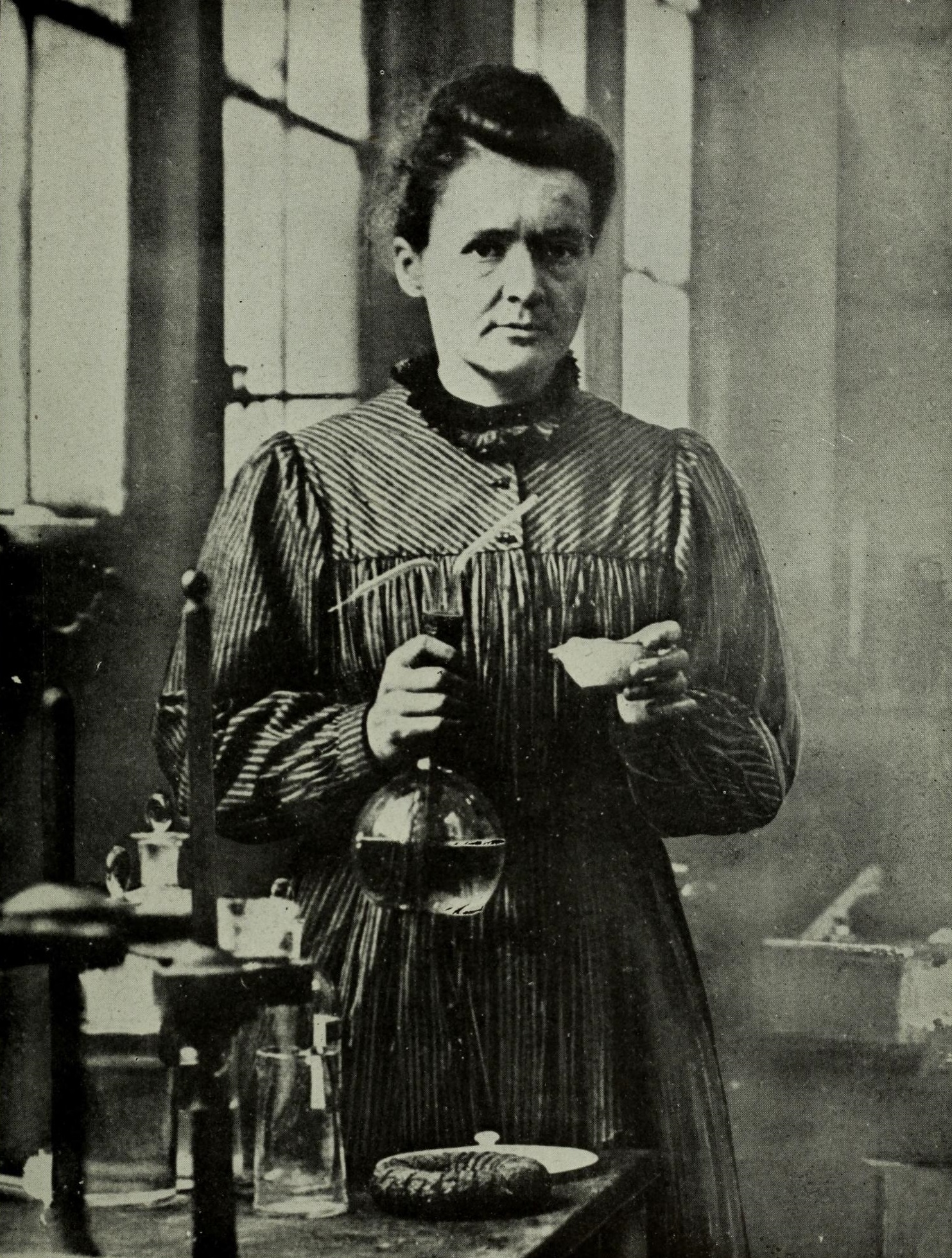
Birth of Pierre Curie in Paris. |
| 1862 |
Anders Jonas Angstrom
|
Discovery of Hydrogen |
Sweden
|
Discovers hydrogen in the solar atmosphere |
| 1865 |
Rudolf Julius Emanuel Clausius
|
Discovery of Entropy |
Germany
|
Introduces the concept of entropy |
| 1865 |
James Clerk Maxwell
Physicist
|
Electromagnetic Theory |
London, Great Britain
|
Publishes equations showing electromagnetic waves can propagate through space. |
| 1868 |
Anders Jonas Angstrom
Physicist and Astronomer
|
Solar Spectrum Atlas |
Uppsala, Sweden
|
Publishes a detailed atlas of the solar spectrum. |
| 1868 |
Anders Jonas Angstrom
Physicist and Astronomer
|
Spectroscopic Wavelength Measurement |
Uppsala, Sweden
|
Establishes precise wavelength measurements using the unit later named the angstrom. |
| 1868 |
Rudolf Julius Emanuel Clausius
|
Royal Society |
Germany
|
Elected a Fellow of the Royal Society of London |
| 1869 |
Johann Wilhelm Hittorf
Physicist
|
Cathode Ray Shadows |
Munster, Germany
|
Observes sharp shadows in discharge tubes, showing that cathode rays travel in straight lines from the cathode. |
| 1870 |
Ludwig Eduard Boltzmann
|
Discovery of Entropy |
Austria
|
The statistical definition is developed by Ludwig Boltzmann in the 1870s by analyzing the statistical behavior of the microscopic components of the system |
| 1871 |
Ernst Rutherford
|
Birth of Ernst Rutherford |
New Zealand
|
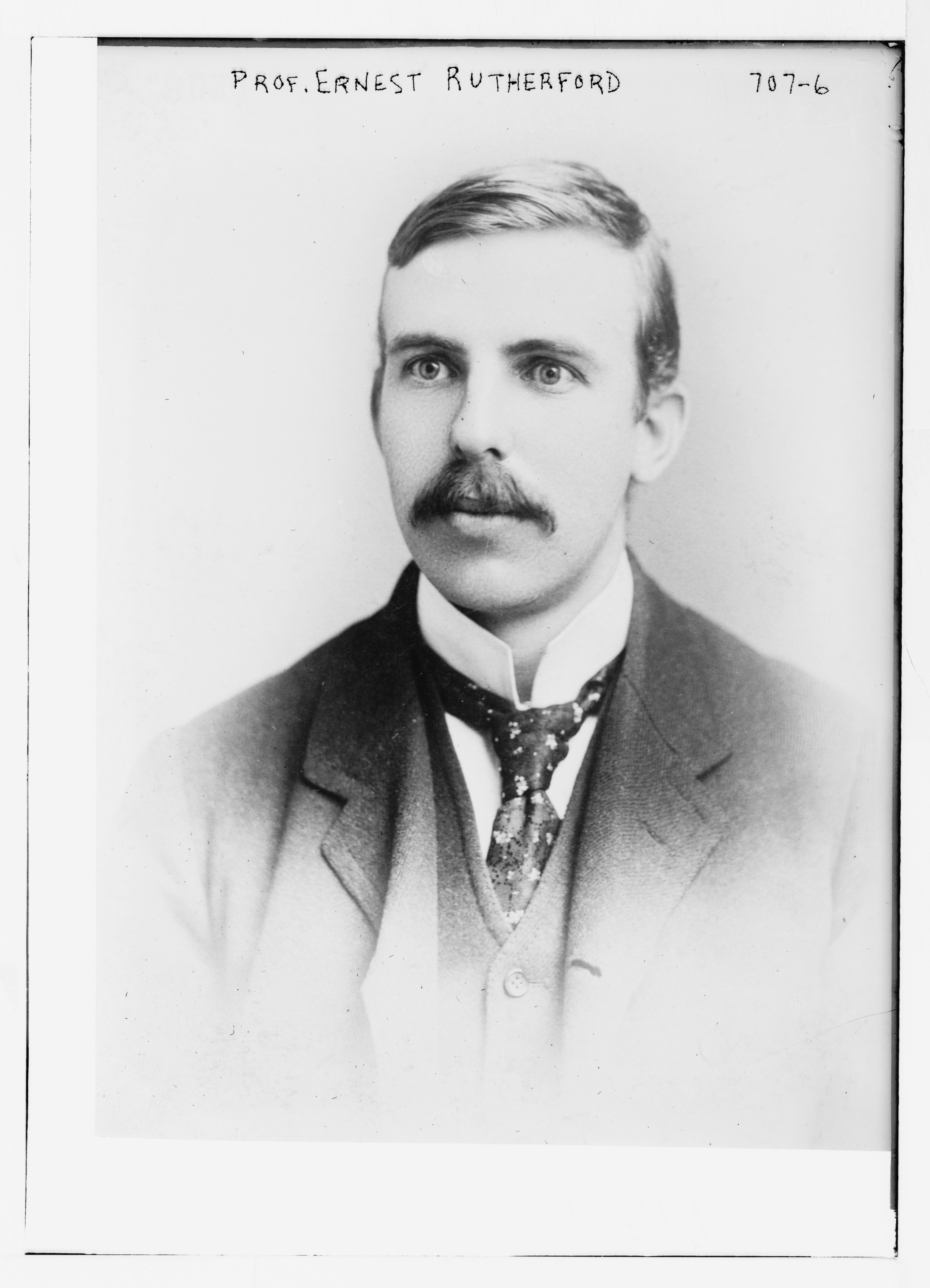
Birth of Ernst Rutherford |
| 1872 |
William Thomson Kelvin, 1st
Baron · Professor
|
Invention of Tide Predictor |
Great Britain
|
Invents a tide predictor |
| 1873 |
John William Strutt Rayleigh, 3rd
Baron · Fellow of the Royal Society
|
Royal Society |
Great Britain
|
Elected Fellow of the Royal Society |
| 1873 |
Robert William Thomson
|
Death of Robert William Thomson |
Great Britain
|
Death of Robert William Thomson |
| 1874 |
George Johnstone Stoney
|
Discovery of Electrons |
Ireland
|
After studying the phenomenon of electrolysis in 1874, Irish physicist George Johnstone Stoney suggested that there existed a "single definite quantity of electricity", the charge of a monovalent ion |
| 1875 |
Gustav Wiedemann
Professor
|
Physics Professorship |
Leipzig, Germany
|
Becomes professor of physics at Leipzig University and helps strengthen experimental physics teaching. |
| 1876 |
Eugen Goldstein
Physicist
|
Cathode Rays Named |
Berlin, Germany
|
Introduces the term cathode rays for the radiation emerging from the negative electrode in a discharge tube. |
| 1877 |
Ludwig Eduard Boltzmann
Physicist
|
Boltzmann Entropy Formula |
Vienna, Austria
|
Connects thermodynamic entropy with the number of microscopic states. |
| 1877 |
Ludwig Eduard Boltzmann
|
President of Austria |
Graz, Austria
|
Appointed President of the University of Graz |
| 1877 |
Ludwig Eduard Boltzmann
Physicist
|
Statistical Entropy |
Vienna, Austria
|
Expresses entropy statistically through the formula later engraved on his tomb. |
| 1877 |
Johannes Diderik van Der Waals
|
Professor |
Amsterdam, Netherlands
|
Becomes the first physics professor of the University of Amsterdam when it opened in 1877 |
| 1878 |
Pierre Curie
Physicist
|
Physics Education |
Paris, France
|
Earns his licence in physics from the Sorbonne. |
| 14 March 1879 |
Albert Einstein
|
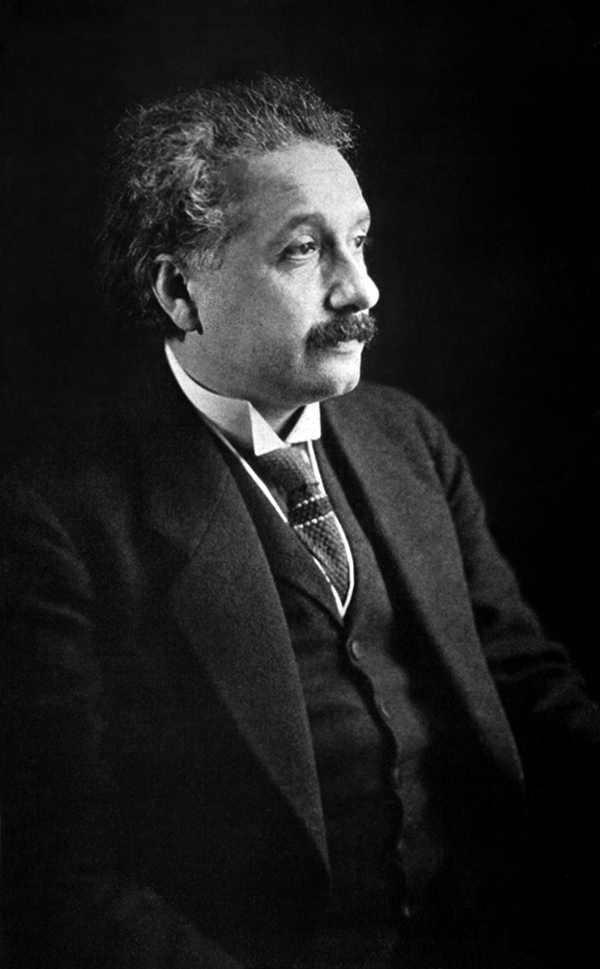
Birth of Albert Einstein |
Ulm, Germany
|
Albert Einstein is born in Ulm, Württemberg, Germany. |
| 1879 |
Edwin Herbert Hall
Physicist
|
Hall Effect |
Baltimore, United States of America
|
Discovers that a magnetic field produces a transverse voltage in a current-carrying conductor, later understood through electron motion. |
| 1879 |
Josef Stefan
Physicist
|
Stefan Radiation Law |
Vienna, Austria
|
Formulates the fourth-power relationship between temperature and radiated energy. |
| 1879 |
Josef Stefan
Physicist
|
Thermal Radiation Power |
Vienna, Austria
|
Establishes a quantitative law governing thermal radiation from hot bodies. |
| 1880 |
Jacques Curie
Physicist
|
Piezoelectricity |
Paris, France
|
Discovers piezoelectricity with his brother Pierre Curie. |
| 1880 |
Pierre Curie
Physicist
|
Piezoelectricity |
Paris, France
|
Discovers piezoelectricity with his brother Jacques Curie. |
| 16 May 1881 |
Werner von Siemens
Inventor
|
First Electric Tram |
Berlin-Lichterfelde, Germany
|
Opens an electric railway at Lichterfelde near Berlin. |
| 16 May 1881 |
Werner von Siemens
Inventor
|
Lichterfelde Electric Railway |
Berlin-Lichterfelde, Germany
|
The line becomes the world's first electric tramway. |
| July 1881 |
Alexander Graham Bell
Inventor
|
Induction Balance Tested |
Washington, Great Britain
|
Tests an induction balance in an attempt to locate Garfield's bullet. |
| July 1881 |
Alexander Graham Bell
Inventor
|
Search for Garfield Bullet |
Washington, Great Britain
|
Develops an early metal detector for the wounded president. |
| 1881 |
Jacques Curie
Physicist
|
Inverse Piezoelectric Effect |
Paris, France
|
Helps demonstrate the inverse piezoelectric effect. |
| 1881 |
Pierre Curie
Physicist
|
Inverse Piezoelectric Effect |
Paris, France
|
Helps experimentally verify the inverse piezoelectric effect. |
| 1881 |
Pierre Curie
Physicist
|
Inverse Piezoelectric Effect |
Paris, France
|
Shows crystals can deform under an electric field. |
| 1881 |
Pierre Curie
Physicist
|
Piezoelectric Verification |
Paris, France
|
Shows that electric fields can deform suitable crystals. |
| 1881 |
Hermann von Helmholtz
|
Discovery of Electrons |
Germany
|
In 1881, German physicist Hermann von Helmholtz argued that both positive and negative charges were divided into elementary parts, each of which "behaves like atoms of electricity" |
| 1881 |
William Thomson Kelvin
Professor
|
Electric Lighting of University House |
Glasgow, Great Britain
|
Creates one of the first houses in the world to be fully lit by electricity on the university campus. |
| 26 August 1882 |
James Franck
Physicist
|
Birth of James Franck |
Hamburg, Germany
|
James Franck is born in Hamburg, Germany. |
| 26 August 1882 |
James Franck
Physicist
|
James Franck Born |
Hamburg, Germany
|
The future Nobel physicist is born into a Hamburg family. |
| 30 September 1882 |
Hans Geiger
Physicist
|
Birth of Hans Geiger |
Neustadt an der Haardt, Germany
|
Hans Geiger is born in Neustadt an der Haardt. |
| 30 September 1882 |
Hans Geiger
Physicist
|
Hans Geiger Born |
Neustadt an der Haardt, Germany
|
The future developer of radiation counters is born in Germany. |
| 11 December 1882 |
Max Born
Physicist
|
Birth of Max Born |
Breslau, Germany
|
Max Born is born in Breslau, Germany. |
| 11 December 1882 |
Max Born
Physicist
|
Max Born Born |
Breslau, Germany
|
The future quantum physicist and Nobel laureate is born. |
| 1882 |
Pierre Curie
Physicist
|
ESPCI Appointment |
Paris, France
|
Joins the Paris School of Industrial Physics and Chemistry. |
| 1883 |
Ernst Mach
Physicist and Philosopher
|
Relational Mechanics |
Prague, Austria
|
Emphasizes observable relations among bodies in the foundations of mechanics. |
| 1883 |
Ernst Mach
Physicist and Philosopher
|
The Science of Mechanics |
Prague, Austria
|
Publishes a critique of absolute space and classical mechanical assumptions. |
| 1883 |
Gustav Wiedemann
Physicist
|
Annalen der Physik Editorship |
Leipzig, Germany
|
Continues influential scientific publishing work while based at Leipzig. |
| 28 January 1884 |
Auguste Piccard
|
Birth of Auguste Piccard |
Switzerland
|
Birth of Auguste Piccard |
| 1884 |
Svante August Arrhenius
Physical Chemist
|
Electrolytic Dissociation Theory |
Uppsala, Sweden
|
Proposes that dissolved salts separate into electrically charged ions. |
| 1884 |
Svante August Arrhenius
Physical Chemist
|
Ions in Solution |
Uppsala, Sweden
|
Explains electrical conductivity and chemical reactions in electrolyte solutions. |
| 1886 |
Heinrich Hertz
Physicist
|
Radio Wave Reflection |
Karlsruhe, Germany
|
Demonstrates radio waves and their reflection from conducting surfaces. |
| 1887 |
Ernst Mach
Physicist
|
Mach Number Research |
Prague, Austria
|
Advances experimental study of supersonic flow and velocity ratios. |
| 1887 |
Ernst Mach
Physicist
|
Supersonic Shock Waves |
Prague, Austria
|
Photographs shock waves produced by projectiles moving faster than sound. |
| 1887 |
Albert Abraham Michelson
Physicist
|
Relativity, Theory of |
Cleveland, United States of America
|
Michelson carries out interferometer measurements that challenge the idea of a stationary luminiferous ether |
| 1887 |
Edward Williams Morley
Chemist
|
Relativity, Theory of |
Cleveland, United States of America
|
Morley works with Michelson on the ether drift experiment later treated as an important background to special relativity |
| 1887 |
Wilhelm Wien
Physicist
|
Leipzig Physics Studies |
Leipzig, Germany
|
Studies physics in Leipzig during his early scientific training. |
| 24 August 1888 |
Rudolf Julius Emanuel Clausius
|
Death of Rudolf Julius Emanuel Clausius |
Germany
|
Death of Rudolf Julius Emanuel Clausius |
| 1888 |
Johannes Robert Rydberg
Physicist
|
Atomic Spectral Series |
Lund, Sweden
|
Provides a mathematical basis for interpreting hydrogen spectral lines. |
| 1888 |
Johannes Robert Rydberg
Physicist
|
Rydberg Formula |
Lund, Sweden
|
Develops a formula describing regular patterns in atomic spectra. |
| 1888 |
William Thomson Kelvin
Professor
|
Climate and Antarctic Ice Lecture |
Glasgow, Great Britain
|
Discusses Antarctic ice and the role of oceans in climate at the Geological Society of Glasgow. |
| 1889 |
George Francis FitzGerald
Physicist
|
Relativity, Theory of |
Dublin, Ireland
|
FitzGerald proposes length contraction as a way to explain the null result of ether drift experiments |
| 1890 |
Johannes Diderik van Der Waals
|
a treatise on the Theory of Binary Solutions |
Netherlands
|
Publishes a treatise on the Theory of Binary Solutions in the Archives N‚erlandaises |
| 1892 |
Hendrik Antoon Lorentz
Physicist
|
Electron Theory of Matter |
Leiden, Netherlands
|
Develops an electrodynamic theory in which charged microscopic particles account for electrical and optical behaviour in matter. |
| 1892 |
Hendrik Antoon Lorentz
Physicist
|
Relativity, Theory of |
Leiden, Netherlands
|
Lorentz develops electron theory and uses contraction ideas in attempts to account for electromagnetic experiments |
| 1892 |
William Thomson Kelvin, 1st
Baron · Professor
|
Peerage |
Great Britain
|
Created Baron Kelvin, 1st |
| 1894 |
Pierre Curie
Physicist
|
Meets Marie Sklodowska |
Paris, France
|
Meets Marie Sklodowska through scientific contacts in Paris. |
| 1894 |
George Johnstone Stoney
|
Discovery of Electrons |
Ireland
|
Stoney coined the term electron to describe these elementary charges, saying, "... an estimate was made of the actual amount of this most remarkable fundamental unit of electricity, for which I have since ventured to suggest the name electron" |
| 1894 |
John William Strutt
Physicist
|
Argon Identification |
London, Great Britain
|
Uses precise density measurements of atmospheric nitrogen to help reveal argon as a distinct element not accounted for in the existing periodic table. |
| 26 July 1895 |
Pierre Curie
Physicist
|
Marriage |
Sceaux, France
|
Marries Marie Sklodowska and begins a famous scientific partnership. |
| 1895 |
Jagadish Chandra Bose
Physicist
|
Microwave Demonstration |
Calcutta, India
|
Jagadish Chandra Bose publicly demonstrates the transmission and detection of millimetre-wave electromagnetic radiation in Calcutta. |
| 1895 |
Pierre Curie
Physicist
|
Curie Law |
Paris, France
|
Formulates the inverse relation between susceptibility and temperature. |
| 1895 |
Pierre Curie
Physicist
|
Curie Point |
Paris, France
|
Shows that magnetic properties change at a critical temperature. |
| 1895 |
Pierre Curie
Physicist
|
Doctorate |
Paris, France
|
Receives a doctorate for research on magnetism. |
| 1895 |
Hendrik Antoon Lorentz
Physicist
|
Relativity, Theory of |
Leiden, Netherlands
|
Lorentz introduces local time in electromagnetic theory, a step toward the later Lorentz transformations |
| 1895 |
Jean Baptiste Perrin
Physicist
|
Negative Charge of Cathode Rays |
Paris, France
|
Demonstrates that cathode rays carry negative electric charge by collecting the rays in an insulated conductor. |
| 1895 |
John William Strutt Rayleigh, 3rd
Baron
|
Discovery of Argon |
Great Britain
|
Discovers the element argon |
| 1 March 1896 |
Henri Becquerel
Physicist
|
Uranium Rays |
Paris, France
|
Discovers penetrating radiation emitted by uranium salts. |
| 1 March 1896 |
Henri Becquerel
Physicist
|
Uranium Rays |
Paris, France
|
Reports spontaneous radiation from uranium salts. |
| March 1896 |
Henri Becquerel
Physicist
|
Radioactivity |
Paris, France
|
Shows uranium radiation can fog photographic plates without sunlight. |
| 1896 |
Svante August Arrhenius
Physical Chemist
|
Carbon Dioxide Climate Calculation |
Stockholm, Sweden
|
Calculates how atmospheric carbon dioxide changes could affect global temperature. |
| 1896 |
Svante August Arrhenius
Physical Chemist
|
Greenhouse Warming Estimate |
Stockholm, Sweden
|
Produces an early quantitative model of greenhouse-driven climate change. |
| 1896 |
William Thomson Kelvin
Professor
|
Kelvin Professorial Jubilee |
Glasgow, Great Britain
|
Is honoured in Glasgow for fifty years as Professor of Natural Philosophy. |
| 1896 |
Pieter Zeeman
Physicist
|
Zeeman Effect and Charged Oscillators |
Leiden, Netherlands
|
Finds that magnetic fields split spectral lines, providing evidence for charged particles participating in atomic radiation. |
| 12 September 1897 |
Pierre Curie
Physicist
|
Birth of Irene Curie |
Paris, France
|
Becomes father of Irene Curie. |
| 1897 |
Jagadish Chandra Bose
Physicist
|
Microwave Research |
London, India
|
Jagadish Chandra Bose presents his microwave apparatus and research on short electromagnetic waves at the Royal Institution in London. |
| 1897 |
Joseph John Thomson
Physicist
|
Cathode-Ray Charge-to-Mass Ratio |
Cambridge, Great Britain
|
Measures the charge-to-mass ratio of cathode-ray particles and shows they are far lighter than atoms. |
| 1897 |
Joseph John Thomson
Physicist
|
Cathode-Ray Corpuscles |
Cambridge, Great Britain
|
Argues that cathode rays consist of universal negatively charged corpuscles, later called electrons. |
| 1897 |
Joseph John Thomson
|
Discovery of Electrons |
Great Britain
|
Discovers the electron |
| 1897 |
Emil Wiechert
Physicist
|
Cathode Ray Charge-to-Mass Ratio |
Konigsberg, Germany
|
Measures a very small mass-to-charge ratio for cathode-ray particles, evidence that they are much lighter than atoms. |
| 1897 |
Emil Wiechert
Physicist
|
Cathode-Ray Charge-to-Mass Measurement |
Konigsberg, Germany
|
Obtains an early charge-to-mass estimate for cathode-ray particles, supporting their subatomic character. |
| 18 July 1898 |
Pierre Curie
Physicist
|
Discovery of Polonium |
Paris, France
|
Works with Marie Curie in announcing the discovery of polonium. |
| 26 December 1898 |
Pierre Curie
Physicist
|
Discovery of Radium |
Paris, France
|
Works with Marie Curie and Gustave Bemont in announcing radium. |
| 1898 |
Philipp Lenard
Physicist
|
Cathode Ray Penetration |
Heidelberg, Germany
|
Studies how cathode rays penetrate matter through thin windows, establishing characteristic absorption and scattering behaviour. |
| 1898 |
Henri Poincare
Mathematician
|
Relativity, Theory of |
Paris, France
|
Poincare discusses the conventional nature of simultaneity and the synchronization of distant clocks |
| 1898 |
Isidor Isaac Rabi
|
Birth of Isidor Isaac Rabi |
Austria
|
Birth of Isidor Isaac Rabi |
| 1898 |
Leo Szilard
|
Birth of Leo Szilard |
Hungary
|
Birth of Leo Szilard, researched nuclear fission |
| 1898 |
William Thomson Kelvin
Professor
|
Wireless Telegram Experiment |
Glasgow, Great Britain
|
Sends a wireless telegram to colleague George Gabriel Stokes during experiments in Glasgow. |
| 1899 |
Philipp Lenard
Physicist
|
Cathode-Ray Absorption Studies |
Kiel, Germany
|
Studies how cathode rays penetrate matter and helps establish their particle-like behaviour. |
| 1899 |
John William Strutt Rayleigh, 3rd
Baron
|
Copley Medal |
Great Britain
|
Awarded the Copley Medal |
| 1899 |
William Thomson Kelvin
Professor
|
Retirement from Glasgow Chair |
Glasgow, Great Britain
|
Retires from the Chair of Natural Philosophy after fifty-three years. |
| 1899 |
Otto Wiener
Professor
|
Leipzig Physics Chair |
Leipzig, Germany
|
Becomes professor of physics at Leipzig University and directs its physical institute. |
| 1900 |
Pierre Curie
Physicist
|
Sorbonne Professor |
Paris, France
|
Becomes professor in the Faculty of Sciences. |
| 1900 |
Paul Drude
Physicist
|
Electron Theory of Metals |
Leipzig, Germany
|
Models conduction in metals as the motion of mobile charged particles and lays foundations for the classical electron theory of conductivity. |
| 1900 |
John William Strutt Rayleigh, 3rd
Baron
|
Discovery of Rayleighs Law |
London, Great Britain
|
Formulates a law relating to black body radiation |
| 1900 |
Pauli Wolfgang
|
Birth of Pauli Wolfgang |
Austria
|
Birth of Pauli Wolfgang, originator of the "exclusion principle" |
| 21 February 1901 |
Albert Einstein
Physicist
|
Swiss Citizenship |
Zurich, Switzerland
|
Einstein becomes a Swiss citizen after having been stateless since 1896. |
| 29 September 1901 |
Enrico Fermi
Physicist
|
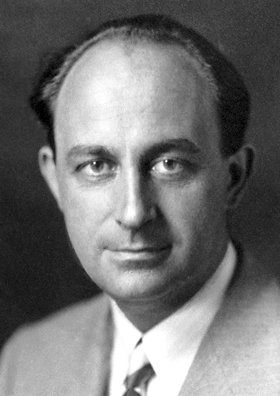
Birth of Enrico Fermi |
Rome, Italy
|
Enrico Fermi is born in Rome on 29 September 1901 and later becomes one of the leading physicists of the twentieth century. |
| 10 December 1901 |
Wilhelm Conrad Rontgen
Physicist
|
Nobel Prize in Physics |
Stockholm, Germany
|
Receives the first Nobel Prize in Physics for discovering the radiation later called X-rays. |
| 1901 |
Pierre Curie
Physicist
|
Radium Effects |
Paris, France
|
Studies physiological effects of radium with medical collaborators. |
| 1901 |
Albert Einstein
Physicist
|
Capillarity Paper |
Zurich, Switzerland
|
Publishes his first scientific paper, examining molecular forces through capillary phenomena. |
| 1901 |
Owen Willans Richardson
Physicist
|
Thermionic Electron Emission |
Cambridge, Great Britain
|
Establishes the temperature dependence of electron emission from heated metals, foundational for vacuum-tube electronics. |
| 1901 |
Wilhelm Conrad Rontgen
Physicist
|
Nobel Prize |
Stockholm, Germany
|
Receives the first Nobel Prize in Physics for the discovery of X-rays, which opened a new method for investigating matter and the human body. |
| 19 June 1902 |
Albert Einstein
Physicist
|
Swiss Patent Office Appointment |
Bern, Switzerland
|
Appointed Technical Expert, third class, at the Swiss Patent Office in Bern. |
| 10 December 1902 |
Hendrik Antoon Lorentz
Physicist
|
Nobel Prize in Physics |
Stockholm, Netherlands
|
Shares the Nobel Prize in Physics for research on the influence of magnetism on radiation. |
| 10 December 1902 |
Pieter Zeeman
Physicist
|
Nobel Prize in Physics |
Stockholm, Netherlands
|
Shares the Nobel Prize in Physics for discovering the effect of magnetism on light spectra. |
| 1902 |
Albert Einstein
Physicist
|
Statistical Mechanics Paper I |
Bern, Switzerland
|
Publishes an early paper developing the kinetic theory of thermal equilibrium using statistical methods. |
| 1902 |
Philipp Lenard
Physicist
|
Photoelectric Electron Energy |
Kiel, Germany
|
Shows that photoelectron energy depends strongly on light frequency rather than simply on intensity. |
| 1902 |
Hendrik Antoon Lorentz
Physicist
|
Nobel Prize |
Stockholm, Netherlands
|
Shares the Nobel Prize in Physics for research on the influence of magnetism upon radiation phenomena and for developing the electron theory used to explain the Zeeman effect. |
| 1902 |
Pieter Zeeman
Physicist
|
Nobel Prize |
Stockholm, Netherlands
|
Shares the Nobel Prize in Physics for discovering that magnetic fields split spectral lines, providing experimental evidence for the interaction between magnetism and light. |
| 10 December 1903 |
Svante August Arrhenius
Physical Chemist
|
Electrolytic Dissociation Recognition |
Stockholm, Sweden
|
Gains international recognition for explaining ions in chemical solutions. |
| 10 December 1903 |
Henri Becquerel
Physicist
|
Nobel Prize |
Stockholm, France
|
Shares the Nobel Prize in Physics for discovering spontaneous radioactivity. |
| 10 December 1903 |
Pierre Curie
Physicist
|
Nobel Prize |
Stockholm, France
|
Shares the Nobel Prize in Physics for research on radiation phenomena discovered by Henri Becquerel. |
| 10 December 1903 |
Pierre Curie
Physicist
|
Nobel Prize in Physics |
Stockholm, France
|
Shares the Nobel Prize in Physics for radiation research. |
| 1903 |
Pierre Curie
Physicist
|
Davy Medal |
London, France
|
Receives the Davy Medal with Marie Curie. |
| 1903 |
Albert Einstein
Physicist
|
Foundations of Thermodynamics |
Bern, Switzerland
|
Publishes further work on the foundations of thermodynamics and statistical mechanics. |
| 1903 |
Ernest Rutherford
Physicist
|
Radioactive Decay |
Montreal, Great Britain
|
Develops radioactive decay theory using uranium and thorium studies. |
| 24 September 1904 |
Henri Poincare
Mathematician
|
Relativity, Theory of |
St Louis, France
|
Poincare states a principle of relativity in a lecture on the future of mathematical physics |
| 10 December 1904 |
John William Strutt Rayleigh, 3rd
Baron · Physicist
|
Nobel Prize in Physics |
Stockholm, Great Britain
|
Receives the Nobel Prize in Physics for gas-density research and the discovery of argon. |
| 1904 |
Jagadish Chandra Bose
Physicist
|
Radio Detector Patent |
United States, India
|
Jagadish Chandra Bose receives a United States patent for a detector of electrical disturbances based on semiconductor-like crystal detection. |
| 1904 |
Pierre Curie
Physicist
|
Sorbonne Chair |
Paris, France
|
Becomes titular professor at the Sorbonne. |
| 1904 |
Albert Einstein
Physicist
|
Radiation Energy Fluctuations |
Bern, Switzerland
|
Studies fluctuations in radiation energy, an important precursor to his later quantum work. |
| 1904 |
Friedrich Hasenohrl
Physicist
|
Electromagnetic Mass-Energy |
Vienna, Austria
|
Explores the relationship between electromagnetic energy and mass before relativity. |
| 1904 |
Friedrich Hasenohrl
Physicist
|
Radiation Cavity Mass |
Vienna, Austria
|
Calculates that radiation confined in a cavity contributes effective inertia. |
| 1904 |
Hendrik Antoon Lorentz
Physicist
|
Relativity, Theory of |
Leiden, Netherlands
|
Lorentz publishes transformations that preserve the form of Maxwells equations for moving systems |
| 1904 |
Julius Robert Oppenheimer
|
Birth of Julius Robert Oppenheimer |
United States of America
|
Birth of Julius Robert Oppenheimer |
| 1904 |
John William Strutt Rayleigh, 3rd
Baron
|
Nobel Prize |
Great Britain
|
Winner of the Nobel Prize for Physics |
| 1904 |
Joseph John Thomson
Physicist
|
Electron Atomic Model |
Cambridge, Great Britain
|
Proposes an atomic model containing negatively charged electrons embedded within diffuse positive charge. |
| 17 March 1905 |
Albert Einstein
Physicist
|
Photoelectric Effect Paper Submitted |
Bern, Switzerland
|
Sends his light-quantum paper to Annalen der Physik, using quanta to explain the photoelectric effect. |
| 30 April 1905 |
Albert Einstein
Physicist
|
Doctoral Dissertation Submitted |
Zurich, Switzerland
|
Submits A New Determination of Molecular Dimensions as his doctoral dissertation at the University of Zurich. |
| 11 May 1905 |
Albert Einstein
Physicist
|
Brownian Motion Paper Received |
Bern, Switzerland
|
Annalen der Physik receives Einstein's paper explaining Brownian motion through molecular collisions. |
| 6 June 1905 |
Pierre Curie
Physicist
|
Nobel Lecture |
Stockholm, France
|
Delivers the Nobel lecture on radioactive substances. |
| 30 June 1905 |
Albert Einstein
Physicist
|
Special Relativity |
Bern, Switzerland
|
Submits On the Electrodynamics of Moving Bodies, establishing the special theory of relativity. |
| 27 July 1905 |
Albert Einstein
Physicist
|
Doctorate Approved |
Zurich, Switzerland
|
The University of Zurich faculty unanimously approves Einstein's doctoral dissertation. |
| 27 September 1905 |
Albert Einstein
Physicist
|
Mass-Energy Equivalence |
Bern, Switzerland
|
Submits the paper deriving the relation between mass and energy from special relativity. |
| 1905 |
Albert Einstein
Physicist
|
Photoelectric Quantum Explanation |
Bern, Switzerland
|
Explains photoelectric emission by proposing that light transfers energy in discrete quanta to electrons. |
| 1905 |
Philip Lenard
|
Nobel Prize |
Germany
|
Winner of the Nobel Prize for Physics, for photoelectric effects & cathode rays |
| 1905 |
Henri Poincare
Mathematician
|
Relativity, Theory of |
Paris, France
|
Poincare publishes work on the dynamics of the electron using Lorentz transformations and relativistic ideas |
| 1905 |
John William Strutt Rayleigh, 3rd
Baron · President of the Royal Society
|
Royal Society |
Great Britain
|
Appointed President of the Royal Society |
| 1905 |
Otto Wiener
Professor
|
New Physics Institute Opens |
Leipzig, Germany
|
Directs Leipzig physics as the university's new Physical Institute opens. |
| 15 January 1906 |
Albert Einstein
Physicist
|
Doctorate Formally Awarded |
Zurich, Switzerland
|
The University of Zurich formally awards Einstein his doctorate in physics. |
| 8 February 1906 |
Albert Einstein
Physicist
|
Molecular Dimensions Paper Published |
Bern, Switzerland
|
His revised dissertation on molecular dimensions is published in Annalen der Physik. |
| 8 February 1906 |
Albert Einstein
Physicist
|
Second Brownian Motion Paper Published |
Bern, Switzerland
|
Publishes a follow-up analysis refining his theory of Brownian motion. |
| 19 April 1906 |
Pierre Curie
Physicist
|
Death of Pierre Curie |
Paris, France
|
Dies after a street accident in Paris. |
| April 1906 |
Albert Einstein
Physicist
|
Patent Office Promotion |
Bern, Switzerland
|
Promoted to Technical Expert, second class, at the Swiss Patent Office. |
| 5 September 1906 |
Ludwig Eduard Boltzmann
|
Death of Ludwig Eduard Boltzmann |
Duino, Austria
|
Death of Ludwig Eduard Boltzmann |
| December 1906 |
Joseph John Thomson
Physicist
|
Nobel Prize for Gas Conduction |
Stockholm, Great Britain
|
Receives the Nobel Prize in Physics for investigations of electrical conduction through gases. |
| 1906 |
Albert Einstein
Physicist
|
Light Production and Absorption Paper |
Bern, Switzerland
|
Publishes work extending the light-quantum hypothesis to the production and absorption of radiation. |
| 1906 |
Paul Langevin
Physicist
|
Curie Laboratory |
Paris, France
|
Maintains scientific links with the Curie research circle. |
| 1906 |
Joseph John Thomson
Physicist
|
Nobel Prize |
Stockholm, Great Britain
|
Receives the Nobel Prize in Physics for theoretical and experimental investigations of electrical conduction through gases, work closely associated with the identification of the electron. |
| 1907 |
Albert Einstein
Physicist
|
Equivalence Principle |
Bern, Switzerland
|
Formulates the equivalence principle, a decisive step toward a relativistic theory of gravitation. |
| 1907 |
Albert Einstein
Physicist
|
Quantum Theory of Specific Heat |
Bern, Switzerland
|
Applies quantum ideas to the specific heat of solids, an early success of quantum theory. |
| 1907 |
Albert Abraham Michelson
Physicist
|
Nobel Prize |
Stockholm, United States of America
|
Receives the Nobel Prize in Physics for developing precision optical instruments and for spectroscopic and metrological investigations carried out with them. |
| 1907 |
William Thomson Kelvin, 1st
Baron
|
Death of William Thomson |
Great Britain
|
Death of William Thomson |
| 21 September 1908 |
Hermann Minkowski
Mathematician
|
Spacetime |
Cologne, Germany
|
Minkowski presents spacetime geometry and recasts special relativity in four dimensional form |
| 1908 |
Albert Einstein
Physicist
|
Privatdozent at Bern |
Bern, Switzerland
|
Begins teaching at the University of Bern as a Privatdozent. |
| 1908 |
Gabriel Lippmann
Physicist
|
Nobel Prize |
Stockholm, France
|
Receives the Nobel Prize in Physics for devising a method of reproducing colours photographically through interference phenomena. |
| 1908 |
Edward Teller
|
Birth of Edward Teller |
Hungary
|
Birth of Edward Teller, helped develop the 1st hydrogen bomb |
| July 1909 |
Albert Einstein
Physicist
|
University of Geneva Honorary Doctorate |
Geneva, Switzerland
|
Receives his first honorary doctorate, awarded by the University of Geneva. |
| 2 December 1909 |
Albert Einstein
Physicist
|
Zurich Physical Society Membership |
Zurich, Switzerland
|
Becomes a member of the Physical Society of Zurich. |
| 1909 |
Karl Ferdinand Braun
Physicist
|
Nobel Prize |
Stockholm, Germany
|
Shares the Nobel Prize in Physics for contributions to wireless telegraphy, including important improvements in radio transmission and receiver technology. |
| 1909 |
Albert Einstein
Physicist
|
Salzburg Quantum Lecture |
Salzburg, Switzerland
|
Presents a major lecture arguing that radiation displays both wave-like and particle-like properties. |
| 1909 |
Albert Einstein
Physicist
|
University of Zurich Appointment |
Zurich, Switzerland
|
Becomes associate professor of theoretical physics at the University of Zurich. |
| 1909 |
Harvey Fletcher
Physicist
|
Oil-Drop Experiment Development |
Chicago, United States of America
|
Develops the use of slowly evaporating oil droplets for precision measurements of elementary electric charge. |
| 1909 |
Guglielmo Marconi
Inventor
|
Nobel Prize |
Stockholm, Italy
|
Shares the Nobel Prize in Physics for contributions to the development of wireless telegraphy and long-distance radio communication. |
| 1909 |
Robert Andrews Millikan
Physicist
|
Oil Drop Charge Experiment |
Chicago, United States of America
|
Begins oil-drop measurements that isolate elementary electric charge by balancing electrical and gravitational forces on charged droplets. |
| 1909 |
Max Planck
Physicist
|
Special Relativity |
Berlin, Germany
|
Planck promotes and develops relativistic dynamics after Einstein and helps establish special relativity among physicists |
| 20 May 1910 |
Erwin Rudolf Josef Alexander Schrodinger
Doctoral Student
|
Doctorate Awarded |
Vienna, Austria
|
Receives his doctorate from the University of Vienna for research on the conduction of electricity over the surface of insulators in moist air. |
| 1910 |
Albert Einstein
Physicist
|
Critical Opalescence Theory |
Zurich, Switzerland
|
Explains critical opalescence using fluctuations near a liquid-gas critical point. |
| 1910 |
Robert Andrews Millikan
Physicist
|
First Oil-Drop Charge Results |
Chicago, United States of America
|
Publishes early oil-drop results showing observed charges are integer multiples of a fundamental unit. |
| 1910 |
Erwin Rudolf Josef Alexander Schrodinger
Physicist
|
Voluntary Military Service |
Austria
|
Begins voluntary military service in fortress artillery after completing his doctorate, temporarily interrupting his academic work. |
| 1910 |
Johannes Diderik van Der Waals
|
Nobel Prize |
Netherlands
|
Winner of the Nobel Prize for Physics |
| 28 March 1911 |
Heinz Maier-Leibnitz
Nuclear Physicist
|
Birth of Heinz Maier-Leibnitz |
Esslingen, Germany
|
Heinz Maier-Leibnitz is born in Esslingen. |
| 28 March 1911 |
Heinz Maier-Leibnitz
Nuclear Physicist
|
German Nuclear Physicist Born |
Esslingen, Germany
|
The future German nuclear physicist and research leader is born. |
| June 1911 |
Albert Einstein
Physicist
|
Light Deflection |
Prague, Switzerland
|
Predicts that gravity should bend starlight and proposes a solar-eclipse test. |
| 30 October 1911 |
Walther Nernst
Physical Chemist
|
First Solvay Conference |
Brussels, Germany
|
Participates in the Solvay meeting devoted to radiation and quanta. |
| 30 October 1911 |
Walther Nernst
Physical Chemist
|
Radiation and Quanta Conference |
Brussels, Germany
|
Engages in international debate on quantum and thermodynamic problems. |
| 30 October 1911 |
Max Planck
Theoretical Physicist
|
First Solvay Conference |
Brussels, Germany
|
Participates in the first Solvay Conference on radiation and quanta. |
| 30 October 1911 |
Max Planck
Theoretical Physicist
|
Quantum Theory Conference |
Brussels, Germany
|
Discusses quantum theory with leading European physicists in Brussels. |
| 30 October 1911 |
Heinrich Rubens
Physicist
|
Experimental Radiation Physics |
Brussels, Germany
|
Contributes expertise from precision measurements of infrared radiation. |
| 30 October 1911 |
Heinrich Rubens
Physicist
|
First Solvay Conference |
Brussels, Germany
|
Attends the first Solvay Conference as an experimental physicist. |
| 30 October 1911 |
Arnold Sommerfeld
Theoretical Physicist
|
First Solvay Conference |
Brussels, Germany
|
Attends the first Solvay Conference on radiation theory. |
| 30 October 1911 |
Arnold Sommerfeld
Theoretical Physicist
|
Quantum Physics Discussions |
Brussels, Germany
|
Contributes to discussions concerning emerging quantum concepts. |
| 10 December 1911 |
Wilhelm Wien
Professor of Physics
|
Heat Radiation Recognition |
Stockholm, Germany
|
Is honored for foundational discoveries concerning black-body heat radiation. |
| 10 December 1911 |
Wilhelm Wien
Professor of Physics
|
Nobel Prize in Physics |
Stockholm, Germany
|
Receives the Nobel Prize for laws governing thermal radiation. |
| 11 December 1911 |
Wilhelm Wien
Professor of Physics
|
Laws of Thermal Radiation |
Stockholm, Germany
|
Reviews experimental and theoretical work leading toward quantum physics. |
| 11 December 1911 |
Wilhelm Wien
Professor of Physics
|
Nobel Lecture |
Stockholm, Germany
|
Delivers his Nobel lecture on the laws of thermal radiation. |
| 29 December 1911 |
Klaus Fuchs
Physicist
|
Birth of Klaus Fuchs |
Russelsheim, Germany
|
Klaus Fuchs is born in Russelsheim in the German Empire. |
| 29 December 1911 |
Klaus Fuchs
Physicist
|
German Physicist Born |
Russelsheim, Germany
|
The future theoretical physicist is born into a German family. |
| 1911 |
Albert Einstein
Physicist
|
First Solvay Conference |
Brussels, Switzerland
|
Participates in the first Solvay Conference, discussing radiation and quantum theory with leading physicists. |
| 1911 |
Albert Einstein
Professor of Physics
|
Professor at Prague |
Prague, Switzerland
|
Becomes professor of theoretical physics at the German University in Prague. |
| 1911 |
Robert Andrews Millikan
Physicist
|
Elementary Electron Charge |
Chicago, United States of America
|
Reports a precise value for the elementary electric charge from oil-drop measurements, strengthening the case for quantized charge. |
| 1911 |
Erwin Rudolf Josef Alexander Schrodinger
Assistant Physicist
|
Assistant to Franz Exner |
Vienna, Austria
|
Becomes an assistant in experimental physics under Franz Exner and gains laboratory experience that later informs his theoretical reasoning. |
| 1911 |
Wihelm Wien
|
Discovery of Wiens Law |
Germany
|
Winner of the Nobe Prize for Physics. Wiens law states that the hotter the body the shorter its radiation wavelegnth |
| 1911 |
Wilhelm Wien
Physicist
|
Nobel Prize |
Stockholm, Germany
|
Receives the Nobel Prize in Physics for discoveries concerning the laws governing thermal radiation, including the displacement law bearing his name. |
| 7 August 1912 |
Victor Franz Hess
Physicist
|
Cosmic Ray Balloon Flight |
Aussig, Austria
|
Measures increasing ionization at high altitude during a balloon flight. |
| 7 August 1912 |
Victor Franz Hess
Physicist
|
Discovery of Cosmic Radiation |
Aussig, Austria
|
Concludes that penetrating radiation reaches Earth from outer space. |
| 1 October 1912 |
Albert Einstein
Physicist
|
ETH Zurich Professorship |
Zurich, Switzerland
|
Begins work as professor of theoretical physics at ETH Zurich. |
| 1912 |
William Henry Bragg
|
Studies In Radioactivity |
Great Britain
|
Publication of "Studies In Radioactivity" |
| 1912 |
William Lawrence Bragg
Physicist
|
Braggs Law |
Cambridge, Great Britain
|
Formulates the mathematical law governing X-ray diffraction by crystals. |
| 1912 |
William Lawrence Bragg
Physicist
|
X-Ray Crystal Diffraction |
Cambridge, Great Britain
|
Connects diffraction angles with atomic plane spacing. |
| 1912 |
Nils Dalen
|
Nobel Prize |
Stockholm, Sweden
|
Receives the Nobel Prize in Physics for automatic regulators used with gas accumulators in lighthouses and buoys. |
| 1912 |
Albert Einstein
Physicist
|
Tensor Calculus Collaboration |
Zurich, Switzerland
|
Works with Marcel Grossmann to master tensor calculus for a relativistic theory of gravitation. |
| 1912 |
Albert Einstein
Physicist
|
Zurich Notebook |
Zurich, Switzerland
|
Uses the Zurich Notebook to explore candidate gravitational field equations and differential geometry. |
| 1912 |
Marcel Grossmann
Mathematician
|
General Relativity |
Zurich, Germany
|
Grossmann introduces Einstein to tensor calculus needed for a relativistic theory of gravitation |
| 1912 |
Max Theodore Felix von Laue
|
Discovery of X-Rays |
Germany
|
Discovers interference of x-rays in crystals & is able to measure their wave lengths |
| 1912 |
Erwin Rudolf Josef Alexander Schrodinger
Assistant Physicist
|
Radioactivity Research |
Vienna, Austria
|
Investigates radioactivity and the statistical character of radioactive decay while working in Vienna. |
| 1912 |
Charles Thomson Rees Wilson
Physicist
|
Cloud Chamber Particle Tracks |
Cambridge, Great Britain
|
Photographs tracks made by charged particles in a cloud chamber. |
| 1912 |
Charles Thomson Rees Wilson
Physicist
|
Ionizing Radiation Photography |
Cambridge, Great Britain
|
Makes invisible ionizing radiation paths directly observable. |
| 1 August 1913 |
Robert Andrews Millikan
Physicist
|
Final Oil-Drop Charge Publication |
Chicago, United States of America
|
Publishes the definitive oil-drop measurement of the elementary electric charge. |
| 1913 |
Niels Bohr
|
Discovery of Electrons |
Denmark
|
In 1913, Danish physicist Niels Bohr postulated that electrons resided in quantized energy states, with the energy determined by the angular momentum of the electrons orbits about the nucleus |
| 1913 |
Niels Henrik David Bohr
Theoretical Physicist
|
Bohr Atomic Model |
Copenhagen, Denmark
|
Publishes an atomic model with electrons occupying discrete energy states. |
| 1913 |
Niels Henrik David Bohr
Theoretical Physicist
|
Quantized Electron Orbits |
Copenhagen, Denmark
|
Explains the hydrogen spectrum through quantum transitions between stationary orbits. |
| 1913 |
William Henry Bragg
Sir · Physicist
|
Crystal Diffraction Research |
Leeds, Great Britain
|
Works with his son to establish practical X-ray crystallography. |
| 1913 |
William Henry Bragg
Sir · Physicist
|
X-Ray Spectrometer |
Leeds, Great Britain
|
Develops instruments for measuring X-ray diffraction from crystals. |
| 1913 |
William Lawrence Bragg
Physicist
|
Sodium Chloride Crystal Structure |
Cambridge, Great Britain
|
Determines the arrangement of atoms within sodium chloride crystals. |
| 1913 |
William Lawrence Bragg
Physicist
|
X-Ray Crystallography |
Cambridge, Great Britain
|
Applies X-ray diffraction to reveal a crystal's internal structure. |
| 1913 |
Albert Einstein
Physicist
|
Einstein-Grossmann Collaboration |
Zurich, Switzerland
|
Collaborates closely with Marcel Grossmann on the mathematical framework of gravitation. |
| 1913 |
Albert Einstein
Physicist
|
Entwurf Theory |
Zurich, Switzerland
|
Publishes the Entwurf gravitational theory with Marcel Grossmann as an intermediate step toward general relativity. |
| 1913 |
Marcel Grossmann
Mathematician
|
General Relativity |
Zurich, Germany
|
Grossmann coauthors the Entwurf theory and supplies mathematical tools for Einsteins gravitational research |
| 1913 |
Henry Moseley
Physicist
|
Atomic Number |
Manchester, Great Britain
|
Establishes atomic number, placing uranium at 92. |
| 1913 |
Henry Gwyn Jeffreys Moseley
Physicist
|
Atomic Number Ordering |
Oxford, Great Britain
|
Shows that elements should be ordered by atomic number rather than atomic weight, providing the physical basis of the modern periodic table. |
| 1913 |
Henry Gwyn Jeffreys Moseley
Physicist
|
Missing Atomic Numbers Identified |
Oxford, Great Britain
|
Uses X-ray spectra to identify gaps in the sequence of atomic numbers and demonstrates that specific elements remain undiscovered. |
| 1913 |
Henry Gwyn Jeffreys Moseley
Physicist
|
Moseley Law |
Oxford, Great Britain
|
Establishes a precise relationship between characteristic X-ray frequencies and the nuclear charge associated with each element. |
| 1913 |
Erwin Rudolf Josef Alexander Schrodinger
Assistant Physicist
|
Crystal Lattice Research |
Vienna, Austria
|
Studies the kinetic theory of solids and the dynamics of crystal lattices as part of his early research programme. |
| 1913 |
Joseph John Thomson
Physicist
|
Neon Isotopes |
Cambridge, Great Britain
|
Finds evidence that neon atoms occur with different masses. |
| 1913 |
Joseph John Thomson
Physicist
|
Positive-Ray Mass Analysis |
Cambridge, Great Britain
|
Uses positive rays to reveal the element's isotopic composition. |
| 5 February 1914 |
Alan Hodgkin
|
Birth of Alan Hodgkin |
Great Britain
|
Birth of Alan Hodgkin |
| 1 September 1914 |
Erwin Rudolf Josef Alexander Schrodinger
Lecturer
|
Habilitation |
Vienna, Austria
|
Completes his habilitation and obtains the qualification required to teach independently at university level. |
| 1914 |
Albert Einstein
Physicist
|
Berlin Academy Appointment |
Berlin, Germany
|
Moves to Berlin for a senior research appointment and membership of the Prussian Academy of Sciences. |
| 1914 |
Albert Einstein
Physicist
|
Covariance Problem in Gravitation |
Berlin, Germany
|
Publishes work refining the mathematical and covariance problems of his developing gravitational theory. |
| 1914 |
Albert Einstein
Physicist
|
Manifesto to Europeans |
Berlin, Germany
|
Co-signs a pacifist appeal opposing wartime nationalism among European intellectuals. |
| 1914 |
James Franck
Physicist
|
Quantized Electron Collision Energy |
Berlin, Germany
|
With Gustav Hertz, shows that electrons transfer energy to mercury atoms in discrete amounts, confirming quantized atomic excitation. |
| 1914 |
Gustav Hertz
Physicist
|
Franck-Hertz Electron Collisions |
Berlin, Germany
|
With James Franck, demonstrates discrete energy transfer when electrons collide with mercury atoms. |
| 1914 |
Max Theodore Felix von Laue
|
Nobel Prize |
Germany
|
Winner of the Nobel Prize for Physics |
| 1914 |
Henry Moseley
|
Discovery of Atomic Numbers |
Great Britain
|
Studies X-rays emitted by metals. Makes sense of the periodic table by stating elements can only have integral numbers |
| 1914 |
Henry Gwyn Jeffreys Moseley
Physicist
|
Periodic Table Anomalies Resolved |
Oxford, Great Britain
|
Explains why elements such as tellurium and iodine must be ordered contrary to atomic weight by showing that atomic number is the fundamental organising principle. |
| 1914 |
Erwin Rudolf Josef Alexander Schrodinger
Artillery Officer
|
First World War Military Service |
Austria
|
Enters wartime service as an artillery officer in the Austro-Hungarian forces while continuing to think and write about physics. |
| 1914 |
John William Strutt Rayleigh, 3rd
Baron
|
Rumford Medal |
Great Britain
|
Awarded the Rumford Medal |
| 4 November 1915 |
Albert Einstein
Physicist
|
Restricted Covariance Equations |
Berlin, Germany
|
Presents revised gravitational field equations to the Prussian Academy during his final push toward general relativity. |
| 11 November 1915 |
Albert Einstein
Physicist
|
Unimodular Gravitation Equations |
Berlin, Germany
|
Presents another formulation of gravitation using a restricted coordinate condition with unit determinant. |
| 20 November 1915 |
David Hilbert
Mathematician
|
General Relativity |
Gottingen, Germany
|
Hilbert submits a variational treatment of gravitational field equations during the final formulation of general relativity |
| 25 November 1915 |
Albert Einstein
Physicist
|
General Relativity Field Equations |
Berlin, Germany
|
Presents the final generally covariant gravitational field equations to the Prussian Academy. |
| 18 December 1915 |
Albert Einstein
Physicist
|
Göttingen Society Corresponding Membership |
Göttingen, Germany
|
Elected a corresponding member of the Royal Society of Sciences at Göttingen. |
| 1915 |
William Henry Bragg
|
Nobel Prize |
Great Britain
|
Winner of the Nobel Prize for Physics, studied crystalline structures using x-rays |
| 1915 |
Albert Einstein
Physicist
|
Einstein-de Haas Effect |
Berlin, Germany
|
Publishes experimental work with Wander de Haas linking magnetism to angular momentum. |
| 1915 |
Albert Einstein
Physicist
|
Göttingen Relativity Lectures |
Göttingen, Germany
|
Lectures on gravitation in Göttingen, stimulating intense discussion with leading mathematicians. |
| 1915 |
Enrico Fermi
Student
|
Early Physics Studies |
Rome, Italy
|
As a teenager, Fermi intensively studies mathematics and physics and begins performing experiments with his friend Enrico Persico. |
| 1915 |
Robert Andrews Millikan
Physicist
|
Photoelectric Equation Verification |
Chicago, United States of America
|
Experimentally verifies Einstein's relation between light frequency and the kinetic energy of emitted electrons. |
| 1915 |
Erwin Rudolf Josef Alexander Schrodinger
Artillery Officer
|
Physics Research During War |
Austria
|
Continues scientific work during military service and maintains active engagement with theoretical physics despite wartime duties. |
| January 1916 |
Karl Schwarzschild
Astronomer
|
Schwarzschild Solution |
Potsdam, Germany
|
Finds the exact spherical solution to Einstein's field equations, foundational for black hole theory. |
| December 1916 |
Albert Einstein
Physicist
|
Relativity: The Special and General Theory |
Berlin, Germany
|
Publishes his popular introduction to special and general relativity. |
| 1916 |
Johannes Droste
Physicist
|
General Relativity |
Leiden, Netherlands
|
Droste independently derives the exterior solution for a spherical gravitational field in general relativity |
| 1916 |
Albert Einstein
Physicist
|
Foundation of General Relativity |
Berlin, Germany
|
Publishes a systematic presentation of the general theory of relativity and its field equations. |
| 1916 |
Albert Einstein
Physicist
|
German Physical Society Presidency |
Berlin, Germany
|
Serves as president of the German Physical Society during the consolidation of general relativity. |
| 1916 |
Albert Einstein
Physicist
|
Quantum Theory of Radiation |
Berlin, Germany
|
Develops a quantum theory of radiation introducing transition probabilities later represented by Einstein coefficients. |
| 1916 |
Erwin Rudolf Josef Alexander Schrodinger
Artillery Officer
|
Italian Front Service |
Italian Front, Austria
|
Serves on the Italian front as an artillery officer while remaining intellectually active in physics. |
| 1916 |
Manne Georg Siegbahn
Experimental Physicist
|
Characteristic X-Ray Measurement |
Lund, Sweden
|
Advances understanding of atomic electron shells through high-resolution spectroscopy. |
| 1916 |
Manne Georg Siegbahn
Experimental Physicist
|
Precision X-Ray Spectroscopy |
Lund, Sweden
|
Develops improved instruments for precise measurement of X-ray spectra. |
| 1917 |
Charles Glover Barkla
|
Nobel Prize |
Great Britain
|
Winner of the Nobel Prize for Physics |
| 1917 |
Albert Einstein
Director
|
Kaiser Wilhelm Institute Directorship |
Berlin, Germany
|
Becomes founding director of the Kaiser Wilhelm Institute for Physics. |
| 1917 |
Albert Einstein
Physicist
|
Stimulated Emission |
Berlin, Germany
|
Formulates stimulated emission in his quantum theory of radiation, a principle later fundamental to lasers. |
| 1917 |
Chandrasekhara Venkata Raman
Professor · Palit Professor
|
Palit Chair of Physics |
Calcutta, India
|
C. V. Raman takes the Palit Professorship of Physics at the University of Calcutta and expands his experimental research programme. |
| 1917 |
Erwin Rudolf Josef Alexander Schrodinger
Physicist
|
Statistical Physics Work |
Austria
|
Continues developing ideas in statistical and theoretical physics during the later years of the First World War. |
| 1918 |
Albert Einstein
Physicist
|
Zurich Guest Lectures |
Zurich, Germany
|
Returns to Zurich for guest lectures while continuing work on relativity and quantum theory. |
| 1918 |
Enrico Fermi
Student
|
Scuola Normale Superiore Fellowship |
Pisa, Italy
|
Wins a competitive fellowship to the Scuola Normale Superiore in Pisa and begins advanced university study in physics. |
| 1918 |
Josef Lense
Physicist
|
Frame Dragging |
Vienna, Austria
|
Lense calculates relativistic frame dragging effects caused by rotating masses |
| 1918 |
Max Planck
Physicist
|
Nobel Prize |
Stockholm, Germany
|
Receives the Nobel Prize in Physics for originating quantum theory through his discovery of energy quanta in the study of black-body radiation. |
| 1918 |
Erwin Rudolf Josef Alexander Schrodinger
Physicist
|
Colour Vision Research Begins |
Vienna, Austria
|
Begins a substantial programme of research on physiological optics and colour vision that continues into the early 1920s. |
| 1918 |
Erwin Rudolf Josef Alexander Schrodinger
Physicist
|
Return to Vienna Research |
Vienna, Austria
|
Returns to academic work in Vienna after the war and resumes research in theoretical and experimental physics. |
| 1918 |
Julian Schwinger
|
Birth of Julian Schwinger |
United States of America
|
Birth of Julian Schwinger |
| 1918 |
Hans Thirring
Physicist
|
Frame Dragging |
Vienna, Austria
|
Thirring works with Lense on the dragging of inertial frames predicted by general relativity |
| 30 June 1919 |
John William Strutt Rayleigh, 3rd
Baron
|
Death of John William Strutt |
Great Britain
|
Death of John William Strutt |
| 1919 |
Heinrich Barkhausen
|
Discovery of Barkhausen Law |
Germany
|
Discovers discontinuities in the magnetization of ferrous metals |
| 1919 |
Albert Einstein
Physicist
|
International Scientific Fame |
Berlin, Germany
|
Becomes internationally famous after eclipse observations are widely reported as confirming general relativity. |
| 1919 |
Enrico Fermi
Student
|
Pisa Physics Research |
Pisa, Italy
|
Undertakes advanced experimental and theoretical physics work at Pisa while developing an unusually broad command of contemporary physics. |
| 1919 |
Ernest Rutherford
Physicist
|
Proton as Nuclear Charge Carrier |
Cambridge, Great Britain
|
Identifies the hydrogen nucleus as a fundamental positive particle, helping connect atomic number with the positive charge of the atomic nucleus. |
| 1919 |
Erwin Rudolf Josef Alexander Schrodinger
Physicist
|
Colour Theory Publications |
Vienna, Austria
|
Publishes work on colour theory and physiological optics, extending his interests beyond conventional theoretical physics. |
| 1919 |
John William Strutt Rayleigh, 3rd
Baron · President of the Society for Psychical Research
|
Society for Psychical Research |
Great Britain
|
Appointed President of the Society for Psychical Research |
| 24 March 1920 |
Erwin Rudolf Josef Alexander Schrodinger
Physicist
|
Marriage to Annemarie Bertel |
Austria
|
Marries Annemarie Bertel while establishing his academic career in Germany. |
| 5 May 1920 |
Albert Einstein
Physicist
|
Ether and Relativity Lecture |
Leiden, Germany
|
Delivers the lecture Ether and the Theory of Relativity, redefining the concept in gravitational terms. |
| 3 June 1920 |
Ernest Rutherford
Physicist
|
Neutral Nuclear Particle Proposal |
Cambridge, New Zealand
|
Suggests that a neutral proton-electron combination could exist inside atomic nuclei, anticipating the neutron. |
| 27 October 1920 |
Albert Einstein
Physicist
|
Leiden Special Professorship |
Leiden, Germany
|
Begins official duties as special professor at Leiden University. |
| 1920 |
Albert Einstein
Physicist
|
Anti-Relativity Campaign |
Berlin, Germany
|
Publicly confronts organized attacks on relativity amid growing political and antisemitic hostility. |
| 1920 |
Erwin Rudolf Josef Alexander Schrodinger
Assistant
|
Jena Appointment |
Jena, Austria
|
Accepts an academic assistantship in Jena, beginning a rapid series of university appointments in Germany. |
| 1920 |
Erwin Rudolf Josef Alexander Schrodinger
Professor
|
Stuttgart Professorship |
Stuttgart, Austria
|
Moves from Jena to Stuttgart as an extraordinary professor and continues research in theoretical physics and colour vision. |
| 3 March 1921 |
Niels Henrik David Bohr
Theoretical Physicist
|
Copenhagen Physics Institute Opened |
Copenhagen, Denmark
|
Creates an international centre for atomic and quantum research. |
| 3 March 1921 |
Niels Henrik David Bohr
Theoretical Physicist
|
Institute for Theoretical Physics |
Copenhagen, Denmark
|
Opens the University of Copenhagen institute devoted to theoretical physics. |
| 2 April 1921 |
Albert Einstein
Physicist
|
First Arrival in New York |
New York, Germany
|
Arrives in New York during his first visit to the United States, including lectures and fundraising. |
| 5 May 1921 |
Albert Einstein
Physicist
|
Royal Society Foreign Membership |
London, Germany
|
Elected a Foreign Member of the Royal Society. |
| 9 June 1921 |
Albert Einstein
Physicist
|
Manchester Honorary Doctorate and Relativity Lecture |
Manchester, Germany
|
Receives an honorary Doctor of Science degree from the University of Manchester and lectures on relativity. |
| 1921 |
Francis William Aston
Physicist
|
Uranium Isotopes |
Cambridge, Great Britain
|
Mass spectrograph work supports isotope studies of heavy elements. |
| 1921 |
Albert Einstein
Physicist
|
Hebrew University Fundraising Tour |
United States, Germany
|
Uses his first American visit to support fundraising for the future Hebrew University of Jerusalem. |
| 1921 |
Albert Einstein
Physicist
|
Nobel Prize |
Stockholm, Germany
|
Receives the Nobel Prize in Physics for contributions to theoretical physics, particularly his explanation of the law governing the photoelectric effect. |
| 1921 |
Albert Einstein
Physicist
|
Nobel Prize in Physics |
Berlin, Germany
|
Awarded the 1921 Nobel Prize in Physics for theoretical physics, especially the law of the photoelectric effect. |
| 1921 |
Albert Einstein
Physicist
|
Princeton Stafford Little Lectures |
Princeton, Germany
|
Delivers four Stafford Little Lectures explaining special and general relativity. |
| 1921 |
Enrico Fermi
Student
|
Early Scientific Publication |
Pisa, Italy
|
Publishes early scientific work while still a student at Pisa, demonstrating growing expertise in theoretical and experimental physics. |
| 1921 |
Chandrasekhara Venkata Raman
Physicist
|
Scattering of Light |
Mediterranean Sea, India
|
C. V. Raman studies the blue colour of the Mediterranean and intensifies his investigation of light scattering in liquids. |
| 1921 |
Carl Ramsauer
Physicist
|
Ramsauer Effect |
Berlin, Germany
|
Discovers an unexpected minimum in the scattering of low-energy electrons by noble-gas atoms, revealing their wave behaviour. |
| 1921 |
Erwin Rudolf Josef Alexander Schrodinger
Professor
|
Breslau Professorship |
Breslau, Austria
|
Takes an ordinary professorship at Breslau during a period of rapid advancement through German universities. |
| 1921 |
Erwin Rudolf Josef Alexander Schrodinger
Professor
|
Zurich Chair of Theoretical Physics |
Zurich, Austria
|
Accepts the chair of theoretical physics at the University of Zurich, beginning the most productive period of his scientific career. |
| 10 December 1922 |
Niels Henrik David Bohr
Theoretical Physicist
|
Atomic Structure Recognition |
Stockholm, Denmark
|
Gains recognition for applying quantum ideas to the structure of atoms. |
| 10 December 1922 |
Niels Henrik David Bohr
Theoretical Physicist
|
Nobel Prize in Physics |
Stockholm, Denmark
|
Receives the physics prize for research on atomic structure and radiation. |
| 14 December 1922 |
Albert Einstein
Physicist
|
Kyoto Relativity Lecture |
Kyoto, Germany
|
Explains how he developed the theory of relativity in a lecture at Kyoto University. |
| 1922 |
Niels Bohr
Physicist
|
Nobel Prize |
Stockholm, Denmark
|
Receives the Nobel Prize in Physics for investigations of atomic structure and the radiation emitted by atoms. |
| 1922 |
Albert Einstein
Physicist
|
Early Unified Field Program |
Berlin, Germany
|
Begins sustained attempts to combine gravitation and electromagnetism within a single field framework. |
| 1922 |
Albert Einstein
Physicist
|
Japan Lecture Tour |
Japan, Germany
|
Travels through Japan giving lectures and public talks on relativity and modern physics. |
| 1922 |
Albert Einstein
Physicist
|
The Meaning of Relativity |
Princeton, Germany
|
The Meaning of Relativity is published from the four lectures Einstein delivered at Princeton in May 1921. |
| 1922 |
Enrico Fermi
Doctoral Student
|
Doctorate in Physics |
Pisa, Italy
|
Receives his doctorate in physics from the University of Pisa after completing studies at the Scuola Normale Superiore. |
| 1922 |
Enrico Fermi
Physicist
|
Relativity Research |
Pisa, Italy
|
Publishes work on relativistic mechanics and electrodynamics during the period immediately following completion of his doctorate. |
| 1922 |
Chandrasekhara Venkata Raman
Physicist
|
Molecular Diffraction |
Calcutta, India
|
C. V. Raman develops his molecular diffraction approach to explain how light is scattered by liquids. |
| 1922 |
Erwin Rudolf Josef Alexander Schrodinger
Professor
|
Zurich Thermodynamics Research |
Zurich, Austria
|
Works on thermodynamics, statistical mechanics and the specific heats of solids during his early years at Zurich. |
| 7 February 1923 |
Albert Einstein
Physicist
|
Jerusalem Relativity Lecture |
Jerusalem, Germany
|
Lectures in French on relativity during his visit to British Mandate Palestine. |
| 13 February 1923 |
Albert Einstein
Physicist
|
Jerusalem German Lecture |
Jerusalem, Germany
|
Gives a second Jerusalem lecture on relativity, this time in German. |
| 4 March 1923 |
Albert Einstein
Physicist
|
Madrid Academy Corresponding Membership |
Madrid, Germany
|
Becomes a corresponding member of the Royal Academy of Exact, Physical and Natural Sciences in Madrid. |
| 8 March 1923 |
Albert Einstein
Physicist
|
Madrid Honorary Doctorate |
Madrid, Germany
|
Receives an honorary doctorate in science from the University of Madrid. |
| 8 March 1923 |
Johannes Diderik van Der Waals
|
Death of Johannes Diderik van Der Waals |
Netherlands
|
Death of Johannes Diderik van der Waals |
| 7 June 1923 |
Albert Einstein
Physicist
|
Pour le Merite for Sciences and Arts |
Berlin, Germany
|
Is admitted to the Pour le Mérite for Sciences and Arts. |
| 11 July 1923 |
Albert Einstein
Physicist
|
Nobel Lecture |
Gothenburg, Germany
|
Delivers his Nobel lecture on fundamental ideas and problems of relativity. |
| December 1923 |
Robert Andrews Millikan
Physicist
|
Nobel Prize for Electron Charge |
Stockholm, United States of America
|
Receives the Nobel Prize in Physics for elementary-charge measurements and photoelectric-effect work. |
| 1923 |
Arthur Holly Compton
Physicist
|
Compton Electron Recoil |
St Louis, United States of America
|
Shows that X-rays scattered by electrons lose energy and momentum as expected from photon-electron collisions. |
| 1923 |
Albert Einstein
Physicist
|
Leiden Research Stay |
Leiden, Germany
|
Spends an extended period in Leiden amid political threats in Germany, continuing scientific work. |
| 1923 |
Enrico Fermi
Research Fellow
|
Göttingen Fellowship |
Göttingen, Italy
|
Spends several months in Göttingen on an Italian government fellowship working in the intellectual environment surrounding Max Born. |
| 1923 |
Enrico Fermi
Physicist
|
Quantum Theory Studies |
Göttingen, Italy
|
Studies emerging quantum theory in Göttingen and deepens his familiarity with the mathematical methods being applied to atomic physics. |
| 1923 |
Robert Millikan
|
Nobel Prize |
Stockholm, United States of America
|
Receives the Nobel Prize in Physics for work on the elementary electric charge and the photoelectric effect. |
| 1923 |
Erwin Rudolf Josef Alexander Schrodinger
Professor
|
Atomic Spectra Research |
Zurich, Austria
|
Investigates problems in atomic spectra as his attention increasingly shifts toward unresolved questions in quantum theory. |
| 1923 |
Hermann Weyl
Mathematician
|
Relativity, Theory of |
Zurich, Germany
|
Weyl develops mathematical approaches to relativity and field theory that influence later gravitational research |
| 20 June 1924 |
Albert Einstein
Physicist
|
American Academy Foreign Honorary Membership |
Berlin, Germany
|
Accepts election as a Foreign Honorary Member of the American Academy of Arts and Sciences. |
| 10 December 1924 |
Manne Georg Siegbahn
Experimental Physicist
|
Nobel Prize in Physics |
Stockholm, Sweden
|
Receives the physics prize for discoveries in X-ray spectroscopy. |
| 10 December 1924 |
Manne Georg Siegbahn
Experimental Physicist
|
X-Ray Spectroscopy Recognition |
Stockholm, Sweden
|
Is recognized for highly accurate methods mapping characteristic X-ray spectra. |
| 1924 |
Satyendra Nath Bose
Physicist
|
Bose Statistics |
Dacca, India
|
Satyendra Nath Bose derives Planck's radiation law using a new statistical treatment of indistinguishable light quanta. |
| 1924 |
Satyendra Nath Bose
Physicist
|
Quantum Statistics Paper |
Berlin, India
|
Bose's paper on Planck's law is translated and submitted for publication by Albert Einstein, bringing Bose statistics to international attention. |
| 1924 |
Louis Victor de Broglie
Theoretical Physicist
|
Matter Waves |
Paris, France
|
Proposes that material particles possess wave properties. |
| 1924 |
Louis Victor de Broglie
Theoretical Physicist
|
Wave Nature of Electrons |
Paris, France
|
Introduces the wavelength relation later confirmed by electron diffraction. |
| 1924 |
Albert Einstein
Physicist
|
Bose Paper Translation |
Berlin, Germany
|
Translates Satyendra Nath Bose's paper on Planck's law into German and arranges its publication. |
| 1924 |
Albert Einstein
Physicist
|
Bose-Einstein Condensation Prediction |
Berlin, Germany
|
Predicts that ideal bosonic particles can accumulate in the lowest quantum state at low temperature. |
| 1924 |
Albert Einstein
Physicist
|
Bose-Einstein Statistics |
Berlin, Germany
|
Extends Bose's statistical method from photons to particles of an ideal gas. |
| 1924 |
Enrico Fermi
Lecturer
|
Florence Lectureship |
Florence, Italy
|
Returns to Italy and becomes lecturer in mathematical physics and mechanics at the University of Florence. |
| 1924 |
Enrico Fermi
Research Fellow
|
Leiden Rockefeller Fellowship |
Leiden, Italy
|
Works in Leiden on a Rockefeller Fellowship with Paul Ehrenfest and becomes more closely connected to leading European theoretical physicists. |
| 1924 |
Erwin Rudolf Josef Alexander Schrodinger
Professor
|
Quantum Statistics Research |
Zurich, Austria
|
Begins intensive work on quantum statistics and the statistical behaviour of particles, helping redirect his research toward quantum foundations. |
| 1924 |
Karl Manne Georg Siegbahn
|
Nobel Prize |
Stockholm, Sweden
|
Receives the Nobel Prize in Physics for discoveries and research in X-ray spectroscopy. |
| 30 November 1925 |
Albert Einstein
Physicist
|
Copley Medal |
London, Germany
|
Awarded the Royal Society's Copley Medal for relativity and contributions to quantum theory. |
| 15 December 1925 |
Erwin Rudolf Josef Alexander Schrodinger
Professor
|
Einstein Gas Theory Paper |
Zurich, Austria
|
Submits a paper on Einstein's gas theory that forms part of the immediate intellectual background to his development of wave mechanics. |
| 1925 |
Pierre Victor Auger
Physicist
|
Auger Electron Effect |
Paris, France
|
Identifies radiationless atomic relaxation in which energy ejects a secondary electron, now called an Auger electron. |
| 1925 |
Albert Einstein
Physicist
|
Hebrew University Administrative Council |
Berlin, Germany
|
Joins the administrative council of the Hebrew University of Jerusalem. |
| 1925 |
Albert Einstein
Physicist
|
Quantum Mechanics Critique Begins |
Berlin, Germany
|
Engages critically with the emerging matrix and wave formulations of quantum mechanics. |
| 1925 |
Albert Einstein
Physicist
|
Second Quantum Gas Paper |
Berlin, Germany
|
Publishes further work on the quantum theory of the ideal monatomic gas. |
| 1925 |
Albert Einstein
Physicist
|
South America Lecture Tour |
South America, Germany
|
Tours Argentina, Uruguay and Brazil, giving lectures and meeting scientific and civic audiences. |
| 1925 |
Enrico Fermi
Lecturer
|
Quantum Gas Research |
Florence, Italy
|
Investigates quantum gases and statistical problems that directly precede his formulation of Fermi statistics. |
| 1925 |
Samuel Goudsmit
Physicist
|
Electron Spin Hypothesis |
Leiden, Netherlands
|
With George Uhlenbeck, proposes that the electron possesses intrinsic angular momentum called spin. |
| 1925 |
Wolfgang Ernst Pauli
Theoretical Physicist
|
Electron State Restriction |
Hamburg, Austria
|
Explains atomic shell structure through a fundamental quantum restriction. |
| 1925 |
Wolfgang Ernst Pauli
Theoretical Physicist
|
Pauli Exclusion Principle |
Hamburg, Austria
|
Formulates the rule preventing identical electrons from sharing one quantum state. |
| 1925 |
Erwin Rudolf Josef Alexander Schrodinger
Professor
|
de Broglie Matter Waves Influence |
Zurich, Austria
|
Studies Louis de Broglie's matter-wave ideas and recognizes that they may provide a new route to understanding atomic structure. |
| 1925 |
George Eugene Uhlenbeck
Physicist
|
Electron Spin Hypothesis |
Leiden, Netherlands
|
With Samuel Goudsmit, proposes that the electron possesses an intrinsic angular momentum called spin. |
| 27 January 1926 |
Erwin Rudolf Josef Alexander Schrodinger
Professor
|
First Eigenvalue Paper Submitted |
Zurich, Austria
|
Submits the first paper in his series on quantization as an eigenvalue problem, applying wave mechanics to the hydrogen atom. |
| 29 January 1926 |
Abdus Salam
Theoretical Physicist
|
Birth |
Jhang, Pakistan
|
Is born in Jhang in Punjab, then part of British India and now in Pakistan. |
| 6 April 1926 |
Erwin Rudolf Josef Alexander Schrodinger
Professor
|
Second Eigenvalue Paper |
Zurich, Austria
|
Publishes the second paper in his wave-mechanics series and extends the new formalism beyond the first hydrogen calculations. |
| 4 May 1926 |
Erwin Rudolf Josef Alexander Schrodinger
Professor
|
Wave and Matrix Mechanics Equivalence |
Zurich, Austria
|
Publishes a demonstration that his wave mechanics and Heisenberg's matrix mechanics are mathematically equivalent formulations of quantum theory. |
| 9 July 1926 |
Erwin Rudolf Josef Alexander Schrodinger
Professor
|
Coherent State Harmonic Oscillator Paper |
Zurich, Austria
|
Publishes work on the relation between microscopic and macroscopic mechanics that introduces what later become known as coherent states for the harmonic oscillator. |
| 1 December 1926 |
Erwin Rudolf Josef Alexander Schrodinger
Professor
|
Undulatory Theory Physical Review Paper |
Zurich, Austria
|
Publishes an English-language account of wave mechanics in Physical Review under the title An Undulatory Theory of the Mechanics of Atoms and Molecules. |
| 1926 |
Albert Einstein
Physicist
|
Rupp Radiation Experiments |
Berlin, Germany
|
Collaborates with Emil Rupp on proposed tests of whether atomic radiation behaves as waves or quanta. |
| 1926 |
Albert Einstein
Physicist
|
Schrodinger Wave Mechanics Discussion |
Berlin, Germany
|
Studies and discusses Schrödinger's wave mechanics while questioning its physical interpretation. |
| 1926 |
Enrico Fermi
Physicist
|
Fermi Gas Theory |
Florence, Italy
|
Applies his new statistics to an ideal gas of particles subject to the Pauli exclusion principle and establishes the theoretical basis of a degenerate Fermi gas. |
| 1926 |
Enrico Fermi
Physicist
|
Fermi-Dirac Electron Statistics |
Rome, Italy
|
Develops quantum statistics for indistinguishable particles obeying the Pauli exclusion principle, providing the statistical framework now known as Fermi-Dirac statistics. |
| 1926 |
Enrico Fermi
Professor
|
Rome Theoretical Physics Chair |
Rome, Italy
|
Wins the newly created chair of theoretical physics at the University of Rome and begins building an influential research school. |
| 1926 |
August Karolus
Physicist
|
Kerr Cell Light-Speed Measurement |
Leipzig, Germany
|
Uses a Kerr-cell method in Leipzig to obtain a highly accurate measurement of light speed. |
| 1926 |
August Karolus
Professor
|
Physics Professorship |
Leipzig, Germany
|
Receives a Leipzig professorship and develops high-speed optical and television-related techniques. |
| 1926 |
Oskar Benjamin Klein
Theoretical Physicist
|
Klein-Gordon Equation |
Copenhagen, Sweden
|
Co-develops a relativistic wave equation for spin-zero particles. |
| 1926 |
Oskar Benjamin Klein
Theoretical Physicist
|
Relativistic Wave Equation |
Copenhagen, Sweden
|
Extends quantum wave mechanics to particles moving near light speed. |
| 1926 |
Robert Millikan
|
Discovery of Cosmic Rays |
United States of America
|
"The pulse of the universe", demonstrates radiation originates beyond the earth |
| 1926 |
Abdus Salam
|
Birth of Abdus Salam |
Pakistan
|
Birth of Abdus Salam |
| 1926 |
Erwin Schrodinger
Physicist
|
Wave Equation for Atomic Electrons |
Zurich, Austria
|
Formulates wave mechanics in which electron states in atoms are represented by wavefunctions obeying the Schrodinger equation. |
| 1926 |
Erwin Rudolf Josef Alexander Schrodinger
Professor
|
Hydrogen Spectrum Wave Mechanics |
Zurich, Austria
|
Uses the new wave equation to derive the allowed energy levels of the hydrogen atom from an eigenvalue problem rather than prescribed electron orbits. |
| 1926 |
Erwin Rudolf Josef Alexander Schrodinger
Professor
|
Wave Function Interpretation |
Zurich, Austria
|
Proposes a continuous wave-based physical interpretation of the quantum state while developing his new formulation of quantum mechanics. |
| 1926 |
Llewellyn Thomas
Physicist
|
Thomas Precession |
Cambridge, Great Britain
|
Derives the relativistic precession that resolves the factor needed in electron spin-orbit coupling. |
| September 1927 |
Niels Henrik David Bohr
Theoretical Physicist
|
Complementarity Principle |
Como, Denmark
|
Presents complementarity as a principle for interpreting quantum phenomena. |
| September 1927 |
Niels Henrik David Bohr
Theoretical Physicist
|
Quantum Measurement Interpretation |
Como, Denmark
|
Argues that mutually exclusive experimental descriptions can both be necessary. |
| October 1927 |
Erwin Rudolf Josef Alexander Schrodinger
Professor
|
Solvay Quantum Theory Discussions |
Brussels, Austria
|
Takes part in the fifth Solvay Conference, where leading physicists debate the interpretation and foundations of the newly developed quantum mechanics. |
| 1927 |
Arthur Holly Compton
Physicist
|
Nobel Prize |
Stockholm, United States of America
|
Shares the Nobel Prize in Physics for discovering the change in wavelength that occurs when X-rays scatter from electrons, demonstrating the particle-like properties of radiation. |
| 1927 |
Clinton Joseph Davisson
Physicist
|
Electron Diffraction from Nickel |
New York, United States of America
|
With Lester Germer, observes diffraction of electrons from a nickel crystal and directly confirms the wave character of matter. |
| 1927 |
Peter Debye
Professor
|
Leipzig Professorship |
Leipzig, Netherlands
|
Accepts a Leipzig professorship and becomes director of the university's Physical Institute. |
| 1927 |
Albert Einstein
Physicist
|
Bohr-Einstein Quantum Debate |
Brussels, Germany
|
Challenges Niels Bohr with thought experiments testing the completeness of quantum mechanics. |
| 1927 |
Albert Einstein
Physicist
|
Fifth Solvay Conference |
Brussels, Germany
|
Participates in the fifth Solvay Conference and debates the interpretation of quantum mechanics. |
| 1927 |
Albert Einstein
Physicist
|
Motion from Field Equations |
Berlin, Germany
|
Investigates with Jakob Grommer whether particle motion can follow directly from gravitational field equations. |
| 1927 |
Albert Einstein
Physicist
|
Princeton Research Professorship Invitation |
Princeton, Germany
|
Receives an invitation to accept a research professorship at Princeton University. |
| 1927 |
Enrico Fermi
Professor
|
Rome Physics Group Formation |
Rome, Italy
|
Builds a collaborative group of young physicists in Rome that later becomes famous for major advances in nuclear and particle physics. |
| 1927 |
Enrico Fermi
Professor
|
Thomas-Fermi Atomic Model |
Rome, Italy
|
Develops the statistical Thomas-Fermi model for estimating the distribution of electrons in many-electron atoms. |
| 1927 |
Lester Germer
Physicist
|
Electron Diffraction from Nickel |
New York, United States of America
|
With Clinton Davisson, observes electron diffraction from a nickel crystal and confirms matter-wave behaviour. |
| 1927 |
Werner Heisenberg
Professor
|
Leipzig Professorship |
Leipzig, Germany
|
Becomes professor at Leipzig University and director of the Institute for Theoretical Physics. |
| 1927 |
Alexander Reid
Physicist
|
Electron Diffraction Through Foils |
Aberdeen, Great Britain
|
Works with George Paget Thomson on electron diffraction through thin metal foils. |
| 1927 |
Erwin Rudolf Josef Alexander Schrodinger
Professor
|
Berlin Scientific Colloquia |
Berlin, Austria
|
Participates actively in the major physics colloquia of Berlin after succeeding Max Planck in the city's leading theoretical-physics chair. |
| 1927 |
George Paget Thomson
Physicist
|
Electron Diffraction Through Metal Foils |
Aberdeen, Great Britain
|
Independently demonstrates electron diffraction by transmitting fast electrons through thin metal foils. |
| 1927 |
Charles Thomson Rees Wilson
Physicist
|
Nobel Prize |
Stockholm, Great Britain
|
Shares the Nobel Prize in Physics for developing the cloud-chamber method that makes the tracks of electrically charged particles visible. |
| 28 February 1928 |
Chandrasekhara Venkata Raman
Physicist
|
Raman Effect |
Calcutta, India
|
C. V. Raman and his collaborators observe the inelastic scattering of light now known as the Raman effect. |
| 13 April 1928 |
Albert Einstein
Physicist
|
Helen Dukas Becomes Assistant |
Berlin, Germany
|
Employs Helen Dukas as his secretary and assistant, beginning a long professional association. |
| 14 June 1928 |
Robert Brout
Theoretical Physicist
|
Birth |
New York City, Belgium
|
Is born in New York City before later building his scientific career in Belgium. |
| 1928 |
Paul Adrien Maurice Dirac
Physicist
|
Relativistic Electron Equation |
Cambridge, Great Britain
|
Formulates a relativistic quantum equation for the electron that naturally incorporates spin and implies antimatter states. |
| 1928 |
Albert Einstein
Physicist
|
Teleparallel Unified Field Theory |
Berlin, Germany
|
Develops a unified-field approach using distant parallelism, also called teleparallel geometry. |
| 1928 |
Enrico Fermi
Professor
|
Introduction to Atomic Physics Teaching |
Rome, Italy
|
Expands advanced teaching in atomic and theoretical physics at Rome and trains a generation of Italian physicists in modern quantum methods. |
| 1928 |
Ralph Howard Fowler
Physicist
|
Field Electron Emission Theory |
Cambridge, Great Britain
|
With Lothar Nordheim, explains electron emission from metals in strong electric fields as quantum tunnelling. |
| 1928 |
Werner Heisenberg
Physicist
|
Quantum Theory Research |
Leipzig, Germany
|
Develops applications of quantum mechanics to atomic, molecular and solid-state physics in Leipzig. |
| 1928 |
Lothar Nordheim
Physicist
|
Field Electron Emission Theory |
Cambridge, Germany
|
With Ralph Fowler, explains strong-field electron emission from metals using quantum tunnelling. |
| 1928 |
Erwin Rudolf Josef Alexander Schrodinger
Professor
|
Nobel Prize Nomination Begins |
Austria
|
Receives early nominations for the Nobel Prize in Physics as the international significance of his wave-mechanics work becomes widely recognized. |
| 1928 |
Arnold Sommerfeld
Physicist
|
Quantum Free-Electron Model |
Munich, Germany
|
Applies Fermi-Dirac statistics to conduction electrons in metals, improving the classical Drude model. |
| 29 May 1929 |
Peter Ware Higgs
Theoretical Physicist
|
Birth |
Newcastle upon Tyne, Great Britain
|
Is born in Newcastle upon Tyne to a Scottish mother and an English father who worked as a BBC sound engineer. |
| 28 June 1929 |
Albert Einstein
Physicist
|
Max Planck Medal |
Berlin, Germany
|
Receives the inaugural Max Planck Medal for outstanding achievement in theoretical physics. |
| 1929 |
Felix Bloch
Physicist
|
Bloch Electron States in Crystals |
Zurich, Switzerland
|
Shows that electrons moving in a periodic crystal potential have wavefunctions with the periodic form now called Bloch states. |
| 1929 |
Louis de Broglie
Physicist
|
Nobel Prize |
Stockholm, France
|
Receives the Nobel Prize in Physics for discovering the wave nature of electrons and establishing the concept of matter waves. |
| 1929 |
Albert Einstein
Physicist
|
Unified Field Theory Publication |
Berlin, Germany
|
Publishes a widely publicized unified-field theory based on teleparallel geometry. |
| 1929 |
Enrico Fermi
Professor
|
Royal Academy of Italy Membership |
Rome, Italy
|
Is elected to the Royal Academy of Italy, receiving national recognition for his rapidly growing scientific reputation. |
| 1929 |
Lester Germer
Physicist
|
Polarized Electron Scattering Data |
New York, United States of America
|
Records low-energy electron scattering data later recognized as evidence of significant electron polarization. |
| 1929 |
Friedrich Hund
Professor
|
Leipzig Appointment |
Leipzig, Germany
|
Joins Leipzig University as professor of mathematical physics. |
| 1929 |
Erwin Rudolf Josef Alexander Schrodinger
Professor
|
Wave Mechanics Recognition |
Berlin, Austria
|
Continues receiving international recognition for wave mechanics as his formulation becomes a standard foundation of quantum theory. |
| 7 November 1930 |
Albert Einstein
Physicist
|
ETH Zurich Honorary Doctorate |
Zurich, Germany
|
Receives an honorary Doctor of Science degree from ETH Zurich. |
| 1930 |
Herbert Becker
Physicist
|
Beryllium Penetrating Radiation |
Giessen, Germany
|
With Walther Bothe, detects penetrating radiation from beryllium bombarded by alpha particles. |
| 1930 |
Felix Bloch
Physicist
|
Doctoral Research in Leipzig |
Leipzig, Switzerland
|
Completes doctoral research in Leipzig under Werner Heisenberg. |
| 1930 |
Walther Bothe
Physicist
|
Beryllium Penetrating Radiation |
Giessen, Germany
|
With Herbert Becker, observes unusually penetrating radiation when alpha particles strike beryllium. |
| 1930 |
Albert Einstein
Physicist
|
First Caltech Winter Visit |
Pasadena, Germany
|
Begins an extended academic visit to the California Institute of Technology. |
| 1930 |
Albert Einstein
Physicist
|
Sixth Solvay Conference |
Brussels, Germany
|
Attends the sixth Solvay Conference and continues discussions on quantum theory and field physics. |
| 1930 |
Enrico Fermi
Professor
|
Quantum Electrodynamics Work |
Rome, Italy
|
Pursues research in quantum electrodynamics and spectroscopic theory while leading the theoretical physics programme in Rome. |
| 1930 |
Friedrich Hund
Physicist
|
Molecular Quantum Theory |
Leipzig, Germany
|
Develops quantum-mechanical approaches to molecular structure while working in Leipzig. |
| 1930 |
Nevill Francis Mott
Physicist
|
Relativistic Electron Scattering |
Cambridge, Great Britain
|
Develops a quantum treatment of electron scattering by atoms that includes electron spin and relativistic effects. |
| 1930 |
Chandrasekhara Venkata Raman
Physicist
|
Nobel Prize |
Stockholm, India
|
Receives the Nobel Prize in Physics for work on the scattering of light and for discovering the optical effect now known as the Raman effect. |
| 1930 |
Chandrasekhara Venkata Raman
Physicist
|
Nobel Prize in Physics |
Stockholm, India
|
C. V. Raman receives the Nobel Prize in Physics for his work on light scattering and the discovery of the Raman effect. |
| 1930 |
Burton Richter
|
Birth of Burton Richter |
United States of America
|
Birth of Burton Richter |
| 1930 |
Erwin Rudolf Josef Alexander Schrodinger
Professor
|
Quantum Foundations Research |
Berlin, Austria
|
Continues research on the conceptual foundations of quantum theory while questioning purely statistical interpretations of the wave function. |
| 1930 |
Edward Teller
Physicist
|
Doctoral Study in Leipzig |
Leipzig, Hungary
|
Studies theoretical physics in Leipzig under Werner Heisenberg. |
| 23 May 1931 |
Albert Einstein
Physicist
|
Oxford Honorary Doctorate |
Oxford, Germany
|
Receives an honorary Doctor of Science degree from the University of Oxford. |
| 1931 |
Subrahmanyan Chandrasekhar
Physicist
|
White Dwarf Theory |
Cambridge, India
|
Chandrasekhar develops and publishes relativistic models of degenerate stars that establish a limiting mass for white dwarfs. |
| 1931 |
Albert Einstein
Physicist
|
Oxford Rhodes Lectures |
Oxford, Germany
|
Gives three Rhodes Memorial Lectures on relativity, cosmology and his latest work in theoretical physics. |
| 1931 |
Enrico Fermi
Professor
|
Rome Nuclear Physics Shift |
Rome, Italy
|
Begins shifting the focus of his research group from atomic spectroscopy toward the emerging problems of nuclear physics. |
| 1931 |
Erwin Rudolf Josef Alexander Schrodinger
Professor
|
Berlin Theoretical Physics Research |
Berlin, Austria
|
Maintains an active programme of theoretical research in Berlin while engaging with leading physicists working on quantum mechanics and field theory. |
| 1931 |
Carl Friedrich von Weizsacker
Physicist
|
Physics Study in Leipzig |
Leipzig, Germany
|
Studies modern theoretical physics in Leipzig during the Heisenberg-Hund period. |
| 27 February 1932 |
James Chadwick
Physicist
|
Possible Existence of a Neutron |
Cambridge, Great Britain
|
Publishes evidence that the penetrating beryllium radiation consists of neutral particles with roughly proton mass. |
| 17 March 1932 |
Albert Einstein
Physicist
|
Leopoldina Membership |
Halle, Germany
|
Becomes a member of the German Academy of Natural Scientists Leopoldina. |
| June 1932 |
James Chadwick
Physicist
|
The Existence of a Neutron |
Cambridge, Great Britain
|
Publishes a fuller experimental account establishing the neutron as a distinct nuclear particle. |
| 6 November 1932 |
Francois Englert
Theoretical Physicist
|
Birth |
Etterbeek, Belgium
|
Is born in Etterbeek, Belgium, into a Jewish family. |
| December 1932 |
Werner Heisenberg
Physicist
|
Nobel Prize Awarded |
Leipzig, Germany
|
Receives the Nobel Prize in Physics while serving as professor at Leipzig University. |
| 1932 |
Carl David Anderson
|
Discovery of Electrons |
United States of America
|
Discovers the positive electron |
| 1932 |
James Chadwick
Physicist
|
Discovery of Neutron |
Cambridge, Great Britain
|
Discovers the neutron, clarifying nuclear structure and explaining how isotopes of the same element can share an atomic number while differing in mass. |
| 1932 |
James Chadwick
Physicist
|
Neutron Mass Estimate |
Cambridge, Great Britain
|
Uses recoil measurements from several light elements to estimate the mass of the newly identified neutron. |
| 1932 |
Albert Einstein
Physicist
|
Institute for Advanced Study Appointment |
Princeton, Germany
|
Accepts appointment to the newly founded Institute for Advanced Study. |
| 1932 |
Enrico Fermi
Professor
|
Neutron Physics Programme |
Rome, Italy
|
Recognizes the importance of the newly discovered neutron and starts directing increasing attention toward neutron-induced nuclear processes. |
| 1932 |
Werner Heisenberg
Physicist
|
Nobel Prize |
Stockholm, Germany
|
Receives the Nobel Prize in Physics for creating quantum mechanics and applying the theory to the allotropic forms of hydrogen. |
| 1932 |
Werner Heisenberg
Physicist
|
Proton-Neutron Nuclear Model |
Leipzig, Germany
|
Develops a nuclear model treating protons and neutrons as the principal constituents of atomic nuclei. |
| 1932 |
Werner Heisenberg
Physicist
|
Quantum Mechanics Recognition |
Leipzig, Germany
|
His Leipzig institute gains international prominence after his Nobel recognition for quantum mechanics. |
| 1932 |
Dmitri Ivanenko
Physicist
|
Nuclear Proton-Neutron Model |
Leningrad, Russia
|
Proposes that atomic nuclei are composed of protons and neutrons rather than nuclear electrons. |
| 1932 |
Frederic Joliot-Curie
Physicist
|
Paraffin Proton Ejection |
Paris, France
|
With Irene Joliot-Curie, reports proton ejection caused by penetrating beryllium radiation. |
| 1932 |
Irene Joliot-Curie
Physicist
|
Paraffin Proton Ejection |
Paris, France
|
With Frederic Joliot-Curie, observes energetic protons ejected from paraffin by penetrating beryllium radiation. |
| 1932 |
Erwin Rudolf Josef Alexander Schrodinger
Professor
|
Quantum Interpretation Debate |
Berlin, Austria
|
Continues challenging aspects of the emerging Copenhagen interpretation and argues for a more complete wave-based account of quantum phenomena. |
| 28 March 1933 |
Albert Einstein
Physicist
|
Leaves Prussian Academy |
Belgium, Switzerland
|
Resigns from the Prussian Academy of Sciences after deciding not to return to Nazi Germany. |
| 3 May 1933 |
Steven Weinberg
Theoretical Physicist
|
Birth |
New York City, United States of America
|
Is born in New York City and later develops an early interest in theoretical physics. |
| 12 September 1933 |
Leo Szilard
Physicist
|
Neutron Chain Reaction Concept |
London, Hungary
|
Conceives a neutron-driven nuclear chain reaction after reading about Rutherford comments on atomic energy. |
| December 1933 |
Paul Adrien Maurice Dirac
Physicist
|
Nobel Prize for Quantum Electron Theory |
Stockholm, Great Britain
|
Shares the Nobel Prize in Physics for new forms of atomic theory that include relativistic electron states. |
| 1933 |
Hans Albrecht Bethe
Physicist
|
Leipzig Physics Lectures |
Leipzig, Germany
|
Takes part in advanced theoretical-physics activity associated with Leipzig's research community. |
| 1933 |
Patrick Blackett
Physicist
|
Electron-Positron Pair Tracks |
Cambridge, Great Britain
|
With Giuseppe Occhialini, photographs cosmic-ray tracks showing electron-positron pair creation. |
| 1933 |
Wander Johannes de Haas
Physicist
|
Leipzig Physics Lectures |
Leipzig, Netherlands
|
Participates in Leipzig scientific meetings during the Debye-Heisenberg-Hund era. |
| 1933 |
Peter Debye
Physicist
|
Leipzig Lecture Weeks |
Leipzig, Netherlands
|
Organises Leipzig lecture weeks attracting leading international physicists. |
| 1933 |
Paul Adrien Maurice Dirac
Physicist
|
Leipzig Physics Lectures |
Leipzig, Great Britain
|
Visits Leipzig for advanced physics lectures during the city's theoretical-physics heyday. |
| 1933 |
Paul Adrien Maurice Dirac
Physicist
|
Nobel Prize |
Stockholm, Great Britain
|
Shares the Nobel Prize in Physics for developing new productive forms of atomic theory, including a relativistic quantum theory of the electron. |
| 1933 |
Albert Einstein
Physicist
|
Oxford Lecture on Theoretical Physics |
Oxford, Switzerland
|
Lectures at Oxford on the methods and foundations of theoretical physics. |
| 1933 |
Albert Einstein
Physicist
|
Permanent Move to Princeton |
Princeton, Switzerland
|
Settles in the United States after the Nazi rise to power and joins the Institute for Advanced Study. |
| 1933 |
Albert Einstein
Physicist
|
Renounces German Citizenship |
Belgium, Switzerland
|
Renounces German citizenship after the Nazi seizure of power while retaining Swiss citizenship. |
| 1933 |
Enrico Fermi
Physicist
|
Beta Decay Theory Development |
Rome, Italy
|
Formulates the fundamental ideas of his beta-decay theory by combining quantum field concepts with Wolfgang Pauli's neutrino hypothesis. |
| 1933 |
Friedrich Hund
Physicist
|
Leipzig Theoretical Physics |
Leipzig, Germany
|
Helps make Leipzig an international centre for theoretical and nuclear physics. |
| 1933 |
Pyotr Leonidovich Kapitza
Physicist
|
Leipzig Physics Lectures |
Leipzig, Russia
|
Visits Leipzig for scientific lectures during the university's golden period in physics. |
| 1933 |
Hendrik Anthony Kramers
Physicist
|
Leipzig Physics Lectures |
Leipzig, Netherlands
|
Visits Leipzig during international lecture programmes organised by Peter Debye. |
| 1933 |
Nevill Francis Mott
Physicist
|
Leipzig Physics Lectures |
Leipzig, Great Britain
|
Participates in Leipzig scientific lecture meetings organised around the university physics institutes. |
| 1933 |
Giuseppe Occhialini
Physicist
|
Electron-Positron Pair Tracks |
Cambridge, Italy
|
With Patrick Blackett, develops coincidence methods that reveal electron-positron pair production. |
| 1933 |
Erwin Rudolf Josef Alexander Schrodinger
Nobel Laureate
|
Nobel Lecture on Wave Mechanics |
Stockholm, Austria
|
Presents his Nobel lecture on wave mechanics and explains the development and physical meaning of the new quantum formalism. |
| 1933 |
Erwin Rudolf Josef Alexander Schrodinger
|
Nobel Prize |
Stockholm, Austria
|
Shares the Nobel Prize in Physics for discoveries in atomic theory and quantum mechanics. |
| 1933 |
Erwin Rudolf Josef Alexander Schrodinger
Nobel Laureate
|
Nobel Prize Shared with Paul Dirac |
Stockholm, Austria
|
Shares the 1933 Nobel Prize in Physics with Paul Dirac for the discovery of new productive forms of atomic theory. |
| October 1934 |
Edoardo Amaldi
Physicist
|
Slow Neutron Experiments |
Rome, Italy
|
Participates in the Rome group discovery that slowed neutrons produce much stronger activation effects. |
| October 1934 |
Enrico Fermi
Physicist
|
Slow Neutron Enhancement |
Rome, Italy
|
Discovers with his Rome group that slowing neutrons with hydrogen-rich material such as paraffin greatly increases their effectiveness in producing nuclear reactions. |
| October 1934 |
Bruno Pontecorvo
Physicist
|
Slow Neutron Experiments |
Rome, Italy
|
Contributes to the Rome experiments establishing the unusually high effectiveness of slow neutrons. |
| October 1934 |
Franco Rasetti
Physicist
|
Slow Neutron Experiments |
Rome, Italy
|
Works with Fermi group on experiments revealing the enhanced action of slow neutrons. |
| October 1934 |
Emilio Segre
Physicist
|
Slow Neutron Experiments |
Rome, Italy
|
Participates in experiments showing that moderation strongly increases neutron-induced radioactivity. |
| 28 December 1934 |
Albert Einstein
Physicist
|
Josiah Willard Gibbs Lecture |
Pittsburgh, Switzerland
|
Delivers the Gibbs Lecture on an elementary proof of the equivalence of mass and energy. |
| 1934 |
Pavel Alekseyevich Cherenkov
Physicist
|
Cherenkov Radiation |
Moscow, Russia
|
Observes blue light emitted when charged particles move rapidly through a medium. |
| 1934 |
Pavel Alekseyevich Cherenkov
Physicist
|
Luminescence in Water |
Moscow, Russia
|
The achievement marks luminescence in water as an important Russian scientific milestone. |
| 1934 |
Peter Debye
Professor
|
Departure from Leipzig |
Leipzig, Netherlands
|
Leaves his Leipzig professorship after seven years directing major experimental and theoretical research. |
| 1934 |
Albert Einstein
Physicist
|
On the Method of Theoretical Physics |
Princeton, Switzerland
|
Publishes reflections on how fundamental theoretical physics develops from principles and mathematical structure. |
| 1934 |
Enrico Fermi
Physicist
|
Artificial Radioactivity Programme |
Rome, Italy
|
Organizes a systematic programme of neutron irradiation experiments that produces artificial radioactivity in many different elements. |
| 1934 |
Enrico Fermi
Physicist
|
Beta Decay Electron Theory |
Rome, Italy
|
Develops a quantitative theory of beta decay in which an electron and a neutrino are created during a weak nuclear transformation. |
| 1934 |
Enrico Fermi
Physicist
|
Neutron Bombardment |
Rome, Italy
|
Bombards many elements, including uranium, with neutrons during experiments on neutron-induced artificial radioactivity. |
| 1934 |
Enrico Fermi
Physicist
|
Neutron Irradiation of Elements |
Rome, Italy
|
Leads the Rome group in exposing a wide range of elements to neutrons and cataloguing the radioactive products created by nuclear transformations. |
| 1934 |
Enrico Fermi
Physicist
|
Slow Neutron Theory Interpretation |
Rome, Italy
|
Interprets the enhanced effectiveness of moderated neutrons as a consequence of their reduced speed and greater probability of nuclear capture. |
| 1934 |
Lise Meitner
Physicist
|
Uranium Research |
Berlin, Germany
|
Begins uranium neutron research with Hahn and Strassmann. |
| 1934 |
Ida Noddack
Physicist
|
Fission Hypothesis |
Berlin, Italy
|
Suggests uranium nuclei might break into large fragments. |
| 1934 |
Erwin Rudolf Josef Alexander Schrodinger
Visiting Lecturer
|
Princeton Lectures |
Princeton, Austria
|
Delivers lectures at Princeton University on quantum mechanics and related theoretical problems after leaving Germany. |
| 1934 |
Erwin Rudolf Josef Alexander Schrodinger
Professor
|
Princeton Position Declined |
Princeton, Austria
|
Declines an offered permanent position at Princeton University and continues his search for a suitable European academic post. |
| 1934 |
Leo Szilard
Physicist
|
Neutron Chain Reaction Patent |
London, Hungary
|
Files patent claims describing neutron multiplication and a self-sustaining nuclear chain reaction. |
| 15 May 1935 |
Albert Einstein
Physicist
|
EPR Paper |
Princeton, Switzerland
|
Einstein, Podolsky and Rosen publish their argument that quantum mechanics may not provide a complete description of physical reality. |
| 15 May 1935 |
Albert Einstein
Physicist
|
Franklin Medal |
Philadelphia, Switzerland
|
Receives the Franklin Medal in recognition of his work in relativity and the photoelectric effect. |
| December 1935 |
James Chadwick
Physicist
|
Nobel Prize for Neutron Discovery |
Stockholm, Great Britain
|
Receives the Nobel Prize in Physics for the discovery of the neutron. |
| 1935 |
Homi Jehangir Bhabha
Physicist
|
Bhabha Scattering |
Cambridge, India
|
Homi Bhabha calculates electron-positron scattering, producing the result later known as Bhabha scattering. |
| 1935 |
James Chadwick
Physicist
|
Nobel Prize |
Stockholm, Great Britain
|
Receives the Nobel Prize in Physics for discovering the neutron, a neutral nuclear particle fundamental to understanding atomic nuclei. |
| 1935 |
Albert Einstein
Physicist
|
Einstein-Rosen Bridge |
Princeton, Switzerland
|
With Nathan Rosen, studies bridge solutions in general relativity connecting two sheets of spacetime. |
| 1935 |
Enrico Fermi
Professor
|
Neutron Physics Consolidation |
Rome, Italy
|
Consolidates the Rome group's results on neutron-induced reactions and establishes slow-neutron methods as a major tool of experimental nuclear physics. |
| 1935 |
Enrico Fermi
Professor
|
Nobel Prize Nomination |
Rome, Italy
|
Receives nominations for the Nobel Prize in Physics as international recognition of his neutron and nuclear research grows. |
| 1935 |
Werner Heisenberg
Physicist
|
Nuclear Physics Research |
Leipzig, Germany
|
Continues nuclear and quantum research at Leipzig with students from several countries. |
| 1935 |
Nathan Rosen
Physicist
|
Einstein-Rosen Bridge |
Princeton, United States of America
|
Rosen coauthors work with Einstein on bridge solutions of the gravitational field equations |
| 1935 |
Erwin Rudolf Josef Alexander Schrodinger
Theoretical Physicist
|
Entanglement Concept |
Oxford, Austria
|
Introduces and develops the concept later known as quantum entanglement to describe the inseparability of correlated quantum systems. |
| 1935 |
Erwin Rudolf Josef Alexander Schrodinger
Theoretical Physicist
|
EPR Response Papers |
Oxford, Austria
|
Responds to the Einstein-Podolsky-Rosen argument with papers exploring the consequences of quantum correlations and the completeness of quantum mechanics. |
| 1935 |
Erwin Rudolf Josef Alexander Schrodinger
Theoretical Physicist
|
Quantum Superposition Thought Experiment |
Oxford, Austria
|
Highlights the tension between microscopic superposition and everyday observation. |
| 1935 |
Erwin Rudolf Josef Alexander Schrodinger
Theoretical Physicist
|
Schrodingers Cat |
Oxford, Austria
|
Introduces the cat thought experiment to illustrate quantum measurement problems. |
| 1935 |
Erwin Rudolf Josef Alexander Schrodinger
Theoretical Physicist
|
Steering Discussion |
Oxford, Austria
|
Analyzes how measurement choices on one part of an entangled system can constrain descriptions of the other, anticipating the modern concept of quantum steering. |
| 15 January 1936 |
Albert Einstein
Physicist
|
US Declaration of Intention |
Trenton, Switzerland
|
Files a declaration of intention to become a citizen of the United States. |
| December 1936 |
Peter Debye
Physicist
|
Nobel Prize in Chemistry |
Stockholm, Netherlands
|
Receives the Nobel Prize in Chemistry after major research carried out during his Leipzig period. |
| 1936 |
Felix Bloch
Physicist
|
Neutron Magnetic Moment Prediction |
Stanford, Switzerland
|
Predicts that the neutron should possess a magnetic moment despite having no net electric charge. |
| 1936 |
Niels Bohr
Physicist
|
Compound Nucleus Theory |
Copenhagen, Denmark
|
Develops the compound-nucleus picture used to understand neutron capture and nuclear reactions. |
| 1936 |
Niels Henrik David Bohr
Theoretical Physicist
|
Compound Nucleus Model |
Copenhagen, Denmark
|
Proposes that an incoming particle forms a temporary compound nucleus. |
| 1936 |
Niels Henrik David Bohr
Theoretical Physicist
|
Nuclear Reaction Theory |
Copenhagen, Denmark
|
Provides a framework for explaining many nuclear reactions and resonance effects. |
| 1936 |
Gregory Breit
Physicist
|
Neutron Resonance Formula |
United States of America, United States of America
|
With Eugene Wigner, formulates resonance theory for neutron-induced nuclear reactions. |
| 1936 |
Walter Elsasser
Physicist
|
Neutron Diffraction Prediction |
Paris, Germany
|
Publishes the theoretical prediction that thermal neutrons should show crystal diffraction. |
| 1936 |
Enrico Fermi
Professor
|
International Neutron Research Recognition |
Rome, Italy
|
Becomes internationally recognized as a leading authority on neutron physics through continued publications, lectures and experimental results. |
| 1936 |
Victor Francis Hess
|
Discovery of Cosmic Rays |
United States of America
|
Winner of the Nobel Prize for Physics for the discovery of cosmic rays |
| 1936 |
Victor Francis Hess
|
Nobel Prize |
Stockholm, Austria
|
Shares the Nobel Prize in Physics for discovering cosmic radiation. |
| 1936 |
Dana P. Mitchell
Physicist
|
Neutron Bragg Reflection |
United States of America, United States of America
|
With Philip Powers, independently demonstrates crystal diffraction of neutrons using magnesium oxide. |
| 1936 |
Philip N. Powers
Physicist
|
Neutron Bragg Reflection |
United States of America, United States of America
|
With Dana Mitchell, observes orientation-dependent Bragg reflection of neutrons from magnesium oxide. |
| 1936 |
Peter Preiswerk
Physicist
|
Neutron Diffraction Demonstration |
Paris, Switzerland
|
With Hans von Halban, experimentally demonstrates neutron diffraction using moderated neutrons and crystals. |
| 1936 |
Erwin Rudolf Josef Alexander Schrodinger
Professor
|
Return to Austria |
Graz, Austria
|
Returns to Austria to take a professorship at the University of Graz after several years in Britain. |
| 1936 |
Eugene Wigner
Physicist
|
Neutron Resonance Theory |
Princeton, United States of America
|
With Gregory Breit, develops a resonance formula describing neutron capture by nuclei. |
| December 1937 |
Clinton Joseph Davisson
Physicist
|
Nobel Prize for Electron Diffraction |
Stockholm, United States of America
|
Shares the Nobel Prize in Physics for discovering electron diffraction from crystals. |
| December 1937 |
George Paget Thomson
Physicist
|
Nobel Prize for Electron Diffraction |
Stockholm, Great Britain
|
Shares the Nobel Prize in Physics for experimental discovery of electron diffraction by crystals. |
| 1937 |
Luis Walter Alvarez
Physicist
|
Nuclear K-Electron Capture Observed |
Berkeley, United States of America
|
Provides the first experimental demonstration of nuclear K-electron capture by detecting characteristic X-rays following the capture of an orbital electron. |
| 1937 |
Carl David Anderson
|
Discovery of Meson Particles |
United States of America
|
Discovers the meson muon particle |
| 1937 |
Homi Jehangir Bhabha
Physicist
|
Cosmic Ray Cascade Theory |
Cambridge, India
|
Homi Bhabha and Walter Heitler develop a cascade theory explaining electron and photon showers produced by high-energy cosmic rays. |
| 1937 |
Marietta Blau
Nuclear Physicist
|
Nuclear Disintegration Stars |
Hafelekar, Austria
|
Records cosmic-ray nuclear reactions as star-shaped tracks in photographic emulsions. |
| 1937 |
Marietta Blau
Nuclear Physicist
|
Photographic Nuclear Emulsions |
Hafelekar, Austria
|
Demonstrates a powerful photographic method for detecting high-energy particle interactions. |
| 1937 |
Albert Einstein
Physicist
|
Einstein-Infeld-Hoffmann Collaboration |
Princeton, Switzerland
|
Works with Leopold Infeld and Banesh Hoffmann on deriving equations of motion from general relativity. |
| 1937 |
Enrico Fermi
Professor
|
Nobel Prize Nominations Continue |
Rome, Italy
|
Receives numerous additional Nobel Prize nominations from prominent physicists who recognize the importance of his neutron research. |
| 1937 |
Walter Heitler
Physicist
|
Electron-Photon Cascade Theory |
Cambridge, Germany
|
With Homi Bhabha, develops a cascade theory of electron, positron and photon showers in cosmic rays. |
| 1937 |
Erwin Rudolf Josef Alexander Schrodinger
Professor
|
Graz Theoretical Physics Work |
Graz, Austria
|
Continues research and teaching in theoretical physics at Graz while political conditions in Austria grow increasingly unstable. |
| 1937 |
Igor Yevgenyevich Tamm
Theoretical Physicist
|
Cherenkov Radiation Theory |
Moscow, Russia
|
Co-develops the theory explaining the radiation observed by Pavel Cherenkov. |
| 1937 |
Igor Yevgenyevich Tamm
Theoretical Physicist
|
Superluminal Radiation |
Moscow, Russia
|
The achievement marks superluminal radiation as an important Russian scientific milestone. |
| December 1938 |
Lise Meitner
Physicist
|
Nuclear Fission |
Kungalv, Austria
|
Interprets uranium splitting as nuclear fission. |
| 1938 |
Albert Einstein
Physicist
|
Einstein-Infeld-Hoffmann Equations |
Princeton, Switzerland
|
Publishes work deriving approximate equations of motion for gravitating bodies from general relativity. |
| 1938 |
Albert Einstein
Physicist
|
Evolution of Physics Published |
Princeton, Switzerland
|
Publishes The Evolution of Physics with Leopold Infeld for a broad readership. |
| 1938 |
Enrico Fermi
Nobel Laureate
|
Departure from Fascist Italy |
Stockholm, Italy
|
Uses the journey to Stockholm for the Nobel ceremony as the opportunity to leave Fascist Italy permanently with his wife Laura and their children. |
| 1938 |
Enrico Fermi
Nobel Laureate
|
Emigration to the United States |
New York, Italy
|
Travels from Stockholm to the United States after receiving the Nobel Prize and begins a new phase of his scientific career in America. |
| 1938 |
Enrico Fermi
|
Nobel Prize |
Stockholm, Italy
|
Receives the Nobel Prize in Physics for demonstrating neutron-induced radioactivity and for discoveries concerning nuclear reactions produced by slow neutrons. |
| 1938 |
Erwin Rudolf Josef Alexander Schrodinger
Professor
|
Dismissal after Anschluss |
Graz, Austria
|
Loses his university position after the German annexation of Austria because his earlier departure from Nazi Germany is treated as politically suspect. |
| 1938 |
Erwin Rudolf Josef Alexander Schrodinger
Refugee Physicist
|
Escape from Austria |
Austria
|
Leaves Austria after the Anschluss and escapes first to Italy before seeking a new academic position elsewhere in Europe. |
| 1938 |
Erwin Rudolf Josef Alexander Schrodinger
Visiting Physicist
|
Return to Oxford |
Oxford, Austria
|
Returns temporarily to Oxford after fleeing Austria and resumes contact with British academic colleagues. |
| 16 January 1939 |
Otto Robert Frisch
Physicist
|
Nuclear Fission |
Copenhagen, Austria
|
Confirms uranium fission experimentally with Meitne |
| January 1939 |
Niels Bohr
Physicist
|
Fission Theory |
Washington, Denmark
|
Carries news of uranium fission to the United States. |
| January 1939 |
Otto Robert Frisch
Physicist
|
Term Nuclear Fission |
Copenhagen, Austria
|
Introduces the term nuclear fission while explaining the splitting of uranium nuclei with Lise Meitner. |
| 11 February 1939 |
Lise Meitner
Physicist
|
Fission Energy Interpretation |
Sweden, Germany
|
With Otto Frisch, explains uranium fission and estimates the large energy release using mass-energy equivalence. |
| 15 February 1939 |
J. Robert Oppenheimer
Physicist
|
Massive Neutron Cores |
Berkeley, United States of America
|
With George Volkoff, shows that sufficiently massive neutron cores have no static equilibrium, helping establish the theoretical path toward gravitational collapse. |
| 2 August 1939 |
Leo Szilard
Physicist
|
Einstein-Szilard Letter |
Long Island, Hungary
|
Drafts a letter warning Roosevelt about uranium weapons. |
| 1 September 1939 |
J. Robert Oppenheimer
Physicist
|
Continued Gravitational Contraction |
Berkeley, United States of America
|
With Hartland Snyder, models continued stellar collapse and shows a sufficiently massive star can become cut off from communication with distant observers. |
| 1939 |
Luis Alvarez
Physicist
|
Neutron Magnetic Moment Measurement |
Berkeley, United States of America
|
With Felix Bloch, uses magnetic resonance to measure the neutron magnetic moment. |
| 1939 |
Felix Bloch
Physicist
|
Neutron Magnetic Resonance |
Berkeley, Switzerland
|
With Luis Alvarez, applies resonance methods to determine the neutron magnetic moment. |
| 1939 |
Niels Bohr
Physicist
|
Uranium Fission Theory |
Princeton, Denmark
|
With John Wheeler, develops a theoretical account of nuclear fission and isotope-dependent neutron behaviour. |
| 1939 |
Enrico Fermi
Professor
|
Columbia University Professorship |
New York, Italy
|
Joins Columbia University as professor of physics and continues neutron research soon after arriving in the United States. |
| 1939 |
Enrico Fermi
Physicist
|
Columbia Uranium Neutron Experiments |
New York, Italy
|
Conducts neutron experiments on uranium at Columbia University while investigating whether a self-sustaining nuclear chain reaction could be achieved. |
| 1939 |
Enrico Fermi
Physicist
|
Fermi Szilard Neutron Experiments |
New York, Italy
|
Works with Leo Szilard and other collaborators on experiments designed to measure neutron production and absorption in uranium and graphite systems. |
| 1939 |
Enrico Fermi
Physicist
|
Recognition of Chain Reaction Possibility |
New York, Italy
|
Recognizes that uranium fission can release secondary neutrons and therefore may permit a self-sustaining nuclear chain reaction. |
| 1939 |
Frederic Joliot-Curie
Physicist
|
Nuclear Fission Research |
Paris, France
|
Studies neutron multiplication after the discovery of nuclear fission. |
| 1939 |
Ernest Orlando Lawrence
Physicist
|
Nobel Prize |
Stockholm, United States of America
|
Receives the Nobel Prize in Physics for inventing and developing the cyclotron and for results obtained with artificially produced radioactive elements. |
| 1939 |
J Robert Oppenheimer
Physicist
|
Gravitational Collapse |
Berkeley, United States of America
|
Oppenheimer analyzes continued gravitational collapse as an implication of general relativity |
| 1939 |
Carl-Gustaf Rossby
Meteorologist and Physicist
|
Planetary Atmospheric Waves |
Washington, Sweden
|
Provides a foundation for modern weather analysis and forecasting. |
| 1939 |
Carl-Gustaf Rossby
Meteorologist and Physicist
|
Rossby Waves |
Washington, Sweden
|
Explains large-scale atmospheric waves caused by Earths rotation. |
| 1939 |
Erwin Rudolf Josef Alexander Schrodinger
Professor
|
Ghent Appointment |
Ghent, Austria
|
Takes a temporary academic position at the University of Ghent before moving to Ireland. |
| 1939 |
Erwin Rudolf Josef Alexander Schrodinger
Director
|
Move to Dublin |
Dublin, Austria
|
Moves to Dublin after receiving an invitation to help establish a new centre for advanced theoretical research in Ireland. |
| 1939 |
Hartland Snyder Snyder
Physicist
|
Gravitational Collapse |
Berkeley, United States of America
|
Snyder coauthors the relativistic collapse model showing how a massive star can pass within its Schwarzschild radius |
| 1939 |
Leo Szilard
Physicist
|
Uranium Neutron Multiplication |
New York, Hungary
|
With collaborators at Columbia, measures neutron multiplication from uranium and advances chain-reaction studies. |
| 1939 |
John Archibald Wheeler
Physicist
|
Fission Theory |
Princeton, United States of America
|
Works with Bohr on the theory of nuclear fission. |
| 1939 |
John Archibald Wheeler
Physicist
|
Fission Theory with Bohr |
Princeton, United States of America
|
With Niels Bohr, develops a liquid-drop description of fission and neutron-induced uranium reactions. |
| 1939 |
Eugene Wigner
Physicist
|
Chain Reaction Warning |
Princeton, United States of America
|
Warns of uranium chain-reaction possibilities with Szilard. |
| 15 January 1940 |
Luis Alvarez
Physicist
|
Quantitative Neutron Moment Publication |
Berkeley, United States of America
|
Publishes a quantitative magnetic-resonance determination of the neutron magnetic moment with Felix Bloch. |
| 15 January 1940 |
Felix Bloch
Physicist
|
Quantitative Neutron Moment Publication |
Berkeley, Switzerland
|
Publishes the neutron magnetic-moment measurement obtained with Luis Alvarez. |
| February 1940 |
Alfred Nier
Physicist
|
Uranium-235 Separation |
Minnesota, United States of America
|
Separates uranium-235 for early fission measurements. |
| March 1940 |
John R. Dunning
Physicist
|
Uranium-235 Fission |
New York, United States of America
|
Shows uranium-235 is responsible for slow-neutron fission. |
| 1 October 1940 |
Albert Einstein
Physicist
|
United States Citizenship |
Trenton, United States of America
|
Becomes a United States citizen while retaining Swiss citizenship. |
| December 1940 |
Glenn T. Seaborg
Chemist
|
Plutonium Discovery |
Berkeley, United States of America
|
Produces plutonium from uranium-derived neptunium. |
| 1940 |
Bibha Chowdhuri
Physicist
|
Cosmic Ray Tracks |
Darjeeling, India
|
Bibha Chowdhuri works with D. M. Bose using photographic plates at high altitude to study charged particles in cosmic rays. |
| 1940 |
Francois Englert
Theoretical Physicist
|
Wartime Childhood |
Belgium, Belgium
|
Spends part of the German occupation concealed in orphanages to hide his Jewish identity and survive Nazi persecution. |
| 1940 |
Edwin McMillan
Physicist
|
Neptunium Discovery |
Berkeley, United States of America
|
Finds neptunium during uranium irradiation studies. |
| 1940 |
Abdus Salam
Theoretical Physicist
|
Matriculation |
Punjab, Pakistan
|
Achieves exceptionally high marks in the University of the Punjab matriculation examination while still a teenager. |
| 1940 |
Erwin Rudolf Josef Alexander Schrodinger
Director
|
School of Theoretical Physics Directorship |
Dublin, Austria
|
Becomes director of the School of Theoretical Physics at the newly established Dublin Institute for Advanced Studies. |
| 26 February 1941 |
Glenn Seaborg
|
Discovery of Plutonium |
United States of America
|
Glenn Seaborg and colleagues conclusively identify plutonium during laboratory work at Berkeley. |
| 26 February 1941 |
Arthur Wahl
|
Discovery of Plutonium |
United States of America
|
Arthur Wahl participates in the conclusive identification of plutonium with Glenn Seaborg and colleagues. |
| 15 July 1941 |
James Chadwick
Physicist
|
MAUD Committee |
Liverpool, Great Britain
|
Supports the MAUD conclusion on uranium weapon feasibility while based at Liverpool. |
| 6 December 1941 |
Vannevar Bush
|
Manhattan Project |
Washington, United States of America
|
Vannevar Bush holds a meeting to organize an accelerated research project, managed by Arthur Compton, Harold Urey develops research into gaseous diffusion as uranium enrichment & Ernest Lawrence investigates separation methods |
| 6 December 1941 |
Ernest Lawrence
|
Manhattan Project |
Washington, United States of America
|
Vannevar Bush holds a meeting to organize an accelerated research project, managed by Arthur Compton, Harold Urey develops research into gaseous diffusion as uranium enrichment & Ernest Lawrence investigates separation methods |
| 1941 |
Bibha Chowdhuri
Physicist
|
Meson Measurements |
Darjeeling, India
|
Bibha Chowdhuri and D. M. Bose publish measurements of cosmic-ray particle tracks that provide early evidence for particles of meson-like mass. |
| 1941 |
Erwin Rudolf Josef Alexander Schrodinger
Director
|
Dublin Theoretical Physics Programme |
Dublin, Austria
|
Develops the research programme of the Dublin Institute for Advanced Studies and helps establish it as an international centre for theoretical physics. |
| May 1942 |
Robert Oppenheimer
|
Manhattan Project |
United States of America
|
Oppenheimer is given the title "Coordinator of Rapid Rupture", specifically referring to the propagation of a fast neutron chain reaction in an atomic bomb |
| 27 July 1942 |
Arthur Holly Compton
|
Irradiated Uranium Shipment |
Chicago, United States of America
|
The first shipment of irradiated uranium, about 300 pounds, arrives at the Metallurgical Laboratory for plutonium research. |
| July 1942 |
Robert Oppenheimer
|
Manhattan Project |
United States of America
|
Robert Oppenheimer convenes a summer conference at the University of California, Berkeley to discuss the design of a fission bomb, Edward Teller brings up the possibility of a hydrogen bomb as a major point of discussion |
| July 1942 |
Edward Teller
|
Manhattan Project |
Hungary
|
Robert Oppenheimer convenes a summer conference at the University of California, Berkeley to discuss the design of a fission bomb, Edward Teller brings up the possibility of a hydrogen bomb as a major point of discussion |
| 20 August 1942 |
Glenn Theodore Seaborg
|
Pure Plutonium Isolation |
Chicago, United States of America
|
Seaborg isolates pure plutonium using a separation method suitable for development on an industrial scale. |
| 13 September 1942 |
Ernest Orlando Lawrence
|
Electromagnetic Pilot Plant Recommendation |
Berkeley, United States of America
|
The S-1 Executive Committee recommends a Tennessee pilot plant based on Lawrence's electromagnetic isotope-separation work. |
| 13 September 1942 |
Robert Oppenheimer
|
Project Y |
United States of America
|
At a meeting of the S-1 Executive Committee, it is decided that a centralized laboratory should be established to study fast neutrons, code-named "Project Y" |
| October 1942 |
J. Robert Oppenheimer
Physicist
|
Los Alamos Laboratory |
Los Alamos, United States of America
|
Is selected to direct bomb-design work at Los Alamos. |
| 3 November 1942 |
Glenn Theodore Seaborg
|
Plutonium Neutron Impurity Warning |
Chicago, United States of America
|
Seaborg warns that plutonium's alpha activity can make light-element impurities a serious unwanted neutron source. |
| 2 December 1942 |
Leo Szilard
|
First Nuclear Chain Reaction |
Chicago, Hungary
|
A uranium and graphite pile achieves the first self-sustaining nuclear chain reaction. |
| 1942 |
—
|
Uranium Enrichment Methods |
Oak Ridge, United States of America
|
The Manhattan Project commits to parallel development of electromagnetic and gaseous-diffusion methods for large-scale uranium isotope separation. |
| 1942 |
Hannes Olof Gosta Alfven
Plasma Physicist
|
Alfven Waves |
Stockholm, Sweden
|
Predicts waves travelling through magnetized electrically conducting fluids. |
| 1942 |
Hannes Olof Gosta Alfven
Plasma Physicist
|
Magnetohydrodynamic Waves |
Stockholm, Sweden
|
Establishes a central phenomenon in plasma physics and space science. |
| 1942 |
Werner Heisenberg
Physicist
|
Departure from Leipzig |
Leipzig, Germany
|
Leaves Leipzig to become director of the Kaiser Wilhelm Institute for Physics in Berlin. |
| 1942 |
Berta Karlik
Nuclear Physicist
|
Element 85 in Nature |
Vienna, Austria
|
Provides evidence that element 85 exists naturally in trace quantities. |
| 1942 |
Berta Karlik
Nuclear Physicist
|
Natural Astatine Detection |
Vienna, Austria
|
Co-detects naturally occurring astatine in uranium decay products. |
| 1942 |
Nicholas Kurti
|
Manhattan Project |
Oxford, Great Britain
|
Simon and Kurti develop gaseous-diffusion methods for separating uranium-235. |
| 1942 |
Nicholas Kurti
|
Oxford University |
Oxford, Great Britain
|
Simon and Kurti develop gaseous-diffusion methods for separating uranium-235. |
| 1942 |
Erwin Rudolf Josef Alexander Schrodinger
Director
|
Unified Field Theory Research |
Dublin, Austria
|
Pursues mathematical approaches to unifying gravitation and electromagnetism while directing theoretical-physics research in Dublin. |
| 1942 |
Franz Simon
|
Manhattan Project |
Oxford, Great Britain
|
Simon and Kurti develop gaseous-diffusion methods for separating uranium-235. |
| 1942 |
Franz Simon
|
Oxford University |
Oxford, Great Britain
|
Simon and Kurti develop gaseous-diffusion methods for separating uranium-235. |
| 1942 |
Leona Woods
Physicist
|
Chicago Pile Neutron Detectors |
Chicago, United States of America
|
Builds and monitors neutron detectors used during Chicago Pile-1 experiments. |
| February 1943 |
Erwin Rudolf Josef Alexander Schrodinger
Lecturer
|
Aperiodic Crystal Concept |
Dublin, Austria
|
Argues in his What Is Life? lectures that hereditary information could be encoded in an aperiodic molecular structure within living cells. |
| February 1943 |
Erwin Rudolf Josef Alexander Schrodinger
Lecturer
|
What Is Life Lectures |
Dublin, Austria
|
Delivers the celebrated What Is Life? lectures at Trinity College Dublin under the auspices of the Dublin Institute for Advanced Studies. |
| 5 April 1943 |
Robert Serber
|
Los Alamos Primer Lectures |
Los Alamos, United States of America
|
Serber begins a series of introductory lectures explaining bomb physics and design to the newly arriving Los Alamos scientific staff. |
| April 1943 |
Hans Albrecht Bethe
|
Theoretical Division Leadership |
Los Alamos, Germany
|
Bethe is selected to head the Los Alamos Theoretical Division, which develops calculations needed for fission-weapon design. |
| April 1943 |
Seth Henry Neddermeyer
|
Implosion Research Begins |
Los Alamos, United States of America
|
Neddermeyer begins experimental work on implosion as a method of rapidly compressing a hollow fissile assembly. |
| 24 June 1943 |
Emilio Gino Segre
|
Cyclotron Plutonium Fission Rate |
Los Alamos, Italy
|
Using cyclotron-produced plutonium, Segre measures a spontaneous-fission rate low enough to keep the plutonium gun concept viable at this stage. |
| 4 July 1943 |
Seth Henry Neddermeyer
|
First Implosion Explosion |
Los Alamos, United States of America
|
Neddermeyer conducts the first explosive experiment in the Los Alamos implosion research programme. |
| 10 July 1943 |
Robert Oppenheimer
|
First Los Alamos Nuclear Physics Experiment |
Los Alamos, United States of America
|
Los Alamos begins its first nuclear-physics experiment, measuring plutonium-239 fission-neutron yield and marking the laboratory's transition into active experimental work. |
| 19 August 1943 |
Winston Leonard Spencer Churchill
Prime Minister of Great Britain
|
Manhattan Project |
Great Britain
|
Roosevelt and Winston Churchill sign Quebec Agreement & a team of British scientists join the Manhattan Project as a result, including Klaus Fuchs |
| 20 September 1943 |
John von Neumann
|
Implosion Compression Insight |
Los Alamos, Hungary
|
Von Neumann visits Los Alamos and emphasises the large compression attainable by implosion, strengthening interest in the method. |
| 4 October 1943 |
Robert Oppenheimer
|
Manhattan Project |
Hanford, United States of America
|
Construction begins for the first reactor at the Hanford Site |
| October 1943 |
Robert Oppenheimer
|
Manhattan Project |
United States of America
|
Project W-47, later called Project Alberta set up to plan delivery of the bomb |
| November 1943 |
Glenn Theodore Seaborg
|
First Plutonium Metal Sample |
Chicago, United States of America
|
The Chicago Metallurgical Laboratory produces the first sample of plutonium in metallic form by chemically reducing plutonium fluoride. |
| December 1943 |
Emilio Gino Segre
|
Uranium-235 Spontaneous Fission Measurement |
Los Alamos, Italy
|
Segre measures a lower-than-expected spontaneous-fission rate for uranium-235, easing design requirements for the uranium gun weapon. |
| 1943 |
Mark Oliphant
Physicist
|
Manhattan Project |
Birmingham, Great Britain
|
Moves from Birmingham nuclear research into Allied atomic bomb work. |
| 1943 |
Julius Robert Oppenheimer
|
Manhattan Project |
Los Alamos, United States of America
|
Appointed head of the Manhattan Project by Roosevelt to develop the atomic bomb |
| 11 January 1944 |
Edward Teller
|
Implosion Theory Group |
Los Alamos, Hungary
|
An implosion theory group is established at Los Alamos with Teller as its first head. |
| January 1944 |
—
|
Y-12 Calutron Operations |
Oak Ridge, United States of America
|
The first Alpha calutron at Y-12 begins operation as electromagnetic isotope separation moves from construction into production. |
| 16 February 1944 |
George Bogdanovich Kistiakowsky
|
Implosion Leadership Change |
Los Alamos, United States of America
|
Kistiakowsky becomes a full-time Los Alamos staff member and takes leadership of the rapidly expanding implosion effort from Neddermeyer. |
| 15 April 1944 |
Emilio Gino Segre
|
Reactor Plutonium High Fission Rate |
Los Alamos, Italy
|
Measurements of reactor-produced plutonium show a spontaneous-fission rate far above expectations because of plutonium-240 contamination, threatening the gun method. |
| April 1944 |
James Leslie Tuck
|
Explosive Lens Proposal |
Los Alamos, Great Britain
|
Tuck proposes using explosive lenses to shape detonation waves into the spherical convergence required for implosion. |
| 24 May 1944 |
Geoffrey Ingram Taylor
|
Implosion Instability Analysis |
Los Alamos, Great Britain
|
Taylor joins Los Alamos and highlights hydrodynamic instability problems that influence the move toward a more conservative implosion design. |
| May 1944 |
Enrico Fermi
Physicist
|
LOPO Reactor |
Los Alamos, Italy
|
Helps bring the LOPO reactor at Los Alamos to criticality, demonstrating an aqueous homogeneous reactor fueled with enriched uranium. |
| June 1944 |
John von Neumann
|
Slow Explosive Lens Component |
Los Alamos, Hungary
|
Von Neumann provides an important design insight for the slower explosive component used to focus an implosion lens. |
| 11 July 1944 |
Enrico Fermi
Physicist
|
United States Citizenship |
United States of America
|
Becomes a naturalized citizen of the United States together with his wife Laura Fermi. |
| September 1944 |
Robert Frederick Christy
|
Solid Core Implosion Design |
Los Alamos, Canada
|
Christy proposes a solid plutonium core compressed to supercritical density, simplifying the implosion concept and reducing instability problems. |
| 8 December 1944 |
Joseph Rotblat
|
Manhattan Project Resignation |
Los Alamos, Poland
|
Rotblat leaves the Manhattan Project after concluding that Germany is no longer developing an atomic bomb threat requiring his participation. |
| December 1944 |
Robert Fox Bacher
|
Implosion Initiator Development Begins |
Los Alamos, United States of America
|
Work begins on a precisely timed neutron initiator for the solid-core implosion weapon. |
| December 1944 |
Lyle Borst
Physicist
|
Neutron Diffraction Measurements |
Oak Ridge, United States of America
|
Works with Ernest Wollan on early reactor-based neutron diffraction measurements. |
| December 1944 |
Ernest Wollan
Physicist
|
First Neutron Powder Diffraction |
Oak Ridge, United States of America
|
Obtains early neutron powder diffraction measurements using the X-10 Graphite Reactor. |
| 1944 |
Enrico Fermi
Physicist
|
Los Alamos F Division Leadership |
Los Alamos, United States of America
|
Leads a Los Alamos division concerned with advanced theoretical and experimental problems related to neutron physics and weapon development. |
| 1944 |
Enrico Fermi
Physicist
|
Move to Los Alamos |
Los Alamos, United States of America
|
Moves to Los Alamos and joins the laboratory effort to solve scientific problems associated with designing the first atomic weapons. |
| 1944 |
Isidor Isaac Rabi
|
Nobel Prize |
Stockholm, United States of America
|
Receives the Nobel Prize in Physics for the resonance method used to measure magnetic properties of atomic nuclei. |
| 1944 |
Erwin Rudolf Josef Alexander Schrodinger
Author
|
Negative Entropy Discussion |
Dublin, Austria
|
Explains biological organization using the language of thermodynamics and describes living systems as sustaining order through exchanges with their environment. |
| 1944 |
Erwin Rudolf Josef Alexander Schrodinger
Author
|
Order from Order Concept |
Dublin, Austria
|
Develops the idea that living organisms maintain ordered structure by exploiting highly organized molecular processes in his book What Is Life?. |
| 1944 |
Emilio Segre
Physicist
|
Plutonium-240 Spontaneous Fission |
Los Alamos, Italy
|
Finds reactor-produced plutonium has a high spontaneous-fission neutron background because of plutonium-240. |
| 1944 |
Ernest Wollan
Physicist
|
Neutron Diffraction Proposal |
Oak Ridge, United States of America
|
Proposes using reactor neutrons and a modified diffraction instrument to study crystal structure. |
| 1944 |
Yevgeny Konstantinovich Zavoisky
Physicist
|
Electron Paramagnetic Resonance |
Kazan, Russia
|
Observes resonant absorption associated with unpaired electron spins in a magnetic field, founding electron paramagnetic resonance. |
| 1944 |
Walter Zinn
Physicist
|
Chicago Reactor Neutron Diffraction |
Chicago, Canada
|
Observes neutron diffraction using reactor neutrons during early Manhattan Project scattering experiments. |
| 18 January 1945 |
Otto Robert Frisch
|
Dragon Prompt Critical Experiment |
Los Alamos, Austria
|
Frisch's Dragon experiment produces the first assembly made prompt critical by neutrons alone, using uranium hydride at Los Alamos. |
| 28 February 1945 |
Robert Oppenheimer
|
Final Plutonium Bomb Design Meeting |
Los Alamos, United States of America
|
A senior design meeting fixes the plutonium bomb approach around a solid core, explosive lenses, electric detonators and a modulated neutron initiator. |
| 11 April 1945 |
George Bogdanovich Kistiakowsky
|
Optimal Implosion Compression |
Los Alamos, United States of America
|
Kistiakowsky reports that sub-scale tests have achieved the desired symmetrical compression for the implosion system. |
| 12 April 1945 |
Otto Robert Frisch
|
Uranium Zero Yield Tests |
Los Alamos, Austria
|
Frisch completes criticality and zero-yield experiments with uranium-235 needed to confirm weapon-core behaviour. |
| 30 April 1945 |
Hans Albrecht Bethe
|
Urchin Initiator Selection |
Los Alamos, Germany
|
The Initiator Committee selects the Urchin concept as the most promising neutron initiator for the implosion weapon. |
| 2 May 1945 |
Luis Walter Alvarez
|
X-Unit Detonation Testing |
Los Alamos, United States of America
|
A Raytheon Mark II X-Unit arrives for testing as part of the electrical firing system for the implosion bomb. |
| 1 June 1945 |
Homi Jehangir Bhabha
Founder · TIFR
|
Tata Institute of Fundamental Research |
Bombay, India
|
Homi Bhabha founds the Tata Institute of Fundamental Research to build advanced research in physics and related sciences in India. |
| 11 June 1945 |
James Franck
|
Franck Report |
Chicago, Germany
|
Franck's committee issues a report urging international control of atomic energy and recommending a demonstration before combat use. |
| 24 June 1945 |
Otto Robert Frisch
|
Implosion Core Criticality Confirmation |
Los Alamos, Austria
|
Frisch confirms through criticality measurements that the planned implosion-core design is satisfactory. |
| 16 July 1945 |
Enrico Fermi
Physicist
|
Trinity Test Observation |
Alamogordo, United States of America
|
Observes the Trinity nuclear test and performs a simple paper-drop experiment to make an immediate estimate of the explosion's yield. |
| 16 July 1945 |
Robert Oppenheimer
|
1st Nuclear Explosion |
Alamogordo, United States of America
|
The first nuclear explosion, the "Trinity" test of an implosion-style plutonium-based nuclear weapon known as "the gadget", near Alamogordo, New Mexico |
| 16 July 1945 |
Robert Oppenheimer
|
Manhattan Project |
Alamogordo, United States of America
|
The first nuclear explosion, the "Trinity" test of an implosion-style plutonium-based nuclear weapon known as "the gadget", near Alamogordo, New Mexico |
| 6 August 1945 |
Luis Alvarez
Physicist
|
Hiroshima Measurement |
Hiroshima, United States of America
|
Measures effects from the uranium bomb mission. |
| 12 August 1945 |
Henry DeWolf Smyth
|
Manhattan Project |
United States of America
|
The Smyth Report was the common name given to an administrative history written by physicist Henry DeWolf Smyth about the Allied World War II effort to develop the atomic bomb, the Manhattan Project |
| 12 August 1945 |
Henry DeWolf Smyth
|
Smyth Report |
United States of America
|
The Smyth Report was the common name given to an administrative history written by physicist Henry DeWolf Smyth about the Allied World War II effort to develop the atomic bomb, the Manhattan Project |
| 12 August 1945 |
Harry S Truman
President of USA
|
Smyth Report |
United States of America
|
The Smyth Report is released to the public, giving the first technical history of the development of the first atomic bombs |
| 16 October 1945 |
Norris Bradbury
|
Manhattan Project |
Los Alamos, United States of America
|
Oppenheimer resigns as director of Los Alamos, and is succeeded by Norris Bradbury |
| 1945 |
Enrico Fermi
Physicist
|
Interim Committee Scientific Panel |
Washington, United States of America
|
Serves on the scientific panel advising the Interim Committee on issues concerning the wartime use and postwar implications of atomic energy. |
| 1945 |
Cecil Frank Powell
Physicist
|
Nuclear Emulsion Research |
Bristol, Great Britain
|
Powell develops particle physics research at the University of Bristol. |
| 1945 |
Erwin Rudolf Josef Alexander Schrodinger
Director
|
Postwar Dublin Research |
Dublin, Austria
|
Continues leading theoretical research in Dublin after the Second World War while working on quantum foundations and unified-field ideas. |
| 21 May 1946 |
Louis Alexander Slotin
|
Los Alamos Criticality Accident |
Los Alamos, Canada
|
Slotin receives a lethal radiation dose when a plutonium-core criticality experiment becomes briefly supercritical. |
| June 1946 |
Clifford Shull
Physicist
|
Joins Oak Ridge Neutron Program |
Oak Ridge, United States of America
|
Joins Ernest Wollan at Oak Ridge to develop neutron diffraction into a quantitative research technique. |
| 1946 |
Albert Einstein
Physicist
|
General Field Theory Draft |
Princeton, United States of America
|
Presents a new draft of field equations for his continuing general field theory program. |
| 1946 |
Enrico Fermi
Professor
|
Postwar Nuclear Physics Programme |
Chicago, United States of America
|
Establishes an energetic postwar research programme at Chicago spanning nuclear physics, particle physics and theoretical problems. |
| 1946 |
Enrico Fermi
Professor
|
University of Chicago Professorship |
Chicago, United States of America
|
Accepts a professorship at the University of Chicago's Institute for Nuclear Studies and returns to fundamental research after the war. |
| 1946 |
Friedrich Hund
Physicist
|
Departure from Leipzig |
Leipzig, Germany
|
Ends his Leipzig period after seventeen years in mathematical and theoretical physics. |
| 1946 |
Frederic Joliot-Curie
Physicist
|
Atomic Energy Commission |
Paris, France
|
Becomes high commissioner of the French atomic energy authority. |
| 1946 |
Abdus Salam
Theoretical Physicist
|
Masters Degree |
Lahore, Pakistan
|
Completes his MA at Government College in Lahore and wins a scholarship for further study at Cambridge. |
| 1946 |
Erwin Rudolf Josef Alexander Schrodinger
Author
|
Statistical Thermodynamics Publication |
Dublin, Austria
|
Publishes Statistical Thermodynamics, presenting a concise treatment of entropy, ensembles and the statistical foundations of thermodynamic behaviour. |
| 1947 |
John Bardeen
Physicist
|
Semiconductor Surface States |
Murray Hill, United States of America
|
Explains how electronic surface states affect semiconductor behaviour, helping guide the Bell Labs transistor experiments. |
| 1947 |
Hans Bethe
Physicist
|
Lamb Shift Calculation |
Schenectady, United States of America
|
Calculates the radiative correction explaining the measured shift between hydrogen electron energy levels. |
| 1947 |
Enrico Fermi
Physicist
|
Cosmic Ray Research |
Chicago, United States of America
|
Studies high-energy cosmic-ray interactions and develops theoretical models for how energetic particles produce secondary particles in the atmosphere. |
| 1947 |
Polykarp Kusch
Physicist
|
Electron Magnetic Moment Anomaly |
New York, United States of America
|
Measures a deviation of the electron magnetic moment from the simplest Dirac prediction, providing another key test for quantum electrodynamics. |
| 1947 |
Willis Eugene Lamb
Physicist
|
Lamb Shift |
New York, United States of America
|
With Robert Retherford, measures a small shift between hydrogen electron energy levels that becomes a decisive test of quantum electrodynamics. |
| 1947 |
Herbert Pollock
Physicist
|
Synchrotron Radiation from Electrons |
Schenectady, United States of America
|
Participates in the first observation of visible synchrotron radiation emitted by relativistic electrons circulating in a synchrotron. |
| 1947 |
Cecil Frank Powell
Physicist
|
Pion Discovery |
Bristol, Great Britain
|
Powell's Bristol group identifies the pion using photographic emulsions. |
| 1947 |
Robert Retherford
Physicist
|
Lamb Shift Measurement |
New York, United States of America
|
With Willis Lamb, measures the small separation between hydrogen electron levels predicted equal by Dirac theory. |
| 1947 |
Erwin Rudolf Josef Alexander Schrodinger
Director
|
General Relativity Research |
Dublin, Austria
|
Continues mathematical investigations into general relativity and attempts to formulate unified descriptions of gravitation and electromagnetism. |
| 15 December 1948 |
Frederic Joliot-Curie
Physicist
|
French Reactor |
Fontenay-aux-Roses, France
|
Leads work culminating in France's first nuclear reactor. |
| 1948 |
Albert Einstein
Physicist
|
Generalized Theory of Gravitation |
Princeton, United States of America
|
Publishes a generalized theory of gravitation during his continuing search for a unified field theory. |
| 1948 |
Enrico Fermi
Physicist
|
Particle Acceleration Theory |
Chicago, United States of America
|
Develops ideas explaining how charged particles can gain energy through repeated interactions with moving magnetic fields in astrophysical environments. |
| 1948 |
Kurt Godel
Mathematician
|
Cosmology |
Princeton, United States of America
|
Godel discovers a rotating universe solution of general relativity with closed timelike curves |
| 1948 |
Igor Kurchatov
Physicist
|
F-1 Reactor |
Moscow, Russia
|
Soviet reactor work uses uranium for plutonium production. |
| 1948 |
Leonard Miller
Physicist
|
Free-Neutron Decay Observation |
Oak Ridge, United States of America
|
With Arthur Snell, records the first observation of free-neutron beta decay. |
| 1948 |
Erwin Rudolf Josef Alexander Schrodinger
Director
|
Field Theory Publications |
Dublin, Austria
|
Publishes further work on field theory as part of his sustained effort to find a unified mathematical framework for fundamental interactions. |
| 1948 |
Julian Seymour Schwinger
Physicist
|
Electron Anomalous Magnetic Moment |
Cambridge Massachusetts, United States of America
|
Calculates the leading quantum-electrodynamic correction to the electron magnetic moment with striking agreement to experiment. |
| 1948 |
Arthur Snell
Physicist
|
First Observation of Free-Neutron Decay |
Oak Ridge, United States of America
|
With Leonard Miller, observes free neutrons decaying into a proton and electron. |
| 1948 |
Sin-Itiro Tomonaga
Physicist
|
Renormalized Quantum Electrodynamics |
Tokyo, Japan
|
Develops a renormalized formulation of quantum electrodynamics for calculating electron-photon interactions. |
| 29 August 1949 |
Igor Vasilyevich Kurchatov
Nuclear Physicist
|
First Soviet Atomic Test |
Semipalatinsk, Russia
|
Directs the scientific programme producing the first Soviet atomic bomb test. |
| 29 August 1949 |
Igor Vasilyevich Kurchatov
Nuclear Physicist
|
RDS-1 Test |
Semipalatinsk, Russia
|
The achievement marks rds-1 test as an important Russian scientific milestone. |
| 1949 |
Freeman John Dyson
Physicist
|
Unified Quantum Electrodynamics |
Princeton, Great Britain
|
Shows the equivalence of major formulations of quantum electrodynamics and systematizes renormalized calculations involving electrons. |
| 1949 |
Albert Einstein
Physicist
|
Autobiographical Notes |
Princeton, United States of America
|
Publishes Autobiographical Notes, reflecting on the development of his scientific ideas and philosophy. |
| 1949 |
Enrico Fermi
Physicist
|
Fermi Acceleration Mechanism |
Chicago, United States of America
|
Publishes a theory of stochastic particle acceleration that later becomes known as second-order Fermi acceleration. |
| 1949 |
Richard Phillips Feynman
Physicist
|
Space-Time Quantum Electrodynamics |
Ithaca, United States of America
|
Publishes a space-time formulation of quantum electrodynamics and diagrammatic methods for calculating electron-photon interactions. |
| 1949 |
Willard Libby
|
Discovery of Carbon 14 |
United States of America
|
Discovers Carbon 14 |
| 1949 |
Andrei Dmitrievich Sakharov
Theoretical Physicist
|
Layer Cake Thermonuclear Design |
Moscow, Russia
|
Develops a layered design concept for an early Soviet thermonuclear device. |
| 1949 |
Andrei Dmitrievich Sakharov
Theoretical Physicist
|
Sloika Concept |
Moscow, Russia
|
The achievement marks sloika concept as an important Russian scientific milestone. |
| 1949 |
Abdus Salam
Theoretical Physicist
|
Cambridge Degree |
Cambridge, Pakistan
|
Completes a BA with first-class honours in both mathematics and physics at St John's College, Cambridge. |
| 1949 |
Erwin Rudolf Josef Alexander Schrodinger
Director
|
Quantum Foundations Lectures |
Dublin, Austria
|
Continues lecturing and writing on the conceptual foundations of quantum mechanics, emphasizing unresolved questions about measurement and physical reality. |
| 1950 |
Albert Einstein
Physicist
|
Later Unified Field Review |
Princeton, United States of America
|
Presents and revises his mature attempts to construct a unified classical field theory. |
| 1950 |
Albert Einstein
Physicist
|
Out of My Later Years |
Princeton, United States of America
|
Publishes a collection of essays on science, society, philosophy and public affairs. |
| 1950 |
Enrico Fermi
Physicist
|
Pion Nucleon Scattering Research |
Chicago, United States of America
|
Uses the Chicago cyclotron to investigate pion-nucleon interactions and helps establish important experimental results in emerging particle physics. |
| 1950 |
Peter Ware Higgs
Theoretical Physicist
|
Physics Degree |
London, Great Britain
|
Graduates from King's College London with first-class honours in physics. |
| 1950 |
Alfred Kastler
Physicist
|
Atomic Energy-Level Control |
Paris, France
|
Creates a method enabling precise spectroscopy and later laser development. |
| 1950 |
Alfred Kastler
Physicist
|
Optical Pumping |
Paris, France
|
Proposes using light to redistribute atoms among quantum energy states. |
| 1950 |
Rube McCord
Physicist
|
Neutron Lifetime Measurement |
Oak Ridge, United States of America
|
Rube McCord participates in the first experimental measurement of the free-neutron lifetime at Oak Ridge. |
| 1950 |
Frances Pleasonton
Physicist
|
Neutron Lifetime Measurement |
Oak Ridge, United States of America
|
Helps make the first measurement of the free neutron decay lifetime. |
| 1950 |
Edward Purcell
Physicist
|
First Neutron EDM Measurement |
Oak Ridge, United States of America
|
With Smith and Ramsey, carries out the first neutron electric-dipole-moment measurement. |
| 1950 |
Norman Ramsey
Physicist
|
First Neutron EDM Measurement |
Oak Ridge, United States of America
|
With Smith and Purcell, measures a stringent early limit on the neutron electric dipole moment. |
| 1950 |
Andrei Dmitrievich Sakharov
Theoretical Physicist
|
Magnetic Fusion Confinement |
Moscow, Russia
|
The achievement marks magnetic fusion confinement as an important Russian scientific milestone. |
| 1950 |
Andrei Dmitrievich Sakharov
Theoretical Physicist
|
Tokamak Concept |
Moscow, Russia
|
Co-proposes the tokamak approach for confining hot plasma with magnetic fields. |
| 1950 |
Abdus Salam
Theoretical Physicist
|
Smith's Prize |
Cambridge, Pakistan
|
Receives Cambridge University's Smith's Prize for outstanding pre-doctoral work in physics. |
| 1950 |
Erwin Rudolf Josef Alexander Schrodinger
Director
|
Unified Field Theory Programme |
Dublin, Austria
|
Maintains an active research programme on unified field theory despite the growing dominance of other approaches in postwar theoretical physics. |
| 1950 |
Dennis William Sciama
Physicist
|
Relativity, Theory of |
Cambridge, Great Britain
|
Sciama promotes Machs principle and gravitational theory questions that shape British relativity research |
| 1950 |
James H. Smith
Physicist
|
First Neutron EDM Measurement |
Oak Ridge, United States of America
|
With Edward Purcell and Norman Ramsey, performs the first experimental search for a neutron electric dipole moment. |
| 1950 |
Arthur Snell
Physicist
|
First Neutron Lifetime Measurement |
Oak Ridge, United States of America
|
With Frances Pleasonton and Rube McCord, measures the lifetime of free neutrons. |
| 1951 |
Albert Einstein
Physicist
|
Unified Field Equations Refinement |
Princeton, United States of America
|
Refines asymmetric-field approaches intended to combine gravitation and electromagnetism. |
| 1951 |
Enrico Fermi
Physicist
|
High Energy Particle Experiments |
Chicago, United States of America
|
Continues high-energy experiments with mesons and nucleons, combining rapid estimates with detailed measurements to test models of particle interactions. |
| 1951 |
Peter Ware Higgs
Theoretical Physicist
|
Masters Degree |
London, Great Britain
|
Receives an MSc from King's College London and continues research in theoretical physics. |
| 1951 |
Abdus Salam
Theoretical Physicist
|
Doctorate |
Cambridge, Pakistan
|
Completes a doctorate in theoretical physics at Cambridge with research that advances quantum electrodynamics. |
| 1951 |
Abdus Salam
Theoretical Physicist
|
Government College |
Lahore, Pakistan
|
Returns to Pakistan and teaches mathematics at Government College in Lahore. |
| 1951 |
Erwin Rudolf Josef Alexander Schrodinger
Director
|
Science and Humanism Lectures |
Dublin, Austria
|
Develops lectures connecting scientific knowledge with broader philosophical questions about human understanding, culture and responsibility. |
| 1951 |
Clifford Shull
Physicist
|
Antiferromagnetic Neutron Diffraction |
Oak Ridge, United States of America
|
Uses neutron diffraction to reveal magnetic ordering in manganese oxide and confirm antiferromagnetism. |
| 1951 |
Wilbur Strauser
Physicist
|
Manganese Oxide Magnetic Structure |
Oak Ridge, United States of America
|
Works with Shull and Wollan to determine manganese oxide antiferromagnetic structure using neutrons. |
| 1951 |
Prahalad Chunnilal Vaidya
Physicist
|
Vaidya Metric |
Bombay, India
|
Vaidya publishes an exact solution of Einstein's field equations describing the gravitational field outside a radiating star. |
| 1951 |
Ernest Wollan
Physicist
|
Manganese Oxide Magnetic Structure |
Oak Ridge, United States of America
|
Uses neutron scattering with Shull and Strauser to reveal antiferromagnetic order in manganese oxide. |
| 18 November 1952 |
Albert Einstein
Physicist
|
Presidency of Israel Declined |
Princeton, United States of America
|
Declines the offer to become president of Israel, citing lack of aptitude and experience for official duties. |
| 1952 |
Bertram Brockhouse
Physicist
|
Primitive Triple-Axis Spectrometer |
Chalk River, Canada
|
Sets up an early triple-axis neutron spectrometer at the NRX reactor. |
| 1952 |
Enrico Fermi
Physicist
|
Fermi Pasta Ulam Work |
Los Alamos, United States of America
|
Collaborates with John Pasta and Stanislaw Ulam on numerical studies of nonlinear coupled oscillators that later become foundational in nonlinear dynamics. |
| 1952 |
Isidor Isaac Rabi
Chairman of AEC
|
Atomic Energy Commission |
Austria
|
Appointed Chairman of the Atomic Energy Commissions General Advisery Committee |
| 1952 |
Erwin Rudolf Josef Alexander Schrodinger
Author
|
Science and Humanism Publication |
Dublin, Austria
|
Publishes Science and Humanism, arguing that scientific inquiry should be understood within a wider intellectual and philosophical culture. |
| 12 August 1953 |
Andrei Dmitrievich Sakharov
Theoretical Physicist
|
RDS-6s Test |
Semipalatinsk, Russia
|
Contributes to the design tested as the Soviet Union's first thermonuclear device. |
| 12 August 1953 |
Andrei Dmitrievich Sakharov
Member of Soviet Acad of Sci
|
Soviet Academy of Sciences |
Moscow, Russia
|
Appointed Member of Soviet Academy of Sciences |
| 12 August 1953 |
Andrei Dmitrievich Sakharov
Theoretical Physicist
|
Soviet Thermonuclear Device |
Semipalatinsk, Russia
|
The achievement marks soviet thermonuclear device as an important Russian scientific milestone. |
| 1953 |
Aage Niels Bohr
Nuclear Physicist
|
Collective Nuclear Model |
Copenhagen, Denmark
|
Co-develops a model combining individual particles with collective nuclear motion. |
| 1953 |
Aage Niels Bohr
Nuclear Physicist
|
Nuclear Rotation and Vibration |
Copenhagen, Denmark
|
Explains nuclear spectra through rotations and vibrations of deformed nuclei. |
| 1953 |
Robert Brout
Theoretical Physicist
|
Cornell Career |
Ithaca, Belgium
|
Joins Cornell University after completing his doctorate and develops research interests spanning statistical mechanics and field theory. |
| 1953 |
Robert Brout
Theoretical Physicist
|
Doctorate |
New York City, Belgium
|
Receives his doctorate in physics from Columbia University. |
| 1953 |
Enrico Fermi
Professor
|
Final Chicago Research Programme |
Chicago, United States of America
|
Continues teaching and conducting research at the University of Chicago while advising younger physicists on nuclear and particle physics problems. |
| 1953 |
Erwin Rudolf Josef Alexander Schrodinger
Director
|
Nature and the Greeks Lectures |
Dublin, Austria
|
Examines the origins of scientific thought in ancient Greek philosophy and connects those ideas with modern questions about nature and knowledge. |
| 28 November 1954 |
Enrico Fermi
Physicist
|
Death of Enrico Fermi |
Chicago, United States of America
|
Enrico Fermi dies in Chicago on 28 November 1954 after a career that transformed quantum statistics, nuclear physics and reactor science. |
| 1954 |
—
|
Paducah Cascade Improvement |
Paducah, United States of America
|
Paducah implements a cascade-improvement programme intended to increase the efficiency of gaseous-diffusion enrichment. |
| 1954 |
Max Born
|
Nobel Prize |
Stockholm, Great Britain
|
Shares the Nobel Prize in Physics for fundamental research in quantum mechanics, especially the statistical interpretation of the wavefunction. |
| 1954 |
Enrico Fermi
Physicist
|
Last Scientific Lectures |
Chicago, United States of America
|
Continues lecturing and discussing current problems in physics during the final year of his life despite declining health. |
| 1954 |
Enrico Fermi
Physicist
|
Legacy in Nuclear and Particle Physics |
Chicago, United States of America
|
Leaves a scientific legacy spanning quantum statistics, beta decay, neutron physics, controlled chain reactions, particle acceleration and high-energy physics. |
| 1954 |
Peter Ware Higgs
Theoretical Physicist
|
Doctorate |
London, Great Britain
|
Receives a PhD from King's College London for research on problems in the theory of molecular vibrations. |
| 1954 |
Peter Ware Higgs
Theoretical Physicist
|
Edinburgh Fellowship |
Edinburgh, Great Britain
|
Moves to the University of Edinburgh as a Royal Commission for the Exhibition of 1851 Senior Student. |
| 1954 |
Gopalasamudram Narayanan Ramachandran
Biophysicist
|
Collagen Structure |
Madras, India
|
G. N. Ramachandran and collaborators propose a triple-helical structural model for collagen using X-ray diffraction constraints. |
| 1954 |
Abdus Salam
Theoretical Physicist
|
Cambridge Lectureship |
Cambridge, Pakistan
|
Returns to Cambridge as a lecturer in mathematics after finding limited research opportunities in Pakistan. |
| 1954 |
Erwin Rudolf Josef Alexander Schrodinger
Author
|
Nature and the Greeks Publication |
Dublin, Austria
|
Publishes reflections on ancient Greek natural philosophy and its continuing influence on the conceptual foundations of modern science. |
| 1954 |
Steven Weinberg
Theoretical Physicist
|
Copenhagen Study |
Copenhagen, United States of America
|
Begins a year of graduate study at the Institute for Theoretical Physics in Copenhagen and starts research in physics. |
| 1954 |
Steven Weinberg
Theoretical Physicist
|
Cornell Degree |
Ithaca, United States of America
|
Receives his undergraduate degree from Cornell University. |
| January 1955 |
Bertram Brockhouse
Physicist
|
Triple-Axis Neutron Results |
Chalk River, Canada
|
Presents early triple-axis neutron spectroscopy results after NRX returns to operation. |
| 18 April 1955 |
Albert Einstein
|
Death of Albert Einstein |
Princeton, United States of America
|
Albert Einstein dies in Princeton, New Jersey, aged 76. |
| 1955 |
Francois Englert
Theoretical Physicist
|
Engineering Degree |
Brussels, Belgium
|
Graduates from the Universite Libre de Bruxelles as a civil electrical-mechanical engineer. |
| 1955 |
Amal Kumar Raychaudhuri
Physicist
|
Raychaudhuri Equation |
Calcutta, India
|
Raychaudhuri derives the focusing equation that later becomes central to the singularity theorems of general relativity. |
| 1955 |
Erwin Rudolf Josef Alexander Schrodinger
Director
|
Retirement from Dublin Institute |
Dublin, Austria
|
Retires from the Dublin Institute for Advanced Studies after directing its School of Theoretical Physics for more than fifteen years. |
| December 1956 |
John Bardeen
Physicist
|
Nobel Prize for Transistor Physics |
Stockholm, United States of America
|
Shares the Nobel Prize in Physics for semiconductor research and the transistor effect. |
| December 1956 |
Walter Houser Brattain
Physicist
|
Nobel Prize for Transistor Physics |
Stockholm, United States of America
|
Shares the Nobel Prize in Physics for semiconductor research and discovery of transistor action. |
| December 1956 |
William Shockley
Physicist
|
Nobel Prize for Semiconductor Research |
Stockholm, United States of America
|
Shares the Nobel Prize in Physics for semiconductor research and discovery of the transistor effect. |
| 1956 |
Homi Jehangir Bhabha
Chairman · Atomic Energy Commission
|
Apsara Reactor |
Trombay, India
|
Homi Bhabha leads India's atomic energy programme when Apsara, Asia's first research reactor, reaches criticality. |
| 1956 |
Bertram Brockhouse
Physicist
|
True Triple-Axis Spectrometer |
Chalk River, Canada
|
Completes the first true triple-axis crystal spectrometer for neutron scattering. |
| 1956 |
Francois Englert
Theoretical Physicist
|
Academic Appointment |
Brussels, Belgium
|
Begins work as an assistant at the Universite Libre de Bruxelles while continuing advanced study in physics. |
| 1956 |
Peter Ware Higgs
Theoretical Physicist
|
London Research |
London, Great Britain
|
Returns to London and works at University College London and Imperial College before his permanent return to Edinburgh. |
| 1956 |
Lev Davidovich Landau
Physicist
|
Fermi Liquid Theory of Electrons |
Moscow, Russia
|
Develops the Fermi-liquid description of interacting electrons in metals as long-lived quasiparticles near the Fermi surface. |
| 1956 |
Erwin Rudolf Josef Alexander Schrodinger
Professor
|
Return to Vienna Professorship |
Vienna, Austria
|
Returns to Vienna to take an honoured university position and resume teaching in the city where his scientific career began. |
| 1956 |
Erwin Rudolf Josef Alexander Schrodinger
Lecturer
|
Vienna Quantum Mechanics Lectures |
Vienna, Austria
|
Resumes university teaching in Vienna and presents lectures on quantum mechanics, statistical physics and the conceptual foundations of modern physics. |
| January 1957 |
John Archibald Wheeler
Physicist
|
Quantum Gravity |
Chapel Hill, United States of America
|
Discusses singularities and the need for quantum gravity beyond classical general relativity. |
| 1 October 1957 |
Edward Purcell
Physicist
|
Neutron EDM Result Published |
United States of America, United States of America
|
Publishes the early neutron EDM limit obtained from magnetic-resonance measurements. |
| 1 October 1957 |
Norman Ramsey
Physicist
|
Neutron EDM Result Published |
United States of America, United States of America
|
Publishes the first-generation experimental limit on the neutron electric dipole moment. |
| 1 October 1957 |
James H. Smith
Physicist
|
Neutron EDM Result Published |
United States of America, United States of America
|
Publishes the neutron electric-dipole-moment limit measured with Purcell and Ramsey. |
| 1957 |
John Bardeen
Physicist
|
BCS Electron Pairing Theory |
Urbana, United States of America
|
With Leon Cooper and Robert Schrieffer, explains superconductivity through correlated pairs of electrons coupled to the crystal lattice. |
| 1957 |
Leon Cooper
Physicist
|
Cooper Electron Pairing |
United States of America, United States of America
|
Shows that electrons near a Fermi surface can form bound pairs through an attractive lattice-mediated interaction. |
| 1957 |
Leo Esaki
Physicist
|
Semiconductor Electron Tunnelling |
Tokyo, Japan
|
Demonstrates quantum tunnelling of electrons through a semiconductor junction, leading to the tunnel diode. |
| 1957 |
Richard Phillips Feynman
Physicist
|
Gravitational Waves |
Chapel Hill, United States of America
|
Feynman gives the sticky bead argument showing gravitational waves can carry energy |
| 1957 |
Abdus Salam
Theoretical Physicist
|
Imperial College |
London, Pakistan
|
Becomes Professor of Theoretical Physics at Imperial College London, establishing a long association with the institution. |
| 1957 |
Robert Schrieffer
Physicist
|
BCS Electron Pair Wavefunction |
Urbana, United States of America
|
Develops the many-electron wavefunction used in the Bardeen-Cooper-Schrieffer theory of superconductivity. |
| 1957 |
Erwin Rudolf Josef Alexander Schrodinger
Professor
|
Mind and Matter Lectures |
Vienna, Austria
|
Develops a series of lectures examining the relationship between consciousness, observation and the physical description of nature. |
| 1957 |
Kai Manne Borje Siegbahn
Experimental Physicist
|
Electron Spectroscopy for Chemical Analysis |
Uppsala, Sweden
|
Develops methods for accurately measuring electron energies emitted from matter. |
| 1957 |
Kai Manne Borje Siegbahn
Experimental Physicist
|
High-Resolution Photoelectron Spectroscopy |
Uppsala, Sweden
|
Creates high-resolution spectroscopy for studying atomic and molecular electronic structure. |
| 1957 |
Ennackal Chandy George Sudarshan
Physicist
|
V-A Theory |
Rochester, India
|
E. C. G. Sudarshan and Robert Marshak formulate the vector-minus-axial-vector description of weak interactions. |
| 1957 |
Steven Weinberg
Theoretical Physicist
|
Columbia Research |
New York City, United States of America
|
Begins postdoctoral research at Columbia University after completing his doctorate. |
| 1957 |
Steven Weinberg
Theoretical Physicist
|
Doctorate |
Princeton, United States of America
|
Receives his PhD from Princeton University for work applying renormalization theory to strong-interaction effects in weak processes. |
| 14 August 1958 |
Frederic Joliot-Curie
Physicist
|
Death of Frederic Joliot-Curie |
Paris, France
|
Dies after a career in nuclear chemistry and physics. |
| 10 December 1958 |
Pavel Alekseyevich Cherenkov
Physicist
|
Nobel Prize in Physics |
Stockholm, Russia
|
Shares the Nobel Prize for discovering and interpreting Cherenkov radiation. |
| 10 December 1958 |
Pavel Alekseyevich Cherenkov
Physicist
|
Recognition of Cherenkov Radiation |
Stockholm, Russia
|
The achievement marks recognition of cherenkov radiation as an important Russian scientific milestone. |
| 10 December 1958 |
Igor Yevgenyevich Tamm
Theoretical Physicist
|
Cherenkov Theory Recognition |
Stockholm, Russia
|
The achievement marks cherenkov theory recognition as an important Russian scientific milestone. |
| 10 December 1958 |
Igor Yevgenyevich Tamm
Theoretical Physicist
|
Nobel Prize in Physics |
Stockholm, Russia
|
Shares the Nobel Prize for the theoretical interpretation of Cherenkov radiation. |
| 1958 |
Philip Warren Anderson
Physicist
|
Electron Localization in Disorder |
Murray Hill, United States of America
|
Shows that disorder can localize electron wavefunctions and suppress electrical conduction, now called Anderson localization. |
| 1958 |
Bertram Brockhouse
Physicist
|
Constant-Q Neutron Spectroscopy |
Chalk River, Canada
|
Develops the constant-Q method for measuring excitations with neutron spectroscopy. |
| 1958 |
Pavel Cherenkov
|
Nobel Prize |
Stockholm, Russia
|
Shares the Nobel Prize in Physics for discovering and interpreting the Cherenkov effect. |
| 1958 |
Francois Englert
Theoretical Physicist
|
Physics Degree |
Brussels, Belgium
|
Completes a degree in physical sciences at the Universite Libre de Bruxelles. |
| 1958 |
Erwin Rudolf Josef Alexander Schrodinger
Author
|
Mind and Matter Publication |
Vienna, Austria
|
Publishes Mind and Matter, exploring philosophical questions about consciousness and its relationship to the physical world. |
| 1958 |
Erwin Rudolf Josef Alexander Schrodinger
Author
|
My View of the World Essays |
Vienna, Austria
|
Brings together philosophical reflections on science, mind and reality that later appear in collections associated with his personal worldview. |
| 1959 |
Yakir Aharonov
Physicist
|
Aharonov-Bohm Electron Phase Effect |
Bristol, Israel
|
With David Bohm, predicts that electron interference can depend on electromagnetic potentials even where the electrons traverse no magnetic field. |
| 1959 |
Robert Brout
Theoretical Physicist
|
Englert Collaboration |
Ithaca, Belgium
|
Begins working closely with Francois Englert when Englert arrives at Cornell as a research associate. |
| 1959 |
Owen Chamberlain
|
Nobel Prize |
Stockholm, United States of America
|
Shares the Nobel Prize in Physics for discovering the antiproton. |
| 1959 |
Francois Englert
Theoretical Physicist
|
Cornell Research |
Ithaca, Belgium
|
Moves to Cornell University as a research associate and begins a close scientific collaboration with Robert Brout. |
| 1959 |
Francois Englert
Theoretical Physicist
|
Doctorate |
Brussels, Belgium
|
Receives a doctorate in physical sciences from the Universite Libre de Bruxelles. |
| 1959 |
Robert Pound
Physicist
|
Gravitational Redshift |
Harvard University, United States of America
|
Measures gravitational redshift with Glen Rebka using the Mossbauer effect. |
| 1959 |
Robert Vivian Pound
Physicist
|
Gravitational Redshift |
Harvard University, United States of America
|
Pound measures gravitational redshift on Earth and tests a key prediction of general relativity |
| 1959 |
Glen Rebka
Physicist
|
Pound-Rebka Experiment |
Harvard University, United States of America
|
Confirms gravitational redshift in a laboratory test of general relativity. |
| 1959 |
Glen Anderson Rebka
Physicist
|
Gravitational Redshift |
Harvard University, United States of America
|
Rebka works with Pound on the laboratory detection of gravitational redshift |
| 1959 |
Abdus Salam
Theoretical Physicist
|
Royal Society |
London, Pakistan
|
Is elected a Fellow of the Royal Society, becoming the first Fellow elected from Pakistan. |
| 1959 |
Erwin Rudolf Josef Alexander Schrodinger
Professor
|
Late Quantum Foundations Work |
Vienna, Austria
|
Continues writing and lecturing on quantum theory and philosophy during the final years of his academic life. |
| 1959 |
Steven Weinberg
Theoretical Physicist
|
Berkeley Research |
Berkeley, United States of America
|
Moves to Berkeley and conducts research across high-energy physics, weak currents, broken symmetries and scattering theory. |
| 1960 |
Homi Jehangir Bhabha
Chairman · Atomic Energy Commission
|
CIRUS Reactor |
Trombay, India
|
Under Homi Bhabha's leadership, the CIRUS research reactor becomes operational at Trombay and expands India's nuclear research capacity. |
| 1960 |
Robert G Chambers
Physicist
|
Electron Interference Test of Magnetic Flux |
Bristol, Great Britain
|
Uses electron interference around a magnetic whisker to obtain early experimental evidence for the Aharonov-Bohm phase effect. |
| 1960 |
Francois Englert
Theoretical Physicist
|
Cornell Appointment |
Ithaca, Belgium
|
Becomes an assistant professor at Cornell University after his initial research-associate appointment. |
| 1960 |
Ivar Giaever
Physicist
|
Superconducting Electron Tunnelling |
Schenectady, Norway
|
Measures electron tunnelling through an insulating barrier into a superconductor and reveals the superconducting energy gap. |
| 1960 |
Peter Ware Higgs
Theoretical Physicist
|
Edinburgh Lectureship |
Edinburgh, Great Britain
|
Takes up a lectureship in mathematical physics at the Tait Institute of Mathematical Physics, University of Edinburgh. |
| 1960 |
Martin Kruskal
Physicist
|
Kruskal Extension |
United States of America
|
Publishes the maximal analytic extension of the Schwarzschild geometry, showing that the event horizon is a regular spacetime surface rather than a physical singularity. |
| 1960 |
Abdus Salam
Theoretical Physicist
|
International Physics Centre Proposal |
Vienna, Pakistan
|
Proposes an international theoretical physics institute that would support scientists from developing countries. |
| 1960 |
Erwin Rudolf Josef Alexander Schrodinger
Physicist
|
Final Scientific Writings |
Vienna, Austria
|
Completes some of his final scientific and philosophical writings while living in Vienna during a period of declining health. |
| 1960 |
Joseph Weber
Physicist
|
Gravitational Waves |
University of Maryland, United States of America
|
Weber begins building resonant bar detectors to search directly for gravitational waves |
| 1960 |
Steven Weinberg
Theoretical Physicist
|
Berkeley Faculty |
Berkeley, United States of America
|
Joins the University of California, Berkeley faculty as an assistant professor. |
| 1961 |
Robert Brout
Theoretical Physicist
|
Move to Belgium |
Brussels, Belgium
|
Leaves Cornell and moves to Belgium to continue his collaboration with Francois Englert at the Universite Libre de Bruxelles. |
| 1961 |
Robert Brout
Theoretical Physicist
|
ULB Professorship |
Brussels, Belgium
|
Joins the Universite Libre de Bruxelles as a professor and makes Brussels the base of his subsequent scientific career. |
| 1961 |
Francois Englert
Theoretical Physicist
|
Return to Brussels |
Brussels, Belgium
|
Returns to the Universite Libre de Bruxelles as a lecturer, continuing his collaboration with Robert Brout. |
| 1961 |
Abdus Salam
Theoretical Physicist
|
Scientific Adviser |
Pakistan, Pakistan
|
Begins serving as Chief Scientific Adviser to the President of Pakistan while remaining active in theoretical physics. |
| 10 December 1962 |
Lev Davidovich Landau
Theoretical Physicist
|
Condensed Matter Theory |
Stockholm, Russia
|
The achievement marks condensed matter theory as an important Russian scientific milestone. |
| 10 December 1962 |
Lev Davidovich Landau
Theoretical Physicist
|
Nobel Prize in Physics |
Stockholm, Russia
|
Receives the Nobel Prize for pioneering theories of condensed matter. |
| 1962 |
Brian David Josephson
Physicist
|
Cooper-Pair Tunnelling Prediction |
Cambridge, Great Britain
|
Predicts that paired electrons can tunnel coherently between superconductors, producing the Josephson effects. |
| 1962 |
Ennackal Chandy George Sudarshan
Physicist
|
Faster-than-light Particles |
United States, India
|
E. C. G. Sudarshan and collaborators publish a theoretical analysis showing how hypothetical faster-than-light particles can fit within special relativity. |
| 1963 |
John Battiscombe Gunn
Physicist
|
Transferred-Electron Effect |
Harlow, Great Britain
|
Discovers spontaneous high-frequency oscillations in gallium arsenide caused by changes in electron transport, the Gunn effect. |
| 1963 |
Roy Kerr
Mathematician
|
Kerr Metric |
Austin, New Zealand
|
Finds the rotating black hole solution to Einstein's field equations. |
| 1963 |
Gopalasamudram Narayanan Ramachandran
Biophysicist
|
Ramachandran Plot |
Madras, India
|
G. N. Ramachandran and colleagues introduce conformational maps showing sterically allowed backbone angles in protein structures. |
| 1963 |
Ennackal Chandy George Sudarshan
Physicist
|
Optical Equivalence Theorem |
Rochester, India
|
E. C. G. Sudarshan develops the diagonal coherent-state representation and optical equivalence theorem foundational to quantum optics. |
| 1963 |
Eugene Paul Wigner
|
Nobel Prize |
Stockholm, United States of America
|
Shares the Nobel Prize in Physics for contributions to nuclear and particle theory, especially symmetry principles. |
| 31 August 1964 |
Robert Brout
Theoretical Physicist
|
Higgs Boson |
Brussels, Belgium
|
Coauthors with Francois Englert the Physical Review Letters paper Broken Symmetry and the Mass of Gauge Vector Mesons. |
| 31 August 1964 |
Robert Brout
Theoretical Physicist
|
Physical Review Letters |
Brussels, Belgium
|
Publishes with Francois Englert the paper Broken Symmetry and the Mass of Gauge Vector Mesons in Physical Review Letters. |
| 31 August 1964 |
Francois Englert
Theoretical Physicist
|
Higgs Boson |
Brussels, Belgium
|
Publishes with Robert Brout the first 1964 gauge-symmetry paper establishing a mechanism by which gauge vector bosons can acquire mass. |
| 19 October 1964 |
Peter Ware Higgs
Theoretical Physicist
|
Higgs Boson |
Edinburgh, Great Britain
|
Publishes Broken Symmetries and the Masses of Gauge Bosons, explicitly identifying the massive scalar excitation later called the Higgs boson. |
| 19 October 1964 |
Peter Ware Higgs
Theoretical Physicist
|
Higgs Boson |
Edinburgh, Great Britain
|
Shows that spontaneous symmetry breaking in a gauge theory can avoid an unwanted massless particle while leaving a massive scalar particle in the theory. |
| 16 November 1964 |
Gerald Guralnik
Theoretical Physicist
|
Higgs Boson |
London, Great Britain
|
Coauthors a third independent 1964 paper explaining spontaneous symmetry breaking in relativistic gauge theory and the generation of gauge-boson masses. |
| 16 November 1964 |
Carl Richard Hagen
Theoretical Physicist
|
Higgs Boson |
London, Great Britain
|
Publishes with Gerald Guralnik and Tom Kibble an independent formulation of the gauge-symmetry-breaking mechanism. |
| 16 November 1964 |
Tom Kibble
Theoretical Physicist
|
Higgs Boson |
London, Great Britain
|
Coauthors Global Conservation Laws and Massless Particles, completing one of the independent 1964 formulations associated with the Higgs mechanism. |
| 10 December 1964 |
Nikolay Gennadiyevich Basov
Physicist
|
Nobel Prize in Physics |
Stockholm, Russia
|
Shares the Nobel Prize for fundamental work in quantum electronics. |
| 10 December 1964 |
Nikolay Gennadiyevich Basov
Physicist
|
Quantum Electronics |
Stockholm, Russia
|
The achievement marks quantum electronics as an important Russian scientific milestone. |
| 10 December 1964 |
Alexander Mikhailovich Prokhorov
Physicist
|
Maser and Laser Research |
Stockholm, Russia
|
The achievement marks maser and laser research as an important Russian scientific milestone. |
| 10 December 1964 |
Alexander Mikhailovich Prokhorov
Physicist
|
Nobel Prize in Physics |
Stockholm, Russia
|
Shares the Nobel Prize for research leading to masers and lasers. |
| 1964 |
Nikolai Gennadevich Basov
|
Nobel Prize |
Russia
|
Winner of the Nobel Prize for Physics, for research in lasers |
| 1964 |
Robert Brout
Theoretical Physicist
|
Gauge Symmetry |
Brussels, Belgium
|
Develops with Francois Englert a mechanism in which spontaneous symmetry breaking gives mass to gauge vector particles without abandoning local gauge symmetry. |
| 1964 |
Robert Brout
Theoretical Physicist
|
Mass Generation |
Brussels, Belgium
|
Shows with Francois Englert that gauge fields can absorb degrees of freedom from a scalar field and thereby become massive. |
| 1964 |
Francois Englert
Theoretical Physicist
|
Professorship |
Brussels, Belgium
|
Becomes a professor at the Universite Libre de Bruxelles in the year of his landmark symmetry-breaking work. |
| 1964 |
Peter Ware Higgs
Theoretical Physicist
|
Scalar Boson Prediction |
Edinburgh, Great Britain
|
Develops the consequence that the symmetry-breaking mechanism should leave a massive scalar particle that could in principle be detected experimentally. |
| 1964 |
Peter Ware Higgs
Theoretical Physicist
|
Symmetry Breaking Paper |
Edinburgh, Great Britain
|
Publishes a short paper on broken symmetries that identifies a loophole allowing gauge theories to evade the usual massless-particle conclusion. |
| 1964 |
Walter Kohn
Physicist
|
Density Functional Theory for Electrons |
San Diego, United States of America
|
With Pierre Hohenberg, establishes that the ground-state properties of interacting electrons are determined by the electron density. |
| 1964 |
Jayant Vishnu Narlikar
Astrophysicist
|
Hoyle-Narlikar Gravity |
Cambridge, India
|
Jayant Narlikar and Fred Hoyle publish a new Machian theory of gravitation based on direct particle interactions. |
| 1964 |
Alexander Prokhorov
|
Invention of Maser |
Moscow, Russia
|
Winner of the Nobel Prize for Physics, created the maser, a microwave laser |
| 1964 |
Alexander Prokhorov
|
Nobel Prize |
Moscow, Russia
|
Winner of the Nobel Prize for Physics, created the maser, a microwave laser |
| 1964 |
Abdus Salam
Theoretical Physicist · ICTP Director
|
ICTP Director |
Trieste, Pakistan
|
Becomes the founding director of the International Centre for Theoretical Physics when the centre opens in Trieste. |
| 1964 |
Irwin Ira Shapiro
Physicist
|
Shapiro Time Delay |
Cambridge Massachusetts, United States of America
|
Predicts a measurable relativistic delay in planetary radar signals. |
| 1964 |
Steven Weinberg
Theoretical Physicist
|
Berkeley Professorship |
Berkeley, United States of America
|
Becomes a full professor at the University of California, Berkeley. |
| December 1965 |
Richard Phillips Feynman
Physicist
|
Nobel Prize for Quantum Electrodynamics |
Stockholm, United States of America
|
Shares the Nobel Prize in Physics for fundamental work in quantum electrodynamics. |
| December 1965 |
Julian Seymour Schwinger
Physicist
|
Nobel Prize for Quantum Electrodynamics |
Stockholm, United States of America
|
Shares the Nobel Prize in Physics for fundamental work in quantum electrodynamics. |
| December 1965 |
Sin-Itiro Tomonaga
Physicist
|
Nobel Prize for Quantum Electrodynamics |
Stockholm, Japan
|
Shares the Nobel Prize in Physics for fundamental work in quantum electrodynamics. |
| 1965 |
—
|
Paducah Commercial Enrichment |
Paducah, United States of America
|
Paducah shifts increasingly toward producing enriched uranium for commercial nuclear-power reactor fuel. |
| 1965 |
Richard Phillips Feynman
|
Nobel Prize |
Stockholm, United States of America
|
Shares the Nobel Prize in Physics for fundamental work in quantum electrodynamics. |
| 1965 |
Walter Kohn
Physicist
|
Kohn-Sham Electron Equations |
San Diego, United States of America
|
With Lu Jeu Sham, formulates practical one-electron equations that make density functional calculations usable for atoms, molecules and solids. |
| 1965 |
Ezra Newman
Physicist
|
Kerr-Newman Metric |
United States of America
|
With collaborators, obtains the rotating electrically charged black hole solution now called the Kerr-Newman metric. |
| 1965 |
Roger Penrose
Mathematician
|
Singularity Theorem |
London, Great Britain
|
Penrose proves a singularity theorem showing that gravitational collapse generically leads to spacetime singularities |
| 1965 |
Roger Penrose
Mathematician
|
Singularity Theorem |
London, Great Britain
|
Proves a singularity theorem showing gravitational collapse can produce spacetime singularities. |
| 1965 |
Julian Schwinger
|
Nobel Prize |
Stockholm, United States of America
|
Shares the Nobel Prize in Physics for fundamental work in quantum electrodynamics. |
| 1965 |
Lu Jeu Sham
Physicist
|
Kohn-Sham Electron Equations |
San Diego, United States of America
|
With Walter Kohn, formulates one-electron equations that make density functional calculations practical. |
| 1965 |
Sin-Itiro Tomonaga
|
Nobel Prize |
Stockholm, Japan
|
Shares the Nobel Prize in Physics for fundamental work in quantum electrodynamics. |
| 20 November 1967 |
Steven Weinberg
Theoretical Physicist
|
A Model of Leptons |
Cambridge, Massachusetts, United States of America
|
Publishes A Model of Leptons, giving a compact electroweak gauge theory with spontaneous symmetry breaking and a scalar field. |
| 20 November 1967 |
Steven Weinberg
Theoretical Physicist
|
Higgs Boson |
Cambridge, Massachusetts, United States of America
|
Uses spontaneous symmetry breaking in A Model of Leptons to construct a unified electroweak theory incorporating a Higgs-type scalar field. |
| 3 December 1967 |
Christian Barnard
Dr
|
1st Heart Transplant |
Cape Town, South Africa
|
Performs the 1st heart transplant in Cape Town, his patient lives for 18 days |
| 1967 |
Francois Englert
Theoretical Physicist
|
Full Professorship |
Brussels, Belgium
|
Holds the rank of ordinary professor at the Universite Libre de Bruxelles. |
| 1967 |
Werner Israel
Physicist
|
Static Black Hole Uniqueness |
Canada
|
Proves a major uniqueness result showing that static vacuum black holes are described by the Schwarzschild solution under suitable assumptions. |
| 1967 |
Steven Weinberg
Theoretical Physicist
|
Weak Mixing |
Cambridge, Massachusetts, United States of America
|
Relates electromagnetic and weak interactions through a common gauge framework whose parameters include the weak mixing angle. |
| 2 January 1968 |
Christian Barnard
Dr
|
1st Heart Transplant |
Cape Town, South Africa
|
Gives a Cape Town dentist a heart that lasts for 19 months |
| 1968 |
Brandon Carter
Physicist
|
Carter Constant |
Australia
|
Shows that particle motion in Kerr spacetime is separable and identifies the additional conserved quantity now called the Carter constant. |
| 1968 |
Jerome Isaac Friedman
Physicist
|
Deep-Inelastic Electron Scattering |
Stanford, United States of America
|
Uses high-energy electrons to probe protons, revealing point-like constituents inside nucleons. |
| 1968 |
Henry Kendall
Physicist
|
Deep-Inelastic Electron Scattering |
Stanford, United States of America
|
Uses high-energy electrons to reveal point-like constituents inside protons and neutrons. |
| 1968 |
Abdus Salam
Theoretical Physicist
|
Electroweak Theory |
London, Pakistan
|
Formulates the electroweak gauge theory independently along lines closely related to Steven Weinberg's model, using spontaneous symmetry breaking to generate weak-boson masses. |
| 1968 |
Abdus Salam
Theoretical Physicist
|
Higgs Boson |
London, Pakistan
|
Presents an electroweak gauge theory in which spontaneous symmetry breaking supplies masses to weak force carriers while preserving the underlying gauge structure. |
| 1968 |
Richard Taylor
Physicist
|
Deep-Inelastic Electron Scattering |
Stanford, Canada
|
Leads precision electron-scattering measurements that reveal point-like structure within nucleons. |
| 1969 |
Georgy Nikolaevich Flerov
Physicist
|
Element 104 Synthesis |
Dubna, Russia
|
Leads work at Dubna reporting production of element 104, one of the first transactinide elements beyond the actinide series. |
| 1969 |
Roger Penrose
Mathematician
|
Cosmic Censorship |
London, Great Britain
|
Penrose proposes cosmic censorship to explain why singularities may be hidden inside black holes |
| 1969 |
Steven Weinberg
Theoretical Physicist
|
MIT Appointment |
Cambridge, Massachusetts, United States of America
|
Joins the Massachusetts Institute of Technology faculty and continues research in particle theory. |
| 10 December 1970 |
Hannes Olof Gosta Alfven
Plasma Physicist
|
Magnetohydrodynamics Recognition |
Stockholm, Sweden
|
Is recognized for discoveries concerning plasma and magnetic-field interactions. |
| 10 December 1970 |
Hannes Olof Gosta Alfven
Plasma Physicist
|
Nobel Prize in Physics |
Stockholm, Sweden
|
Shares the physics prize for foundational work in magnetohydrodynamics. |
| 1970 |
Hannes Alfven
|
Nobel Prize |
Stockholm, Sweden
|
Shares the Nobel Prize in Physics for fundamental work and discoveries in magnetohydrodynamics and plasma physics. |
| 1970 |
Peter Ware Higgs
Theoretical Physicist
|
Reader |
Edinburgh, Great Britain
|
Is promoted to Reader in Mathematical Physics at the University of Edinburgh. |
| 1970 |
Abdus Salam
Theoretical Physicist
|
Swedish Academy |
Stockholm, Pakistan
|
Is elected a foreign member of the Royal Swedish Academy of Sciences. |
| 1971 |
Gerardus 't Hooft
Theoretical Physicist
|
Higgs Boson |
Utrecht, Netherlands
|
Demonstrates the renormalizability of spontaneously broken gauge theories, helping establish the mathematical consistency needed for the electroweak Higgs mechanism. |
| 1971 |
Dennis Gabor
|
Nobel Prize |
Stockholm, Great Britain
|
Winner of the Nobel Prize for Physics, for work on holography |
| 1971 |
Gopalasamudram Narayanan Ramachandran
Biophysicist
|
Tomographic Reconstruction |
Bangalore, India
|
G. N. Ramachandran and A. V. Lakshminarayanan publish a convolution-based method for reconstructing three-dimensional structures from projection data. |
| 1971 |
Robert V Wagoner
Physicist
|
Relativity, Theory of |
Stanford University, United States of America
|
Wagoner develops post Newtonian calculations used to test general relativity with solar system observations |
| 1971 |
Yakov Zeldovich
Physicist
|
Black Hole Superradiance |
Russia
|
Shows that waves scattered from a rotating absorbing body can be amplified, a mechanism closely connected with superradiance from rotating black holes. |
| December 1972 |
John Bardeen
Physicist
|
Second Nobel Prize for Superconductivity |
Stockholm, United States of America
|
Shares the Nobel Prize in Physics for the microscopic BCS theory of superconductivity. |
| December 1972 |
Leon Cooper
Physicist
|
Nobel Prize for Superconductivity |
Stockholm, United States of America
|
Shares the Nobel Prize in Physics for the BCS theory based on paired electrons. |
| December 1972 |
Robert Schrieffer
Physicist
|
Nobel Prize for Superconductivity |
Stockholm, United States of America
|
Shares the Nobel Prize in Physics for the BCS theory of superconductivity. |
| 1972 |
Saul Arno Teukolsky
Physicist
|
Teukolsky Equation |
California Institute of Technology, United States of America
|
Teukolsky derives separable equations for electromagnetic and gravitational perturbations of rotating Kerr black holes. |
| December 1973 |
Leo Esaki
Physicist
|
Nobel Prize for Electron Tunnelling |
Stockholm, Japan
|
Shares the Nobel Prize in Physics for experimental discoveries concerning tunnelling in semiconductors. |
| December 1973 |
Ivar Giaever
Physicist
|
Nobel Prize for Superconducting Tunnelling |
Stockholm, Norway
|
Shares the Nobel Prize in Physics for experimental discoveries concerning tunnelling in superconductors. |
| December 1973 |
Brian David Josephson
Physicist
|
Nobel Prize for Josephson Effects |
Stockholm, Great Britain
|
Receives the Nobel Prize in Physics for theoretical predictions of coherent electron-pair tunnelling. |
| 1973 |
James Bardeen
Physicist
|
Four Laws of Black Hole Mechanics |
United States of America
|
With Brandon Carter and Stephen Hawking, formulates the four laws of black hole mechanics and their analogy with thermodynamics. |
| 1973 |
Brandon Carter
Physicist
|
Four Laws of Black Hole Mechanics |
Australia
|
With James Bardeen and Stephen Hawking, formulates the four laws of black hole mechanics and their analogy with thermodynamics. |
| 1973 |
Abdus Salam
Theoretical Physicist
|
Higgs Boson |
Trieste, Pakistan
|
Sees the discovery of weak neutral currents provide major experimental support for the electroweak framework in which the Higgs mechanism operates. |
| 1973 |
Abdus Salam
Theoretical Physicist
|
Neutral Currents |
Geneva, Pakistan
|
Sees experimental observation of weak neutral currents provide a key confirmation of the electroweak theory. |
| 1973 |
Alexander Starobinsky
Physicist
|
Rotating Black Hole Amplification |
Russia
|
Calculates amplification of waves by rotating black holes, developing the theory of black hole superradiance. |
| 1973 |
Steven Weinberg
Theoretical Physicist
|
Harvard Professorship |
Cambridge, Massachusetts, United States of America
|
Becomes Higgins Professor of Physics at Harvard University. |
| 1973 |
Steven Weinberg
Theoretical Physicist
|
Higgs Boson |
Cambridge, Massachusetts, United States of America
|
Sees neutral-current observations strengthen the electroweak theory that he had formulated using spontaneous symmetry breaking. |
| 1973 |
Steven Weinberg
Theoretical Physicist
|
Neutral Current Confirmation |
Geneva, United States of America
|
Sees weak neutral-current observations provide decisive experimental support for the electroweak theory. |
| 11 January 1974 |
Helmut Rauch
Physicist
|
First Neutron Interferometry Signal |
Vienna, Austria
|
Leads the team that observes the first neutron interference signal using a perfect-crystal interferometer. |
| 11 January 1974 |
Wolfgang Treimer
Physicist
|
First Neutron Interferometry Signal |
Vienna, Germany
|
Participates in the first successful observation of neutron interference with a crystal interferometer. |
| 18 May 1974 |
Raja Ramanna
Director · BARC
|
Pokhran-I |
Pokhran, India
|
Raja Ramanna plays a leading scientific role in India's first underground nuclear test at Pokhran. |
| November 1974 |
Samuel Ting
Physicist
|
J-Psi Discovery |
Brookhaven, United States of America
|
Leads the team that discovers the J/psi particle using high-energy particle interactions. |
| 1974 |
Ulrich Bonse
Physicist
|
Neutron Interferometer Development |
Vienna, Germany
|
Contributes perfect-crystal interferometry expertise to the first successful neutron interferometer experiment. |
| 1974 |
Peter Ware Higgs
Theoretical Physicist
|
Royal Society of Edinburgh |
Edinburgh, Great Britain
|
Is elected a Fellow of the Royal Society of Edinburgh. |
| 1974 |
Jayant Vishnu Narlikar
Astrophysicist
|
Mini-bangs |
India, India
|
Jayant Narlikar develops the idea of localized matter-creation events, later described as mini-bangs within alternative cosmological models. |
| 1974 |
Yuri Oganessian
Physicist
|
Element 106 Synthesis |
Dubna, Russia
|
Participates in experiments reporting production of element 106, further extending the periodic table into the heavy transactinide elements. |
| 1974 |
Burton Richter
Physicist
|
Electron-Positron J-Psi Discovery |
Stanford, United States of America
|
Leads the SPEAR electron-positron collider team that discovers the J-psi particle, demonstrating the power of lepton colliders for particle physics. |
| 1974 |
Andrei Sakharov
|
Exile of Andrei Sakharov |
Gorky, Russia
|
Sentenced to internal exile |
| 10 December 1975 |
Aage Niels Bohr
Nuclear Physicist
|
Collective Nuclear Motion Recognition |
Stockholm, Denmark
|
Receives recognition for connecting nuclear structure with collective behavior. |
| 10 December 1975 |
Aage Niels Bohr
Nuclear Physicist
|
Nobel Prize in Physics |
Stockholm, Denmark
|
Shares the physics prize for describing collective motion in atomic nuclei. |
| 1975 |
—
|
Gas Centrifuge Development |
Oak Ridge, United States of America
|
A United States centrifuge uranium-separation programme begins at Oak Ridge as engineers investigate alternatives to gaseous diffusion. |
| 15 January 1976 |
Stephen William Hawking
Physicist
|
Black Holes and Thermodynamics |
Great Britain
|
Explores the thermodynamic interpretation of black holes and the relationship between horizon area, entropy and temperature. |
| 15 January 1976 |
Don Page
Physicist
|
Black Hole Particle Emission |
Canada
|
Calculates emission rates for massless particles from an uncharged, nonrotating black hole using Hawking radiation and black hole perturbation theory. |
| 15 May 1976 |
Paul Davies
Physicist
|
Evaporating Black Hole Stress Tensor |
Great Britain
|
With Stephen Fulling and William Unruh, calculates the quantum stress-energy tensor in a collapse model supporting the standard picture of black hole evaporation. |
| 15 May 1976 |
Stephen Fulling
Physicist
|
Evaporating Black Hole Stress Tensor |
United States of America
|
With Paul Davies and William Unruh, calculates the quantum stress-energy tensor near an evaporating black hole. |
| 15 August 1976 |
William Unruh
Physicist
|
Notes on Black-Hole Evaporation |
Canada
|
Analyzes black hole evaporation and shows the close relation between particle detection by accelerated observers and quantum effects near event horizons. |
| 15 December 1976 |
Don Page
Physicist
|
Rotating Black Hole Emission |
Canada
|
Extends Hawking-radiation calculations to rotating black holes and studies how evaporation removes angular momentum. |
| 15 December 1976 |
William Unruh
Physicist
|
Small Black Hole Absorption |
Canada
|
Calculates low-frequency absorption cross sections for small black holes, clarifying how scalar and spinor waves interact with the horizon. |
| December 1976 |
Burton Richter
Physicist
|
Nobel Prize for J-Psi Discovery |
Stockholm, United States of America
|
Shares the Nobel Prize in Physics for discovery of the J/psi using electron-positron collisions. |
| December 1976 |
Samuel Ting
Physicist
|
Nobel Prize for J-Psi Discovery |
Stockholm, United States of America
|
Shares the Nobel Prize in Physics for discovery of a new kind of heavy elementary particle. |
| 1976 |
Stephen William Hawking
Physicist
|
Breakdown of Predictability |
Great Britain
|
Argues that black hole evaporation creates a fundamental challenge for predictability and quantum information conservation. |
| 1976 |
William George Unruh
Physicist
|
Relativity, Theory of |
Vancouver, Great Britain
|
Unruh predicts that accelerated observers detect thermal radiation, connecting quantum theory and relativity |
| 15 October 1977 |
Don Page
Physicist
|
Charged Lepton Emission |
Canada
|
Calculates Hawking emission of electrons and muons from a nonrotating black hole and analyzes fluctuations in the hole's electric charge. |
| 1977 |
Nikolai Gennadevich Basov
|
Medal |
Russia
|
Awarded the Volta Gold Medal |
| 1977 |
Gary Gibbons
Physicist
|
Black Hole Euclidean Action |
Great Britain
|
With Stephen Hawking, develops Euclidean gravitational methods that connect black hole action, temperature and thermodynamic partition functions. |
| 10 December 1978 |
Pyotr Leonidovich Kapitsa
Physicist
|
Low-Temperature Physics |
Stockholm, Russia
|
The achievement marks low-temperature physics as an important Russian scientific milestone. |
| 10 December 1978 |
Pyotr Leonidovich Kapitsa
Physicist
|
Nobel Prize in Physics |
Stockholm, Russia
|
Receives the Nobel Prize for discoveries in low-temperature physics. |
| 1978 |
Horst Ludwig Stormer
Physicist
|
High-Mobility Two-Dimensional Electron Gas |
Murray Hill, Germany
|
Helps develop modulation-doped semiconductor structures with exceptionally mobile electrons confined to two dimensions. |
| 10 December 1979 |
Abdus Salam
Theoretical Physicist · Nobel Laureate
|
Higgs Boson |
Stockholm, Pakistan
|
Shares the Nobel Prize in Physics for electroweak unification, the theory whose massive weak bosons depend on spontaneous gauge-symmetry breaking. |
| 10 December 1979 |
Abdus Salam
Theoretical Physicist · Nobel Laureate
|
Nobel Prize |
Stockholm, Pakistan
|
Shares the Nobel Prize in Physics with Sheldon Glashow and Steven Weinberg for contributions to unified weak and electromagnetic interactions. |
| 10 December 1979 |
Steven Weinberg
Theoretical Physicist · Nobel Laureate
|
Higgs Boson |
Stockholm, United States of America
|
Shares the Nobel Prize in Physics for the electroweak theory, which incorporates the symmetry-breaking mechanism later tested through Higgs-boson measurements. |
| 10 December 1979 |
Steven Weinberg
Theoretical Physicist · Nobel Laureate
|
Nobel Prize |
Stockholm, United States of America
|
Shares the Nobel Prize in Physics with Sheldon Glashow and Abdus Salam for contributions to electroweak unification. |
| 1980 |
Robert Brout
Theoretical Physicist
|
Theoretical Physics Group |
Brussels, Belgium
|
Co-founds and co-directs the theoretical physics group at the Universite Libre de Bruxelles with Francois Englert. |
| 1980 |
Francois Englert
Theoretical Physicist
|
Theoretical Physics Group |
Brussels, Belgium
|
Begins co-directing the theoretical physics group at the Universite Libre de Bruxelles with Robert Brout. |
| 1980 |
Alan Harvey Guth
Physicist
|
Inflation |
Stanford Linear Accelerator Center, United States of America
|
Guth proposes inflation, using relativistic field theory to address early universe problems |
| 1980 |
Peter Ware Higgs
Theoretical Physicist
|
Personal Chair |
Edinburgh, Great Britain
|
Is promoted to a Personal Chair of Theoretical Physics at the University of Edinburgh. |
| 1980 |
Andrei Sakharov
|
Arrest of Andrei Sakharov |
Russia
|
Sakharov is arrested |
| 1980 |
Klaus von Klitzing
Physicist
|
Integer Quantum Hall Effect |
Grenoble, Germany
|
Discovers precisely quantized Hall resistance in a two-dimensional electron system at low temperature and high magnetic field. |
| 10 December 1981 |
Kai Manne Borje Siegbahn
Experimental Physicist
|
Electron Spectroscopy Recognition |
Stockholm, Sweden
|
Receives recognition for methods revealing atomic and molecular energy levels. |
| 10 December 1981 |
Kai Manne Borje Siegbahn
Experimental Physicist
|
Nobel Prize in Physics |
Stockholm, Sweden
|
Shares the physics prize for high-resolution electron spectroscopy. |
| 1981 |
Peter Ware Higgs
Theoretical Physicist
|
Hughes Medal |
London, Great Britain
|
Shares the Royal Society Hughes Medal with Tom Kibble for contributions to theoretical physics. |
| 1981 |
Andrei Dmitriyevich Linde
Physicist
|
Inflation |
Moscow, Russia
|
Linde develops new inflation as a relativistic early universe model |
| 12 May 1982 |
Francois Englert
Theoretical Physicist
|
Francqui Prize |
Brussels, Belgium
|
Receives the Francqui Prize for major contributions including spontaneous symmetry breaking, quantum field theory, statistical physics, relativity and cosmology. |
| 1982 |
Alain Aspect
Physicist
|
Bell Inequality Experiment |
Orsay, France
|
Performs experiments testing Bell inequalities with entangled photons. |
| 1982 |
Alain Aspect
Physicist
|
Quantum Entanglement Test |
Orsay, France
|
Finds correlations incompatible with local hidden-variable theories. |
| 1982 |
Alexei Alexandrovich Starobinsky
Physicist
|
Inflation |
Moscow, Russia
|
Starobinsky develops an inflationary model from corrections to general relativity |
| 1982 |
Horst Ludwig Stormer
Physicist
|
Fractional Quantum Hall Effect |
Murray Hill, Germany
|
With Daniel Tsui, discovers the fractional quantum Hall effect in a two-dimensional electron system. |
| 1982 |
Daniel Tsui
Physicist
|
Fractional Quantum Hall Effect |
Murray Hill, United States of America
|
With Horst Stormer, discovers fractional quantization in a two-dimensional electron gas. |
| 1982 |
Steven Weinberg
Theoretical Physicist
|
University of Texas |
Austin, United States of America
|
Joins the University of Texas at Austin as Jack S. Josey-Welch Foundation Chair in Science and builds a prominent theory group. |
| 1983 |
Stephen William Hawking
Physicist
|
Hawking-Page Transition |
Great Britain
|
With Don Page, identifies a phase transition between thermal anti-de Sitter space and a stable large black hole. |
| 1983 |
Peter Ware Higgs
Theoretical Physicist
|
Royal Society |
London, Great Britain
|
Is elected a Fellow of the Royal Society in recognition of his contributions to theoretical physics. |
| 1983 |
Robert Betts Laughlin
Physicist
|
Fractional Quantum Hall Theory |
Livermore, United States of America
|
Explains fractional quantum Hall states as a strongly correlated many-electron quantum fluid with fractionally charged excitations. |
| 1983 |
Don Page
Physicist
|
Hawking-Page Transition |
Canada
|
With Stephen Hawking, identifies the thermodynamic phase transition now called the Hawking-Page transition in anti-de Sitter space. |
| 1983 |
Carlo Rubbia
Experimental Physicist
|
Higgs Boson |
Geneva, Italy
|
Leads the UA1 collaboration as CERN experiments discover the W and Z bosons whose masses are explained within electroweak theory by the Higgs mechanism. |
| 1983 |
Abdus Salam
Theoretical Physicist
|
Third World Academy |
Trieste, Pakistan
|
Becomes a founding member of the Third World Academy of Sciences, furthering his effort to strengthen science in developing countries. |
| 20 May 1984 |
Andrei Sakharov
|
Exile of Andrei Sakharov |
Moscow, Russia
|
Passes papers to US diplomats which request his wife be given asylum in the US embassy |
| 21 June 1984 |
Andrei Sakharov
|
Arrest of Andrei Sakharov |
Russia
|
Chernenko & Mitterand clash over human rights during the discussion of Sakharov |
| 21 June 1984 |
Andrei Sakharov
|
Chernenko & Mitterand clash over human rights during the discussion of Sakharov |
Russia
|
Chernenko & Mitterand clash over human rights during the discussion of Sakharov |
| 21 June 1984 |
Andrei Sakharov
|
Politics |
Russia
|
Chernenko & Mitterand clash over human rights during the discussion of Sakharov |
| 10 December 1984 |
Simon van der Meer
|
Nobel Prize |
Stockholm, Netherlands
|
Shares the Nobel Prize in Physics for decisive contributions enabling discovery of the W and Z particles. |
| 10 December 1984 |
Carlo Rubbia
|
Nobel Prize |
Stockholm, Italy
|
Shares the Nobel Prize in Physics for discoveries leading to the W and Z particles, carriers of the weak interaction. |
| 1984 |
Peter Ware Higgs
Theoretical Physicist
|
Rutherford Medal |
Great Britain, Great Britain
|
Shares the Institute of Physics Rutherford Medal with Tom Kibble. |
| 1984 |
Andrei Sakharov
|
Arrest of Andrei Sakharov |
Russia
|
Threatens to go on hunger strike |
| December 1985 |
Klaus von Klitzing
Physicist
|
Nobel Prize for Quantum Hall Effect |
Stockholm, Germany
|
Receives the Nobel Prize in Physics for discovery of the quantized Hall effect. |
| 1985 |
—
|
Gas Centrifuge Programme |
Oak Ridge, United States of America
|
The Oak Ridge centrifuge uranium-separation programme is terminated after a decade of development work. |
| 1985 |
Gerard 't Hooft
Physicist
|
Brick Wall Model |
Netherlands
|
Introduces the brick wall model for calculating black hole entropy from quantum fields near an event horizon. |
| December 1986 |
Gerd Binnig
Physicist
|
Nobel Prize for Scanning Tunnelling Microscopy |
Stockholm, Germany
|
Shares the Nobel Prize in Physics for design of the scanning tunnelling microscope. |
| December 1986 |
Heinrich Rohrer
Physicist
|
Nobel Prize for Scanning Tunnelling Microscopy |
Stockholm, Switzerland
|
Shares the Nobel Prize in Physics for design of the scanning tunnelling microscope. |
| December 1986 |
Ernst August Friedrich Ruska
Physicist
|
Nobel Prize for Electron Optics |
Stockholm, Germany
|
Shares the Nobel Prize in Physics for fundamental work in electron optics and the electron microscope. |
| 1986 |
Akira Tonomura
Physicist
|
Shielded Aharonov-Bohm Electron Experiment |
Tokyo, Japan
|
Uses electron holography with shielded magnetic flux to demonstrate the Aharonov-Bohm phase shift without electrons entering the magnetic field. |
| 1986 |
Clifford Martin Will
Physicist
|
Relativity, Theory of |
Washington University, United States of America
|
Will synthesizes experimental tests of general relativity and parameterized post Newtonian theory |
| 1987 |
Anne LHuillier
Physicist
|
Attosecond Light Foundations |
Saclay, France
|
Establishes a foundation for generating attosecond light pulses. |
| 1987 |
Anne LHuillier
Physicist
|
High-Harmonic Generation Plateau |
Saclay, France
|
Observes unexpectedly high harmonics produced by intense laser pulses in gas. |
| 1988 |
Albert Fert
Physicist
|
Giant Magnetoresistance Electron Spin Transport |
Orsay, France
|
Co-discovers giant magnetoresistance, showing that electrical resistance can depend strongly on electron spin in magnetic multilayers. |
| 1988 |
Peter Grunberg
Physicist
|
Giant Magnetoresistance Discovery |
Julich, Germany
|
Independently discovers giant magnetoresistance in magnetic multilayers, demonstrating strong spin-dependent electron transport. |
| 1988 |
Jayant Vishnu Narlikar
Founder · IUCAA
|
IUCAA |
Pune, India
|
Jayant Narlikar becomes founding director of IUCAA, creating a national centre to strengthen university research in astronomy and astrophysics. |
| 1989 |
Hans Dehmelt
|
Nobel Prize |
Stockholm, United States of America
|
Shares the Nobel Prize in Physics for developing the ion trap technique used in high-precision spectroscopy. |
| 1989 |
Peter Ware Higgs
Theoretical Physicist
|
Higgs Boson |
Geneva, Great Britain
|
Sees CERN's LEP collider begin precision tests of electroweak theory and searches that increasingly constrain the possible mass of the Higgs boson. |
| 1989 |
Norman Ramsey
|
Nobel Prize |
Stockholm, United States of America
|
Shares the Nobel Prize in Physics for the separated oscillatory fields method and its use in atomic precision measurements. |
| 1989 |
Joseph Hooton Taylor
Physicist
|
Binary Pulsar |
Princeton, United States of America
|
Taylor reports precise orbital decay measurements matching general relativitys gravitational wave prediction |
| 1991 |
—
|
Portsmouth Low-Enriched Uranium |
Piketon, United States of America
|
Portsmouth enters its final operating decade producing only low-enriched uranium for commercial nuclear-power use. |
| 1992 |
Maximo Banados
Physicist
|
BTZ Black Hole |
Chile
|
With Claudio Teitelboim and Jorge Zanelli, discovers the rotating black hole solution in three-dimensional anti-de Sitter gravity known as the BTZ black hole. |
| 1992 |
Claudio Teitelboim
Physicist
|
BTZ Black Hole |
Chile
|
With Maximo Banados and Jorge Zanelli, discovers the three-dimensional anti-de Sitter black hole now known as the BTZ black hole. |
| 1992 |
Steven Weinberg
Theoretical Physicist
|
Dreams of a Final Theory |
United States of America, United States of America
|
Publishes Dreams of a Final Theory, explaining the search for deeper unification in fundamental physics to a broad audience. |
| 1992 |
Jorge Zanelli
Physicist
|
BTZ Black Hole |
Chile
|
With Maximo Banados and Claudio Teitelboim, discovers the three-dimensional anti-de Sitter black hole now known as the BTZ black hole. |
| 15 October 1993 |
Leonard Susskind
Physicist
|
Black Hole Complementarity |
United States of America
|
With Larus Thorlacius and John Uglum, develops black hole complementarity using a stretched-horizon description. |
| 15 October 1993 |
Larus Thorlacius
Physicist
|
Black Hole Complementarity |
Iceland
|
With Leonard Susskind and John Uglum, develops the stretched-horizon formulation of black hole complementarity. |
| 1993 |
—
|
USEC Enrichment Operations |
Paducah, United States of America
|
Federal uranium-enrichment operations at Paducah and Portsmouth are transferred to the United States Enrichment Corporation under leasing arrangements. |
| 1993 |
Gerard 't Hooft
Physicist
|
Holographic Principle |
Netherlands
|
Argues that gravitational physics can be described by information encoded on a lower-dimensional boundary, helping establish the holographic principle. |
| 1993 |
Donald Eigler
Physicist
|
Quantum Corral Electron Standing Waves |
San Jose, United States of America
|
Builds a ring of atoms with a scanning tunnelling microscope and images standing-wave patterns of surface electrons confined inside it. |
| 1993 |
Don Page
Physicist
|
Page Curve |
Canada
|
Derives the characteristic entropy evolution now called the Page curve for radiation from an evaporating black hole under unitary evolution. |
| 1993 |
Abdus Salam
Theoretical Physicist
|
ICTP Leadership |
Trieste, Pakistan
|
Ends his long period as director of the International Centre for Theoretical Physics after building it into a major international research institution. |
| 1993 |
Robert Wald
Physicist
|
Noether Charge Entropy |
United States of America
|
Shows that black hole entropy in a broad class of gravitational theories can be expressed as a Noether charge. |
| 16 December 1994 |
Hubert Curien
Physicist
|
Large Hadron Collider Approval |
Geneva, France
|
Chairs the CERN Council meeting that approves construction of the Large Hadron Collider by consensus. |
| 16 December 1994 |
Christopher Llewellyn Smith
Physicist
|
Large Hadron Collider Approval |
Geneva, Great Britain
|
Welcomes CERN Council approval for construction of the Large Hadron Collider as the laboratory's next major high-energy physics project. |
| December 1994 |
Bertram Brockhouse
Physicist
|
Nobel Prize for Neutron Spectroscopy |
Stockholm, Canada
|
Shares the Nobel Prize in Physics for developing neutron spectroscopy. |
| December 1994 |
Clifford Shull
Physicist
|
Nobel Prize for Neutron Diffraction |
Stockholm, United States of America
|
Shares the Nobel Prize in Physics for developing the neutron diffraction technique. |
| 1994 |
Sigurd Hofmann
Physicist
|
Discovery of Darmstadtium |
Darmstadt, Germany
|
Leads a team that produces element 110, later named darmstadtium, by fusing heavy atomic nuclei at the GSI laboratory. |
| 1994 |
Sigurd Hofmann
Physicist
|
Discovery of Roentgenium |
Darmstadt, Germany
|
Leads a team that produces element 111, later named roentgenium, extending the known periodic table through heavy-ion fusion. |
| 1994 |
Ashoke Sen
Physicist
|
S-Duality |
Allahabad, India
|
Ashoke Sen provides influential evidence for strong-weak coupling duality in four-dimensional string theory. |
| 1995 |
Leonard Susskind
Physicist
|
The World as a Hologram |
United States of America
|
Develops the holographic principle in a concrete framework motivated by black hole entropy and information. |
| 1995 |
Steven Weinberg
Theoretical Physicist
|
Quantum Theory of Fields |
United States of America, United States of America
|
Publishes the first volume of The Quantum Theory of Fields, synthesizing modern quantum field theory for advanced researchers and students. |
| 21 November 1996 |
Abdus Salam
Theoretical Physicist
|
Death |
Oxford, Pakistan
|
Dies in Oxford after a career combining fundamental particle physics with advocacy for scientific development in poorer countries. |
| 20 December 1996 |
Hubert Curien
Physicist
|
Large Hadron Collider Construction Plan |
Geneva, France
|
Presides as CERN Council approves completing the Large Hadron Collider in a single construction stage rather than the original two-stage plan. |
| 1996 |
Peter Ware Higgs
Theoretical Physicist
|
Retirement |
Edinburgh, Great Britain
|
Retires from the University of Edinburgh and becomes Professor Emeritus. |
| 1996 |
Sigurd Hofmann
Physicist
|
Discovery of Copernicium |
Darmstadt, Germany
|
Leads experiments producing element 112, later named copernicium, and provides evidence for another superheavy element. |
| 8 December 1997 |
Federico Pena
Government Official
|
Large Hadron Collider International Participation |
Geneva, United States of America
|
Signs an agreement establishing major United States participation in construction of the Large Hadron Collider and its experiments. |
| 1997 |
Robert Brout
Theoretical Physicist
|
European Physics Prize |
Europe, Belgium
|
Shares the European Physical Society High Energy and Particle Physics Prize with Francois Englert and Peter Higgs. |
| 1997 |
Francois Englert
Theoretical Physicist
|
European Physics Prize |
Europe, Belgium
|
Shares the European Physical Society High Energy and Particle Physics Prize with Robert Brout and Peter Higgs. |
| 1997 |
Peter Ware Higgs
Theoretical Physicist
|
Dirac Medal |
Great Britain, Great Britain
|
Receives the Institute of Physics Paul Dirac Medal and Prize for his contributions to theoretical particle physics. |
| 1997 |
Juan Maldacena
Physicist
|
AdS-CFT Correspondence |
Argentina
|
Proposes the AdS-CFT correspondence, providing a non-gravitational description of quantum gravity that became central to modern studies of black holes and information. |
| 1997 |
Rainer Weiss
Physicist
|
LIGO |
Massachusetts Institute of Technology, United States of America
|
Weiss helps shape the laser interferometer design that becomes central to LIGO |
| 1997 |
Anton Zeilinger
Quantum Physicist
|
Quantum Teleportation Experiment |
Innsbruck, Austria
|
Co-demonstrates experimental quantum teleportation using entangled photons. |
| 1997 |
Anton Zeilinger
Quantum Physicist
|
Teleportation of a Photon State |
Innsbruck, Austria
|
Transfers an unknown photon state without transporting the original particle. |
| 10 August 1998 |
Lionel Jospin
Prime Minister
|
Large Hadron Collider Civil Engineering |
France, France
|
Authorizes French civil-engineering work needed for Large Hadron Collider construction on the French side of the CERN site. |
| December 1998 |
Robert Betts Laughlin
Physicist
|
Nobel Prize for Fractional Quantum Hall Effect |
Stockholm, United States of America
|
Shares the Nobel Prize in Physics for explaining the fractional quantum Hall effect. |
| December 1998 |
Horst Ludwig Stormer
Physicist
|
Nobel Prize for Fractional Quantum Hall Effect |
Stockholm, Germany
|
Shares the Nobel Prize in Physics for discovery of the fractional quantum Hall effect. |
| December 1998 |
Daniel Tsui
Physicist
|
Nobel Prize for Fractional Quantum Hall Effect |
Stockholm, United States of America
|
Shares the Nobel Prize in Physics for discovery of the fractional quantum Hall effect. |
| 1998 |
Barry Clark Barish
Physicist
|
LIGO |
California Institute of Technology, United States of America
|
Barish directs LIGO construction and organisation during its transformation into a major observatory |
| 1998 |
David DiVincenzo
Physicist
|
Electron Spin Qubit Proposal |
United States of America, United States of America
|
With Daniel Loss, proposes quantum-dot electron spins as controllable quantum bits. |
| 1998 |
Francois Englert
Theoretical Physicist
|
Professor Emeritus |
Brussels, Belgium
|
Becomes professor emeritus at the Universite Libre de Bruxelles after decades of teaching and research. |
| 1998 |
Daniel Loss
Physicist
|
Electron Spin Qubit Proposal |
Basel, Switzerland
|
With David DiVincenzo, proposes using the spin states of individual electrons in quantum dots as quantum bits. |
| 1998 |
Ashoke Sen
Physicist
|
Stable Non-BPS States |
Allahabad, India
|
Ashoke Sen demonstrates how duality can identify stable non-BPS states in string theory and determine their properties. |
| 1998 |
Ashoke Sen
Physicist
|
Tachyon Condensation |
Allahabad, India
|
Ashoke Sen develops influential ideas about tachyon condensation in unstable D-brane systems within string theory. |
| 1998 |
Edward Witten
Physicist
|
AdS Black Hole Phase Transition |
United States of America
|
Relates thermal phase transitions in anti-de Sitter black holes to confinement transitions in the dual gauge theory. |
| 1999 |
Geradus 't Hooft
|
Nobel Prize |
Stockholm, Netherlands
|
Shares the Nobel Prize in Physics for elucidating the quantum structure of electroweak interactions. |
| 1999 |
Lene Vestergaard Hau
Physicist
|
Light Reduced to Bicycle Speed |
Cambridge Massachusetts, Denmark
|
Reduces a light pulse to speeds comparable with ordinary transport. |
| 1999 |
Lene Vestergaard Hau
Physicist
|
Slow Light Experiment |
Cambridge Massachusetts, Denmark
|
Leads an experiment slowing light dramatically in an ultracold atomic gas. |
| 1999 |
Martinus Veltman
|
Nobel Prize |
Stockholm, Netherlands
|
Shares the Nobel Prize in Physics for elucidating the quantum structure of electroweak interactions. |
| 10 December 2000 |
Zhores Ivanovich Alferov
Physicist
|
Nobel Prize in Physics |
Stockholm, Russia
|
Shares the Nobel Prize for developing semiconductor heterostructures. |
| 10 December 2000 |
Zhores Ivanovich Alferov
Physicist
|
Semiconductor Heterostructures |
Stockholm, Russia
|
The achievement marks semiconductor heterostructures as an important Russian scientific milestone. |
| December 2000 |
Zhores Alferov
Physicist
|
Nobel Prize for Semiconductor Heterostructures |
Stockholm, Russia
|
Shares the Nobel Prize in Physics for semiconductor heterostructures used in high-speed and optoelectronic devices. |
| December 2000 |
Herbert Kroemer
Physicist
|
Nobel Prize for Semiconductor Heterostructures |
Stockholm, Germany
|
Shares the Nobel Prize in Physics for developing semiconductor heterostructures for high-speed and optoelectronics. |
| 2000 |
Peter Ware Higgs
Theoretical Physicist
|
Higgs Boson |
Geneva, Great Britain
|
Sees the LEP collider finish operations without a confirmed Higgs discovery, leaving the particle as a central target for future collider experiments. |
| 2000 |
Yuri Oganessian
Physicist
|
Discovery of Livermorium |
Dubna, Russia
|
Leads collaborative experiments that produce atoms of element 116, later named livermorium, through fusion of heavy nuclei. |
| May 2001 |
—
|
Portsmouth Enrichment Closure |
Piketon, United States of America
|
Uranium-enrichment activities at the Portsmouth Gaseous Diffusion Plant conclude after roughly half a century of operation. |
| 2001 |
Hartmut Haffner
Physicist
|
Bound Electron g-Factor Measurement |
Mainz, Germany
|
Helps measure the magnetic moment of a bound electron in hydrogenlike carbon with a Penning trap, providing a precision test of strong-field quantum electrodynamics. |
| 2001 |
Lene Vestergaard Hau
Physicist
|
Stopped Light |
Cambridge Massachusetts, Denmark
|
Stops a light pulse temporarily inside an atomic medium. |
| 2001 |
Lene Vestergaard Hau
Physicist
|
Stored Optical Information |
Cambridge Massachusetts, Denmark
|
Stores and later retrieves optical information using coherent atomic states. |
| 2002 |
Roberto Emparan
Physicist
|
Black Ring |
Spain
|
With Harvey Reall, discovers an asymptotically flat five-dimensional rotating black hole with a ring-shaped event horizon. |
| 2002 |
Samir Mathur
Physicist
|
Fuzzball Proposal |
India
|
Develops the fuzzball proposal in string theory, replacing the conventional black hole interior with horizon-scale quantum microstate structure. |
| 2002 |
Yuri Oganessian
Physicist
|
Discovery of Oganesson |
Dubna, Russia
|
Leads experiments that produce element 118, later named oganesson, completing the seventh period of the modern periodic table. |
| 2002 |
Harvey Reall
Physicist
|
Black Ring |
Great Britain
|
With Roberto Emparan, discovers the five-dimensional rotating black ring solution, demonstrating that higher-dimensional black holes need not have spherical horizons. |
| 10 December 2003 |
Alexei Alexeyevich Abrikosov
Theoretical Physicist
|
Nobel Prize in Physics |
Stockholm, Russia
|
Shares the Nobel Prize for theories explaining superconductors and superfluids. |
| 10 December 2003 |
Alexei Alexeyevich Abrikosov
Theoretical Physicist
|
Type-II Superconductivity |
Stockholm, Russia
|
The achievement marks type-ii superconductivity as an important Russian scientific milestone. |
| 10 December 2003 |
Vitaly Lazarevich Ginzburg
Theoretical Physicist
|
Nobel Prize in Physics |
Stockholm, Russia
|
Shares the Nobel Prize for pioneering contributions to superconductivity theory. |
| 10 December 2003 |
Vitaly Lazarevich Ginzburg
Theoretical Physicist
|
Superconductivity Theory |
Stockholm, Russia
|
The achievement marks superconductivity theory as an important Russian scientific milestone. |
| 20 April 2004 |
Francis Everitt
Physicist
|
Gravity Probe B |
Vandenberg Air Force Base, United States of America
|
Leads the mission launched to test geodetic precession and frame dragging predicted by general relativity. |
| 2004 |
Robert Brout
Theoretical Physicist
|
Higgs Boson |
Jerusalem, Belgium
|
Shares the Wolf Prize in Physics with Francois Englert and Peter Higgs for the theoretical mechanism underlying gauge-particle mass generation. |
| 2004 |
Robert Brout
Theoretical Physicist
|
Wolf Prize |
Jerusalem, Belgium
|
Receives the Wolf Prize in Physics with Francois Englert and Peter Higgs for pioneering work on mass generation through broken gauge symmetry. |
| 2004 |
Francois Englert
Theoretical Physicist
|
Higgs Boson |
Jerusalem, Belgium
|
Shares the Wolf Prize in Physics with Robert Brout and Peter Higgs for pioneering work on mass generation through broken gauge symmetry. |
| 2004 |
Andre Geim
Physicist
|
Graphene Isolation and Electron Transport |
Manchester, Great Britain
|
With Konstantin Novoselov, isolates graphene and studies its unusual two-dimensional electronic behaviour. |
| 2004 |
Stephen William Hawking
Physicist
|
Black Hole Information Revision |
Dublin, Great Britain
|
Announces a revised position on the black hole information problem, arguing that quantum information need not be permanently lost. |
| 2004 |
Peter Ware Higgs
Theoretical Physicist
|
Higgs Boson |
Jerusalem, Great Britain
|
Shares the Wolf Prize in Physics with Robert Brout and Francois Englert for pioneering work that established the mechanism of mass generation. |
| 2004 |
Konstantin Novoselov
Physicist
|
Graphene Electronic Transport |
Manchester, Russia
|
With Andre Geim, isolates graphene and measures its unusual electronic transport in a one-atom-thick carbon lattice. |
| 7 March 2005 |
Lyn Evans
Physicist
|
Large Hadron Collider Magnet Installation |
Geneva, Great Britain
|
Oversees the project as the first superconducting dipole magnet is lowered into the Large Hadron Collider tunnel. |
| 25 August 2005 |
Lyn Evans
Physicist
|
Large Hadron Collider Installation |
Geneva, Great Britain
|
Sees major detector magnet milestones reached for ATLAS and CMS while installation of the Large Hadron Collider continues. |
| 2005 |
Charles Kane
Physicist
|
Quantum Spin Hall Effect Theory |
Philadelphia, United States of America
|
With Eugene Mele, predicts a two-dimensional topological state whose edge channels carry spin-filtered electrons protected by time-reversal symmetry. |
| 2005 |
Philip Kim
Physicist
|
Graphene Quantum Hall Effect |
New York, South Korea
|
Demonstrates unusual quantum Hall behaviour of charge carriers in graphene. |
| 2005 |
Eugene Mele
Physicist
|
Quantum Spin Hall Theory |
Philadelphia, United States of America
|
With Charles Kane, develops the theoretical model for a quantum spin Hall state with protected electron edge channels. |
| 2005 |
Frans Pretorius
Physicist
|
Binary Black Hole Simulation |
Canada
|
Achieves the first successful full numerical simulation of the inspiral and merger of two black holes through the final ringdown. |
| 23 June 2006 |
Lyn Evans
Physicist
|
Large Hadron Collider Start-Up Planning |
Geneva, Great Britain
|
Reports plans for initial Large Hadron Collider collisions as accelerator and detector installation approaches its final commissioning phase. |
| 2006 |
John Baker
Physicist
|
Binary Black Hole Evolutions |
United States of America
|
With collaborators, develops stable numerical evolutions of orbiting black holes through merger and ringdown using moving punctures. |
| 2006 |
Manuela Campanelli
Physicist
|
Moving Puncture Method |
Italy
|
With collaborators, demonstrates a moving-puncture method that enables stable long-term numerical simulations of orbiting and merging black holes. |
| 2006 |
Gerald Gabrielse
Physicist
|
Single-Electron Magnetic Moment Measurement |
Cambridge Massachusetts, United States of America
|
Uses a single trapped electron to make an exceptionally precise measurement of the electron magnetic moment. |
| 2006 |
Shoucheng Zhang
Physicist
|
HgTe Quantum Spin Hall Prediction |
Stanford, United States of America
|
With collaborators, predicts a quantum spin Hall state in mercury-telluride quantum wells. |
| 22 June 2007 |
Robert Aymar
Physicist
|
Large Hadron Collider Start-Up Schedule |
Geneva, France
|
Announces a revised Large Hadron Collider start-up schedule after delays in installation and commissioning. |
| December 2007 |
Albert Fert
Physicist
|
Nobel Prize for Giant Magnetoresistance |
Stockholm, France
|
Shares the Nobel Prize in Physics for discovery of giant magnetoresistance and spin-dependent electron transport. |
| December 2007 |
Peter Grunberg
Physicist
|
Nobel Prize for Giant Magnetoresistance |
Stockholm, Germany
|
Shares the Nobel Prize in Physics for discovery of giant magnetoresistance. |
| 2007 |
Laurens Molenkamp
Physicist
|
Quantum Spin Hall Effect Observed |
Wurzburg, Netherlands
|
Leads experiments in mercury-telluride quantum wells that observe edge conduction associated with the quantum spin Hall state. |
| 2007 |
Laurens Molenkamp
Physicist
|
Quantum Spin Hall Experiment |
Wurzburg, Netherlands
|
Leads experiments observing edge conduction consistent with the quantum spin Hall effect in mercury-telluride wells. |
| 10 September 2008 |
Lyn Evans
Physicist
|
Large Hadron Collider First Beam |
Geneva, Great Britain
|
Leads the project as the first proton beam successfully circulates around the full 27-kilometre Large Hadron Collider ring. |
| 19 September 2008 |
Lyn Evans
Physicist
|
Large Hadron Collider Incident |
Geneva, Great Britain
|
Sees an electrical connection failure cause serious damage in one Large Hadron Collider sector, forcing an extended repair programme. |
| 21 October 2008 |
Robert Aymar
Physicist
|
Large Hadron Collider Inauguration |
Geneva, France
|
Participates in the official inauguration of the Large Hadron Collider following the successful circulation of its first beam. |
| 2008 |
David Hanneke
Physicist
|
Improved Electron g-Factor Measurement |
Cambridge Massachusetts, United States of America
|
With collaborators, improves the precision measurement of the electron magnetic moment using a single trapped electron. |
| 20 November 2009 |
Rolf-Dieter Heuer
Physicist
|
Large Hadron Collider Restart |
Geneva, Germany
|
Sees proton beams circulate again in the Large Hadron Collider after repairs and consolidation following the 2008 incident. |
| 30 November 2009 |
Rolf-Dieter Heuer
Physicist
|
Large Hadron Collider Beam Energy Record |
Geneva, Germany
|
Announces that the Large Hadron Collider has set a world record for particle-beam energy at 1.18 TeV per beam. |
| 16 December 2009 |
Rolf-Dieter Heuer
Physicist
|
Large Hadron Collider Collision Record |
Geneva, Germany
|
Sees the Large Hadron Collider produce 2.36 TeV proton collisions, setting a new world record for collider energy. |
| December 2009 |
Willard Boyle
Physicist
|
Nobel Prize for CCD Imaging |
Stockholm, Canada
|
Shares the Nobel Prize in Physics for invention of the imaging semiconductor circuit known as the CCD. |
| December 2009 |
George Elwood Smith
Physicist
|
Nobel Prize for CCD Imaging |
Stockholm, United States of America
|
Shares the Nobel Prize in Physics for invention of the CCD imaging semiconductor circuit. |
| 30 March 2010 |
Rolf-Dieter Heuer
Physicist
|
Large Hadron Collider High-Energy Collisions |
Geneva, Germany
|
Welcomes the first Large Hadron Collider proton collisions at a total energy of 7 TeV, beginning sustained high-energy physics running. |
| 13 October 2010 |
Steve Myers
Physicist
|
Large Hadron Collider Luminosity |
Geneva, Great Britain
|
Sees the Large Hadron Collider reach its 2010 luminosity target ahead of schedule during the first year of 7 TeV proton physics. |
| 8 November 2010 |
Rolf-Dieter Heuer
Physicist
|
Large Hadron Collider Lead Ions |
Geneva, Germany
|
Sees lead-ion beams introduced into the Large Hadron Collider, opening a programme studying extremely hot and dense strongly interacting matter. |
| December 2010 |
Andre Geim
Physicist
|
Nobel Prize for Graphene |
Stockholm, Great Britain
|
Shares the Nobel Prize in Physics for groundbreaking experiments regarding two-dimensional graphene. |
| December 2010 |
Konstantin Novoselov
Physicist
|
Nobel Prize for Graphene |
Stockholm, Great Britain
|
Shares the Nobel Prize in Physics for groundbreaking experiments on graphene's electronic properties. |
| 2010 |
Robert Brout
Theoretical Physicist
|
Sakurai Prize |
Washington, Belgium
|
Shares the J. J. Sakurai Prize with Englert, Higgs, Guralnik, Hagen and Kibble for foundational work on spontaneous symmetry breaking. |
| 2010 |
Francois Englert
Theoretical Physicist
|
Higgs Boson |
Washington, Belgium
|
Shares the J. J. Sakurai Prize with five other theorists for elucidating spontaneous symmetry breaking and consistent vector-boson mass generation. |
| 2010 |
Peter Ware Higgs
Theoretical Physicist
|
Higgs Boson |
Washington, Great Britain
|
Shares the J. J. Sakurai Prize for work explaining spontaneous symmetry breaking in relativistic gauge theory. |
| 2010 |
Charles Marcus
Physicist
|
Coherent Single-Electron Transport |
Cambridge Massachusetts, United States of America
|
Advances controlled quantum transport of individual electrons in semiconductor nanostructures. |
| 22 April 2011 |
Rolf-Dieter Heuer
Physicist
|
Large Hadron Collider Beam Intensity Record |
Geneva, Germany
|
Announces that the Large Hadron Collider has surpassed the Tevatron's hadron-collider luminosity record, increasing its discovery potential. |
| 3 May 2011 |
Robert Brout
Theoretical Physicist
|
Death |
Linkebeek, Belgium
|
Dies at his home in Linkebeek, Belgium, before the experimental discovery associated with the mechanism he helped formulate. |
| 4 May 2011 |
Francis Everitt
Physicist
|
Gravity Probe B Results |
Washington DC, United States of America
|
Announces final Gravity Probe B results confirming geodetic precession and frame dragging around Earth. |
| 2011 |
Stefanos Aretakis
Mathematician
|
Extremal Horizon Instability |
Greece
|
Discovers an instability of extremal black hole horizons in which certain derivatives of perturbing fields fail to decay and can grow along the horizon. |
| 2011 |
Francois Englert
Theoretical Physicist
|
Chapman University |
Orange, California, Belgium
|
Joins Chapman University's Institute for Quantum Studies as a distinguished visiting professor and founding member. |
| 2011 |
Steve Myers
Physicist
|
Large Hadron Collider Operations |
Geneva, Great Britain
|
Guides accelerator operations as the Large Hadron Collider substantially increases delivered collision data during its second year of proton running. |
| 2011 |
Saul Perlmutter
|
Nobel Prize |
Stockholm, United States of America
|
Shares the Nobel Prize in Physics for discovering the accelerating expansion of the Universe through observations of distant supernovae. |
| 2011 |
Adam G. Riess
|
Nobel Prize |
Stockholm, United States of America
|
Shares the Nobel Prize in Physics for discovering the accelerating expansion of the Universe through observations of distant supernovae. |
| 5 April 2012 |
Steve Myers
Physicist
|
Large Hadron Collider 8 TeV Collisions |
Geneva, Great Britain
|
Sees the Large Hadron Collider begin proton collisions at a total centre-of-mass energy of 8 TeV. |
| 4 July 2012 |
Robert Brout
Theoretical Physicist
|
Experimental Confirmation |
Geneva, Belgium
|
Receives posthumous scientific vindication when ATLAS and CMS announce a new particle consistent with the boson implied by the Brout-Englert-Higgs mechanism. |
| 4 July 2012 |
Fabiola Gianotti
Experimental Physicist
|
Higgs Boson |
Geneva, Italy
|
Presents the ATLAS collaboration's evidence for a new particle near 125 GeV at CERN during the Higgs discovery seminar. |
| 4 July 2012 |
Fabiola Gianotti
Physicist
|
Higgs Boson Discovery |
Geneva, Italy
|
Presents the ATLAS collaboration's evidence for a new particle near 125 GeV during CERN's Higgs boson discovery announcement. |
| 4 July 2012 |
Rolf-Dieter Heuer
Physicist · CERN Director-General
|
Higgs Boson |
Geneva, Germany
|
As CERN Director-General, welcomes the ATLAS and CMS results announcing observation of a new particle consistent with the long-sought Higgs boson. |
| 4 July 2012 |
Rolf-Dieter Heuer
Physicist
|
Higgs Boson Discovery |
Geneva, Germany
|
Announces that ATLAS and CMS have observed a new particle consistent with the long-sought Higgs boson. |
| 4 July 2012 |
Peter Ware Higgs
Physicist
|
Large Hadron Collider Higgs Result |
Geneva, Great Britain
|
Witnesses CERN announce a new particle consistent with the boson predicted by the symmetry-breaking mechanism associated with his work. |
| 4 July 2012 |
Joe Incandela
Experimental Physicist
|
Higgs Boson |
Geneva, United States of America
|
Presents the CMS collaboration's independent evidence for a new particle near 125 GeV during CERN's announcement of the discovery. |
| 4 July 2012 |
Joe Incandela
Physicist
|
Higgs Boson Discovery |
Geneva, United States of America
|
Presents the CMS collaboration's independent evidence for a new particle near 125 GeV during CERN's Higgs boson discovery announcement. |
| 28 September 2012 |
Steve Myers
Physicist
|
Large Hadron Collider Data Target |
Geneva, Great Britain
|
Sees the Large Hadron Collider reach its 2012 target of delivering 15 inverse femtobarns of data to ATLAS and CMS. |
| 2012 |
Serge Haroche
|
Nobel Prize |
Stockholm, France
|
Shares the Nobel Prize in Physics for experimental methods enabling measurement and manipulation of individual quantum systems. |
| 2012 |
Leo Kouwenhoven
Physicist
|
Majorana Nanowire Tunnelling Signature |
Delft, Netherlands
|
Reports a zero-bias tunnelling feature in a semiconductor-superconductor nanowire consistent with Majorana bound states. |
| 2012 |
Donald Marolf
Physicist
|
Black Hole Firewall |
United States of America
|
With collaborators, formulates the firewall paradox as a challenge to conventional assumptions about black hole horizons and quantum information. |
| 2012 |
Joseph Polchinski
Physicist
|
Black Hole Firewall |
United States of America
|
With collaborators, formulates the firewall argument, sharpening the conflict among unitarity, effective field theory and a smooth black hole horizon. |
| 2012 |
David J. Wineland
|
Nobel Prize |
Stockholm, United States of America
|
Shares the Nobel Prize in Physics for experimental methods enabling measurement and manipulation of individual quantum systems. |
| 14 February 2013 |
Rolf-Dieter Heuer
Physicist
|
Large Hadron Collider Run 1 Completion |
Geneva, Germany
|
Marks the end of the Large Hadron Collider's first three-year running period before the machine enters its first long shutdown. |
| 14 March 2013 |
Fabiola Gianotti
Physicist
|
Higgs Boson Properties |
Geneva, Italy
|
Sees additional ATLAS and CMS measurements strengthen the identification of the 2012 particle as a Higgs boson. |
| 14 March 2013 |
Peter Ware Higgs
Theoretical Physicist
|
Higgs Boson |
Geneva, Great Britain
|
Sees CERN report that additional data support the new particle having spin zero and positive parity, strengthening its identification as a Higgs boson. |
| 14 March 2013 |
Peter Ware Higgs
Physicist
|
Higgs Boson Confirmation |
Geneva, Great Britain
|
Sees CERN report that accumulating measurements increasingly support the new particle having the properties expected of a Higgs boson. |
| May 2013 |
—
|
Paducah Enrichment Closure |
Paducah, United States of America
|
Commercial uranium-enrichment operations cease at Paducah, ending more than sixty years of gaseous-diffusion production at the site. |
| 8 July 2013 |
Francois Englert
Theoretical Physicist
|
Baron |
Belgium, Belgium
|
Is elevated to the rank of baron by King Albert II of Belgium in recognition of his scientific achievements. |
| 8 October 2013 |
Robert Brout
Theoretical Physicist
|
Nobel Recognition |
Stockholm, Belgium
|
Is explicitly acknowledged in the Nobel announcement as Englert's deceased collaborator in the 1964 development of the mass-generating mechanism. |
| 21 October 2013 |
Donald Marolf
Physicist
|
Gauge-Gravity Black Hole Interior |
United States of America
|
With Joseph Polchinski, argues that typical black holes in gauge-gravity duality may possess firewalls at the horizon. |
| 21 October 2013 |
Joseph Polchinski
Physicist
|
Gauge-Gravity Black Hole Interior |
United States of America
|
With Donald Marolf, develops a gauge-gravity argument supporting firewalls in typical black hole states. |
| 10 December 2013 |
Francois Englert
Theoretical Physicist · Nobel Laureate
|
Higgs Boson |
Stockholm, Belgium
|
Shares the Nobel Prize in Physics after CERN measurements confirm a particle associated with the symmetry-breaking mechanism proposed in 1964. |
| 2013 |
Robert Brout
Theoretical Physicist
|
Scientific Legacy |
Brussels, Belgium
|
Is remembered as the third member of the Brout-Englert-Higgs collaboration whose death made him ineligible to share the 2013 Nobel Prize. |
| 2013 |
Francois Englert
Theoretical Physicist
|
Prince of Asturias Award |
Oviedo, Belgium
|
Shares the Prince of Asturias Award for Technical and Scientific Research with Peter Higgs and CERN. |
| 2013 |
François Englert
|
Nobel Prize |
Stockholm, Belgium
|
Shares the Nobel Prize in Physics for the theoretical discovery of the mechanism explaining the origin of mass of subatomic particles. |
| 2013 |
Peter Higgs
|
Nobel Prize |
Stockholm, Great Britain
|
Shares the Nobel Prize in Physics for the theoretical discovery of the mechanism explaining the origin of mass of subatomic particles. |
| 2013 |
Peter Ware Higgs
Theoretical Physicist
|
Companion of Honour |
Great Britain, Great Britain
|
Is appointed a Member of the Order of the Companions of Honour in the New Year Honours. |
| 2013 |
Juan Maldacena
Physicist
|
ER Equals EPR |
Argentina
|
With Leonard Susskind, proposes that quantum entanglement and Einstein-Rosen bridges may be deeply connected, a conjecture known as ER equals EPR. |
| 2013 |
Leonard Susskind
Physicist
|
ER Equals EPR |
United States of America
|
With Juan Maldacena, proposes the ER equals EPR conjecture connecting entanglement with wormhole geometry in quantum gravity. |
| 23 June 2014 |
Peter Ware Higgs
Theoretical Physicist
|
Higgs Boson |
Geneva, Great Britain
|
Sees CERN report stronger evidence that the Higgs boson decays directly to fermions, extending tests of how the Higgs field couples to matter particles. |
| 2014 |
Isamu Akasaki
|
Nobel Prize |
Stockholm, Japan
|
Shares the Nobel Prize in Physics for inventing efficient blue light-emitting diodes, enabling bright energy-saving white light sources. |
| 2014 |
Hiroshi Amano
|
Nobel Prize |
Stockholm, Japan
|
Shares the Nobel Prize in Physics for inventing efficient blue light-emitting diodes, enabling bright energy-saving white light sources. |
| 2014 |
Robert Brout
Theoretical Physicist
|
BEH Terminology |
Brussels, Belgium
|
Continues to be commemorated in the term Brout-Englert-Higgs mechanism, which recognizes his central role in the 1964 theory. |
| 2014 |
Fabiola Gianotti
Physicist
|
Large Hadron Collider Preparations |
Geneva, Italy
|
Prepares for renewed high-energy physics as the Large Hadron Collider and its experiments approach the end of the first long shutdown. |
| 14 July 2015 |
Guy Wilkinson
Physicist
|
Pentaquark Discovery |
Geneva, Great Britain
|
Sees the LHCb collaboration report structures interpreted as pentaquark states in decays recorded with Large Hadron Collider data. |
| 14 September 2015 |
Gabriela Gonzalez
Physicist
|
GW150914 Black Hole Merger |
Argentina
|
As LIGO Scientific Collaboration spokesperson, helps lead the collaboration when LIGO records GW150914, the first direct gravitational-wave detection and first observed binary black hole merger. |
| 14 September 2015 |
Kip Stephen Thorne
Physicist
|
Gravitational Waves |
California Institute of Technology, United States of America
|
Thornes black hole and gravitational wave theory helps interpret the first LIGO detection |
| 14 September 2015 |
Rainer Weiss
Physicist
|
Gravitational Waves |
LIGO Hanford Observatory, United States of America
|
Weiss sees the interferometer concept vindicated when LIGO detects gravitational waves from merging black holes |
| 25 November 2015 |
Fabiola Gianotti
Physicist
|
Large Hadron Collider Lead-Ion Collisions |
Geneva, Italy
|
Sees the Large Hadron Collider begin lead-ion collisions at roughly twice the energy achieved in its previous heavy-ion programme. |
| 26 December 2015 |
Gabriela Gonzalez
Physicist
|
GW151226 Black Hole Merger |
Argentina
|
During her term as LIGO Scientific Collaboration spokesperson, LIGO records GW151226, its second confirmed gravitational-wave signal from merging stellar-mass black holes. |
| 2015 |
Fabiola Gianotti
Physicist
|
Large Hadron Collider Run 2 |
Geneva, Italy
|
Sees the Large Hadron Collider begin Run 2 with proton collisions at the new energy frontier of 13 TeV. |
| 2015 |
Peter Ware Higgs
Theoretical Physicist
|
Copley Medal |
London, Great Britain
|
Receives the Royal Society's Copley Medal for his fundamental contribution to particle physics. |
| 2015 |
Takaaki Kajita
|
Nobel Prize |
Stockholm, Japan
|
Shares the Nobel Prize in Physics for discovering neutrino oscillations, showing that neutrinos have mass. |
| 2015 |
Arthur B. McDonald
|
Nobel Prize |
Stockholm, Canada
|
Shares the Nobel Prize in Physics for discovering neutrino oscillations, showing that neutrinos have mass. |
| 11 February 2016 |
David Reitze
Physicist
|
Gravitational Waves |
Washington DC, United States of America
|
Reitze announces the first direct detection of gravitational waves by the LIGO collaboration |
| 11 July 2016 |
Fabiola Gianotti
Physicist
|
Large Hadron Collider Luminosity |
Geneva, Italy
|
Sees Large Hadron Collider performance exceed expectations as ATLAS and CMS rapidly accumulate substantially more Run 2 collision data. |
| 2016 |
Stephen William Hawking
Physicist
|
Soft Hair on Black Holes |
Great Britain
|
With Malcolm Perry and Andrew Strominger, proposes that soft quantum degrees of freedom on horizons may carry information about black holes. |
| 2016 |
Mike Lamont
Physicist
|
Large Hadron Collider Operations |
Geneva, Great Britain
|
Helps oversee accelerator performance as the Large Hadron Collider operates with more than two thousand proton bunches per beam. |
| 2016 |
Malcolm Perry
Physicist
|
Soft Hair on Black Holes |
Great Britain
|
With Stephen Hawking and Andrew Strominger, develops the proposal that black hole horizons can carry soft quantum hair. |
| 2016 |
Andrew Strominger
Physicist
|
Soft Hair on Black Holes |
United States of America
|
With Stephen Hawking and Malcolm Perry, develops a soft-hair framework linking horizon symmetries to the black hole information problem. |
| 14 August 2017 |
David Shoemaker
Physicist
|
GW170814 Three-Detector Black Hole Merger |
United States of America
|
During his leadership of the LIGO Scientific Collaboration, LIGO and Virgo make their first three-detector observation of a binary black hole merger. |
| 3 October 2017 |
Barry Barish
Physicist
|
Nobel Prize for LIGO |
Stockholm, United States of America
|
Shares the Nobel Prize in Physics for decisive contributions to the LIGO detector and the observation of gravitational waves from sources including merging black holes. |
| 3 October 2017 |
Kip Stephen Thorne
Physicist
|
Nobel Prize for LIGO |
Stockholm, United States of America
|
Shares the Nobel Prize in Physics for decisive contributions to LIGO and gravitational-wave astronomy, inaugurated by the detection of a binary black hole merger. |
| 3 October 2017 |
Rainer Weiss
Physicist
|
Nobel Prize for LIGO |
Stockholm, United States of America
|
Shares the Nobel Prize in Physics for decisive contributions to LIGO and the observation of gravitational waves, first detected from a binary black hole merger. |
| October 2017 |
Barry Clark Barish
Physicist
|
Nobel Prize |
Stockholm, United States of America
|
Barish receives the Nobel Prize for leadership and decisive contributions to LIGO |
| October 2017 |
Kip Stephen Thorne
Physicist
|
Nobel Prize |
Stockholm, United States of America
|
Thorne receives the Nobel Prize for decisive contributions to LIGO and gravitational wave observation |
| October 2017 |
Rainer Weiss
Physicist
|
Nobel Prize |
Stockholm, United States of America
|
Weiss receives the Nobel Prize for decisive contributions to LIGO and gravitational wave observation |
| 2017 |
Fabiola Gianotti
Physicist
|
Large Hadron Collider Physics |
Geneva, Italy
|
Sees Run 2 continue producing large proton-collision datasets for precision Standard Model measurements and searches for physics beyond it. |
| 3 December 2018 |
Fabiola Gianotti
Physicist
|
Large Hadron Collider Run 2 Completion |
Geneva, Italy
|
Marks the end of Large Hadron Collider Run 2 after four years of 13 TeV proton collisions and extensive heavy-ion running. |
| 3 December 2018 |
Mike Lamont
Physicist
|
Large Hadron Collider Long Shutdown 2 |
Geneva, Great Britain
|
Sees the Large Hadron Collider enter Long Shutdown 2 for major maintenance, consolidation and upgrades. |
| 2018 |
Arthur Ashkin
|
Nobel Prize |
Stockholm, United States of America
|
Shares the Nobel Prize in Physics for optical tweezers and their application to biological systems. |
| 2018 |
Yuan Cao
Physicist
|
Magic-Angle Twisted Bilayer Graphene |
Cambridge Massachusetts, China
|
Leads measurements revealing strongly correlated electron behaviour in magic-angle twisted bilayer graphene. |
| 2018 |
Fabiola Gianotti
Physicist
|
Higgs Bottom-Quark Decay |
Geneva, Italy
|
Sees ATLAS and CMS report observation of Higgs boson decay into bottom quarks using Large Hadron Collider data. |
| 2018 |
Peter Ware Higgs
Theoretical Physicist
|
Higgs Boson |
Geneva, Great Britain
|
Sees ATLAS and CMS report observation of Higgs-boson decay to bottom quarks, confirming an important predicted coupling to fermionic matter. |
| 2018 |
Pablo Jarillo-Herrero
Physicist
|
Magic-Angle Graphene Superconductivity |
Cambridge Massachusetts, Spain
|
Leads experiments showing correlated insulating and superconducting electron states in magic-angle twisted bilayer graphene. |
| 2018 |
Gérard Mourou
|
Nobel Prize |
Stockholm, France
|
Shares the Nobel Prize in Physics for a method of generating high-intensity, ultrashort optical pulses. |
| 2018 |
Donna Strickland
|
Nobel Prize |
Stockholm, Canada
|
Shares the Nobel Prize in Physics for a method of generating high-intensity, ultrashort optical pulses. |
| 1 April 2019 |
Rainer Weiss
Physicist
|
LIGO Observation Run |
United States of America
|
LIGO and Virgo begin the O3 observing run for gravitational waves. |
| 2019 |
Reinhard Dorner
Physicist
|
Electron Correlation Imaging |
Frankfurt, Germany
|
Uses coincidence momentum imaging to study correlated electron motion in atoms and molecules. |
| 2019 |
Fabiola Gianotti
Physicist
|
Large Hadron Collider Upgrade |
Geneva, Italy
|
Oversees CERN while accelerator teams begin extensive Long Shutdown 2 upgrades to the Large Hadron Collider and its injector chain. |
| 2019 |
Michel Mayor
|
Nobel Prize |
Stockholm, Switzerland
|
Shares the Nobel Prize in Physics for discovering an exoplanet orbiting a solar-type star. |
| 2019 |
Geoffrey Penington
Physicist
|
Entanglement Wedge Reconstruction |
Great Britain
|
Shows how quantum extremal surfaces can reproduce a Page curve and recover information from an evaporating black hole in holographic models. |
| 2019 |
Didier Queloz
|
Nobel Prize |
Stockholm, Switzerland
|
Shares the Nobel Prize in Physics for discovering an exoplanet orbiting a solar-type star. |
| 6 October 2020 |
Andrea Ghez
Astronomer
|
Nobel Prize |
Stockholm, United States of America
|
Awarded the Nobel Prize in Physics for work on the supermassive compact object at the centre of the Milky Way. |
| 6 October 2020 |
Roger Penrose
Mathematician
|
Nobel Prize |
Stockholm, Great Britain
|
Awarded the Nobel Prize in Physics for showing that black hole formation is a robust prediction of general relativity. |
| 2020 |
Reinhard Genzel
|
Nobel Prize |
Stockholm, Germany
|
Shares the Nobel Prize in Physics for discovering a supermassive compact object at the centre of the Milky Way. |
| 2020 |
Fabiola Gianotti
Physicist
|
Large Hadron Collider Detector Upgrades |
Geneva, Italy
|
Sees ATLAS, CMS, ALICE and LHCb continue major detector and data-acquisition upgrades in preparation for higher-rate Run 3 collisions. |
| 2020 |
Juan Maldacena
Physicist
|
Semiclassical Page Curve |
Argentina
|
With collaborators, derives the Page curve of Hawking radiation from semiclassical gravity using replica methods and quantum extremal surfaces. |
| 23 July 2021 |
Steven Weinberg
Theoretical Physicist
|
Death |
Austin, United States of America
|
Dies in Austin after a career that reshaped particle physics, quantum field theory and modern cosmology. |
| 10 December 2021 |
Klaus Hasselmann
Physicist
|
Nobel Prize in Physics |
Stockholm, Germany
|
Is honoured for climate modelling that connected weather variability with long-term climate change. |
| 10 December 2021 |
Syukuro Manabe
Physicist
|
Nobel Prize in Physics |
Stockholm, Japan
|
Is honoured for climate modelling that quantified variability and helped predict global warming. |
| 10 December 2021 |
Giorgio Parisi
Physicist
|
Nobel Prize in Physics |
Stockholm, Italy
|
Is honoured for discovering how disorder and fluctuations interact in complex physical systems. |
| 2021 |
Fabiola Gianotti
Physicist
|
Large Hadron Collider Run 3 Preparations |
Geneva, Italy
|
Oversees final preparations for restarting the Large Hadron Collider after the extended maintenance and upgrade programme. |
| 2021 |
Klaus Hasselmann
|
Nobel Prize |
Stockholm, Germany
|
Shares the Nobel Prize in Physics for physical modelling of Earth's climate, quantifying variability and reliably predicting global warming. |
| 2021 |
Giorgio Parisi
|
Nobel Prize |
Stockholm, Italy
|
Receives the Nobel Prize in Physics for discovering the interplay of disorder and fluctuations in physical systems from atomic to planetary scales. |
| 22 April 2022 |
Fabiola Gianotti
Physicist
|
Large Hadron Collider Restart |
Geneva, Italy
|
Sees proton beams circulate in the Large Hadron Collider again after more than three years of maintenance, consolidation and upgrades. |
| 4 July 2022 |
Fabiola Gianotti
Physicist
|
Higgs Boson Tenth Anniversary |
Geneva, Italy
|
Marks ten years since the ATLAS and CMS collaborations announced the discovery of a Higgs boson using Large Hadron Collider data. |
| 4 July 2022 |
Peter Ware Higgs
Theoretical Physicist
|
Higgs Boson |
Geneva, Great Britain
|
Sees CERN mark ten years since the discovery with increasingly precise measurements supporting the Higgs boson's predicted spin-zero Standard Model properties. |
| 4 July 2022 |
Peter Ware Higgs
Physicist
|
Higgs Boson Tenth Anniversary |
Geneva, Great Britain
|
Sees CERN commemorate ten years of increasingly precise measurements of the Higgs boson discovered with Large Hadron Collider data. |
| 5 July 2022 |
Fabiola Gianotti
Physicist
|
Large Hadron Collider Record Energy |
Geneva, Italy
|
Sees the Large Hadron Collider establish routine physics collisions at 13.6 TeV, the highest centre-of-mass energy then achieved by a collider. |
| 5 July 2022 |
Fabiola Gianotti
Physicist
|
Large Hadron Collider Run 3 |
Geneva, Italy
|
Marks the start of Run 3 physics as the Large Hadron Collider delivers proton collisions at the record energy of 13.6 TeV. |
| 10 December 2022 |
Alain Aspect
Physicist
|
Nobel Prize in Physics |
Stockholm, France
|
Shares the physics prize for experiments with entangled photons and advances in quantum information science. |
| 10 December 2022 |
John F Clauser
Physicist
|
Nobel Prize in Physics |
Stockholm, United States of America
|
Shares the physics prize for experiments with entangled photons and tests of Bell inequalities. |
| 10 December 2022 |
Anton Zeilinger
Physicist
|
Nobel Prize in Physics |
Stockholm, Austria
|
Shares the physics prize for experiments with entangled photons and advances in quantum information science. |
| 2022 |
Alain Aspect
|
Nobel Prize |
Stockholm, France
|
Shares the Nobel Prize in Physics for experiments with entangled photons, Bell inequality violations and pioneering quantum information science. |
| 2022 |
John F. Clauser
|
Nobel Prize |
Stockholm, United States of America
|
Shares the Nobel Prize in Physics for experiments with entangled photons, Bell inequality violations and pioneering quantum information science. |
| 2022 |
Fabiola Gianotti
Physicist
|
Large Hadron Collider Experiment Upgrades |
Geneva, Italy
|
Sees upgraded ATLAS, CMS, ALICE and LHCb systems begin collecting larger and higher-quality Run 3 datasets. |
| 2022 |
Joe Incandela
Physicist
|
Large Hadron Collider Run 3 |
Geneva, United States of America
|
Sees CMS exploit rapidly accumulated 13.6 TeV collision data to produce early Run 3 measurements of top-quark pair production. |
| 2022 |
Anton Zeilinger
|
Nobel Prize |
Stockholm, Austria
|
Shares the Nobel Prize in Physics for experiments with entangled photons, Bell inequality violations and pioneering quantum information science. |
| 10 December 2023 |
Pierre Agostini
Physicist
|
Nobel Prize in Physics |
Stockholm, France
|
Shares the physics prize for methods producing attosecond light pulses to study electron dynamics. |
| 10 December 2023 |
Ferenc Krausz
Physicist
|
Nobel Prize in Physics |
Stockholm, Hungary
|
Shares the physics prize for methods producing attosecond light pulses to study electron dynamics. |
| 10 December 2023 |
Anne LHuillier
Physicist
|
Nobel Prize in Physics |
Stockholm, France
|
Shares the physics prize for methods producing attosecond light pulses to study electron dynamics. |
| 2023 |
Pierre Agostini
Physicist
|
Attosecond Electron Dynamics |
Columbus, France
|
Develops attosecond light-pulse methods that allow electron motion and energy changes in matter to be tracked on their natural time scale. |
| 2023 |
Fabiola Gianotti
Physicist
|
Large Hadron Collider Run 3 Physics |
Geneva, Italy
|
Sees the Large Hadron Collider continue Run 3 measurements of Higgs physics, heavy flavours, heavy ions and precision Standard Model processes. |
| 2023 |
John Tisch
Physicist
|
Attosecond Electron Dynamics Experiments |
London, Great Britain
|
Uses ultrafast light techniques to investigate electron motion on attosecond time scales. |
| 8 April 2024 |
Peter Ware Higgs
Theoretical Physicist
|
Death |
Edinburgh, Great Britain
|
Dies at home in Edinburgh at the age of ninety-four, leaving a central legacy in the Standard Model of particle physics. |
| 10 December 2024 |
Geoffrey Hinton
Computer Scientist
|
Nobel Prize in Physics |
Stockholm, Great Britain
|
Shares the physics prize for foundational work enabling machine learning with artificial neural networks. |
| 10 December 2024 |
John J Hopfield
Physicist
|
Nobel Prize in Physics |
Stockholm, United States of America
|
Shares the physics prize for foundational work enabling machine learning with artificial neural networks. |
| 2024 |
John J. Hopfield
|
Nobel Prize |
Stockholm, United States of America
|
Shares the Nobel Prize in Physics for foundational discoveries and inventions enabling machine learning with artificial neural networks. |
| 2025 |
John Clarke
|
Nobel Prize |
Stockholm, Great Britain
|
Shares the Nobel Prize in Physics for discovering macroscopic quantum tunnelling and energy quantisation in an electric circuit. |
| 2025 |
Michel H. Devoret
|
Nobel Prize |
Stockholm, France
|
Shares the Nobel Prize in Physics for discovering macroscopic quantum tunnelling and energy quantisation in an electric circuit. |
| 2025 |
John M. Martinis
|
Nobel Prize |
Stockholm, United States of America
|
Shares the Nobel Prize in Physics for discovering macroscopic quantum tunnelling and energy quantisation in an electric circuit. |
| 18 June 2026 |
Francois Englert
Theoretical Physicist
|
Death |
Uccle, Belgium
|
Dies in Uccle at the age of ninety-three after a career spanning particle physics, cosmology and quantum field theory. |